Rachel A Rosen’s Author Talk – And More!!!

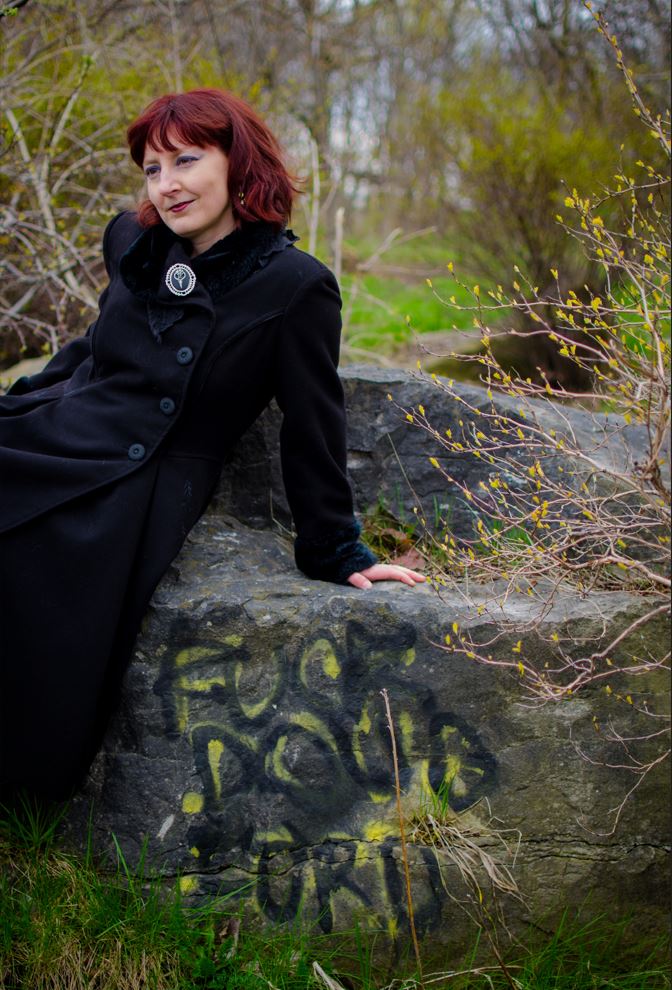
Rachel sitting on a rock which has extremely good taste in Premiers

Rachel A. Rosen talks climate disaster, wizards, Cthulhu, and Canadian politics, and how they all come crashing together in her debut novel Cascade.

Join us on November 11, in Toronto, for an in-person author talk and book signing with Rosen will discuss her genre-blending work – part techno-thriller, part response to “hopepunk”, part urban fantasy – and the inspiration behind it. Sign up here.

Can’t make it to Toronto? Prefer online talks? We got you. 

There’s a talk online at Brighton Public Library on Dec. 6 at 6:30.

Rachel is speaking about book deisgn at FyreCon Nov. 13 at 4 pm.

Can’t make any of them? You can still read Cascade through Amazonany ebook retailer, or direct from the press.

Book Report Corner

by Zilla N.

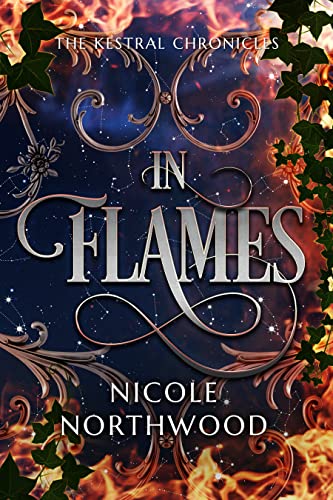
In Flames cover

In Flames opens with Sera telling us, “I am attuned to three things: blood, fire, and love”, and this book delivers on all three.

Sera is a sorceress with a rare gift for predicting love matches, and when she goes to college—a magical medical school—she meets her own celestial matches. But nothing is as she expected. Instead of one partner, she’s matched with two men, and they matched with each other as well as her. And the college itself holds darker secrets, secrets of blood and murder. Sera and her partners need to fight for their match to survive.

This book is in the best tradition of magical dark academia. Imagine a grown-up, poly Harry Potter. A sexy Ninth House. I’d originally been quizzical about the idea of a matchmaking sorceress, but I loved the worldbuilding of a sex-positive culture where love is considered divinely inspired. The world exists at an intersection of magic and technology, where sorcerers text each other on their phones and hockey fans are kept magically warm in the arena stands. Then, of course, the mystery calls into question the entire society which built this so-called school of healing. It’s a delightful play on a familiar genre, and I was left hoping for a sequel where I could see something of the world outside the school.

“But I’ll burn for you, Seraphina. I’ll burn for you if you ask me to.”

Then there’s the romance plotline, which is sizzlingly hot. There is a reason this book is called In Flames. Do not read this book in a drought or you might be accused of arson. I adored Seri, Alexi, and Dario, and it was pure delight to have a novel where no one had to choose between love interests in a love triangle. I will avoid spoilers, but I’ll leave you with two words to end this review: hot chocolate.

We received a review copy of In Flames. Get your copy here.

Behind the Screens: Tuesday Author Interview

Every Tuesday, get to know a bit about the stories behind the books you love, and discover your next favourite novel.

The cover of the sad bastard cookbook

Sabitha: Today we talk to one of the Night Beats creators, Zilla Novikov, about The Sad Bastard Cookbook. Full disclosure—I beta read this cookbook, and I love it already. But for people who haven’t had the chance to read it yet, Zilla, tell us about the project that you created with Rachel A. Rosen and Marten Norr.

Zilla: Thanks Sabitha! The Sad Bastard Cookbook is a cookbook of coping mechanisms and dark humour. There’s a lot of mental illness in the Night Beats community—and the world. We wanted to share how we get through eating on the days when picking up a spoon seems impossible. Also, we wanted an excuse to make jokes about Watchmen when we eat beans straight from the can. This cookbook let us do both at once.

Sabitha: What inspired you to write this book?

Zilla: I realized I needed to write this book while watching Mrs P stream Dead by Daylight on Twitch. We were discussing ramen hacks, and someone mentioned adding egg to ramen soup to up the protein. Mrs P asked whether you needed to cook the egg first, and the whole community chimed in with suggestions for ways to make egg-in-ramen soup. Before that chat, I thought everyone already knew about eggs in ramen. And I thought there was only one way to prepare them. 

As we’ve worked on this project with our community, I’ve realized that everyone has a version of my story. Sometimes it’s about teaching their sibling, sometimes their students, or sometimes their friends. Eating is essential, but when you’re depressed, or exhausted, or overworked, it can be really hard. Little tricks like eggs in ramen can be so important. This cookbook meant Rachel and I could share our coping strategies, and at the same time learn from everyone else in our community. 

Sabitha: You’ve written Query, and Rachel’s published Cascade. How did writing The Sad Bastard Cookbook differ from writing fiction?

Zilla: You’ve already mentioned the first difference—this is my first time co-writing a book, and my first time having it illustrated. I’m so lucky to work with such fantastic, creative people, who understand what I’m trying to express even when I can’t put it into words. Which is a bad trait in a writer!

The other difference is that this cookbook was sourced from the community. We asked around widely for suggestions about recipes to include, and we were not disappointed! From Cheater Channa Masala to a new pancake recipe, I learned so many tips and tricks, and it’s been wonderful seeing how caring our community is.

Sabitha: It’s an unusual process, but also an unusual sales tactic. You’re making it free.

Zilla: We’re making the e-book free. Unfortunately, we don’t have the wealth to make the paper copy free to everyone who wants it. But we’re not impressed with how capitalism makes it expensive to be mentally ill or in poverty. There might not be much we can do to fight that system, but we can make our book free for people to learn these coping strategies. 

We’re going to release early December, in time for Christmas gifting. The paper copy will go up on Amazon then, and our newsletter subscribers will get access to the free e-book. Both editions make great gifts! We’ll “sell” the e-book version to the general public in Jan, but newsletter subscribers get the bonus of early access to the e-book. We hope you like it!

The Fear Round Table

A picture of cocoa the cat with a pumpkin

It’s spooky season! Which is our favourite season. Rachel begins prepping for Halloween in July. For our October feature, we thought we’d take a look at reading and writing horror, fear, and the uncanny.

Sabitha: Do you read or write horror? If so, what kind? If not, do you incorporate horror elements into your writing?

Rachel: I always say that I don’t, and horror elements keep creeping into my writing like a sleeping Elder God under the ocean. Cascade has more than a dash of cosmic horror to it. I tend to gravitate towards works that are horror-adjacent, that have a lot of that creeping sense of menace and the uncanny but aren’t necessarily shelved in the horror section.

Rohan: When it comes to horror I am a complete wuss, despite being born on Halloween. I have never watched or read an out-and-out horror movie or book. But then I don’t class movies like Alien or zombie movies as horror in my mind. I think because they are so far fetched that it doesn’t scare me. And just like Rachel I definitely have horror elements that sneak into my Sci-Fi. Alinda was very much Alien inspired. 

Sabitha: What are some of your favourite horror tropes?

Zilla: I am a total sucker for “the real horror is our own humanity”. It’s admittedly a bleak outlook on life, but not terribly surprising if you’ve met me. Give me Night of the Living Dead and Twenty-Eight Days Later where racism and male entitlement are scarier than zombies. Horror holds up a funhouse mirror to the world, but the scariest things are always on our side of the reflection.

Rachel: A big shoutout to Get Out, probably my favourite horror movie of all time, for really bringing the terror in that regard.

I adore the uncanny and the unsettling. That deep-seated feeling of helplessness within a context that is much larger than you and doesn’t care one bit about your existence, when done well, is absolutely stunning. Peter Watts’ Blindsight has one of the most effective uses of a truly hostile and uncaring universe I’ve ever seen in fiction. Not to mention it has vampires in space.

Sabitha: What are some of your least favourite horror tropes?

Rachel: I’m not a big fan of a lot of the moralism that ends up in a lot of horror works. Women punished for being sexually active, that kind of thing. And of course I can’t mention cosmic horror without shooting old H.P. Lovecraft a giant side-eye, though personally I’m a little thrilled to know how terrified he would have been of my very existence.

Sabitha: Recommendations time! Which book really scared you? Besides the IPCC Report, Zilla.

Zilla: Wow, spoilers Sabitha. Some people might not know how the IPCC Report ends yet.

Rachel: Manhunt by Gretchen Felker-Martin made waves for a certain throwaway line of worldbuilding, but it’s one of the cleverest horror novels I’ve read in ages. It’s a fresh take on the “gendercide” narrative: a splatterpunk survival horror focusing on trans people’s experiences after a virus has turned anyone with a high enough level of testosterone into vicious monsters.

Sabitha: Last and most important question: What are you dressing as for Halloween?

Rachel: The haunting reminder that the pandemic isn’t over. Or the comics version of Death of the Endless. Some kind of memento mori, anyway.

Rohan: I usually go for something controversial. But I am stuck for motivation with the farcical being too close to reality these days. 

Zilla: The scariest thing of all: a millennial trapped in late capitalism.

Book Report Corner

by Zilla N.

by Sabitha F.

Ghost in the Vending Machine by Saevelle is a Wattpad novel, but don’t let that stop you from reading it. In fact, that should have you running to it, as not only can you read it for free, you don’t even have to wait for your hold on it to come in at the library. You can read it right now!

Now, as one of the founders of Night Beats, I’m heavily biased. Maybe you are too, since you’re reading this very blog. If you’re new here, though, Night Beats is a Creative Commons-licensed concept for a cheesy early Noughts paranormal police procedural—think X-Files meets Supernatural meets Forever Knight. Basically, you can slip it into your creative project if you need to make a reference that won’t get dated.*

So it’s been used in various creative works quite a bit already, and you can find out more on this very website. But to my knowledge Saevelle is the first person to actually write an entire episode. And it’s glorious. It’s so wonderful.

The story alternates between the episode itself and the behind-the-scenes filming of it. In the episode, a sex worker is murdered by some kind of monster, and Jordan and Jane have to both solve the case and keep her ghost, trapped in a coin, safe. Meanwhile in Toronto, the actors, stunt people, and makeup artists deal with the ups and downs of minor celebrity and on-set romances. It’s sweet and funny and as a Torontonian one degree away from the film industry, I believe she gets it perfectly. And I love the episode itself—it has all the dramatic beats and character moments of a show like this, and Saevelle’s cinematic writing style lets you picture it as if on screen.

Basically, I adore this story with my whole heart, and if you’re a fan of campy, witty, self-aware fiction, I’m guessing that you will too.

*In other words, it exists purely because JKR is a TERF and Rachel had to edit all the Harry Potter references out of the second draft of Cascade. True story.

Behind the Screens: Tuesday Author Interview

Every Tuesday, get to know a bit about the stories behind the books you love, and discover your next favourite novel.

Nigel and the Festival of Flames cover

Sabitha: We’ve got Macy Lewis here, telling us about her children’s book Nigel and The Festival of Flames. Macy, can you introduce us to your book?

Macy: I wrote my Nigel and The Festival of Flames to help children learn that being different is what makes us unique, which is something we shouldn’t feel nervous about. It also teaches them to be kind and kindness can be difficult to find these days.

Nigel the dragon is competing in the Festival of Flames, but he can’t throw his flames as high as the other dragons can because he’s smaller than the other dragons. When Nigel takes a walk, he meets Princess Rakella, can she convince Nigel to return to the Festival of flames and try again?

Sabitha:  Which character do you relate to the most and why?

Macy: I relate to Nigel because I’m blind and sometimes, I don’t think I can do things that sighted people can do, but when I talk with friends or my family, they always encourage me to try and more often than not, I’m able to find a way to do what I have wanted to do. I think we all need a little encouragement like Princess Rakella does for Nigel, and it’s such a beautiful thing to watch as the story unfolds.

Sabitha: What do you love about the writing process?

Macy: I love writing children’s books because it’s a challenge. I always feel like I must captivate children with the first lines of my story, so they’ll want to continue reading my books. I couldn’t have written Nigel without my editor Emily. She’s the one who gave Nigel’s text the rhyming rhythm that everyone loves so much.  My illustrator, Miara, hand painted each one of the pictures, and I think they turned out absolutely beautiful. I knew I wanted Nigel to be light blue, but I let Miara do what she wanted with everything else and create her own vision when she read the text.

Sabitha: That sounds really sweet and meaningful. Thank you for sharing. Where can the Night Beats community find you and your book?

Macy: They can find my books at their favorite online bookstore, but here’s my Amazon author page. They can follow me on Facebook and Twitter.

Book Report Corner

by Zilla N.

Noema Cover

Now is not the first time the Earth’s climate has changed. Now is not the first time that temperatures changed, that animals were driven to the brink of extinction, that food production dwindled. Noema is a story about human survival through environmental change twelve thousand years ago. But Noema is much more than historical fiction.

This book is about the price of survival, and who pays it: the animals, the people, All Life. It is about the Law of Unintended Consequences and about complicity for what is done in what is done in your name, when you have been the one to teach people your name. Or when those people are the ones who gave you a name in the first place.

Names and identity are major themes in Noema. I still can’t tell you who the narrator is, but then, I think that’s the point. We are interconnected. We are the living and the dead. We are the humans and the horses and the wheat. We are All Life, and sometimes to preserve All Life, we have to make terrible sacrifices.

Noema is a book that lingers with you, that offers up its precious secrets deliciously slowly. It is a book you can read over and over. Find it here.

Behind the Screens: Tuesday Author Interview

Every Tuesday, get to know a bit about the stories behind the books you love, and discover your next favourite novel.

The Debt Diary cover

Sabitha: Joshua Neal is with us today to talk about his YA science fiction novel, The Debt Diary. Josh, take it away!

Josh: The Debt Diary is dystopian young adult fiction. It focuses on Harry, a teenage climate refugee, as he struggles to survive living on the streets of an inhospitable city. The book also has a supernatural hook in the form of Harry’s debt diary, a book that Harry uses to track his debts but that begins to predict his future. 

Sabitha: That sounds very topical. What inspired you to write this book?

Josh: Brexit, mostly. But also a complete and utter disdain for the heat. There was a decent amount of xenophobia tied up within the Brexit narrative, and I’m sure I don’t need to make anyone aware of the continuing discourse about our changing climate. Take these two things to the extreme and you’ve got some very desperate people in very desperate situations. I was also inspired more specifically by the Essex lorry deaths and other similar news stories.

Sabitha:  Which character do you relate to the most and why?

Josh: I think Harry is the most relatable character. He has no idea what the future holds, yet he’s forced to make decisions every day that will inevitably change that future. Whether it’s changed for better or for worse, he has no idea. All he can do is make the best, most informed decision that he can and hope the rest falls into place.

Sabitha: We have a lot of writers in our community. What’s your writing process?

Josh: The writing process for The Debt Diary was very different from the process that I’m developing now. The Debt Diary is my first novel, and I pantsed it pretty hard. I just put my head down and wrote until I finished it. Then, I sought direction from a number of sources and used the feedback to fix everything that I’d done wrong (which was a lot). The experience was enlightening but I’m plotting my current projects far more thoroughly.

Sabitha: What was the hardest part about editing?

Josh: Fleshing out act two and trying to ensure that Harry’s transformation was a satisfying and moving one. Also, trying to tie together the two book’s two primary themes and ensure that they synthesise in the final act.

Sabitha: What do you most want your readers to take away from reading your book?

Josh: That the future is uncertain, but that doesn’t mean that you can compromise your morals or hang others out to dry. We can achieve more together than we can alone, and it’s up to each of us to continue to build connections rather than burn bridges.

Sabitha: Thanks for sharing your story and your process. We’re looking forward to reading! Where can the Night Beats community find you and your book?

Josh: You can find The Debt Diary on Amazon (UK and US) and it is free on Kindle Unlimited. You can find me on Twitter, Instagram, TikTok, and Facebook

I’m donating 25% of the proceeds of my book sales to a local charity in Norwich. You can find out more about this on my website.