Monthly book reports, author interviews, bonus content, recipes, and cat pictures, straight to your inbox.
Click here to subscribe!
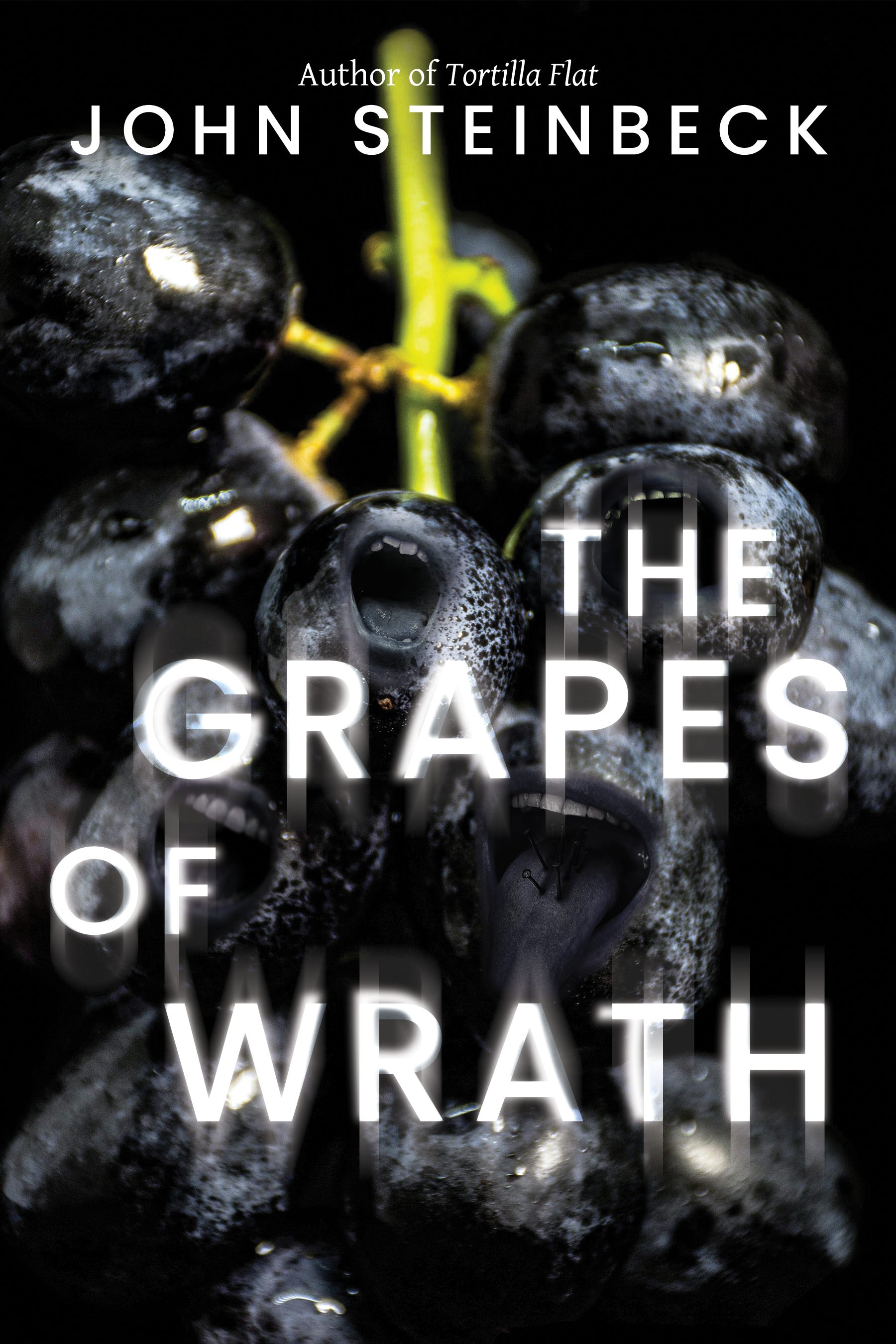
Wrong Genre Covers
| The Grapes of Wrath as horror was suggested by Rob. Have a funny idea for a Wrong Genre Cover? Email us at nightbeatseu@gmail.com, and if Rachel likes your suggestion, she’ll make it in a future issue. Or @ us on basically any of the socials. |
Behind the Screens: Tuesday Author Interview
Every Tuesday, get to know a bit about the stories behind the books you love, and discover your next favourite novel.
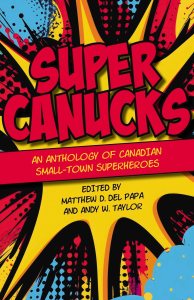
Zilla: Canada is a big place, and we need stories that cover all of it—the small, quiet places where people have big, loud adventures. Bring a touch of whimsy, and you’ve got Matthew Del Papa’s anthology SuperCanucks. So Matthew, tell us about it!
Matthew: SuperCanucks features eleven stories that explore the usual superhero tropes while shining a spotlight on the unique corners of Canada. Not your typical big city superhero, but those who live in and around Canada’s more often overlooked locales—isolated small towns and rural outposts. These heroes battle unique Canadian dangers, including government bureaucracy and the overreaching neighbours in the south.
Zilla: What inspired you to write this book?
Matthew: Living in small-town Canada I noticed that, though superheroes were having a cultural moment, the action always seemed to centre on big, American cities. Canada came as an afterthought. And rural communities didn’t even get that. Excluding Smallville, Kansas—which Superman had to leave before achieving greatness—there’s little to no mention of towns. But surely, I thought, some superheroes would stick close to home. What would life be like for them? Balancing a secret identity with nosy neighbours?
Zilla: Is there a visual image—a painting or a photo—that inspired you?
Matthew: There was a movie scene that has long stuck with me. The details are lost but the character, a young person, was driving away from home and the camera locked on the rear-view mirror of the family waving goodbye as they faded into the distance. It reminded me of countless friends and family who had to leave my hometown to attend school or find work elsewhere. That sad sojourn happens so often in the rural parts of Canada that we’ve named it: the Brain Drain. SuperCanucks wonders if something similar would happen to super-powered citizens—would the ‘best and brightest’ have to leave—and what that might mean for those left behind. Would small towns be stuck with ‘C’ level heroes?
Zilla: Why do you write?
Matthew: I write to keep my head from exploding. Combine a vivid imagination with insatiable curiosity and my childhood daydreams grew vivid and complicated. Getting these down on paper turned a liability into a productive creative outlet. I’ve long had an animal-like hunger for stories, gorging on anything I could get my hands on since discovering science fiction and fantasy. Reading voraciously led me to try my hand at writing.
Zilla: If you weren’t a writer, what do you think you’d do instead?
Matthew: Routine is a big part of my life. I prefer order to chaos but enjoy excitement and a good challenge. These traits make me think a career in the military or law enforcement would have been an interesting alternate path. Several relatives served in the navy and I’ve friends who became police officers (Royal Canadian Mounted Police, Ontario Provincial Police). I’d like to believe that I could have done the same. That said, I’m a huge coward and so prefer writing about conflict to living through it.
Zilla: What’s your next writing project?
Matthew: I’m toying with a book of connected short stories about a directionless thirty-something who inherits his uncle’s private investigator business. It would feature a lot of humour as my point-of-view character learns the ropes and works to keep the doors of Milks’ Independent Investigations open. I plan on setting it in a fictional neighbourhood of the Greater Toronto Area, a sort of small town subsumed by the city but still clinging to the lingering shreds of its own identity, and filling it with memorably bizarre characters.
Zilla: Thanks for sharing your story and your process. We’re looking forward to reading! Where can the Night Beats community find you and your book?
Matthew: My co-editor, Andy Tayler, has a website. Our anthology is available at most major bookstores and can be purchased directly from our publisher.
Book Report Corner
by Rachel A. Rosen
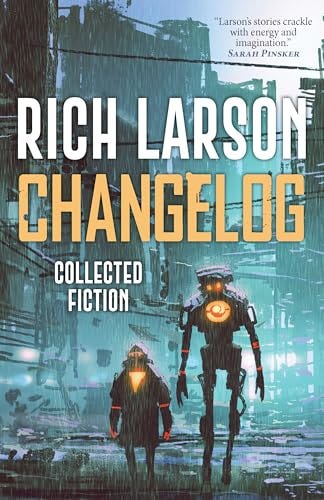
The foreword to this book describes Rich Larson as underrated, which is the understatement of the year. There’s not a single weak link in this cyberpunk/biopunk anthology. It’s like a good version of Black Mirror, focusing on the human and fallible. It had me by the first story when someone’s eye implant is infected; this future is grounded and lived in and messy and sometimes beautiful.
It’s hard to pick a favourite, and I haven’t, but the standouts to me include “Animals Like Me,” which is a delightfully horrifying take on Elsagate, “Quandary Aminu vs The Butterfly Man,” which takes us to a grimy, crime-ridden Nuuk with a tough-as-nails queer heroine and surprising compassion at its core, “Tidings,” which is the most hopeful story I’ve read in a good long time, but in a cool way not a twee way, and “You Are Born Exploding,” which is devastating and brilliant. If you like your sci-fi with an incandescent emotional core, this is an anthology for you.
Behind the Screens: Tuesday Author Interview
Every Tuesday, get to know a bit about the stories behind the books you love, and discover your next favourite novel.
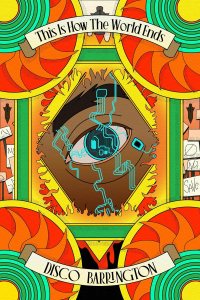
Zilla: It sure feels like we’re approaching some kind of global tipping point, and dystopian fiction can give us a roadmap of how the story goes. Disco Barrington brings us his distinctly queer version of this apocalyptic story in This is How the World Ends. Disco, can you start us off with the the back-of-the-book blurb?
Disco: Run the race. Or die.
Britain is at war, isolated by a digital blockade.
Dissidents run a deadly race for the public’s entertainment, while the flood-ravaged country falls apart. The Cartwright family tries to soldier on, refusing to give in to fear. But when catastrophe looms, Emma Cartwright flees – only to find that life beyond the border is anything but safe.
The fight for survival has begun.
This is how the world ends.
Zilla: What inspired you to write this book?
Disco: I wrote the first chapter in April 2025, the day the UK Supreme Court ruled that the definition of a woman was based on biological sex. I was enraged. I opened my notes app and began to type furiously. That momentum carried me through the summer where I found myself feverishly writing chapters at 3 AM, haunted by the ever-worsening news cycle. By autumn I had a book about queer people fighting back against fascism during an apocalypse. I’m very proud of it.
Zilla: Your story sounds way too realistic, speaking as a queer person living through the rise of fascism during an apocalypse. Are there surprises in it?
Disco: The book opens in a broken Britain run by the right wing and devastated by climate change, so it may initially feel a little close to home. But humanity falls all too quickly, and what comes after is, I hope, wholly unexpected. The narrative hurtles into sci-fi chaos, as characters try to hang on for dear life.
Zilla: What drives you to write? You can’t say existential dread—that answer is mine.
Disco: This book was fuelled by a deep sense of defiance. I wanted to face my anxieties head-on. Also, I’m British-Trinidadian, and even though I love dystopian literature the most popular works tend to centre straight, white, European or US-based protagonists. I wanted to flip the script that Britain has dictated: that it is the centre of the world—the strongest and best, a paradise beset by less fortunate migrants. In the book, a British woman flees this so-called paradise, seeking asylum in Trinidad.
Britain is not invulnerable, not anymore. When the world ends, it ends for everyone.
Zilla: So what’s your next writing project?
Disco: I’m working on a transgender cannibal Regency romance, about a network of honourable cannibals in historical Britain, eating the rich and giving to the poor. It’s been a joy to write so far, especially the romance. What could be more romantic than dismembering your enemies and turning them into a nice Chateaubriand?
I’m hoping to have it ready for release in October 2027, for Halloween.
Zilla: Thanks for sharing your story and your process. We’re looking forward to reading! Where can the Night Beats community find you and your book?
Disco:
Socials:
TikTok: https://www.tiktok.com/@discobooks
BlueSky: https://bsky.app/profile/discobooks.bsky.social
Book links:
Amazon: https://amzn.eu/d/07Zvt5NR
Kobo: https://www.kobo.com/gb/en/ebook/this-is-how-the-world-ends-1
Direct (signed copies, UK only): https://beventi.co/orderform/1silxumn3k
Behind the Screens: Tuesday Author Interview
Every Tuesday, get to know a bit about the stories behind the books you love, and discover your next favourite novel.
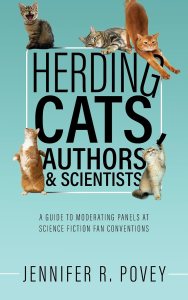
Zilla: Cats, authors, and scientists have something in common—they’re bad at following instructions. Leave them alone, and you’ll end up with a book, a theory, and all your dice on the floor (not necessarily in that order). We were delighted by Jennifer R. Povey’s non-fiction book Herding Cats, Authors and Scientists, a short how-to guide for moderating successful science fiction convention panels.
Jennifer, it’s great to have you here! Can you start by telling us who the book is for?
Jennifer: It’s a bit canted towards authors, because that’s what I am, but would be useful for fans, cosplayers, etc.
Zilla: You’re an experienced fiction writer. How did you make the transition from fiction to nonfiction?
Jennifer: I don’t feel that I “transitioned” at all, that would imply writing less fiction! (In fact, I just had a cryptid fiction novella come out). I also write a fair bit of short form non fiction, short articles and book reviews. But Herding Cats is my first non-fiction book. What it boils down to is this conversation with myself: Somebody should write a book on moderating as there’s basically no training. Who would be qualified to do that? Oh, oops… I’m not saying I’m the only person or the best person, but I am a person who can do this. So I did.
Zilla: What’s the biggest mistake you’ve seen a moderator make?
Jennifer: A lot of the mistakes I’ve seen are in the book, including this one, but I would absolutely say that the biggest mistake I’ve seen was the moderator who got intimidated by the topic and decided to do a completely different panel! This was not appreciated by the panelists, the audience or, ultimately, the convention.
Zilla: What do you wish panelists knew?
Jennifer: Don’t spend the entire time talking about yourself, your book, or your project. I’d say that’s the most common thing panelists do that’s “wrong” or “bad” – and I know people who have gotten themselves uninvited by making everything about themselves. You’re there to talk about the panel topic. If your book is relevant, by all means touch on it.
Zilla: What do you wish moderators knew?
Jennifer: That you’re doing a great service to fandom. That the panelists really have consented to be moderated by you. And to drink enough water. I harp on that far more than seems reasonable, but…
Zilla: What’s the most skillful mod move you’ve seen?
Jennifer: Hrm. I wish I could think of something specific. We tend to remember the bad stuff more than the good. So, instead, I’m going to shout out two of the best moderators I know – Joan Wendland and Hildy Silverman. Both of them run a very good panel and I’ve learned a lot from them.
Zilla: What’s your next project?
Jennifer: I’m mostly focused on short fiction right now but have started preliminaries for another space opera series.
Zilla: Thanks for sharing your story and your process. We’re looking forward to reading! Where can the Night Beats community find you and your book?
Jennifer: Bluesky: https://bsky.app/profile/ninjafingers.bsky.social
Threads: https://www.threads.com/@jenniferr.povey
Amazon order link: https://www.amazon.com/dp/B0H6VNZ2CB
Behind the Screens: Tuesday Author Interview
Every Tuesday, get to know a bit about the stories behind the books you love, and discover your next favourite novel.
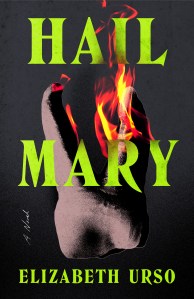
Zilla: Elizabeth Urso promises us atmospheric settings, haunted people, and unsolved crimes, and her debut novel, Hail Mary, delivers! If you’re in the mood for suspense, you’ll want to know more! So Elizabeth, what can you tell us about the book?
Elizabeth: I like to think of it as Six Feet Under by way of Rebecca. It follows Mary Foreman, who returns to her hometown to help her estranged family during a scandal-plagued election. But when the opening of a decades-old time capsule at her alma mater (a Catholic school for girls where she now teaches) draws her into a criminal investigation tied to her family’s funeral empire, she must fight to prove her innocence. Not only of recent crimes, but past ones, too. For this is the North Shore of Lake Huron, and the past is always present where the dead don’t die.
Zilla: Words do more than convey meaning—they’re a way to express feeling. How do you select the right words?
Elizabeth: Selecting the right words is one of my favourite parts of the writing process. It’s likely why I love editing so much – the right words rarely strike me the first time around. I love the specificity of it all. Tone. Cadence. Pulling at heart strings. Delivering a gut punch. It’s an iterative process, but it’s how you make your writing sing.
Zilla: Do you have any lines you’re particularly proud of? What about them are you proud of?
Elizabeth: There’s a passage in Hail Mary’s prologue that reads: “At the base of the stairs, they stood frozen. Transfixed. Three tenors trying to find their vocal cords; wondering if their grandfather still had his, or if you’d eaten those smooth bands of muscle, too.” It’s a cooler way to say that three brothers found their little sister having cannibalized their grandfather. At least, I like to think so!
Zilla: If you could meet your characters, what would you say to them?
Elizabeth: It’s silly, but I’d say, “Thank you.” Mary helped me navigate the grief of coming home in the wake of my father’s pancreatic cancer diagnosis and his untimely death. She also helped me find the sense of humor I’d lost. The other point-of-view character in Hail Mary (no spoilers!) gave me somewhere to put an anger that I had no idea what to do with. Collectively, they gave me space to think about inheritance and namesake and what it means to keep living. Writing is cool. It’s fun, but it’s also cathartic.
Zilla: What’s your next writing project?
Elizabeth: Readers will soon return to the North Shore of Lake Huron! My sophomore novel, Confession, follows fourteen-year-old Charlotte Taylor, a precocious, amateur sleuth who eavesdrops on confessions in a haunted church. But when she overhears something in confession that leads her to believe a man accused of murder is innocent, she begins her own search for the truth—one far more sinister than she could’ve imagined. An excerpt will be featured in the back of Hail Mary.
Zilla: Thanks for sharing your story and your process. We’re looking forward to reading! Where can the Night Beats community find you and your book?
Elizabeth: The Night Beats community can follow me on Instagram. If I’m up to anything cool, it will be on my Link Tree. Order links can also be found there.
Wrong Genre Covers
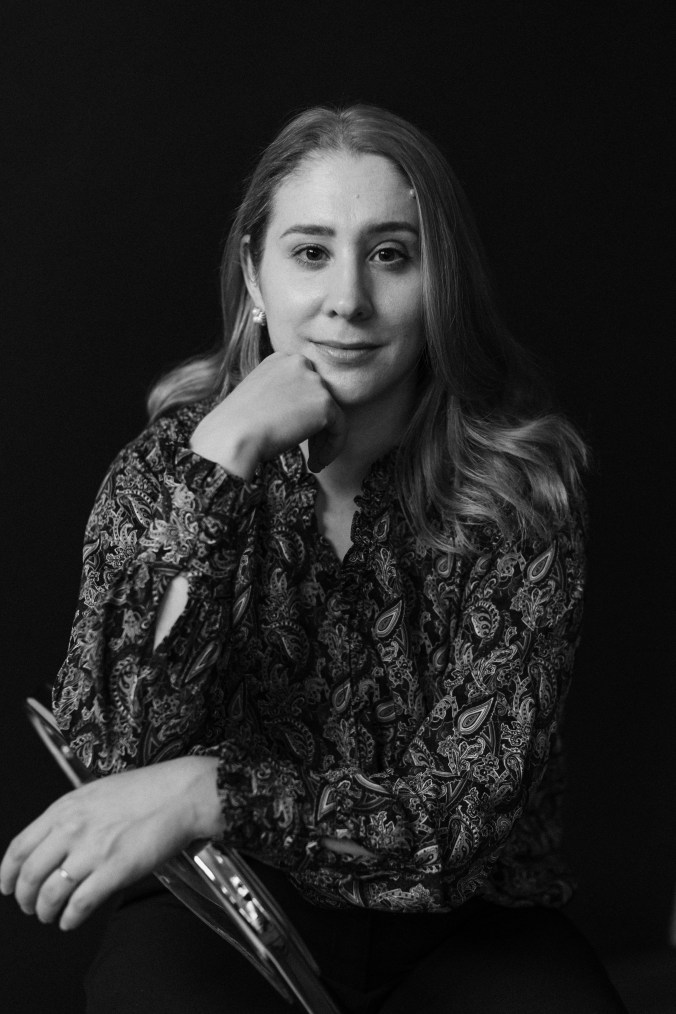
| Creative Writing for Dummies as an AI slop cover was suggested by Zilla. Have a funny idea for a Wrong Genre Cover? Email us at nightbeatseu@gmail.com, and if Rachel likes your suggestion, she’ll make it in a future issue. Or @ us on basically any of the socials. |
Behind the Screens: Tuesday Author Interview
Every Tuesday, get to know a bit about the stories behind the books you love, and discover your next favourite novel.
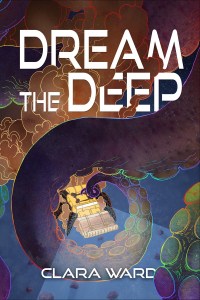
Zilla: Clara Ward is back and they’re here with another of their amazing ecofiction adventures. We’re delighted to bring the author of Be the Sea back to tell us about their latest novel, Dream the Deep. Clara, can you introduce us to your story?
Clara: Robbed of their green-energy aspirations by military-backed billionaires who misled the whole planet, Ryn embraces new dreams—fighting deep sea threats alongside unexpected allies and a giant cephalopod. It’s 2139 in the Cali-Coastal Corporate Zone, and Ryn struggles with their own body and brain as they fight to survive five days locked up with academic rivals and the military-backed billionaires who’ve misled them all since their teenage years.
Ryn needs an exit strategy but doesn’t know whether to trust Akira, the hacker-spy who may have saved their life, or Jay, the geeky military rebel with a secret stash of hot chocolate. Not to mention, Jay keeps falling asleep in their bed, and Ryn’s not sure if either of them is interested in more—but at least they like the same shows!
Zilla: What inspired this book?
Clara: Let’s just say my first book, Be the Sea, was a bit chunky (over 180,000 words). My friend, Betsy Miller (with Thinking Ink Press, check them out!), challenged me to write a novella (under 40,000 words). The idea rattled around in my head for weeks until it became a deep-sea mining robot clumsily ploughing its way through my brain. Beyond the obvious threats such robots might pose to marine ecosystems and the entire ocean (as our largest carbon sink), could there be unforeseen risks to the robots among the ninety percent of ocean species not yet identified?
I’d already written about humans dreaming themselves into the bodies of sea creatures. It seemed entirely natural (to me!) that if real cephalopods have distributed brains controlling their limbs, some unknown giant cephalopod might have different human dreamers inhabiting each limb, and possibly teaming up to stop a pesky robot!
Fair warning, that’s only a small part of what’s happening in this book—from the human perspective.
Zilla: If you could meet your characters, what would you say to them?
Clara: Fandom friends are amazing.
If you agree a shapeshifter is the best character ever on Star Trek, you’re probably pretty adaptable.
No one should have to sleep in a bucket, but when sleeping in a strange place, it helps to have a friend.
Zilla: What tropes are you subverting?
Clara: Only one bed—Make it ace!
Zilla: What’s your next writing project?
Clara: While I wrote Dream the Deep to stand alone (and it does!), I barely lasted two weeks before I missed the characters and needed to write more. It’s hard to explain without spoilers, but if you end up wanting more, Dream the Light comes on in February 2027!
Zilla: Thanks for sharing your story and your process. We’re looking forward to reading! Where can the Night Beats community find you and your book?
Clara: You can find me (and eclectic bonus material for my book!) on my website. Dream the Deep is available directly from my publisher, Atthis Arts, or at your favorite online or brick-and-mortar bookseller. And check out Betsy Miller on Bluesky or with Thinking Ink Press.
Behind the Screens: Bonus (not) Tuesday Author Interview!
Every Tuesday (and occasional Thursdays!), get to know a bit about the stories behind the books you love, and discover your next favourite novel.
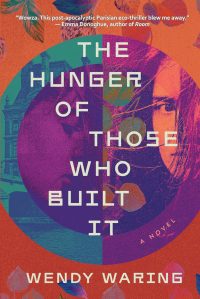
Zilla: Even climate repair can have its dark side—environmental justice is a choice that we need to make, not a guaranteed outcome of protecting the planet. And our estrangement from the natural world can mirror our more personal estrangements—from our family or our own histories. I am so excited for Wendy Waring’s novel The Hunger of Those Who Built It, and I am so happy that she’s here to tell us all about it!
Wendy: The Hunger of Those Who Built It imagines a near-future Paris encircled by vertical farmland built on the city’s beltway, the engineer who designed it, the people who co-opted it, and her loved ones who, years later, are battling to get past it…
Diane Griffith draws on engineering innovations in vertical agriculture for an ambitious model of green urban life meant to heal both city and planet. As the project transforms Paris’s historic core, unanswered questions arise—about care, responsibility, and what sustainable progress truly requires. The search for her missing activist sister forces Diane to engage with those questions. Told alongside the future perspective of her niece Lou, who must live with and fight within Diane’s legacy, The Hunger of Those Who Built It asks who gets to inherit tomorrow’s utopia.
Zilla: What inspired you to write this book?
Wendy: So many things! One: a Paris map torn from a nineteenth-century guidebook. Instead of the Périphérique highway surrounding central Paris, there’s a crenellated line marking the defensive walls erected by France’s last king. I wanted to imagine what that aristocratic barrier would look like in 2050. Because we carry our history with us into the future.
Zilla: What made this story the one you needed to tell?
Wendy: I am galvanised by fascism’s failure of imagination and capitalism’s future-blindness. I want to create a narrative lab where people can feel and inhabit the futures being constructed, consider what it might cost us if we refuse to fully imagine them, and even dream of alternatives.
Zilla: What would you do if you weren’t a writer?
Wendy: I started my life journey as a translator and an editor, detoured through academia, and tiptoed into the land of fiction writing. So I could pursue my love affair with words in other ways. But if there were some mass aphasia event, I’d dedicate myself to growing heat-hardy vegetables.
Zilla: Can you share some lines you’re proud of from the book?
Wendy: I’m more joyful of the discovery than proud… In the book’s far future storyline, Diane is en route to Paris by dirigible: “They lofted over the striated shimmer of a vast solar farm.”
Or here’s Lou, indentured inside the wealthy enclave her aunt helped build:
When people build a wall, they may think they’re dividing in from out, separating haves from have-nots. But they’re not. They’re marking a segregation that has already happened. They’re building two waiting rooms joined by a closed door. In one, you dread the coming invasion. In the other, you plan. […] If I get caught, they’ll say I was here for gain—for jewels, for goods, for gold. But I’m not. I’m here for hope.
I love how this short passage captures the book’s storyline and rebel Lou—so fierce yet tender.
Zilla: Thanks for sharing your story and your process. We’re looking forward to reading! Where can the Night Beats community find you and your book?
Wendy: At Stelliform Press!
Behind the Screens: Tuesday Author Interview
Every Tuesday, get to know a bit about the stories behind the books you love, and discover your next favourite novel.
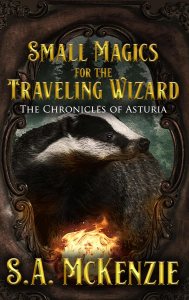
Zilla: Growing up is complicated, but even more so when you’re a wizard’s assistant. Even if you can’t relate to meeting a talking badger, you’ll love this story about a young girl growing into her power. Sharron McKenzie wrote Small Magics for the Traveling Wizard and she’s come along to tell us about it. So Sharron, take it away!
Sharron: It’s about a young wizard’s assistant named Pax who gets dragged along on a wild quest by her elderly master, Joran, to find some magical doors. Along the way, they acquire a number of companions including a cursed prince and a sarcastic talking badger, and Pax realizes that her master is being manipulated by a hidden evil that everyone thought was defeated. As his dementia gets worse, she’s forced to step up and become a leader.
Zilla: What inspired you to write this book?
Sharron: The inspiration for this book came when I was thinking about how fantasy wizards are often elderly men, and I wondered what happens to wizards who develop dementia. What do you do with someone who still holds the power to burn down a city—and no longer remembers why he shouldn’t? And how does a group of adventurers who have been raised to believe in the competence of wizards deal with a leader who is in decline and making bad choices?
I was also interested in how our memories shape us as people. Pax doesn’t remember where she comes from, and is building new memories and figuring out who she is, while Joran is losing a very long lifetime of memories, and is struggling to remember what happened yesterday.
It is also important to me to write queer-normal fantasy settings, and most of my characters are queer—including the non-binary badger, who will bite anyone who gets too nosy about what gender they are.
Zilla: I love that! Your plots surprise your characters, but do you ever surprise your readers?
Sharron: I like to surprise my readers by messing with the standard fantasy tropes. I’ve written stories about werewolves who are pink and fluffy, and unicorns that are carnivorous. There are quite a few unpleasantly large surprises waiting for Pax in the Wild Lands. Because I’m from New Zealand, I’ve incorporated some of the wildlife from this part of the world into my world-building, and the fantasy land of Asturia shares some aspects of my homeland.
Zilla: Sneak peak time! Can you share some lines from your novel?
Sharron: There are a couple of lines from the start of the book that I’m particularly fond of, where I describe the messy state of the wizard’s workroom and all the different ingredients Joran used to try to make a magical insecticide:
A glitter-encrusted slug slithered through a bright blue puddle, leaving a trail that fizzed faintly. Pax picked up the open jar the slug had escaped from and frowned at the label.
“Dried slugs?” she read.
Zilla: What’s your next writing project?
Sharron: Small Magics for the Traveling Wizard is the first book in a trilogy, and I’m currently working on the second book, Wild Magics for the Wizard at Sea.
Zilla: Thanks for sharing your story and your process. We’re looking forward to reading! Where can the Night Beats community find you and your book?
Sharron: You can find my book on Amazon. My website is here and I’m active on Bluesky: @samckenzie.bsky.social and Threads: @hedgehogcircus

