Behind the Screens: Tuesday Author Interview

Every Tuesday, get to know a bit about the stories behind the books you love, and discover your next favourite novel.

Every Tuesday, get to know a bit about the stories behind the books you love, and discover your next favourite novel.

Rachel: We’re delighted to have Nina Munteanu, author of Gaia’s Revolution, here to talk with us about eco-fiction, the climate crisis, and slime molds! Nina, please tell us us a little about your creative work. And what inspired you to write it?

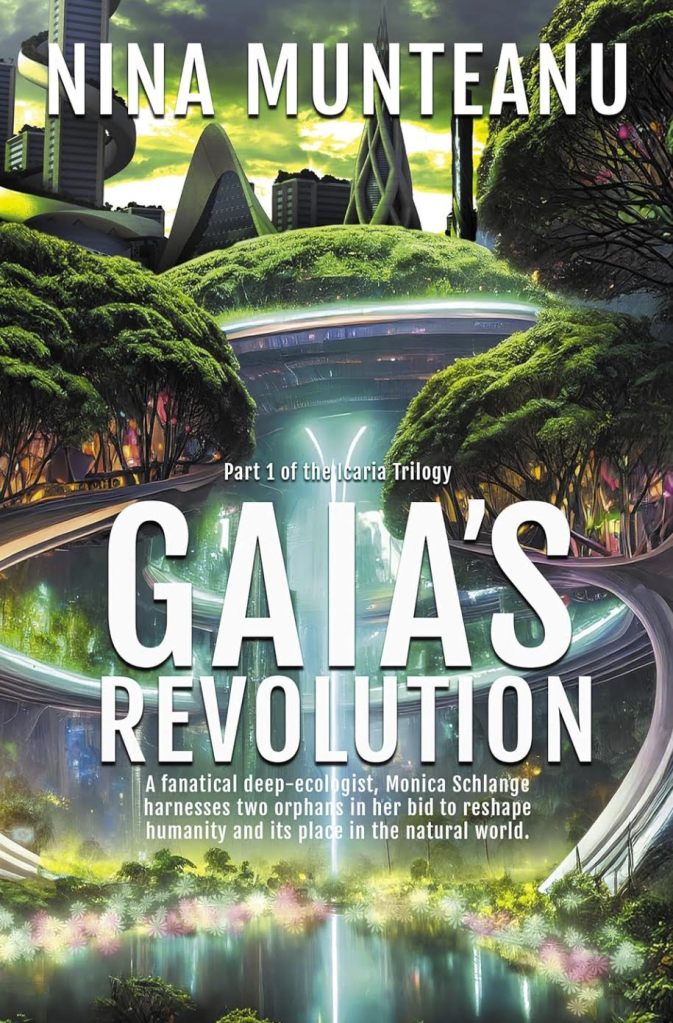
    Nina: My latest novel is Gaia’s Revolution, the first of The Icaria Trilogy, clifi eco-fiction that explores a collapsing capitalist society in Canada through ravages of climate change, societal decisions, and a failing technology. Gaia’s Revolution opens in Berlin, 2022, then moves to Canada, where ambitious twin brothers Eric and Damien ignite a revolution that could save the planet—or erase humanity altogether. Fanatical deep ecologist, Monica Schlange plays the brothers like chess pieces in her gambit to ‘rule the world.’ She captures three orphans in a web of intrigue to reshape humanity and its place in the natural world. But the orphans will ultimately determine the direction of humanity and launch a new set of rules no one envisioned.

    This is a story about Canada’s future, a fast-paced political thriller that touches on issues Canadians may soon or already face: environmental devastation of climate change, social unrest and polarization, eco-terrorism, DNA-targeted plagues, techno-clones, environmental technocracy and behaviour engineering.

    I originally wrote what eventually became the middle book of the current trilogy back when I was a teenager in the late 60s. The story, originally called Caged in World, featured a world forced inside sealed domes to escape the harsh uninhabitable environment destroyed by climate change (Yes! I knew about climate change back then!) and effects of unruly human greed. A teenager in high school, I was acutely aware of what we were doing to the planet; it inspired me to write this story, and this dystopia became the first full length novel I would write.  

    Rachel: I did something similar, both in terms of conceiving of the middle book first, and in tackling the effects of the climate crisis in Canada. And, as it turns out, writing rather morally grey lead characters. Ecofiction these days often tends towards the utopian, with well-intentioned characters doing their best. Why did you decide to focus on manipulative and extremist characters instead?

      Nina: The morally ambiguous character appeared much truer to what is going on with our current climate / environmental dilemma and what the trilogy is about. Our world is fast becoming more fractured, polarized and extremist in worldviews and actions; and we are growing less tolerant of any divergences. Under extraordinary circumstances, ordinary people may be driven outside their comfort level, to extremism and moral ambiguity. I wanted to explore that possibility by featuring actors deeply involved through their convictions in the big decisions that face humanity; questions that touch on ecocentrism vs. anthropocentrism; deep ecology, sustainability, and selfish vs selfless motivations. When faced with truly existential questions and extreme divergences in worldview, innocence is the first casualty.

      The true—and the only innocent—protagonists in this story are the three orphans, who must navigate the harsh environment their elders have left them. In some ways they—and the casualty of their innocence—are at the heart of the story.

      Rachel: Can you explain a little about limnology and how your background in ecology plays into your writing?

        Nina: Limnology is the ecological study of freshwater. It is a multi-disciplinary field that incorporates chemistry, physics and biology to create big-picture analyses of systems and their surroundings. For that reason, limnologists also look at watersheds and land use, given their effect on water systems. I’ve brought much of my science background into my fiction writing—mostly for premise and background, but also as theme in many of my works (the majority of which are eco-fiction). My love for Nature and my study of the environment have informed my fiction incredibly: in the language, the direction of my works, in my choice of protagonists, even. When I was ten years old all I wanted was to be a paperback novelist. But I took some turns and pursued a science degree instead and became a science teacher and environmental consultant, only to return to writing books. The universe in its wisdom, provided me with the tools I needed to be the writer I was meant to be: a science-informed eco-fiction science-fiction writer of high-concept ideas with large scope.

        Rachel: What is the role of speculative fiction in combatting the climate crisis?

          Nina: The climate crisis and associated environmental issues are largely a global phenomenon—concerns like water and air quality and quantity, environmental exploitation and fossil fuel extraction, impacts to biodiversity and rampant extinction. Science fiction (and speculative fiction particularly) is the literature of consequence that explores large issues faced by humankind; This largely metaphoric writing can provide an important vehicle in raising environmental awareness. Literature in general has always served as a cultural reporter on themes important to humanity.  Critic Frederic Jameson argues that the literature of “science fiction is in its very nature a symbolic meditation on history itself.” The science fiction genre—and speculative fiction particularly—explores premises based on current scientific and technological paradigms. What if we kept doing this?…What if that went on unchecked?… What if we decided to end this?… These are conveyed through the various predictive visions from cautionary tales (e.g., Atwood’s Oryx and Crake) to dystopias (e.g., Huxley’s Brave New World). The power of speculative fiction over realist fiction or non-fiction reportingh to do with environment and climate change is in “showing us” instead of simply “telling us.” Using the tools of metaphor and personal dramatization, speculative fiction provides a palatable, and more meaningful narrative that readers can truly experience and connect with, learn and act on. 

          Rachel: If you weren’t a writer, what do you think you’d do instead?

          Nina: I’ve already done it! And I’m still doing it! I was an ecologist / limnologist, working as an environmental consultant for various clients, educating them and helping them comply with regulations and become better environmental citizens. I’d like to teach ecology in primary and secondary school, if such a program existed—which it doesn’t, unfortunately. Either way, both of these are aimed to educate toward more environmental awareness and sustainable choices. You could say, I’m doing that with my writing now, which is why I love it as a career. I currently teach writing at The University of Toronto. I also write non-fiction articles for various magazines and on my blogs, which see over 80,000 visitors a month.

            The other pursuit I would have loved to follow is in the field of lichenology (the study of lichens) or mycology, (the study of fungi and slime molds). As it turns out, I’ve become a pretty good amateur mycologist and lichenologist. I walk the nearby forests daily and often come out with photos and an article in my head about some interesting specimen. Check out the blog on my site The Meaning of Water for some of them.

            Rachel: I’m low-key obsessed with the strange organisms that make up our very real world. So…could you tell our readers a few interesting facts about slime molds?

              Nina: I’d love to! Perhaps because—or in spite of—the bizarre designs of their fruiting bodies, their intriguing behaviour and success and ubiquity while remaining rather invisible and overlooked—slime molds have both defied taxonomic identification and been given some of the most colourful, disgusting, and wonderful common names. Some include: Moon Poo Slime, Wolf’s Milk Slime, Tree Hair Slime, Dog Vomit Slime, Bubble Gum Slime, Scrambled Egg Slime, Tapioca Slime, and Chocolate Tube Slime.

              Slime molds are bizarre life forms, once classified as fungus—because they sort of looked like fungi. Unlike a fungus that is not capable of absorbing and digesting their food internally, a slime mold can. They can also move—unlike fungus; slime molds conduct phagocytosis—just like the amoeba I studied in school. They can move several millimeters in an hour and some may charge into a rapid movement of over 1 mm/second. That’s visible to the naked eye! Think Steve McQueen and The Blob. Shades of science fiction! Lastly, slime mold has been proven to have intelligence, able to navigate the most efficient route to a food source. We have much more to learn about these tiny intelligent beings who are silently taking over the world.

              Rachel: While I am off forming a new punk band called Moon Poo Slime, where can our readers find you and your work?

                Nina: Readers and other interested parties can find me and my work on several sites. www.NinaMunteanu.ca is dedicated to my writing; www.NinaMunteanu.me showcases weekly articles with my latest news and articles on writing; I post weekly articles on www.TheMeaningOfWater.com which explores all things environmental and about water, particularly. I’m also active on several social media platforms, including Bluesky, Twitter, and Linked-In

                Behind the Screens: Tuesday Author Interview

                Every Tuesday, get to know a bit about the stories behind the books you love, and discover your next favourite novel.

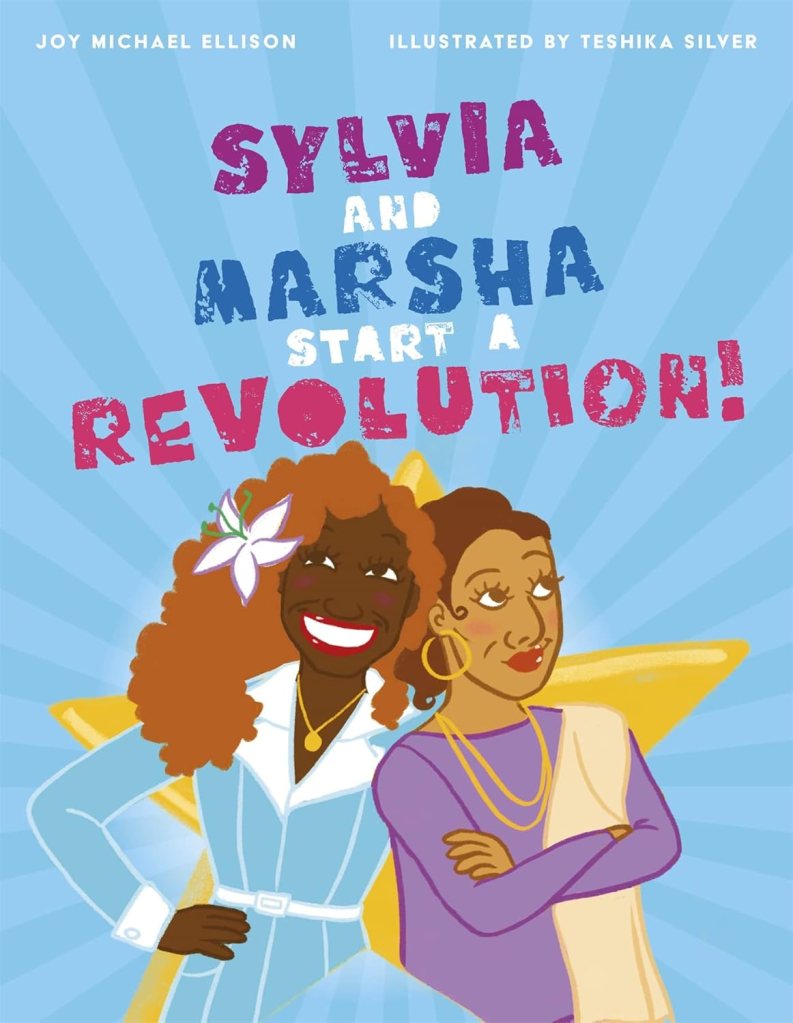
                Sylvia and and Marsha Start a Revolution by Joy Michael Ellison and illustrated by Teshika Silver. The background is a blue sunburst with a yellow star, and in the foreground are Marsha P. Johnson, a Black woman wearing a blue dress and a big flower in her hair, and Sylvia Rivera, a Latina woman wearing a purple shirt and a beige scarf. They look cute af.

                Rachel: With us today is Joy Michael Ellison to talk about a book I’m so excited about. Joy, can you introduce yourself, and tell our readers a little bit about Sylvia and Marsha Start a Revolution!?

                Joy: Hey there! I’m Joy Michael Ellison [they/them]. I’m a white, disabled, queer and trans person currently living on the traditional lands of the Narragansett nation. I am a writer, a professor of Gender and Women’s Studies at University of Rhode Island, and a life-long grassroots, community activist. My approach to organizing is shaped by the three years I spent in Msafer Yatta, Palestine supporting Palestinian- led popular movements and my experiences working in transformative justice movements in Chicago, Illinois. As an author, I am interested in using stories, both fictional and true, to build community, document social movements, and imagine a liberated world.  I believe that storytelling is integral to healing, transformation, resistance, and survival.

                Sylvia and Marsha Start a Revolution! is my first children’s book. It tells the story of Sylvia Rivera and Marsha P. Johnson, two trans women of color who made history during the Stonewall Rebellion, kickstarting the movement for acceptance of queer and trans youth.  Sylvia and Marsha help trans girls like them by sharing what they have in abundance: friendship. They show us all that beside our best friends, we can change the world.

                Rachel: Tell us about the journey from concept to publication. What was your process, and how did you collaborate with Teshika to bring the story to life?

                Joy: Sylvia and Marsha Start a Revolution! is an unintentional case study in what it takes for queer and trans people to break into conventional publishing. In fact, this book started out as a joke—one of those unfunny things you tell yourself when you’re afraid to try because you know how much systemic oppression is against you. I decided that I was going to write a picture book about the Stonewall Rebellion that would never be published. I had been reading every primary source I could about Sylvia and Marsha as a part of my graduate studies and I yearned to share what I was learning with a wider audience. So, I wrote and revised the text, took a class on picture book publishing, (the teacher seriously told me that I should write a book about “trans seahorses” instead), revised more, and submitted to a dozen publishers. After receiving as much rejection as I could stand, I decided to self publish. 

                I knew that my community would buy this book. I approached a local artist’s collective and hooked up with Teshika. Together, we crowdfunded the book. Naturally, as soon as we proved that there was a market for it, capitalists came knocking. Because I had discovered that self-publishing is a nightmare for my anxiety, we sold the book to a traditional publisher. Because of that, I was able to find an agent who turned around and sold four more picture books about queer and transgender history, the first of which is “Willi Ninja: Vogue Legend,” coming out May 2026. 

                Now I spend more time writing and more time…let’s call it “gentle-parenting” publishers into letting me do right by the historical figures I write about. My experience shows how much we’re trapped by capitalism, and what queer and trans people can do when we go outside of normal channels. 

                Rachel: Obviously, the history of the Stonewall Riots and the fight for queer and trans liberation is a beautiful one, but also one that involves state repression and police violence. How did you go about telling the story in a way that is appropriate for a young audience?

                Joy: The first decision I made was to center Sylvia and Marsha’s friendship and mutual aid politics. Sharing and working together are ideas that children immediately understand and they encapsulate some of the central principles of trans liberation politics. Then I used all of the tools that children’s authors use to tell a good story: repetition, lively dialogue, and pictures that elevate the action further. 

                I firmly believe that any form of violence that children go through is something that we have to talk about with them. It’s not kids that struggle with these topics; it’s adults. Picture books can be a powerful tool for starting those conversations because they provide grown ups with the information and the conceptual and emotional framework to start talking. Once that conversation begins, adults will discover that it’s really not that scary.

                Rachel: I love how much you respect your young audience. It’s also so cool that you included a reading guide and teaching materials! As a teacher myself, I always appreciate when authors do this. Do you envision this book being used in classrooms?

                Joy: Yes! I’m lucky to be a part of the Lambda Literary LGBTQ Writers in Schools program so I’ve visited many schools where teachers and librarians are using Sylvia and Marsha Start a Revolution! to talk about queer and trans movements. I firmly believe that picture books are for everyone and my classroom visits have proved it’s true. Teachers from third grade through high school are using Sylvia and Marsha Start a Revolution! to teach about queer and trans history and social movements, in the face of intensifying repression in public school and library systems. It’s honestly healing for me to see children loving this book and adults bravely sharing it. 

                Rachel: We are seeing book bans and censorship of BIPOC and queer histories in both the US and Canada, especially in school libraries. If readers love your book (and they will) what can they do to ensure that new generations get to read about Sylvia and Marsha?

                Joy: Yeah, censorship has been a pressing issue for a very long time, but it’s getting worse and worse. The most important thing you can do is get involved with a local network that’s protesting book bans and protecting teachers and librarians in your community. This issue is primarily fought in our neighborhoods. 

                If attending a library or school board meeting isn’t within your capacity, there are lots of other small actions you can take. Buy books by queer, trans,  and BIPOC authors. Pre-order them and write reviews. Check them out from your local library or request that they purchase them. Donate books to a little free library near you (Is that a thing in Canada? It’s big here in the U.S. and I kinda live for middle-class parents getting into mutual aid without even realizing it). 

                Rachel: It’s totally a thing in Canada.

                Joy: Ask a teacher if they would like copies for their classroom. Read banned books out loud to anyone who will listen. Invite me to speak to your children (I’m available in person in the Northeastern United States, but I do a mean Zoom story hour. I’ll even do it in drag, if you like!). 

                It’s also of vital importance that we support small presses. Most of the censorship of queer and trans authors takes place inside the publishing industry, firmly out of sight and pretty much impossible to track. Wonderful books are rejected because they’re too political or because publishers don’t understand that they will sell. If a book is acquired, publishers often pressure authors to remove content they see as a liability. I’ve had publishers say absolutely astonishing things to me, like telling me that I couldn’t define LGBTQIA2+ in a glossary because it would get the book banned—a pretty nonsensical claim for a novella about the Stonewall Rebellion that already gave plenty of ammunition to bigots. Small presses can be a powerful way to fight this kind of censorship and mistreatment of marginalized authors. 

                P.S., if you’ll forgive me for going further: right now, trans authors in the United States like me, along with BIPOC, disabled, and immigrant people of all sorts, really need solidarity from people outside of our country. The most marginalized people in our communities are already facing violent repression from our overtly fascist government and the situation is getting worse. White people in the United States, including leftists, are often pretty crap at engaging in transnational movements and unpracticed in actually asking for support. Frankly, I don’t blame anyone who feels we hardly deserve it. But fascism is growing globally. Ousting Trump is an international issue. I really hope we can start having conversations about transnational strategies, like boycotting U.S. sports, refusing to travel to the U.S., and working to support people who are deported from the U.S. and U.S. citizens who may need to immigrate elsewhere.

                Rachel: This is hugely important, and I hope our little platform can be part of that transnational movement. Where can readers find the book—and you?

                Joy: Sylvia and Marsha Start a Revolution! is available anywhere you buy books, but the best place to buy it is on my Bookshop page. Buying your copy there gets me a little more $$$ and supports local bookstores instead of the billionaires who want to ruin this planet and then move on to ruining Mars. You can find me on Instagram, where I very reluctantly allow the algorithm to feast on my social anxiety, or my website. I have a lot of books in the pipeline right now, starting with Willi Ninja: Vogue Legend (May 2026) and then my first academic book The Trans Midwest: Trans Feminist Coalition Building Since World War II (January 2027), which will be thick enough to use as a weapon. So please, stay in touch. I’d love to hear from you!

                Behind The Screens: Tuesday Author Interview

                Every Tuesday, get to know a bit about the stories behind the books you love, and discover your next favourite novel.

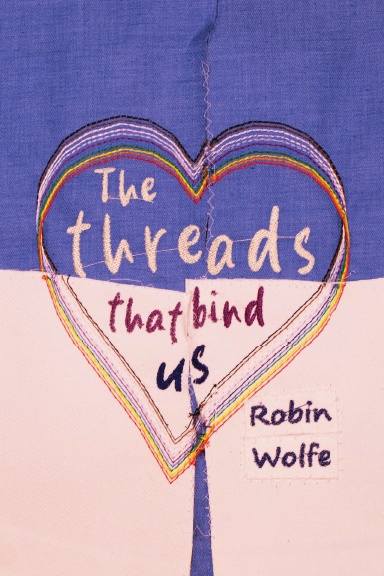
                The Threads That Bind Us by Robin Wolfe. Image is an embroidered heart on two colours of fabric that divide the cover vertically with an uneven seam going down the middle. The heart is embroidered with multiple threads forming a rainbow.

                Rachel: I was blown away by Robin Wolfe’s new book, The Threads That Bind Us, and immediately contacted them to ask if they’d be willing to talk about it for our readers. Graciously, they accepted, so thank you for joining us today, Robin!

                Can you tell our readers a little bit about the process? What is the book, and how did it come to be?

                Robin: The most honest answer to “what is this book and how did it come to be” is that this book is my embodiment of community, and it came to be because I’m a nonbinary queer who struggled with finding community. 

                I’ve always been too much: too out for my very anti-queer area when I was growing up, too bi (biphobia from both sides of the aisle is very real), too woman-perceived for the leather community in my city, then too disabled for in-person queer community. And yet I kept looking, because I ached to belong. 

                About two years ago, I was lucky enough to stumble across a weekly online leather night. The host, a leather historian who works with the Carter/Johnson Library and Collection (the CJLC is a US-based library dedicated to preserving 2SLGBTQ+ and leather history), assured me I would be welcome and this wasn’t a men-only space. That first night I realized that I’d found the community I’d been seeking for decades. 

                And they found me, too. They quickly realized I was a skilled leatherworker and textile artist, and they ensured that Vi Johnson, who runs the CJLC, knew all about me. About half a year later, I was asked to be one of the CJLC Artists in Residence for 2025. The plan was for me to do a project to increase leather accessibility by making custom leather for four disabled people and then creating a how-to book for leatherworkers. (As a disabled person myself, the inaccessibility of leather is a constant source of frustration. It crushes me when people come to me for custom leather and they’ve been turned away unnecessarily by other leatherworkers.) 

                In March 2025 I realized that with the literal erasure happening in the US and elsewhere, there could be no project more important to me than recording our lives. Accessibility in leather would have to wait.

                So with nine months remaining, I made a new plan: find 10 or so 2SLGBTQ+ and/or leather people who were willing to share their memories with me (kept in their own words). Do the editing and transcription required to be able to use their stories. Create an original embroidery for each story, inspired by their story. Photograph the embroideries and turn them into illustrations. Finally, turn the whole thing into a fully accessible ePub and a print book… 

                …and do all of that in less than nine months (before my artist year ends). Never let it be said that I lack ambition. I figured, “I used to be a small-press publisher and fiction author; I have the skills. It’ll be fine.”

                (Now imagine me with a thousand-yard stare, because that’s how I looked during much of March through December 2025. The stress was epic.) 

                The book did come out on time though, and I’m so proud of it. This book is community itself; the foreword is by the leather historian who welcomed me, Vi herself donated a story, and the other stories are from eleven people who chose to gift me with their honesty, vulnerability, and courage. Yes, I created the art, did a lot of back-end work, and designed and formatted the book. But without the gifts of my collaborators, there would have been no art and no book to make. This was co-created by all of us.

                Rachel: In the introduction, you situate your work in the context of political textile art, including Chilean arpilleros, the AIDS Memorial Quilt, and the use of quilts by enslaved people to escape to freedom. Why is textile art so often the voice of the unheard?

                Robin: With regards to the art, it had to be embroidery. Embroidery was and is seen as “women’s work” in many cultures, which meant women weren’t policed about doing it. This led to many women in awful situations – enslaved, indentured, locked up in prisons and asylums – using embroidery to record their experiences and share information with each other in coded ways. With this project, I added my own threads to the global community that used (and uses) this art form to resist oppressors for centuries.

                I used to hand-embroider but my joints can no longer handle it, so I taught myself to do digital art, digitize them into machine embroidery instructions, and then have a machine do it. (For the curious: it took about 15-25 hours per illustration, and I included an Appendix in the book with step-by-step instructions of my process.)   

                Rachel: How did you collect the stories? 

                Robin: I started out with an online Call for Submissions. Then I started posting online events titled, “LGBTQ people, come tell me your stories.” The Zooms ended up going on for hours. I’d curl up and  sob afterward, both in gratitude—these complete strangers trusted me with their memories!—and with emotional exhaustion. Creating a safe space for people to share their stories took a lot, especially for an introvert like me. They told me so many things; I even had two people come out for the very first time in those Zooms. (Those stories are not in the book. They both decided afterward they weren’t ready to share their life with the world yet. I respect their wishes, and am still honored that I got to be the first to validate their truth and welcome them to the community.)

                Rachel: This almost feels like an oral history (and in some cases was, with the interviews conducted on Zoom). Can you tell us a little about the responsibilities and considerations involved when collecting these stories?

                Robin: There’s a lot of stress involved with a project like this. I’m literally carrying people’s memories. They’ve given me part of what makes them, them, and I need to do it justice. It needs to be kept in their own words. But it also needs to be edited for readability and to avoid the book being deemed pornography. (Young people desperately need access to supportive media too, so I wanted it available to an audience of mid-teens and older.) 

                So I had to decide on all my rules early on. Would I edit for grammar and word choice? (No.) Punctuation? (Yes.) Obscene words and slurs? (Censor them with stars, if egregious.) How much sex is okay? (Brief references are fine, but no in-depth descriptions.) When using a Zoom transcript, is it okay to remove side chats that had nothing to do with the narrative? (Yes. Nobody wants to read three pages of us commiserating about the pain of Payless Shoes closing.) Can I adjust for flow, because when people are talking they jump around non-chronologically and keep returning to earlier bits to add previously forgotten details? (Yes. Cut-and-paste entire sentences and paragraphs, moving them elsewhere in the story to ensure it’s reasonably chronological. Send it to the person afterward for review and possible further editing by them if they want.)

                Rachel: The use of embroidery as an art form signals, to me, incredible care for these individuals and communities—the sheer effort it takes to create each piece, as you describe at the end of the book, elevates each memory, no matter how small, to the level of art. Are these extraordinary people, or do we all have the extraordinary within us? Who are some of the people who shared their memories?

                Robin: Before starting this project, I believed everyone had an interesting story in them. During this project, I realized I hadn’t gone far enough; the truth is that every “everyday person” contains the extraordinary. Perhaps that’s a young trans person finding a way to hold their true identity close – with their new name written in created symbols that only they can interpret – until it’s safe to share it when they escape in the future. Or a teen who spent his days offering comfort, validation, and love to men dying of AIDS. Or people who heal enough from religious trauma and conversion camps to live authentic lives. All of those experiences are within the book, and so much more. When I was given these stories, many made me cry. Many made me smile. Most made me do both.

                If I learned one thing about my community during this process, it’s that we are survivors. We are courageous and so very determined. We cannot be erased, and we cannot be destroyed. This community is stronger than anyone can imagine. This book is my love letter to all of us. 

                Rachel: I am begging readers to check out The Threads That Bind Us.Where can they find it (and you, if you want to be found)?

                Robin: All profits from the book (both the accessible ePub version and the print version) are being donated to the CJLC. If people wish to purchase the book, direct links can be found at https://robinwolfe.com/store.html . I avoid social media these days, but readers can email me through the website. 

                I’m currently collecting memories for the second/final volume of this project, so if you are 2SLGBTQ+ and wish to donate your story, please reach out. I can’t use every memory in the book, but those that I can’t use are still sent to the CJLC, where they are made available to researchers and visitors.
                Behind The Screens: Tuesday Author Interview

                Every Tuesday, get to know a bit about the stories behind the books you love, and discover your next favourite novel.

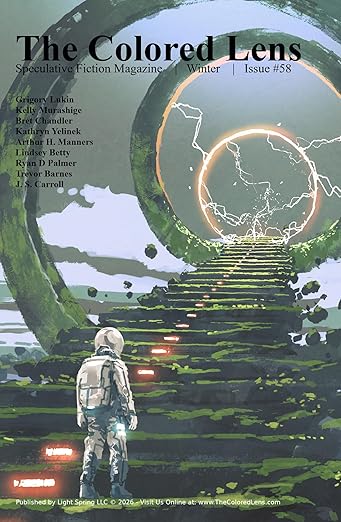
                The cover of The Colored Lens, featuring an astronaut at the bottom of a set of moss-covered stairs with glowing lights, walking towards a glowing circle beneath mossy circles.

                Rachel: I’m a huge fan of Jordan S. Carroll’s nonfiction, so it’s super exciting to see him venture into fiction as well. Especially because it’s about pro wrestling, which is inherently hilarious to me. Please tell our readers about it!

                J.S: My short story “Romeo Popinjay vs. Iron Hans in the Beauty and the Beast Match You Won’t Want to Miss” is a fantasy narrative about a professional wrestling promotion in an early modern world where some of humankind’s ancestors or cousins have evolved in alternate directions. It’s also a bit of a buddy comedy about a big hairy wrestling savant teaming up with a vain heel who prefers to go it alone. 

                Rachel: I need it. What inspired you to write this story?

                J.S: I’d been reading books about the evolution of human cognition by authors such as Gary Tomlinson and Merlin Donald, and they led me to imagine a hominin species evolving more-than-human powers of imitation and rehearsal or “mimetic skill” instead of developing symbolic thought.

                Originally it was going to be a folk horror story in which some wildmen of the forest who’ve been forced to do repetitive manual labor join in solidarity with humans to start a peasant revolt. But then I thought about the time I saw Mojo the monkey fight at an SOS Pro Wrestling show here in Tacoma. He was amazing. That’s when I realized that my wildmen would make really good pro wrestlers.

                Rachel: Is there a visual image—a painting or a photo—that inspired you?

                J.S: For Iron Hans, I was really inspired by videos of George “The Animal” Steele gnawing on turnbuckle pads. Romeo Popinjay’s wrestling persona draws on performances by Gorgeous George, the pretty boy wrestler who audiences loved to hate. I tried to find YouTube clips of many of the moves I wrote about. I watched a lot of Wrestling with Wregret. Other inspirations included Scott Beekman’s Ringside: A History of Professional Wrestling in America and Josephine Riesman’s Ringmaster: Vince McMahon and the Unmaking of America.

                Rachel: Ringmaster in particular has been on my TBR list forever, having heard her interviewed on a number of podcasts. But anyway. Why do you write? What drives you?

                J.S: Writing is a way for me to make sense of things. Plus it’s fun to have a good excuse to read and think about a lot of topics that I would not have otherwise considered.

                Rachel: What’s the secret to editing?

                J.S: I read things out loud to myself—even nonfiction. I also spend an inordinate amount of time cutting prepositions.

                Rachel: So far I’ve enjoyed everything that you’ve come out with (and I suspect our readers will too). What’s next for you?

                J.S: I’m writing a novel titled Fellow Creatures. It’s a gothic picaresque adventure about a shapeshifting ghoul. He’s bouncing around a world that recalls 17th century Europe, but all the wars of religion are fought over the best method of preserving the dead to ensure that they can be resurrected intact on judgement day. Needless to say, being a cannibal makes his life difficult. I don’t want to give away much more, but the title is a phrase often used by religious radicals such as the Diggers and the Ranters around the time of the English Civil War.

                You can find “Romeo Popinjay vs. Iron Hans in the Beauty and the Beast Match You Won’t Want to Miss” here. I post about new publications and projects here.

                Behind the Screens: Tuesday Author Interview

                Every Tuesday, get to know a bit about the stories behind the books you love, and discover your next favourite novel.

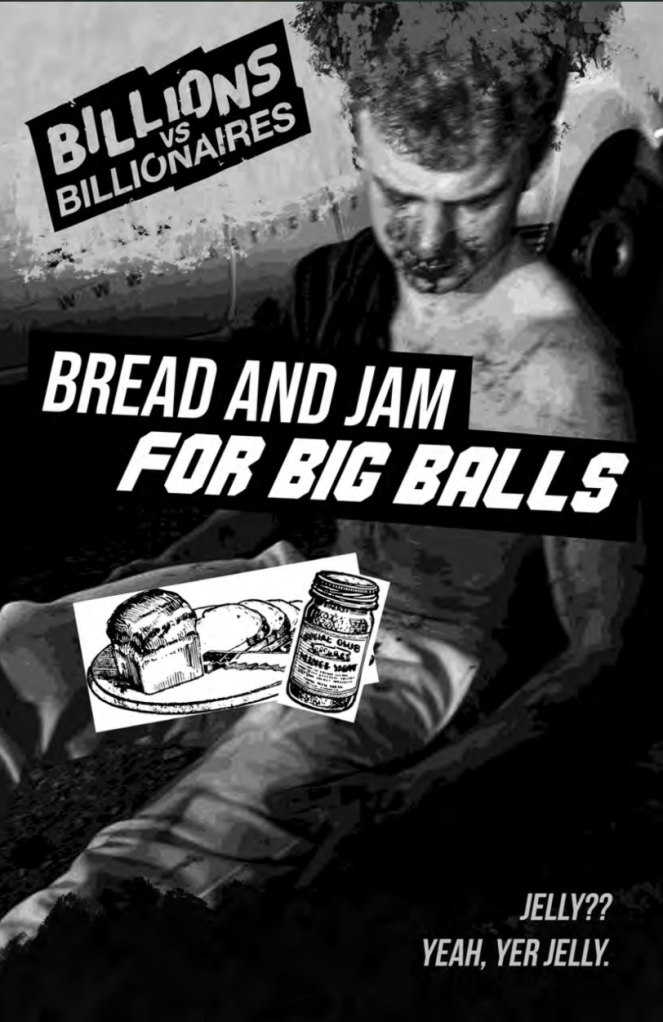
                Billions vs. Billionaires: Bread and Jam for Big Balls. Depicts a black-and-white image of a beaten big balls with bread and jam collaged over it.

                Rachel: Nick Mamatas and I go way back on the internet, but it was only last summer that we finally met in real life. He was launching the first issue of a new zine, Billions Vs. Billionaires, which is so my jam it’s not even funny (unlike the zine, which is hilarious). The second issue is out now, and Nick is here to talk about it!

                Tell us a little bit about the project. Why use a zine to fight back against the fascist billionaire class?

                Nick: Well, there are forces at work. Forces inspired by DOGE and the weird nerds who enthusiastically signed up as Elon Musk’s anti-spending budget-cutting squad. While DOGE actually didn’t cut much out of the federal budget despite expansive claims about millions of dead people on Social Security rolls etc, plenty of damage was done. USAid for example, was all but destroyed–all the good stuff the program did was cut, but the imperial interventions (spying, funding dirty little wars etc.) were just integrated into the State Department without the public-facing vaccination programs or cultural programs.

                The idea, from a former acquaintance of Musk, was to try to make Elon seem less cool to the sort of very online audience that he had cultivated. And the acquaintance had a little bit of money. So zines via itch.io, YouTube shorts, RPGs, bumper stickers and badges to be handed out at science fiction cons and the like.

                Rachel: I remain big sad that I didn’t get one of the badges at Worldcon. 

                So even for a zine, there’s a ton of formal experimentation in Billions Vs. Billionaires, from a fold-out one-page RPG to…math questions??? (Dear readers, I promise they will make you wish you paid more attention to math in high school.) Did you seek this out, or did it happen organically?

                Nick: Surely seeking something out is organic! We use our spongy brains to do things. But we basically wanted multiscale meme warfare, so any bundle of ideas is good.

                Rachel: What can we expect to see in the second issue? Is there anything that really stood out for you?

                Nick: The infographic! A little two-page play (but with three actors, so a role for an entire polycule!), a story by Rich Larson, who is a very successful short story writer (which is why nobody has ever heard of him).

                Rachel: I’m clearly one of the cool kids, having hung out with Rich Larson on several occasions. He’s rad af.

                Whenever I go to zine fairs, I’m impressed that there are more, and more sophisticated zines, than there were even before social media and print-on-demand made the photocopier less of an influential technology. What’s the state of the zine publishing scene?

                Nick: Print is back, baby. The algorithm, and the five big social media platforms that are all just screenshots of the other four, have ruined online, so people are returning to print, and with the graphic design skills people learned online.

                Rachel: I’m here for it. 

                Given the level of surveillance and repression of speech in the US, were you and/or other American contributors worried about putting this out?

                Nick: We had a brief conversation about even using the word “antifa” in the zine, and we always ask if contributors wish to be pseudonymous. We also recommend people print out the zines in such a way that printer-identification marks can’t be used to trace where the zine was printed. But thankfully, as Musk himself once said, “comedy is legal.”

                Rachel: What’s next for Billions Vs. Billionaires, and where can we find you/more of your work?

                Nick: At least two more volumes of the zine:
                COMMUNIQUES FROM THE GRIMES LIBERATION FRONT

                And

                ENTER…THE KILLIONAIRE K-HOLE.

                And if anyone wants to produce the play “Grimes and Elon In..Roko’s Basilisk!” from our new zine BREAD AND JAM FOR BIG BALLS  and put it online as a tiktok or reel or short or or or or…drop me a line!

                Find Billions Vs. Billionaires on itch.io!

                Behind the Screens: Tuesday Author Interview

                Every Tuesday, get to know a bit about the stories behind the books you love, and discover your next favourite novel.

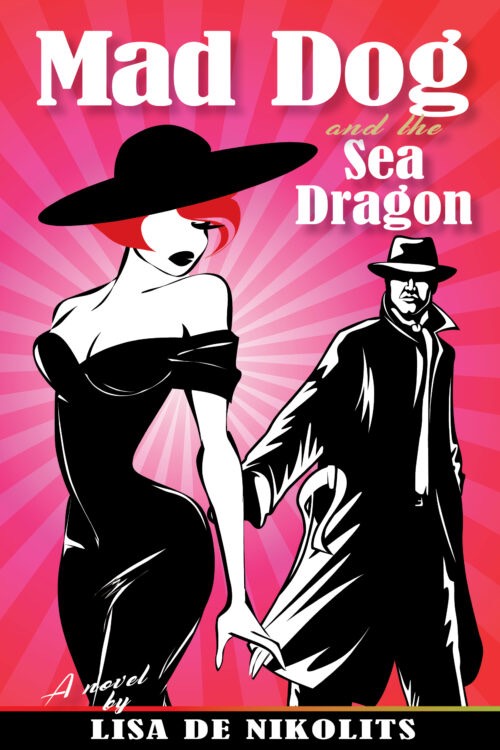
                Mad Dog and the Sea Dragon by Lisa De Nikolits. A femme fatale type with red hair and a hat stands in front of a guy with a fedora and a trenchcoat.

                Zilla: From Blade Runner to The Expanse, Maltese Falcon to The Brick, noir has delighted audiences—not to mention readers. Lisa de Nikolits offers us her own take on the genre with a modern tale. Lisa, can you tell us about Mad Dog and the Sea Dragon?

                Lisa: Mad Dog and the Sea Dragon is a modern-day noir caper with gangster villains of old and a glamorous kick-ass heroine. Murder, drug running, organized crime and danger, this book has it all, in a hard-boiled satirical style laced with dark humor. 

                Zilla: Is there a visual image—a painting or a photo—that inspired you? 

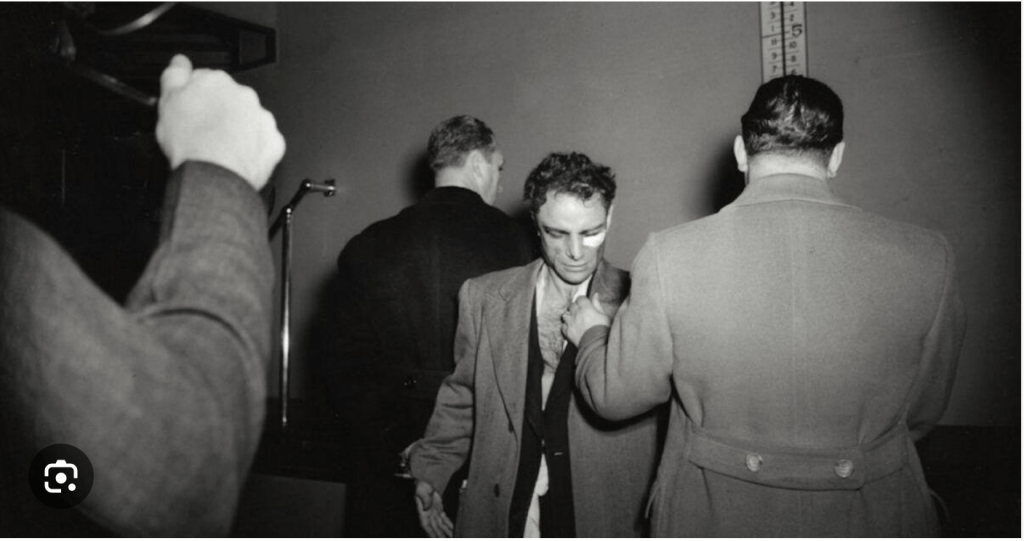
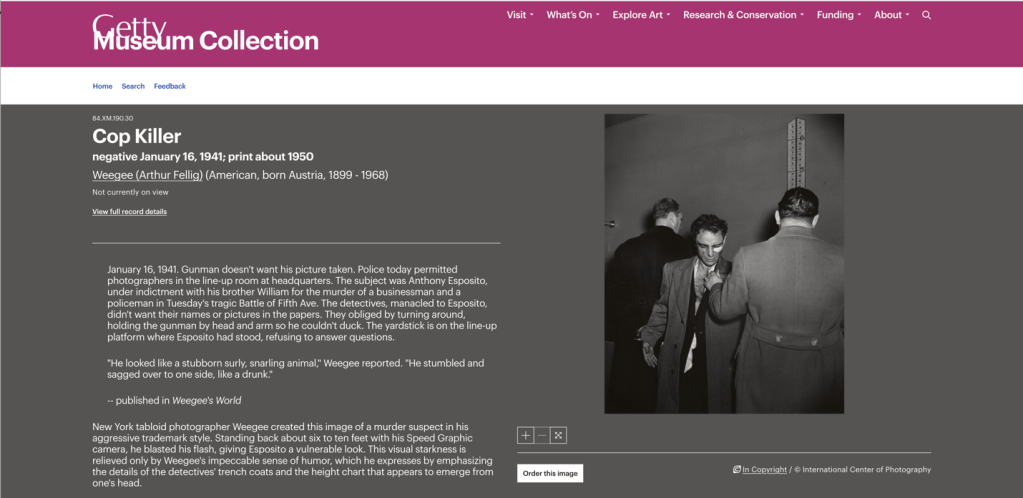
                Lisa: An exhibit by Arthur Fellig featured a pic of Mad Dog Esposito. I immediately crushed on Mad Dog Esposito; his dishevelled sexiness, his moral anarchy, his casual, oversized trench coat, the torn shirt and ripped jacket revealing a manly chest with the right amount of chest hair, his handsome features completing his poster boy persona for a complete disregard for civilized life. 

                A picture of, well, a pic of Mad Dog Esposito with dishevelled sexiness, his moral anarchy, his casual, oversized trench coat, the torn shirt and ripped jacket revealing a manly chest with the right amount of chest hair.
                A screen shot from the Getty Museum Collection website, featuring the same photo.

                Zilla: If your characters met you, what would they say to you? 

                Lisa: Fascinating! In 15 years of interviews I’ve never been asked this! 

                JESSICA AND DONATELLA: CHAPTER 33

                Donatella leads Jessica through a maze of dimly lit, thickly carpeted corridors. Jessica reflects that it wasn’t just the living room that looked like an African safari had taken root in the Swiss Alps, it was the whole house. The corridor smelled musty and odd, like cloves mixed with rotting carpets and mildew. Lisa rounds the corner and bumps into them. 

                DONATELLA

                What you doing here, bitch? You gotta lotta nerve.

                JESSICA

                Yeah Lisa, what are you doing here? 

                LISA

                Talk about a warm welcome. I wanted to know if you guys were happy with the way I wrote you.

                DONATELLA

                (laughs sarcastically)

                You want our blessing? Bad timing, honey. But in general yeah, you did an okay job. But you coulda been kinda about the nose candy. I think you fell into a bucket of hyperbole. 

                JESSICA

                Ignore her, Lisa. I’m happy too. I started out a bit spineless but I got my groove on. But couldn’t you have figured out something else for Daisy? 

                LISA

                (chagrined)

                I tried. I really did. I’m sorry.

                DONATELLA

                Yeah hug it out bitches, then Lisa, make like a magician and vanish. 

                Zilla:Is your work more plot-driven or character-driven? Or a secret, third thing?

                Lisa: It’s a secret third thing! Imagine a kaleidoscope made up of a thousand different puzzle pieces, and those puzzle pieces are scenes from aquariums, movies, books, people I see on the subway, art galleries, overheard conversations, dreams (nightmares) of my own, late-night TV true crime documentaries at 2 am when I can’t sleep. And then I reach down into my heart and pull out a wish list of a book I’d love to have written. And then I set out to write it, and I spin the kaleidoscope until it makes sense – sense to me anyway, and then I pretend I’m on one of those reality TV shows where only one person makes it to the top of Mount Everest and I tell myself that I’m that person and then I write the book and nothing else exists until it’s finished. 

                Zilla: What’s your next writing project?

                Lisa: In the Interests of Transparency, a novella, That Time I Killed You (coming in May 2026). “A story of iced cakes and malice, this compulsively readable novel about ordinary people doing very bad things will captivate you from the first page to the last.”

                Zilla: Thanks for sharing your story and your process. We’re looking forward to reading! Where can the Night Beats community find you and your book?

                Lisa: You can find me on Facebook and Instagram, or on my website. You can get my book on Amazon.

                Behind the Screens: Tuesday Author Interview

                Every Tuesday, get to know a bit about the stories behind the books you love, and discover your next favourite novel.

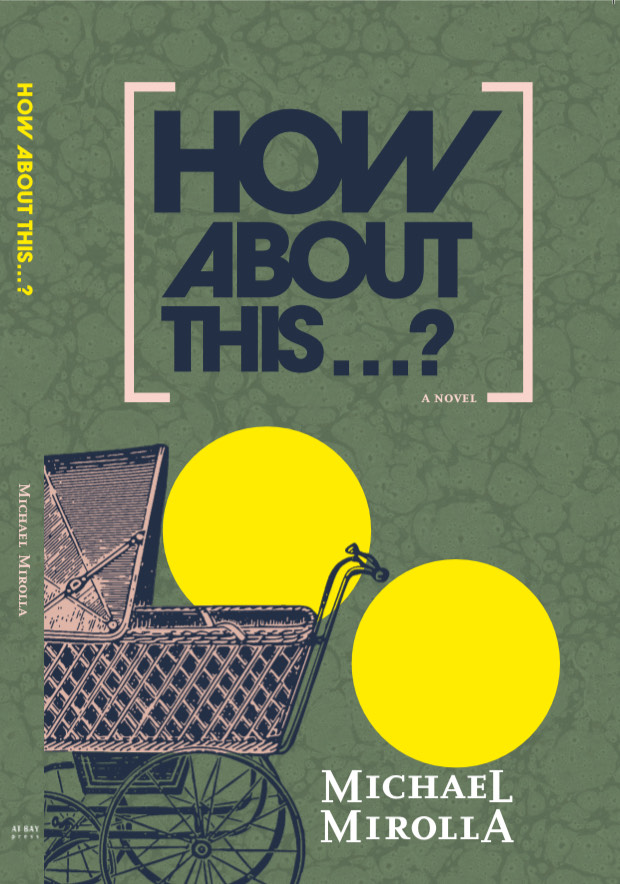
                How About This...: A Novel by Michael Mirolla. Shows a baby carriage on a green background with two large yellow dots.

                Rachel: With us today to talk about his latest book is Michael Mirolla! Michael, how about telling us about How About This…?

                Michael: It’s a little after the middle of the 21st century. Loving couple Elspeth and Marybeth are both shocked and excited when a stroller with identical twins is left on their back deck with a recorded message that warns them not to try to return the babies or they could face arrest for kidnapping. Using false starts, footnotes, direct approaches to the reader, lists, questions about who the author(s) might be, and even a dose of self-criticism, the story unwinds from that point as El and Mar work hard to create a family under the circumstances. This becomes even more difficult when they discover the babies come with unusual features that perhaps might explain why they were left in the first place. And it all takes place in a disintegrating world that may leave humans incapable of telling their own stories.

                Rachel: What inspired you to write this book?

                Michael: I have an overriding theme that runs through most of my writing – and that’s the fluid, shapeshifting and very difficult to nail down nature of human identity. Another interest that runs through the majority of my work is the metafictional aspect of writing, the connection between the word and the outside world, the ability of fiction to create its own worlds. There is a good deal of this in How About This …? – as described in the blurb for the novel. In places, the authors (supposedly a collective of some kind) speak directly to the reader; in others, they explain situations through footnotes; at the end of the novel, a critic lashes out at the authors for what he feels are lacunae in their writing.

                Rachel: In metafiction and experimental writing, characters often have direct interaction with their writers. What would yours say to you?

                Michael: If my characters met me, they would at first have trouble recognizing me as the author who put them down on paper. That’s because my own life (bland and undramatic) has been nothing like that I’ve laid out for my characters. What would they say to me: “Aren’t you supposed to write what you know? You know love, marriage, children, grandchildren, family gatherings and even a touch of farm life. So what are you doing writing about characters who cut off their leg in order to replace a one-legged news vendor? How can you describe a character who spends his time recreating a Mussolini clone in order to shoot him? Who gave you the right to write about an institutionalized janitor who is found with computer files describing a philosophy professor’s surreal trip to Berlin?”

                Rachel: Who is your favourite fictional character someone else wrote? And why?

                Michael: Josef K. (Franz Kafka’s Der Prozess The Trial). The story of a man who suddenly finds himself on trial, accused of some vague crime that could very well end up being the criminal act of being alive and conscious. Simply the guilt of being human. For me, it comes across as the finest, truest representation of the 20th century’s existential dilemma ever put on paper. And combining absurdism with dystopia in a way that foresaw many of the horrors of what took place later in the 20th century and continuing into the 21st.

                Rachel: It’s hard to top Kafka for anything. But who is your favourite character you’ve written, and why?

                Michael: I have a character named Giulio who has appeared in a string of my writings, starting with The Formal Logic of Emotion short story collection, the novel Berlin, and still going strong in my as-yet-to-be published magnum opus The Second Law of Thermodynamics. In The Giulio Metaphysics III, the character appears in each of the stories while at the same time not being recognizable as the same character other than his name. A protean character, in other words, lacking any form of so-called essential identity. As well, in The Giulio Metaphysics, the relationship between writer (creator) and character is explored. In the first half, Giulio is forced to do his creator’s bidding; in the second half, Giulio breaks away from his creator – only to find himself completely lost and unable to even remember his name, let alone where he is or why he does what he does.

                Rachel: How much research did you need to do for your book?

                Michael: For How About This …? the majority of my research had to do with the nature of intersex persons (twins) and their relationships both between themselves and with the world around them.

                Rachel: Well, this sounds up our alley. Tell us where the Night Beats community can find you and find your work!

                Behind the Screens: Tuesday Author Interview

                Every Tuesday, get to know a bit about the stories behind the books you love, and discover your next favourite novel.

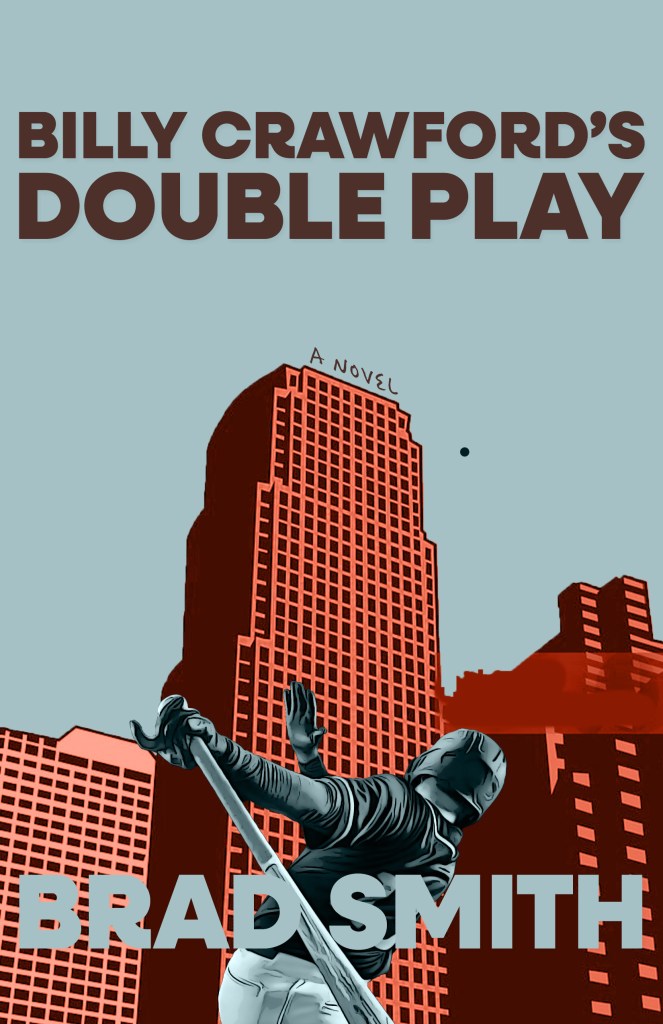
                Billy Crawford's Double Play by Brad Smith. Features a man hitting a baseball into a skyline of condos.

                Rachel: With us today to talk about his latest novel is Brad Smith. Brad, tell us a little about your book!

                  Brad: Billy Crawford’s Double Play is a comedic look at the world of baseball, politics and that confounding thing called life. 

                  Rachel: What inspired you to write this book?

                  Brad: As an avid baseball fan I’ve always intended to write a book about the game. And, as a political junkie, I have always enjoyed writing about that fascinating, maddening, complicated world. With the Greenbelt issue being so contentious in Ontario these days – I thought, why not combine the two?

                  Rachel: You may have landed on the blog of two authors with very strong Greenbelt opinions! If you could meet your characters, what would you say to them?

                  Brad: I would tell Billy Crawford to stay back on the ball and drive it to the opposite field and I would ask Carroll Miller to stop being a deceitful weasel!

                  Rachel: If your characters met you, what would they say?

                  Brad: They would both advise me to mind my own damn business.

                  Rachel: Who is your favourite fictional character someone else wrote? And why?

                  Brad: It varies from day to day but right now it’s Mack from Steinbeck’s very funny novella Cannery Row. Mack is a vagrant – sly, charming, manipulative, big-hearted – a real character who manages to be at once as honest as the day is long, and as crooked as a dog’s hind leg. 

                  Rachel: What about from the characters you’ve written?

                  Brad: Nate Cooper from The Return Of Kid Cooper. Nate is a man of contradictions – not entirely law-abiding, yet not a criminal. He has humour, integrity and loyalty.  He’s a man of the old west, trying to find his way in the “modern” world, circa 1910, while at the same time balking at what he is constantly being told is “progress”.

                  Rachel: Is your work more plot-driven or character-driven?

                  Brad: Tricky question. I would have to say a combination of both. A good plot doesn’t travel far without well-drawn characters and visa versa. What begins in Billy Crawford as a tale about a standard city mayoral election is turned on its ear by the introduction of a cast of characters, all of whom have very different motivations.

                  Rachel: What’s your next writing project?

                  Brad: I’m working on a book set in Moose Jaw in the 1920’s, when that small prairie city was known as “Little Chicago”. It deals – in part – with the decades-old rumours that the notorious Al Capone spent time there during that period. 

                  Rachel: Sounds very cool! Tell us where the Night Beats community can find you and find your work!

                  www.bradsmithbooks.com

                  Facebook

                  Instagram

                  Behind the Screens: Tuesday Author Interview

                  Every Tuesday, get to know a bit about the stories behind the books you love, and discover your next favourite novel.

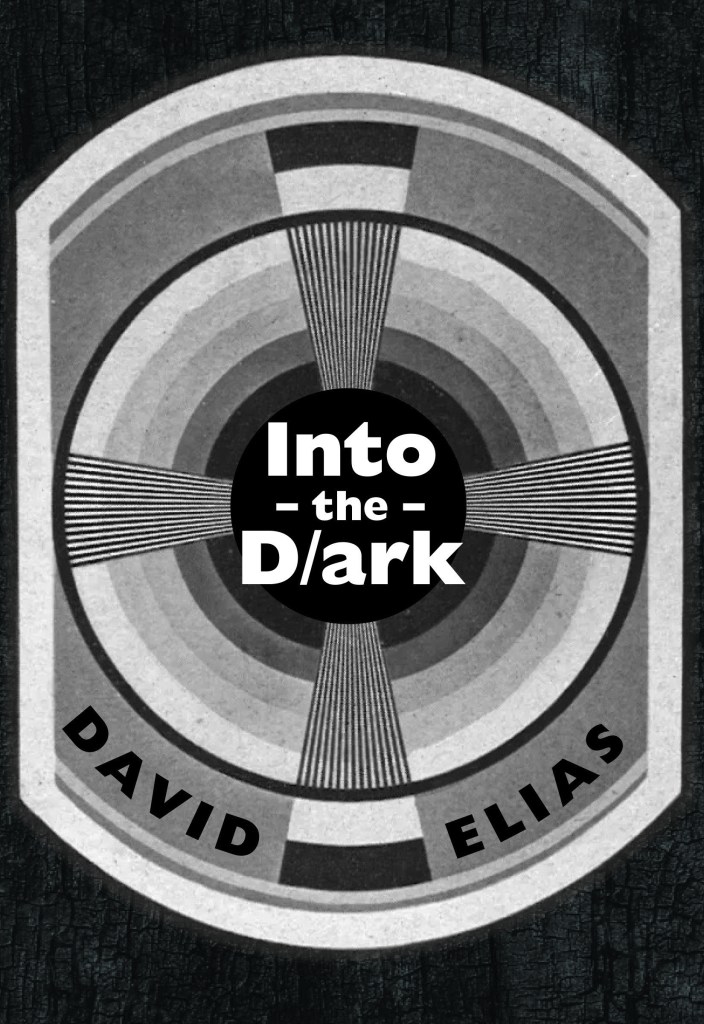
                  Into the D/ark by David Elias. Black and white image, looks like a test pattern from an old TV.

                  Rachel: With us today to talk about his book Into the D/ark is David Elias! David, can you tell us a little about the book?

                  David: Rose Martens struggles with the aftermath of a terrible fire that has left her sons, Jake and Isaac, horribly disfigured.  The boys have gone to live in an abandoned house they’ve named Bachelor’s Paradise, where they spend all their time watching American network television. Their father Clarence works day and night in his blacksmith shop, producing bizarre metallic creations no one can make any sense of.  Martha Wiebe returns to the stifling conformity of the valley to discover that her brother Abe, a preacher, has abandoned his congregation to devote himself to the construction of “The Ark”, a massive and mysterious edifice whose purpose he will not divulge.  When the first major snowstorm of the year roars into the valley, it unleashes a chain of bizarre events that the valley may never recover from.

                  Rachel: What inspired you to write this book?

                  David: I was a kid living on a farm in the Pembina Valley of southern Manitoba when American network television started to invade the folk society I’d been born into.  Before I knew it, I was sitting down in front of a primitive black and white TV to watch Liberace and Cassius Clay ham it up together on the Ed Sullivan Show.  Then, up in the big city (Winnipeg) Marshall McLuhan started talking about the medium as the message, and right about that time Walter Kronkite appeared on the screen, took off his glasses, and announced to the world that the future we thought we were headed for had just gone up in smoke (from a rifle fired out of the Texas Schoolbook Depository).  This book came out of that time and place.  

                  Rachel: If your characters met you, what would they say to you?

                  David: They might say something like: “It’s not as though we aren’t grateful for this opportunity, David, but did you conjure us up just to put us through all this misery?  What did we do to deserve being saddled with so much trouble and strife?  It wouldn’t kill you to lighten up a bit.

                  Rachel: I feel like that’s a lot of our characters. Who is your favourite character you’ve written, and why?

                  David: Of all the characters I’ve created, Martha Wiebe is probably my favorite.  I’ve written about her in a number of other books, and she makes another appearance in this one.  She keeps popping up in my work because I like her style – a combination of grace and candour, combined with a vast and complex “inner bigness”.

                  Rachel: Is your work more plot-driven or character-driven? Or a secret, third thing?

                  David: While a lot of my work is probably more character-driven than plot-driven, both of them often have to take a back seat to the kind of writing that I would characterize as “idea-driven” – a deep dive into the finer intricacies of the human condition.

                  Rachel: That does sound intriguing! Where can our readers find the book?

                  David: From Radiant Press, or wherever books are sold!

                  Behind the Screens: Tuesday Author Interview

                  Every Tuesday, get to know a bit about the stories behind the books you love, and discover your next favourite novel.

                  The Haunting of Modesto O'Brien: A Novel by Brit Griffin. The illustration shows two back to back figures in cowboy hats. In between them is what looks like a red flame and the silhouette of a cowboy on a horse.


                  Rachel: Joining us today is Brit Griffin to talk about her novel, the Haunting of Modesto O’Brien! Brit, tell us about your work!

                  Brit: A gothic tale from deep within the boreal forest…

                  Violence and greed have intruded into a wild and remote land. It’s 1907, and silver fever has drawn thousands of men into a fledgling mining camp in the heart of the wilderness. Modesto O’Brien, fortune-teller and detective, is there too – but he isn’t looking for riches. He’s seeking revenge.

                  O’Brien soon finds himself entangled with the mysterious Nail sisters, Lucy and Lily. On the run from their past and headed for trouble, Lily turns to O’Brien when Lucy goes missing. But what should have been a straightforward case of kidnapping pulls O’Brien into a world of ancient myths, magic, and male violence.

                  As he searches for Lucy, O’Brien fears that dark forces are emerging from the ravaged landscape. Mesmerized by a nightmarish creature stalking the wilderness, and haunted by his past, O’Brien struggles to maintain his grip on reality as he faces hard choices about loyalty, sacrifice, and revenge.

                  Rachel: The only thing cooler than a gothic is an eco-gothic. What inspired you to write this book?

                  Brit: The witnessing of a schoolyard act of violence – it stayed with me, bothered at me, kept me thinking about violence, spectacle, and the ability to stand up to bullies. To be able to finally work through/around this event in The Haunting of Modesto O’Brien was a relief and gave form and structure to something that had been troubling and ever present, but also somewhat hard to decipher in terms of its impact. 

                  Rachel: Is there a visual image—a painting or a photo—that inspired you?

                  Brit: Yes, it is a series of three photographs of a team of horses, unsettling and powerful. I first saw them as part of the Thomas Wilfred Foster collection (shared by the photographer’s grandson, John Weatherburn). Foster was a young photographer working during an early 20th century silver boom, and he managed to foreground the very creatures that provided the horsepower to drive this propulsive economic and cultural event. The labour that horses provided – pulling loads, carriages, sleighs- was usually rendered invisible, insignificant, but for some reason Foster saw the horses. The three images capture their story of hard labour, suffering and loss. When I engaged with the photos I also found myself stepping into that time and place – and it was there that I found Modesto O’Brien, my main character. So it was with that dapple-grey horse that the story began to stir.

                  Rachel: We all have influences—what are some of yours?

                  Brit: I really like the characters of Paul and Martha Cable from Last Stand at Sable River. It is one of Elmore Leonard’s early westerns. I like their mutual trust and respect- like too the way Paul Cable thinks, creating scenarios in his mind and working his way through them; his absolute confidence and comfort in his own skin, the solid way he confronts the ‘villain’; his absolute confidence in Martha’s strength. I think in these two characters Leonard created an ideal thoughtful and heroic pair. 

                  Rachel: If you weren’t a writer, what do you think you’d do instead?

                  Brit: Think now I might want to hang out more with creatures, study wildlife rehabilitation or something to understand how to be more helpful, maybe be a goat herder.

                  Rachel: I too often prefer goats to people. But in the meantime, what’s your next writing project?

                  Brit: I’m just starting to sketch out a novel/novella about changelings, the unknown, and sins against nature. I’ve already met some of the characters and am getting interested in their story. 

                  Rachel: I suspect our readers will be as intrigued about your work as I am! Where can we find it?

                  Brit: The Haunting of Modesto O’Brien is available through Latitude 46 Publishing.

                  You can follow me at: