Behind the Screens: Tuesday Author Interview

Every Tuesday, get to know a bit about the stories behind the books you love, and discover your next favourite novel.
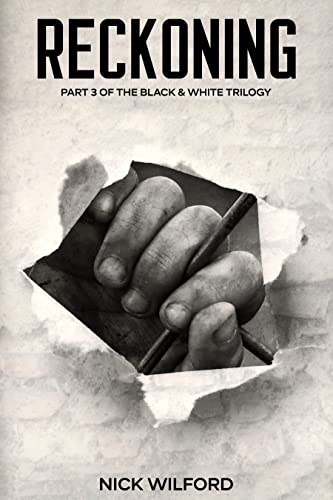
Sabitha:  Pulkit Khanna joins us today to talk about his novel The Other Side of it. Pulkit, can you introduce us to your book?

Pulkit: A hundred-year-old bridge connects an isolated village of Punjab to the rest of the world & the villagers have lived their entire lives without finding the need to walk on to the other side. But there are always some people whose idea of a life well lived is non conformity. Two such little boys, Jeet and Sabr, embark on a journey to find what lies on the other side of the bridge, and in their quest to find the unknown, they discover some secrets about the villagers that not many knew of. Thus begins a story of love, loss, friendship, belief and most of all—hope.

Sabitha: That’s a fascinating premise for a novel. Which of those characters do you relate to the most and why?

Pulkit: I relate to the boy ‘Sabr’. He’s a little boy who is full of emotions but can also be very mature when the situation requires him to. He believes that kindness is the most important virtue; knowing when to stop being kind is important too.

Sabitha: What was your favourite thing to write in the book?

Pulkit: The ending was my favourite thing to write in the book. I had multiple endings planned but I wanted to leave the readers with the perfect aftertaste. I wanted to blur the line between the last page of the book and their real life that lied on the other side of it.

Sabitha: What advice would you give to someone who’s writing or querying?

Pulkit: There’s a story about a pottery teacher who splits her class into two groups. The first group is tasked with making a single, perfect pot. The other group is tasked with making as many unique pots as possible. At the end, even though the first group had pooled their resources and spent all their time researching, the second group had the best pot. This is because, at the end of the day, your first pot is always going to suck. So, keep writing. Write a dozen stories, a hundred stories, a thousand stories. Eventually, one of them will be a winner.

Sabitha: That’s such a motivational way to think about writing. Has being published changed your feelings about writing?

Pulkit:  As a writer, self-doubt is something that always stays with you. But after I got published, people started talking about my characters like they were real people. It was the kind of acceptance that I was looking for. It was like they gave life to my characters.

Sabitha: What do you most want your readers to take away from reading your book?

Pulkit: Life isn’t easy, grief is omnipresent, and things will almost never go as you want them to. I want them to know that you have to just hold on and just keep on trying. Hold on to hope, hold on to the people that love you, and most importantly hold on to yourself. Eventually, one day, you will most definitely move to the other side of it. And you’ll know it was all worth it.

Sabitha: Thanks for sharing your writing motivation and your story. We’re looking forward to reading! Where can the Night Beats community find you and your book?

Pulkit: You can buy the book on Amazon. You can find me on my website, Twitter and Instagram (@pulkitkhanna30 & @moonlightissunshinetoo).

The Music of Cascade

I didn’t set out to do it, but music is woven through Cascade like a spell. From Lucy’s opera to Ian’s fiddle, music is the backdrop of my characters’ lives—and of my own writing process.

I went from always listening to music when I wrote, to never listening to it, to a particular ritual during the pandemic where most of my drafting happened while listening to The Friday Night Parkdale Special. (At least the ending of Cascade was written to Motown, Tipper Gore’s Filthy 15, and hair metal. FNPS—and I— contain musical multitudes.) 

But there’s also the songs that I listen to when I’m imagining my world and my characters and the soundtrack to their story, and those are the songs I’m going to talk about in this post. I’ve put the whole playlist on Spotify, but I’ll share some highlights below.

Continue reading

Last-minute Cascade pre-order promotion

Do you want weird mail from a weird author? Pre-order the ebook edition of Cascade before June 15 and you too can have something strange show up in your snail mailbox. Just DM Rachel on Instagram or the Night Beats Twitter with the receipt (and your favourite astrological sign—doesn’t need to be yours), and we’ll send you a personalized postcard by Rachel and stickers from After Hours in Toronto.

Get Cascade from your favourite online bookstore here!

The ebook version of Cascade sitting on the paperback version of Cascade, surrounded by fairy lights and various swag and objects.

Behind the Screens: Tuesday Author Interview

Every Tuesday, get to know a bit about the stories behind the books you love, and discover your next favourite novel.

The Magic Circle cover

Sabitha: This Tuesday we’re talking fantasy—we’re talking to Barry Ryerson about The Magic Circle. Barry, tell us a bit about your book!

Barry: The Magic Circle is set over a hundred years in our future and forty years after the world fired most of its nuclear arsenal at each other. In this time, countries that survived have been rebuilding and, in an attempt to prevent such a war ever happening again, major superpowers signed the World Peace Accords. This prevents the superpowers from having contact with each other, on the premise that if they never even speak, they’ll never need to fight.

In this backdrop we meet three strangers. Bethany Roberts is an 18 year old art student in Paris. She’s fun, quirky, and utterly hopeless with guys. Wikus de Klerk is a South African programmer who is old enough to remember the bombs falling. And Yevgeny Arafyev works for the Russian Church as a spy, secretly crossing borders in order to recruit or kill those like him.

Because, since those bombs went off, magic has returned to Earth.

Not everyone has magic. In fact, it’s very rare and most people don’t know it exists. Bethany discovers it when she tries to flirt. Yevgeny had it as a child and uses it on his missions. Wikus is aware of it, and is desperate to have that power himself.

Yet powers outside their understanding threaten all life on Earth. How will they use this power?

Sabitha: What inspired you to write this book?

Barry: I’ve long loved fantasy and sci-fi, but very rarely do you get anything that truly blends the two. I’ve been wanting to read a book like this for years and so, now, I’ve made one. True magic and guns.

Sabitha: I love that—when you can’t find what you want to read, you write it yourself! What was your favourite thing to write in the book?

Barry: Midway through there is a battle scene where we see the fight unfold from each of the main character’s perspectives. I really enjoyed that, as it builds and shows the limits of what the characters know in a tense environment.

Sabitha: Your cast sounds really fun. Which character do you relate to the most and why?

Barry: I’d say Bethany. She’s creative, very self-conscious, and is trying to find her way in the world. Being half-Jamaican, she’s often seen as half-Jamaican by Europeans, but half-Scottish by Jamaicans. I’m half-Irish myself and feel that, too. She also has an innocence that gradually gets rubbed away throughout the book.

Sabitha: How did you choose the title?

Barry:  I love double entendres and The Magic Circle means so many things. A group of stage magicians. The core group that Bethany joins. The linking of magic-users. The meaning develops and changes as the book progresses.

Sabitha: If you could pick any author to read your book, who would you want to read it? Why them?

Barry: Brent Weeks! His Lightbringer series was hugely inspirational for me on this book.

Sabitha: We love when genres collide, and we’re looking forward to reading. Where can the Night Beats community find you and your book?

Barry: You can buy the book on Amazon or get signed copies from my website (shipped from UK but worldwide shipping available). You can follow me on Twitter and Instagram.

Behind the Screens: Tuesday Author Interview

Every Tuesday, get to know a bit about the stories behind the books you love, and discover your next favourite novel.

The cover of Dear Isobel

Sabitha: We’re delighted to have Jinny Alexander here to talk to us about her book, Dear Isobel. Jinny, can you introduce us to your book?

Jinny: Dear Isobel recounts the aftermath of an affair, told by the ‘other woman’, who remains unnamed throughout the book. She’s biased, grieving, sad, and angry, and, as one reviewer put it: “utterly, continuously self-absorbed”. She is also real, honest, and raw. I deliberately left her unnamed, because so many people experience infidelity, and Dear Isobel is almost certainly telling the story of someone you know! 

Sabitha: What inspired you to write this book?

Jinny: I began writing Dear Isobel about ten years ago when Ireland was in the depths of recession. I had just lost my own job and was grieving the loss of the work I loved, as were people all over the country. A friend had recently emigrated to Australia and I’d bought her pottery equipment from her when she left. I threw myself into learning to make ceramics to distract myself from having no job – that part of Dear Isobel is shamelessly stolen from my own story. Meanwhile, I began to write again too – something I always wanted to do but hadn’t had time for. Ireland was bored with the gloom of the recession so I found myself thinking of other reasons a business would end abruptly. Meanwhile, a friend was having a fling with a work colleague, so I put the two together – the loss of a job and infidelity, and there was Dear Isobel.

Sabitha:  I love that you pulled aspects of your own life into the story—it makes characters so much more real, and in my opinion, relatable. So which character do you relate to the most and why?

Jinny: I know people who have been in the same situation as all four of my main characters, and I have some insight into all their circumstances. I found I had a lot of sympathy for the narrator, despite her afore-mentioned, self-centred brow-beating. I’ve learned just how common infidelity is, and how easy it is to be in the position Charles and the narrator get into. Weirdly, I don’t feel as sorry for Isobel as I probably should, but when I do a sequel from her POV, this may change! Then there’s James… In real life, I know a couple of men who are like James, and they are kind, gentle, loving people who have acted very much as he does in the book. I really admire the James’s of the world.

Sabitha: What was your favourite thing to write in the book?

Jinny: There is a line that still reverberates around my head – I think it’s because I accidentally wrote it in perfect Iambic rhythm – but it also sums up the entire story and the narrator’s obsession with Charles: [Do] thoughts of me still linger in the ashes of his dreams?

Sabitha: Thanks for such a personal story. We’re looking forward to reading! Where can the Night Beats community find you and your book?

Jinny: Dear Isobel is available here, as are some of the short story anthologies I am featured in. You can find me on Twitter, Instagram, Facebook, or via my website.