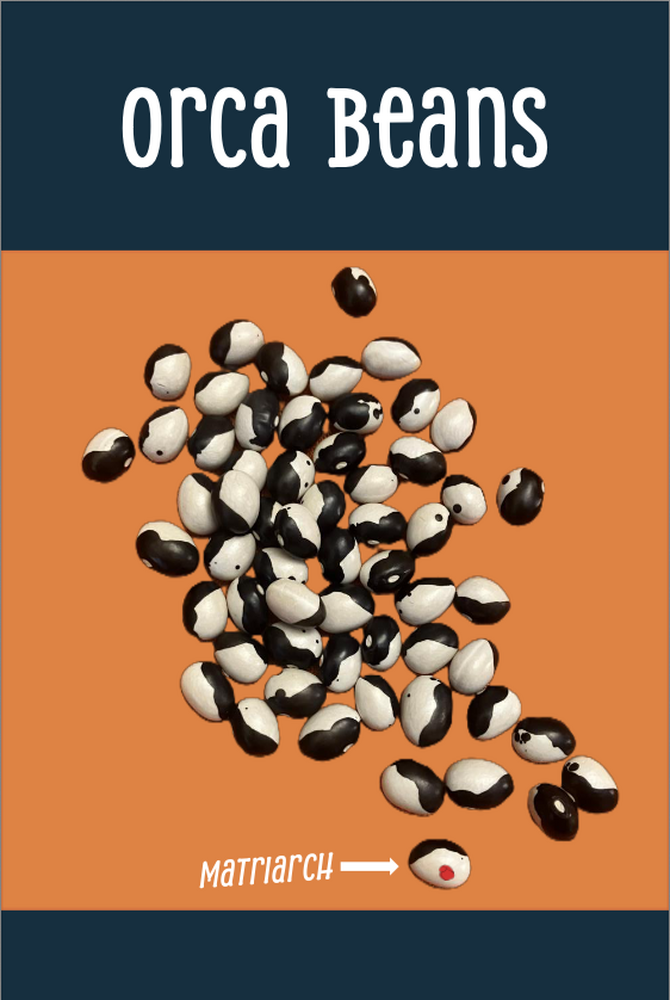
Can’t get enough orcas sinking yachts? Why not play Julian Gunn new game, Pod, inspired by Rachel’s short story, “What If We Kissed While Sinking a Billionaire’s Yacht?” It’s designed to be played with orca beans but can be played with any counters.
Can’t get enough orcas sinking yachts? Why not play Julian Gunn new game, Pod, inspired by Rachel’s short story, “What If We Kissed While Sinking a Billionaire’s Yacht?” It’s designed to be played with orca beans but can be played with any counters.
Every year, we here at Night Beats make resolutions that we absolutely intend to keep and are not, in fact, breaking right now. This year, in 2026, we will definitely, absolutely, pinkie-promise…
Finish editing my sci-fi novel Abysm and see about publishing it… Also finish a WIP curio novelette (tentative title: Parenthesis)… Start a new novel (tentative title: Warbuyers) which will be immoderately bonkers and take ages to write… — Dale Stromberg
I will finish this damn draft! — Rachel Corsini
After I have finished this trilogy—with the exhausted triumph of a general putting down an enemy army—I will write something shorter, like a nice novella. — Rachel A. Rosen
My new year’s resolution is the same every year: I resolve to make fewer new year’s resolutions. — Zilla Novikov
I never make one, but I resolve to make one next year. — Tucker Lieberman
Every Tuesday, get to know a bit about the stories behind the books you love, and discover your next favourite novel.

Zilla: Emotions run high at music shows, and anything can happen—which makes a touring band the perfect setting for David Kummer’s horror novel The Band. David, it’s great to have you back! Can you tell us about your latest book?
David: While my last two bestselling novels were part of a series, my newest book, The Band, is a new and exciting novel about a cover band touring in Appalachia. The novel is from one character’s point of view, Aidan, who follows the band as their sound guy. He’s in love with Kate, the lead singer, and when they all stay in Oakville for a week, they run into sinister and mysterious danger. To make matters worse, they brought their own with them.
Zilla: What inspired you to write this book?
David: I got the initial inspiration for this book after my wife and I took a trip to West Virginia. We explored the New River Gorge and one of the small towns nearby. This adventure and these places inspired me to write this story with a touring cover band and all the secret, dangerous history they carry with them.
Zilla: Aidan, Kate, and Johnny each sound like fascinating characters. If you could meet them, what would you say to them?
David: I would love to meet the characters, because they’re one of the best cover bands anyone has ever seen. I love concerts, and it would be a lot of fun. I’d probably just ask them about the tour. And how they’re still alive!
Zilla: And what would they ask you?
David: Probably, “Why did you try to kill us off?”
Zilla: Hah! So would you say that your books are character-driven stories, then?
David: My books are driven by both plot and characters. While tons of crazy stuff happens in The Band with a thrilling and unpredictable plot, the characters are the best part, and they’ll likely stick with you. I always wanted to focus on my writing style for this book and try to mimic some of my favorite authors who write such beautiful prose, especially Denis Johnson and other minimalist authors like him.
Zilla: What’s your next writing project?
David: My next writing project is to finish The House on the Hill trilogy! The first two novels have been bestsellers, and I’m super excited to finish working on The Empty Room, coming this October.
Zilla: Thanks for sharing your story and your process. We’re looking forward to reading! Where can the Night Beats community find you and your book?
David: I’ve got a blog where I review lots of horror movies (and other types), as well as active social media pages on Facebook and Twitter. You can find me at davidkummer.com or check out my books on Amazon or Goodreads.
We asked the Night Beats crew about their favourite fictional toxic romances and of course, they were very normal about it.
Rachel A. Rosen: The love triangle between Captain Ahab, Starbuck, and a whale to whom human beings really have no business ascribing motive or malice. It’s clear from the start that Ahab cares much more about Moby Dick than his wife and kids, and the same goes for Starbuck and Ahab, and Moby Dick is just trying to live his best life. Of course the whole thing was always going to end in tears.
Dale Stromberg: My favourite literary toxic romance (stretching the definition of “romance” but indubitably “toxic”) has got to be the uncannily ill-defined situationship that develops between Valerie and Ly in Ryszard Merey’s novella Read and Then Burn This. This book aims not to shock but to disturb: to lead you past the easy ethical decisions and into the grey and blurry borderlands that lie between them—then abandon you to wander there, wondering, “Is this… is this okay? Wait, is this… really okay?”

Nicole Northwood: THAT WAS MY SUGGESTION TOO.
Zilla Novikov: My favourite literary toxic romance is between me and my TBR. I keep buying it expensive gifts (more books) and all it does is shame me (for buying books faster than I can read them).
Every Tuesday, get to know a bit about the stories behind the books you love, and discover your next favourite novel.
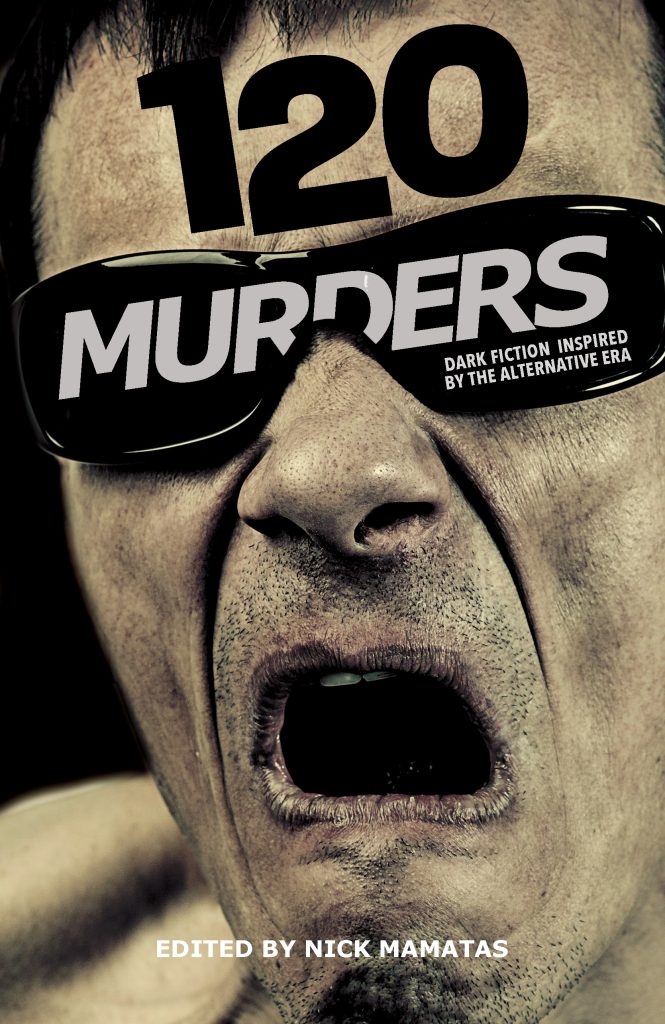
Rachel: Nick Mamatas is a fantastic author and a longtime friend, and every time he puts out a new book, I know I’m going to love it. This one is no exception, and I’m thrilled that he’s here to tell you about it. Nick, please tell us about yourself and 120 Murders.
Nick: I’m Nick Mamatas, an author and editor. My most recent editorial work is the editing of the anthology 120 Murders: Dark Fiction Inspired by the Alternative Era. I asked top writers of noir, gothic, and horror fiction to write a story inspired somehow by the songs played on college radio and “alternative” music video programming blocks, and, boy howdy, did they!
It’ll be published by a new independent press, Ruadán (pronounced ROO-ah-dawn) Books, which focuses on all manner of dark speculative fiction.
120 Murders includes brand new stories by William Boyle, Selena Chambers, Jeff Chon, Libby Cudmore, Jeffrey Ford, Meg Gardiner, Todd Grimson, Cara Hoffman, Maxim Jakubowski, Alex Jennings, Cyan Katz, Josh Malerman, Michael Marano, Silvia Moreno-Garcia, Zandra Renwick, Jason Ridler, Veronica Schoanes, Elena Mauli Shapiro, Brian Francis Slattery, Molly Tanzer, Chris L. Terry, and Paul Tremblay, as well as little notes about their musical tastes.
Rachel: One of the hazards of growing older is that delusion that the pop music you listened to when you were 17 was truly the best pop music ever produced by humanity. For GenX, of course, that is objectively true. In Ghosts Of My Life, Mark Fisher talks about the material conditions that led to post-punk, and how they no longer exist to produce music with the same originality and emotional resonance. Is there something about the alternative era that lends itself particularly well to horror, dark fantasy, and noir?
Nick: There might be some biases built into that conception. I remember when Don’t Tell a Soul came out; most Replacements fans I knew thought something along the lines of “What the hell is this?!” and now that album is a classic, I guess. Do people still listen to Helium? I suspect not. I just tried and almost made it through “Superball.” Yow!
But I do agree; the 80s and 90s were the last time when rents and rehearsal space were cheap enough, but recording equipment expensive enough, that bands would write and play out and perfect their sounds, and then be discovered and signed. The incubation period for songwriting has been drastically shortened thanks to self-releasing, and labels for lack of something to spend their capital on so focus on brand development over band development, and high-priced producers and songwriters/punch-up artists that flatten sounds and eliminate lyricism. You can’t mass produce “It’s so easy to laugh, it’s so easy to hate/ It takes strength to be gentle and kind.” It doesn’t rhyme!
Deeper lyrics tend to be darker. Analog production tends to sound dirtier. Reagan, Thatcher, and Kohl, those great annihilators of society, gave everyone plenty to write about. Now everyone’s a Reaganite—1980s Reagan in economics and queerphobia, 1960s Reagan in racism. One can hardly even object to it anymore; what’s a ruin when it’s your cradle?
Rachel: Horrifying, though I am relieved it’s not just because I’m old. What was your process for assembling the collection? Did any authors have to fight it out for a particular song?
Nick: I asked the writers whose short stories I like, and begged some famous friends whose short stories I like, to lend me their names and then went hunting for money. For the most part, everyone wanted something different to riff off of, though for a moment there 120 Murders looked like it might have ended up 120 Murmurs–an R.E.M. tribute.
I was also quietly open to query letters, which, back in the old days, every anthologist was. The SATization of submissions by editors, who claim to be interested in new voices, mean that many anthologists don’t entertain query letters, which I think is a huge mistake. Slush piles are an extremely inefficient way to find new voices, but they do serve to make editors objects of respect and fear among hundreds of hopeful submitters, which is often rather the point of launching some anthology or magazine project. You get prominent writers to love you by giving them money, and would-be writers to fear you by holding forth on social media about how writers aren’t following submission guidelines or are otherwise being bad boys (almost always boys, of course).
One might say that querying serves as an in politic, as someone needs to know how to write an effective business letter, but that’s a skill one can master in an afternoon. Others suggest that it serves as a barrier against writers who are shy or lack confidence. I’ll say that several people tweeted/commented to me, publicly, to ask when/if/why wouldn’t I open to slush submissions. Anyone nervy enough to ask an anthologist to quintuple his workload, and to attempt a bit of public shaming while they’re at it, is certainly brave enough to just write and privately send a normal query letter.
Three of the stories in the final book were query acceptances, and a fourth was the author’s fiction debut. Cyan Katz was a student in an online workshop I ran and I was impressed enough with their work, which was wild and raw and had a very “punk” feel, that I solicited them for a story and worked to get it into great shape. Other authors generally needed light edits, or some rewrites, or were given a second chance after the first story wasn’t great.
Rachel: With BookTok and niche online communities, the many genre markets are increasingly segmented, and trend-chasing publishers seem to be leaning towards cozy, hopeful stories. What were some of your motivations and challenges when pushing back against these trends?
Nick: I’m very skeptical of the cozy trend, though every subgenre and movement has its virtuosos and its hacks. The top three percent of anything is going to be great. I do think there are two trends—plenty of cozy and hopeful, but also a lot of dark stuff. Barnes & Noble here in the US has a horror section again, major publishers have relaunched horror lines for the first time in thirty years, and neo-noir is pretty huge. There may even be a cozy story in 120 Murders, though the author and I disagree about how cozy it is. I think any story with a closetful of desiccated corpses is pretty dark.
In crime fiction, there’s been a microtrend toward anthologies in tribute to this or that musical artist. I even have a story in one, Lawyers, Guns, and Money, which is obviously a Warren Zevon tribute. Some of the book themes are a little shakier, honestly. I thought a broad musical range—all of college radio and alternative—and a thematic range of noir, science fiction, crime, and gothic—would make more sense, or would at the very least put a bullet in the head of the trend.
Rachel: I would never ask you to pick favourites, but are there any particular images or moments from any of the stories that live rent-free in your head? What are they?
Nick: Bunches! I’ll list a few. One of the stories begins with its author contemplating being solicited for the story she is writing and the reader is reading. My name is in it, so of course I love it. We have queer cyborgs who actually do queer things on the page, alleyways full of broken glass sparkling under the streetlamps, a big pile of sloppy joe mix plopped atop a cardboard chore wheel (ew!), poor Jeffrey Ford writing about a very Jeffrey Ford-type guy being shot in the head for being annoying (Jeff, no!) a horrific historical scene of butchery and cannibalism, and much much more.
Rachel: Cara Hoffman’s author’s note references “collective loneliness,” and “art from garbage and lack,” concepts that as a cynical Gen Xer immediately resonated with me. What does this era of music—and the stories inspired by it—tell us about our struggles today?
Nick: There’s a weird social media trend in which Gen X people describe themselves as feral and tough because they were latchkey kids and roamed the streets freely and had to get up and walk across the room to change the TV channel. It’s extremely tedious, if you ask me, and obviously just whistling past a graveyard.
But art from garbage and lack is totally it. The internet is dead; this interview may well be the only non-AI tainted thing a reader may come across today, and even then they’ll likely just find it via links you and I post to our social media accounts. Does anyone just stop by any website anymore to see what’s up? Amazon Prime Day, maybe! Ugh. So we are back to where we were in 1992—photocopy machines (many books are print-on-demand, that’s just big photocopying!) and homebrew movies (albeit with phones and not VHS camcorders) and singing over beats. If the Sisters of Mercy had Doktor Avalanche (the first Dr was a Boss DR55 drum machine that could produce all of four sounds) and toastmasters and MCs had the first twenty seconds of a vinyl track to work with in the 1980s and 1990s, well, so do we. The struggle is going to be to find our humanity between gaps in the algorithm, and as the last people to hit adolescence in an analog world, Gen X and Xennials have something to say and something to share.
Rachel: I’ve already read it, but where do normal readers get a copy? And how do they find you?
Nick: Find me on Bluesky at nmamatas!
On Instagram I mostly post license plates and pizza slices, but there I am concentrateandtryagain. You can get 120 Murders at a nice discount, with a bonus story by me bundled in with your receipt, at the publisher website. I would also highly recommend special ordering a copy from your local independent bookstore, though the book will also be available via the megachains—emphasis on the word chains, if you catch my drift. You don’t want to be chained, do you?
Rachel A Rosen is interviewed by author Dale Stromberg, and talks about the process of designing his cover, her favourite designs, and her spicy opinions on terrible covers. Read it (unpaywalled) here!
Every Tuesday, get to know a bit about the stories behind the books you love, and discover your next favourite novel.

Rachel: I have been quietly freaking out about this book since I read it in manuscript form, and now it’s finally time for you to tell our readers about it. Do so!
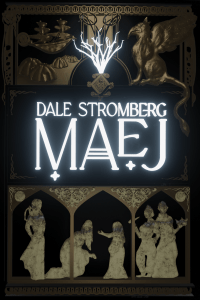
Dale: Mæj is a high fantasy novel that one early reviewer has called “a work of very unapologetic genre fiction that’s equally unapologetic in its intelligence and dedication to doing strange, creative things with language.”
Madenhere sells mæjwerk; Taræntlere sells sex. Both young women have grown up seeing people starved and children kidnapped in their tentslum. When Madenhere learns of an imprisoned hundred-day child, her heart burns to act—but the consequences of freeing the girl will be dire.
Meanwhile, Taræntlere’s molten fury leads her to join a secret insurrection whose implications neither woman is ready to face. Tying everything together is a power older than history which threatens to revolutionize an economy and spark a war—the power of mæj.
Rachel: Many authors depict the idea of matriarchy as something inherently softer and gentler than a patriarchy. You went a very different route. Why?
Dale: First of all, I find it perfectly believable that a given matriarchy could be softer and gentler than a given patriarchy. But I want to emphasise “given”: specific, particular. One problem we face when we imagine alternate worlds is that we, or our readers, can fall into the trap of essentialism: “Because women are all this way, a woman-led society would always work out like this.”
We wouldn’t say the same thing about patriarchy. For example, in the twentieth century, which was dominated politically by men, we saw the coexistence of liberal democracy, fascism, totalitarianism, democratic socialism, Islamic republicanism… as well as kibbutzes, hippie communes, you name it… There were all sorts of ways people were organising human affairs politically. Men were the bosses of the big systems, but those systems didn’t all function the same, and some were arguably softer and gentler than others. There’s no reason to suppose women-led systems would not also differ in this way.
This is the source of my resistance to the notion that, you know, “if we just put women in charge, there’d be no more wars,” et cetera. That sort of thinking is insultingly reductive. But it would be equally simplistic merely to swap the pronouns and portray matriarchy as a perfect mirror of patriarchy. So I wanted to think, not about how “female nature” would dictate political systems, but about how this particular matriarchy would have evolved to operate. Because the world in Mæj is not a world without exploitation.
What matriarchy and patriarchy have in common is the –archy, the rule of some over others. The particular matriarchy I wrote about preserves such hierarchy, such power differentials—and human beings are rarely at our best when given arbitrary power over others. If one group is up, another group will be down, and those with power will display a range of attitudes towards those beneath them, from sympathy and solicitude at one end to supercilious callousness at the other. Sadly, the crueler sort of people tend to be more adroit at manipulating and benefiting from power.
Rachel: Maej features extreme acts of linguistic acrobatics, with language denoting class and caste in a skillful way. How did you design your various dialects?
Dale: Oh, we could get nerdy with this one… I’ll try to rein myself in.
Before I wrote this novel, for years I nursed the notion of “my fantasy novel”, a book I would someday write. I love the language of Shakespeare and decided beforehand that, when I wrote my fantasy novel, I was going to throw in everything I liked, so “thee” and “thou” had to go in.
The Hwoamish language is a mashup of Tudor English with various other dialects, including traces of characteristics of Japanese (which I happen to speak) such as sentence-ending interjectory particles and rhyming four-word aphorisms which are meant as homages to four-character idiomatic compounds found in Chinese and Japanese. Also, I live in Malaysia and hear so-called “Manglish” on a daily basis, so bits and pieces of that went in as well.
As for using language to denote characters’ classes and backgrounds, I think life in Malaysia has greatly influenced me. In addition to English, people here speak Malay, Canto, Tamil, Hokkien, Hakka, Mandarin… all to varying degrees, and I don’t think there’s a single language common to everybody in the nation. Characteristics from one language will ooze into another, but there is still a mélange of linguistic difference which links people to a multiplicity of backgrounds.
I think of things like this, and I also think of an Irish guy I once knew, from Belfast; every time he met another person from Belfast, he’d listen to them speak for a moment, then declare (generally with great accuracy) which neighbourhood they had grown up in. This fascinated me as a U.S.-born person because I speak a dialect of English that spans time zones, lacking such geographical specificity. So I am intensely interested in focusing in on such things. If we maintain an awareness of what our voices and words say about our biographies, we can craft dialogue for individual characters which hints at such histories and differences.
Other made-up languages in Mæj are mostly translated into contemporary English, but when I wanted to show a few lines of untranslated Ennish, for example, I’d take an English sentence, reorder the words to Japanese grammatical order, then have fun with spelling and diacritics.
Yes, “fun with spelling and diacritics”. Freak flag: flying.
Rachel: As the cover designer, I was of course struck by the visuals—the art, architecture, and fashion of your invented world. Did you have a strong sense of the aesthetics when you started writing, or did that come later?
Dale: It came gradually as I drafted the manuscript. Before starting a new scene, I would do “pre-production” work, including lots of image searches for clothing, buildings, artwork, and so forth. I’d also sketch things out on paper, such as the exterior of West Hospitium or the floor plan of Nighpetal Manse. I stink at drawing, but having a visual helped me discover how I wanted to paint things in words.
I’m also an inveterate word collector, and for Mæj I compiled a list of more than 2,500 words and phrases I just had to use. Many of these were wonderfully evocative of a visual, which helped me fill out my imagery.
Rachel: Maej is highly literary. Is it a challenge to balance the expectations of epic fantasy as a genre with your own proclivities towards literary fiction?
Dale: To be honest, I am rather naïve about genre expectations. When I began working on Mæj, I had no idea how publishing worked. I figured, “You write the kind of book you’d love to read, and then somehow (vague waving of hands) it gets published.” I remained blithely uncognisant of the idea that publishers and ultimately readers would measure the book against genre expectations.
So any such “balance” of expectations and proclivities happened by accident; I wanted magic spells and talking gryphons, and I also wanted Shakespearean dialogue and jawbreaker vocabulary words… and everything else I personally like also got tossed in. Maybe “mishmash” is a better word than “balance” here.
Rachel: This brick of a novel is such a tremendous feat. What are you working on next?
Dale: Shorter works! After wrapping up the bulk of Mæj, which occupied me for (I cringe to say it) about ten years, I sat down and wrote a literary novella titled Gyre in just a couple of months. Now I’m working on a science fiction novella (with bathyscaphes, sea monsters, mind control tech, etc.) which, again, above all else, I hope to keep brief.
Spending a long time slow-cooking a massive novel was, in its way, highly rewarding, but now I’m enjoying the change to a quicker pace of writing. Gyre is about a woman who is born a second time with some knowledge intact from her prior lifetime, and it is currently seeking a publisher. If the Fates smile, in the fulness of time it may see the light of day.
Rachel: Where can readers find you, Maej, and your other work?
Dale: Mæj will be published on 21 October 2024 by tRaum Books. You can preorder the book on Amazon (ebook and paperback) or Bookshop.
The publisher and I are also keen to find people who are willing to receive a free advance review copy (ARC) in exchange for posting an honest review; anybody interested can sign up for that here. I send an infrequent newsletter called The Seldom which you can sign up for on my website. My favourite social media platform is called “email” but I also lurk on Bluesky and Goodreads.
Fiction To Sink Your Teeth Into, a feature normally written by professional chef Rohan O’Duill, has been taken over this month by Rachel A. Rosen, who co-wrote a book about being bad at cooking.
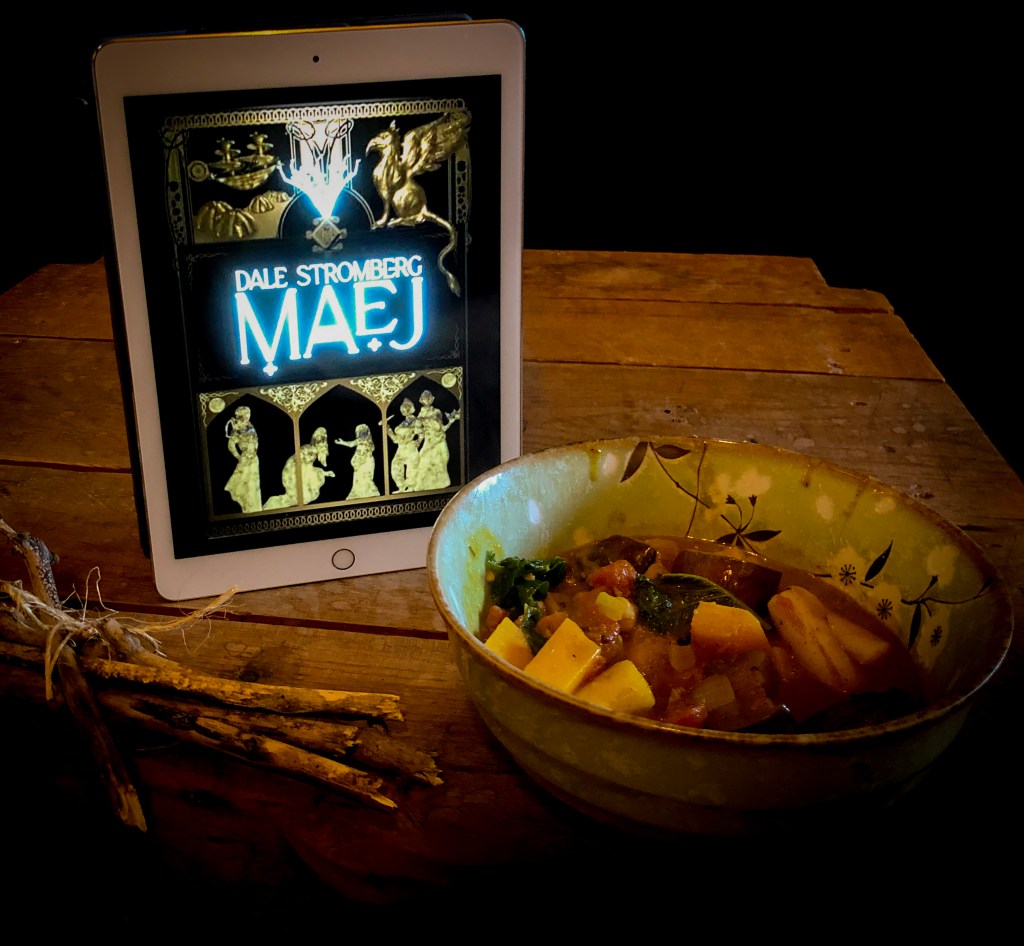
In Dale Stromberg’s Maej, Madenhere and Taræntlere eat meersaw-gossamy, described as a flavourful stew of “squash, aubergine, egg, and garlic.” I asked him for details about what it tastes like, and he told me they were never afraid to throw in chilies, and that “any dairy was rhinocerote milk and eggs are likely peahen eggs.” Lacking access to rhinocerotes and being vegan myself, I created a slightly less ambitious version.
Fiction To Sink Your Teeth Into, a feature normally written by professional chef Rohan O’Duill, has been taken over this month by Rachel A. Rosen, who co-wrote a book about being bad at cooking.
a + e (Seasons Book 1: Spring) by Ryszard Merey is a haunting and luminous tale of doomed queer love and friendship. If you’ve ever had a teenage crush on your best friend, snuck into a club wearing fishnet, or otherwise got your mess splattered over everyone else in your life, this book is for you. In it, Ash seems to subsist entirely off orange Tic Tacs, while Eu eats everything he won’t touch.

Every Tuesday, get to know a bit about the stories behind the books you love, and discover your next favourite novel.

Rachel: I’m obsessed with Zohar Jacobs’ short stories, and every time she publishes one, I have to send the link around to everyone I know and yell at them until they read it. Today, she’s joined us to tell our readers about her work!
Zohar: I write science fiction and slipstream, and so far have had stories published in the Sunday Morning Transport, Small Wonders, Analog and Clarkesworld. I also have a story forthcoming in Asimov’s.
Rachel: I’m always impressed by the religious and cultural questions you address in your writing, whether it’s about the role of religion on a Soviet lunar base or the question of whether a paired intelligence counts as one person or two in a minyan. Religion is such an under-explored concept in sci-fi—what draws you to exploring it?
Zohar: Mostly I’m getting back at Gene Roddenberry for how badly he dealt with religion in Star Trek. Although I’m an agnostic, religion has always been part of my life, and it’s one of the most complex social and intellectual systems that humanity has created. Why assume that we’d leave all that behind? You could actually argue that the feeling of being unmoored by distance from Earth and the scale of the universe might make people turn to religion more.
Rachel: Another theme I see in your writing is the engagement with real-world issues such as the climate crisis or the war in Ukraine? What are the challenges of writing about a future that is so grounded in our present?
Zohar: Oddly I’ve never thought of it as a challenge. I sometimes think that I’m not a very creative person: reality is always where I get my inspiration, because it comes up with much more complex and bizarre scenarios than I ever could. By hewing close to reality, I can expect my readers to bring their own set of rich, independent associations to my work. I guess the challenge is that I can’t predict how people will take my writing – but I’m not sure I could do that anyway.
Rachel: How important is literary voice in science fiction?
Zohar: Many SF readers prefer transparent, pacy prose that doesn’t get in the way of the story: think Andy Weir’s The Martian. So maybe it’s not that important. On the other hand, some of SF’s best writers have been great prose stylists – Ursula le Guin, Samuel R. Delany, M. John Harrison – so it’s clearly no obstacle to success either. Literary voice is important to me, but then I sometimes joke that I’m actually a literary author who just likes spaceships too much.
Rachel: What’s your next writing project?
Zohar: Funnily enough, a literary novel. It feels odd to temporarily step back from the SFF community, but this is a story that I’ve been wanting to tell for nearly 20 years. (It has spaceships too.)
Rachel: Tell us where the Night Beats community can find you and find your work!
Zohar: Apart from the magazines where I’ve been published, you can find me on Twitter @zoharjacobs and BlueSky @zoharjacobs.bsky.social. One of these days I will set up a website but this is not that day yet.
 Night Beats Extended Universe