Another Sad Bastard Cookbook Cover Teaser

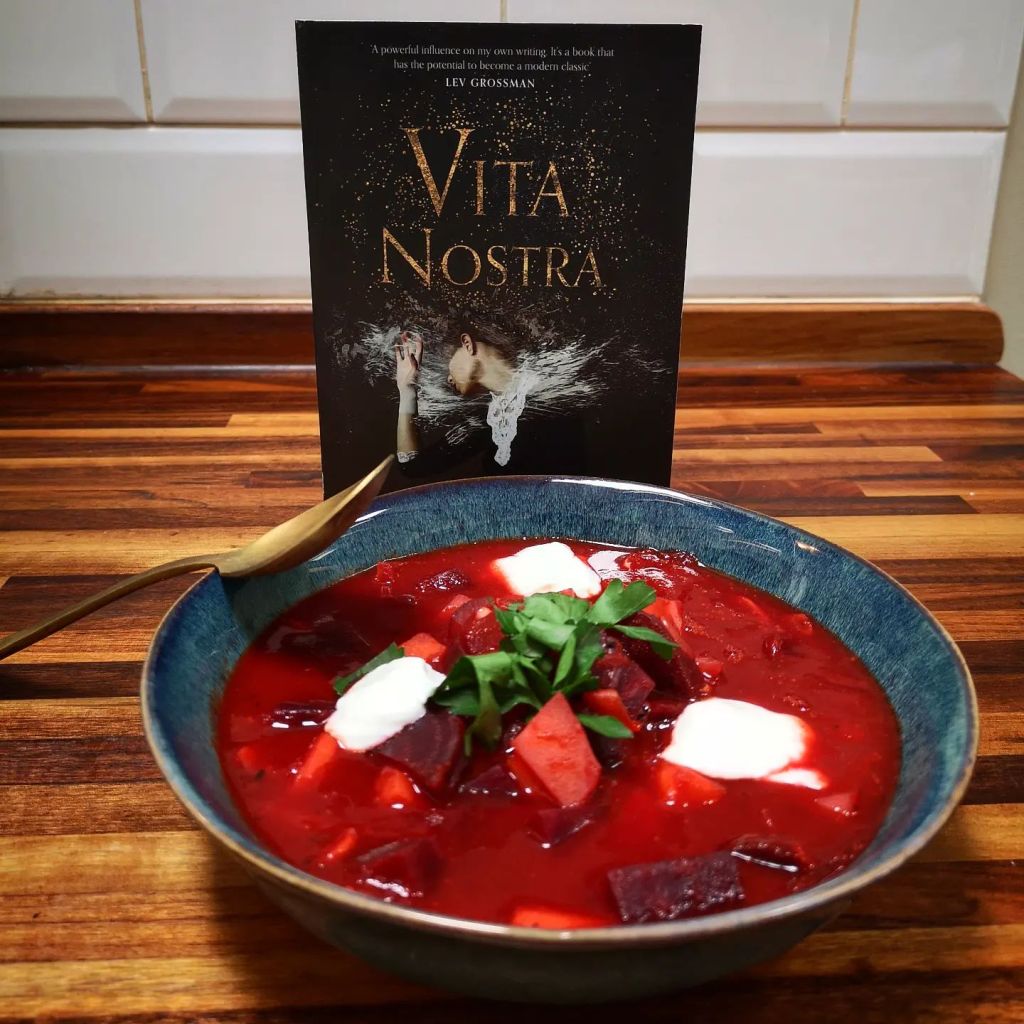
Ever have one of those days? You know you need to cook dinner, but you can’t stop thinking. About the climate apocalypse. About the friend you lost in middle school. About the Eldritch abomination at the bottom of the ocean that neither speaks nor sleeps, only waits. The Sad Bastard Cookbook might help you — at least with dinner.

Sad Bastard Cookbook Cover Teaser 2

Want early access? Sign up to beta test our recipes, or to get a free advance e-book. Plus, stay tuned for Wednesday when we reveal the full cover. Because sometimes one of those days turns into one of those lifetimes. And even sad bastards have to eat.

Joel’s Thai Sweet-Potato Soup

The team at Night Beats Productions is working night and day on The Sad Bastard Cookbook. An essential element of this cookbook is community—sharing recipes and learning new meals. This suggestion from Joel Troster sounded so good that Rohan O’Duill had to make it for himself!

We won’t be including this particular meal in the cookbook—it’s a bit more effort than we personally can manage when we’re in the depths of depression. But it is delicious. So we decided to share the recipe with everyone on this blog. Enjoy!

A bowl of soup
Continue reading

Behind the Screens: Tuesday Author Interview

Every Tuesday, get to know a bit about the stories behind the books you love, and discover your next favourite novel.

The Art of Becoming a Traitor cover

Sabitha: Andrea Bougiouklis, author of the delightfully titled The Art of Becoming a Traitor, joins us to talk about her military thriller novel. Tell us a bit about your book, Andrea!

Andrea: A young woman with a larger-than-life legacy and an incredible sense of self truly believed that what she was doing was right. With all of her being, she thought that she was helping to serve a long-overdue justice.

When Eleri learns that she had been used as a pawn in a larger, evil plot, she has to find it in herself to right her wrongs – even if it means going against everything and everyone she ever loved. The war had been raging since she was a young child, and she had never thought to question it.

When Eleri and her best friend Fyodor discover that their leaders have been doctoring and altering history and are planning to disintegrate an entire population, they realize that they may be the only two who can prevent this atrocity.

In a race against time, power, and their own morals, they can only hope that their willpower and strength are enough to overturn a war that has already begun.

 Sabitha: How do you come up with story ideas? Character ideas? Setting ideas?

Andrea: I don’t think of myself as a very conventional writer, in the sense that there is not one specific way that I come up with story ideas, and most times, it has nothing to do with me conceiving a plot. Oftentimes there is inspiration drawn from anything in my life – whether or not it is other media, world events, personal experiences, or anything else – and this inspiration will lead to a single piece of dialogue, a single scene, or perhaps even a character. I then tend to build around that one concept. I don’t storyboard or pre-determine an outline for what I write. Instead, I just write and see where the story goes on its own. Obviously, when I re-read or revise my work, I fix any plot holes or inconsistencies that I overlooked as I was writing, but in general terms of my process or how I create ideas, there is no real answer!

.Sabitha: That’s a pretty loose process. Do you have any self-imposed writing rules? How do they help
your writing?

Andrea: There was something that I saw a long time ago, I can’t remember where or who to credit for it, but it said that to make your characters come to life, write out five or ten things about them (personality, interests, fears, etc.) and try to never explicitly mention it in your work. It helps to make them seem fuller and more well-rounded and adds dimension to the characters. Beyond that, there isn’t any one thing that I do when I’m writing. As I mentioned before, I do not have a linear or conventional writing style. I like to make themed playlists or sometimes find visual references, especially when worldbuilding, but those only enhance ideas that I already have.

Sabitha: Thanks for sharing your story and your process. We’re looking forward to reading! Where can the Night Beats community find you and your book?

Andrea: You can get my book here, and find out more about me here. You can find me on Twitter and Instagram.

Behind the Screens: Tuesday Author Interview

Every Tuesday, get to know a bit about the stories behind the books you love, and discover your next favourite novel.

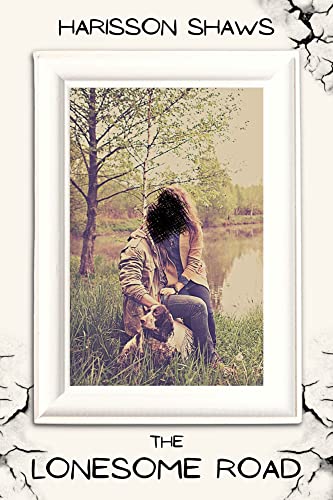
The Lonesome Road Cover

Sabitha: Today we’ll talk to Londoner Harisson Shaws about his debut novel, The Lonesome Road. Henry, can you introduce us to your book?

Harrison: Life as we know is gone. The once vivid city now stands abandoned. Earth became a wasteland, stripped of all life. Broken, confused, and in a desperate search for answers, one person still roams its desolate remains. The Wanderer has no memories, no recollection of the events that led to the end of the world. All he sees are deserted buildings and the smoke that covers the sun. While taking shelter in an abandoned house one night, the last man on Earth gets a knock on his door. He finds an unexpected guide in a woman who feels familiar.

Will he choose to keep traversing these lands, lost as before, or will he take her guidance to find the answers his heart so deeply desires?

Sabitha: Does your book touch on any social issues or topics?

Harrison: The main topics that are sprung throughout The Lonesome Road are mental health, mortality, and morality. In today;s age, it is ridiculous that mental health issues still carry a certain stigma. As someone who suffers from severe depression and anxiety, I felt obligated to write about these certain issues.

People are left in fear of opening up to even those closest to them. Without the ability to share the burden, it burrows even deeper inside of them, rotting their core as they become even more hurt, desperate, and confused. Without a helping hand, we are forced, same as our main protagonist, to wander the world searching for answers that are on the end of a hard and difficult road. To get to them, we are at risk of corrupting the image of the world we hold and the image of our own self, our own worth, and our ideals. With someone who would dare to understand, the world would seem less grim.

There are questions of morality and mortality, what really is evil and what is good, are there such things, or is the world much more complicated, as both are mere matters of perspective?

The book also touches on topics of humanity and moral compass, are we bound to do good within the borders of set norms? If those who are higher do not abide, how can we be judged by someone who has the same or even worse sins than ourselves? One of the final questions that the book tries to ask is the question of destiny and hope. What is destiny, really? If destiny is real, does anything we do really matter? The Wanderer presents a curious take on it, saying that destiny is two points in time, one set and final we can’t affect (our birth) and the other ever-changing (our death). The path in between as we walk determines how our death will be, further saying that the point of life is a good death. But can we really rely on an opinion of a cynical narcissist that is our main protagonist?

Sabitha: What are some interesting facts about you that others might not know?

Harrison: I speak five languages. I spent some time of my childhood in Hamburg, Germany. I started writing at the age of 9, and I still remember parts of that fantasy I created, even though who knows where that notebook I wrote in is. Fitting that after all, I’ve been through, I am here, as a writer, feeling that this is my true calling. Before writing, I spent some time working as a video editor, but my love of writing was bigger than the one for editing.

Sabitha: Thanks for sharing your story and your values. We’re looking forward to reading! Where can the Night Beats community find you and your book?

Harrison: You can find my book here. You can find information about me here, or follow me on Twitter and Instagram.

Night Beats Betas?

We run a feature in our newsletter called Night Beats Betas. Authors submit 500 words of their work in progress, and we respond by cheerleading the parts we love about it. We also offer any suggestions they’ve asked for, whether that’s big picture comments or grammatical edits. And of course we send our comments to the author to approve before anything goes in the newsletter.

Photograph of a person typing on a typewriters.

Our newsletter subscribers love it—they love being exposed to lots of different writers’ work and seeing the writing process. Our authors love it—they get comments from an supportive editor, and we include their socials so they can promote the works to our newsletter subs.

The only thing is, we’re out of things to beta read! We need more!

This is a plea for you to submit 500 whatever you’re working on to us right now. Or later! We won’t be able to keep running this feature without you, and we really love this. So … please submit?

Photo by Thom Milkovic on Unsplash

Book Report Corner

by Zilla N.

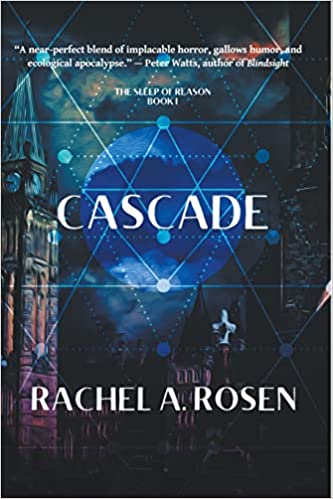
When the climate apocalypse awakens monsters and magic, a group of misfit Canadian activists try to prevent catastrophe by working inside the system. Can the master’s tools dismantle the master’s house before the second wave of supernatural devastation?

If you’ve lived in this world for any length of time, you can probably guess the answer, even without Ian’s precognition. But you still reach for hope. You debate trash television with good friends, you raise an aloe vera plant or a child, you fall in love. You march or write or teach or–you try, in your own way, to navigate your way through the labyrinth to a happy ending.

Cascade is a very hard book for me to review because I’ve been on a journey with this novel. When I met Rachel A Rosen, Cascade was unfinished. I read along as she wrote it, laughing at the jokes, wincing at the truths, decimating the semi colons. And more than that. In many ways, the character arcs of the novel mirror journeys I’ve been on in my own life. It’s a hard thing to read the climate science and know I’m living in the end days. It’s hard to look at a world where so much has already been lost and know the devastation is only beginning. Cascade holds a mirror to our world, and I see myself reflected back.

Rachel A Rosen is a very good writer, and Cascade is a very good book. I don’t know what else to say, but I’m excited to talk about it with you when you finish reading it.

Order a paperback copy on Amazon, or a digital copy on the BumblePuppy Press or your favourite digital retailer.

Behind the Screens: Tuesday Author Interview

Every Tuesday, get to know a bit about the stories behind the books you love, and discover your next favourite novel.

Sabitha: Rachel A Rosen is here! One of the founding creators of Night Beats, plus activist, writer, and all around fantastic human being, Rachel is going to tell us about her novel, Cascade, and all things magical and climate change. Rachel, take us away!

Rachel: Cascade is set a generation after climate change returns magic to the world—for better or worse, but mostly worse. A small number of people are able to channel otherwise unpredictable magical energy, and one of them, Ian Mallory, works for the Canadian government, using his precognitive abilities to keep the ruling minority party in power. But when the disaster he predicts is much larger than the usual sordid affair, expense scandal, or minor terrorist incident that he’s hired to avert, it falls to the magic-loathing photojournalist Tobias, land rights activist Jonah, climate scientist Blythe, and Ian’s emoji-spell wielding intern Sujay, to prevent a future cataclysm bigger than politics or ideology. 

Sabitha: What inspired you to write this book?

Rachel: For most of my life, I’ve worked in one way or another for social change—as an activist, educator, union member, and a volunteer for political parties. The majority of that time has been spent on the losing side of one struggle or another. Sometimes you just want to wave a magic wand and make people see reason. But of course, people being people, the realist in you knows that we’d find a way to screw that up too. Cascade, which is about magic colliding with the political process, is about that inherent contradiction.

Sabitha: We have a lot of writers in our community. What’s your writing process?

Rachel: I’m what’s known euphemistically as a discovery writer and more commonly as a pantser, which is to say that I don’t make detailed outlines or attempt to follow commercial story beats. I do have a vague plan for where the story goes—and I generally have the last scenes of each book in my mind. But the story itself comes to me in very distinct images and I write around those.

Sabitha: Which character do you relate to the most and why?

Rachel: They’re all kind of me at some level.

Sabitha: Even the villains?

Rachel: Especially the villains.

That said, in many ways Sujay is my younger self, with her insecurity and nerdy optimism, and Ian, with his cynicism and rage, is my older self. And Eric, alas, is how I often cope in a crisis.

Sabitha:  Did anything change from when you started planning your first draft to the published version? What?

Rachel: My original draft was 20,000 words longer. Much of it was supplementary material—chat logs, reports, even a Wikipedia entry. But I also cut plotlines and scenes and combined characters, in particular two pairs of important secondary characters. And there is one scene at the end that changed quite dramatically.

Sabitha: What do you want readers to take away from your book?

Rachel: Cascade is about climate catastrophe, rising fascism, and widespread apathy in the country currently known as Canada, and it’s entirely possible that my bleak novel is too optimistic. It could not only happen here, but it is happening here. And the wizards aren’t here to save us. If there’s any takeaway, it’s the pressing need for ordinary people to fight for a better world.

Sabitha: Obviously I loved this book and I think everyone else would too. Where can they find it? And you?

Rachel: You can find Cascade in various digital formats here, in paperback on Amazon, or at the BumblePuppy Press. You can connect with me through my website or on Instagram. Or, hey, right here on the Night Beats blog.