
WHY DO I KEEP DOING THIS TO MYSELF (102,000 words) is a cozy mystery, where the mystery is when I’ll give up querying. I’m quietly terrified that it’s got series potential.
— Query by Zilla Novikov
WHY DO I KEEP DOING THIS TO MYSELF (102,000 words) is a cozy mystery, where the mystery is when I’ll give up querying. I’m quietly terrified that it’s got series potential.
— Query by Zilla Novikov
Every Tuesday, get to know a bit about the stories behind the books you love, and discover your next favourite novel.

Sabitha: We have Whitney L. Spradling with us, to talk about her new release, Of Flames and Curses. Whitney, tell us about your fantasy romance!
Whitney: I write adult fantasy/paranormal romance. Of Flames and Curses is an adult urban-to-fantasy romance. It takes place in two realms, the human realm (New York City), and the Faerie Realm. It is a slow burn romance that contains mystery, curses, magic, evil queens, and so much more. It has been compared to the TV miniseries The 10th Kingdom. I’m horrible at elevator pitches, but if I had to give one, it would be: Her sister has just been mysteriously murdered and her quest for answers leads her to life-changing revelations; thrown into a magical world she didn’t know existed, this newly discovered half-breed must overcome her fear of loss while searching for a way to break a curse, or she will lose more than her sister to this magical world.
Sabitha: That sounds like so much fun. What inspired you to write this book?
Whitney: The opening paragraph came to me in the shower. I kept repeating it to myself until I got out and could write it down. From there, I planned out a rough idea of what I wanted to happen, then just let the words flow.
Sabitha: Was there any music that inspired you while you were writing?
Whitney: Music is my biggest inspiration when writing. For this particular book, I listened to Yellowcard a lot. Also, the song Dangerous Night by 30 Seconds to Mars has kind of become the theme song for this book. Usually, I listen to whatever genre tends to fit the book I’m writing. For Of Flames and Curses, it was a lot of old school punk.
Sabitha: We have a lot of writers in our community. What’s your writing process?
Whitney: I’m a pantser. I have a general idea of the direction I want the book to take, and a general idea of the ending. From there, I just let the words flow, and let my characters go where they please.
Sabitha: Do you have a “fan-cast” – do you have actors you’d cast as your main characters?
Whitney: Yes! Lucy Hale is my Lainey 100%. For Phoenix I’m torn between Liam Hemsworth and Lucas Bravo. Lucas Till (if he were just a tad bit older) is who I picture for Ash, however Victor Seitz (model) is the inspiration for him.
Sabitha: What book do you tell all your friends to read? Besides yours of course!
Whitney: Anything published by Midnight Tide Publishing. Brindi Quinn’s Come True genie series is amazing. As is Lou Wilham’s Heir to Moondust series. H. R. Truelove’s Alter, Morgan Gautheir’s Mark of the Hunter, and so many more.
Sabitha: You have great taste – we love Midnight Tide. Which character do you relate to the most and why?
Whitney: Probably, Lainey. She is kind of a loner. While she’s a loner due to her circumstances in life, mine is by choice. She’s quiet, but fierce when she needs to be. In this first book, she is definitely the damsel in distress, but in book two, she decides she’s had enough and steps up to the plate. I feel like her determination is similar to mine when I decided to write and publish books. It was out of my comfort zone, but I pushed through to do it anyway.
Sabitha: Thanks for sharing your story and your process. We’re looking forward to reading! Where can the Night Beats community find you and your book?
Whitney: You can find all of my socials and websites here.
Whimsical and dolorous, ironic and absurd, this slippery assortment of stories and fragments masks existential dysphoria with deceptive simplicity and hangdog comedy—all the while asking you to read what is not there, what is also there, what is parabolic.

Whimsical and dolorous, ironic and absurd, this slippery assortment of stories and fragments masks existential dysphoria with deceptive simplicity and hangdog comedy—all the while asking you to read what is not there, what is also there, what is parabolic.

I look forward to hearing from you. Or not, since your policy is not to respond if you’re not interested. But I’m not exactly looking
forward to being rejected.
I dread not hearing from you.
— Query by Zilla Novikov
tRaum Books’ weird, queer, agenre books are half price for the Winter’s Death-Rattle sale.

Darknesses
by Lachelle Seville || Dracula’s back and she’s not happy with Bram Stoker…
Most Famous Short Film of All Time
By Tucker Lieberman || Get ready!!!
Noema
By Dael Akkerman || Twelve thousand years ago, She chose two girls to save humanity…
It Helps with the Blues
By Bryan Cebulski || Jules leaves. Gabriel rages. Estelle changes. Joshua hides….
Airy Nothing
By Clarissa Pattern || Two boys find danger, love, adventure–and Shakespeare!
a + e
By Rysz Merey || My God, help me survive this deadly love…
The Pink and The Blue
By R Merey || aka ‘You can’t get fucked by the same river twice.’
Coming soon…Zilla Novikov’s satirical novella about publishing and activism, Query.

We are delighted and terrified to announce the impending publication of Query as a joint tRaum Books/Night Beats co-production!
City planner by day, novelist by night, Zilla Novikov is coping with her climate anxiety by working as a cog in the wheel of local government and querying literary agents with her postmodern ecofiction novel. But becoming the latest literary sensation isn’t easy.
Zilla’s query letters to literary agencies quickly devolve into a darkly funny exploration of her own psyche. As her frustrations mount, her novel blurbs and biographies grow increasingly unhinged. She finds unexpected solace in her newfound relationships with a community of fellow activists.
When Zilla discovers that becoming a bestseller means navigating a neoliberal hellscape, she is forced into questioning how much meaning that kind of success holds.
Interested in reading and reviewing a free e-book of Query? We’re looking for advance copy readers to publicly review! Sign up at here.
Every Tuesday, get to know a bit about the stories behind the books you love, and discover your next favourite novel.
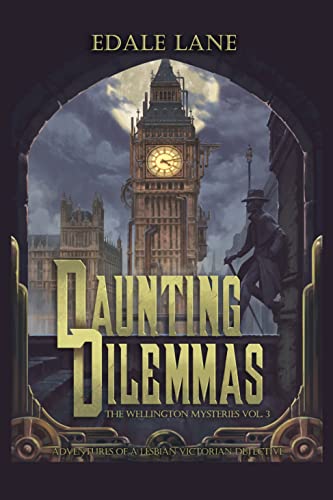
Sabitha: We’ve got the wonderful Edale Lane with us again. This time, she’s sharing her lesbian Victorian detective novel, Daunting Dilemmas, with us. Edale, tell us about your novel!
Edale: Sometimes one must lie to live her truth.
Stetson has been fooling London for ten years while her fictitious alter-ego solves crimes. But could a criminal mastermind put her carefree days of sleuthing in jeopardy?
Evelyn longs to be recognized for her talent; will her music prove to be the key in helping Stetson solve a mystery?
While Jack the Ripper terrorizes London, Stetson closes in on the art thief she has been after for months; however, will catching him place her in an impossible position which threatens to expose her?
Daunting Dilemmas: The Wellington Mysteries, Vol. 3, Adventures of a Lesbian Victorian Detective is a collection of five sequential novellas, each encompassing its own exciting mystery while furthering the story of Stetson’s life in London. If you enjoy crime dramas, Victorian era fiction, or a sweet lesbian romance, then you’ll love award-winning author Edale Lane’s Daunting Dilemmas.
Sabitha: What a delightful story! What inspired you to write this?
Edale: Years ago, before my debut novel, Heart of Sherwood, I saw a call for submissions for Private Dicks Packing Heat, an LGBTQ mystery anthology. Being a historian and fan of Sherlock Holmes, I set my work in Victorian London. Mr. X and the Blackmailed Female became the published result. I always wanted to go back and do more with my protagonist, Stetson Goody (AKA Xavier Wellington), and when I hit a snag working on Walks with Spirits in 2021, I turned all my attention to expanding one novella into 5 in Daring Duplicity. It did well and readers liked the Holmes-like Stetson, so I expanded the series with Perilous Passages and now Daunting Dilemmas.
Sabitha: You clearly love alliteration. How did you choose the titles?
Edale: Daring Duplicity got its name due to the double-life my bold heroine has undertaken. Perilous Passages was so titled because Stetson and her partner head out for a “road trip” on steamships and trains, meeting with dangerous criminals along the way. But in the third installment written against the backdrop of Jack the Ripper’s “Fall of terror” in 1888, Stetson faces her most daunting dilemma thus far. (I can’t tell you what it is without a spoiler.)
Sabitha: No spoilers! If you could pick any author to read your book, who would you want to read it? Why them?
Edale: Sir Arthur Conan Doyle, of course, as he was a foundation master of the genre and the creator of Sherlock Holmes. I’d love his opinion on how I could make Volume 4 the most compelling yet.
Sabitha: What’s your writing process?
Edale: It varies depending on what manuscript I am working on. For this series, tons of research is required to recreate an accurate portrayal of 1880s London and meticulous planning to create and solve fresh, engaging enigmas. Not much “pantsing” here, except in some personal scenes between Stetson and her partner Evelyn. After all, an exceptional locked-door mystery doesn’t just solve itself!
Sabitha: Thanks for sharing your story and your process. We’re looking forward to reading! Where can the Night Beats community find you and your book?
Edale: I have a website with a newsletter. You can also check out my Goodreads and my Bookbub. You can find Daunting Dilemmas on Amazon, and the rest of my novels on my Amazon page.
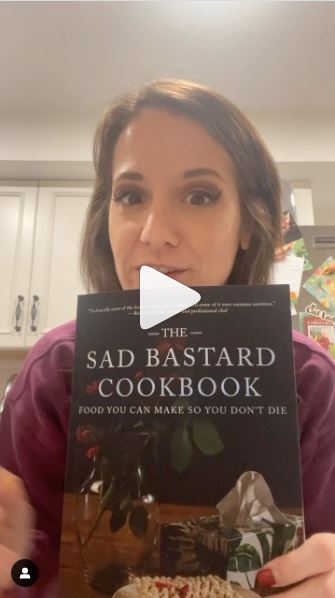
Rachel Corsini, author of the amazing rom-com Sushi and Sea Lions, cooks Classic Ramen from The Sad Bastard Cookbook. Watch the magic happen on her Instagram!
Get your free e-book PDF of The Sad Bastard Cookbook here.
Every Tuesday, get to know a bit about the stories behind the books you love, and discover your next favourite novel.

Sabitha: Rachel Corsini is here, to talk to us about a book that we all loved, Sushi and Sea Lions. Rachel, tell us a bit about your loveable rom com!
Rachel: Sushi and Sea Lions is about Daniela Verdi, who loses her career as a prima ballerina, and her very wealthy boyfriend, all at once. Her whole life collapses and she moves back to Queens, NY. While there it is up to her to discover what truly matters and figuring out that the dream life she imagined isn’t necessarily what she needed. She also reunites with her brother’s best friend, Vincent LaBate, who is dealing with his own broken life. She falls in love of course, but that’s not the whole story.
Sabitha: A lot of romance stars a rich man falling for a not-rich heroine. You broke with that by having Dany and Vinny finding each other after leaving behind their rich lifestyles. Why was it important to you to show them finding happiness without riches?
Rachel: I feel like in a world of consumerism we are so caught up on materialism that we lose sight of what really matters. Money and status isn’t everything in the world. Daniela was horribly lonely even though she had prestige and wealth. You can have all the money in the world but be miserable. It happens a lot more than people think. In the end, what matters is how you define success and happiness.
Sabitha: The story is set in New York, but not just anywhere. Queens feels almost like another character in the novel, because it’s rendered so lovingly. What drew you to this setting?
Rachel: Queens is special. I grew up there, specifically in the neighborhood the novel takes place in. I had a love/hate relationship with where I grew up for a really long time, until I reached adulthood and I felt like it was special. It was important to me to convey the atmosphere of that place. Small enough that there was a neighborhood feel, a place where it seemed like people knew each other, but big enough that you could be anonymous if you wanted to. The feeling that there was always somewhere to go when you needed something, like a midnight chocolate bar. I also think novels set in New York always focus on the city (meaning Manhattan), they rarely focus on the outer boroughs because I don’t think many writers have experience with them. Queens is a part of me. I wanted to share that.
Sabitha: Regi the cat was obviously the best character, and I’ve heard a rumour that the fictional Regi is based on your own real life version. Can we see a picture of Regi?
Rachel: Fiction Regi is based on my Regi. There are some differences like age, but for the most part they are the same.

I have given you a picture of Regi as cat tax. You’re welcome.
Sabitha: This book draws on more of your life than just Regi. Like Dany, you did ballet, and you trained as a teacher. Why did you choose to bring so much of yourself into the book, and where do “you” end and “Dany” begin?
Rachel: This was the first book I’ve ever finished. There is some wisdom in the adage “write what you know.” I think this was also a little bit of therapy for me. It allowed me to process a lot of things that I was dealing with when I wrote the book. It was easier to use Dany as an outlet for that instead of saying myself, even though she was a lot of myself.
Superficially, I was never a prima ballerina, though I dreamt of being one at one time. So that’s a major difference between Daniela and myself. Daniela is also more dreamy than I am, more romantic. I really heightened that in her character to show that Vincent helps balance her wonderful overzealousness for life. I am that perky and bubbly and happy in real life. I tend to take whatever upset or sadness I’m feeling and internalize it. I wait to cry alone. Daniela does the same thing. She only shows that side of herself to special people and I do the same. It’s hard for me to be vulnerable. Dany is more vulnerable than I am for sure!
Sabitha: What does Regi think of your writing?
Rachel: Regi is unamused by everything that I do. She could care less. I think she is excited about the possibility of being famous though.
Sabitha: We’re so excited for everyone to be able to read this book. Where can people pre-order it? And where can they find you online?
Rachel: They can preorder my book on Amazon, Barnes and Noble, and Apple Books! They can find me online on Instagram, TikTok, and Facebook.


If you like great podcasts about justice in all its forms, Total Liberation Podcast is what you’re looking for. If you can only listen to one episode, we suggest Episode 92: Solarpunk, Indigenous & Afrofuturism, & Climate Fiction: Decolonizing Our Imaginations w. Tory Stephens (Imagine 2200).
In this episode, Mexie speaks with Tory Stephens, founder of Imagine 2200: Climate Fiction for Future Ancestors. Imagine 2200 is a climate fiction initiative at Grist magazine which showcases stories from authors from around the globe that are all in the visionary fiction genre (Afrofuturism, Indigenous futurism, solarpunk, etc.), providing inspiration on how we might get to a sustainable, reciprocal, and just world. We dig into all things visionary fiction, including its political significance and how crucial it is to decolonize our imaginations and reclaim our radical creativity to craft solutions for this current historical moment.
Plus, they also give a short review of The Sad Bastard Cookbook, and we might be biased but we think their options on this cookbook are perfect. Listen here!
 Night Beats Extended Universe