Behind the Screens: Tuesday Author Interview

Every Tuesday, get to know a bit about the stories behind the books you love, and discover your next favourite novel.

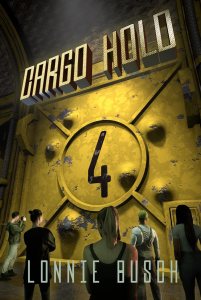
Cargo Hold 4 cover

Zilla: Full disclosure—I read Lonnie Busch’s science fiction thriller Cargo Hold 4 and I absolutely loved it. I don’t want to say too much, because the mystery is part of what makes this horror so compelling. So Lonnie, tell us a bit about Cargo Hold 4—but no spoilers!

Lonnie: Several years into a multi-decade deep space mission, a team of eight scientists—four women, four men—explore a dwarf planet near the Kuiper Belt and inadvertently bring aboard a stowaway, which is desperately trying to escape from Cargo Hold 4. Or so the crew believes.

Zilla: The alien is a science fiction horror masterpiece, mashing up elements of frogs, bees, and plenty more. What inspired it?

Lonnie: I honestly don’t know. I’m what a lot of writers call a “pantser,” meaning I “write” by the seat of my pants. In other words, I don’t plot out the story. Cargo Hold 4 came out of nowhere. I’m trying to get my latest book, Project Übermensch, ready for publication, and I keep hearing in my head, Cargo Hold 4, Cargo Hold 4, like a mantra. I ignore it as long as I can, until “something” in Cargo Hold 4 starts beating on the huge yellow metal hatch, and I can see the big yellow hatch, and these enormous dents pushing out (which is what I animated in my book trailer.) 

So, I start writing, and when I get to finally revealing this thing, I realize I may be done. Nothing’s coming but worn-out tropes from years of too much TV and moviegoing. I ease forward and wait for something to emerge, and it does, and it’s super creepy and I go with it, trying to learn what it is, and what’s going on. There is always a risk with the panster approach of writing a lot of pages and ending up nowhere. But I’m used to that from my background in painting and working on sculpture. Just part of the creative process. I’m okay with it.

Zilla: It’s not just the alien though–plenty of the characters have their own dark secrets. Who is the real monster, the aliens or the humans?

Lonnie: Yeah, that was so cool, how organically it developed. Once this thing was kind of revealed, I started following what I imagined this crew would do, how they might react, how I might react, pitting reason against morals, navigating the conundrum they found themselves up against. I tried to be as honest as possible about the potential eruption of human emotions and choices, no matter how dark it got. As you know, it got pretty dark, way darker than I imagined.

Zilla: I really enjoyed the science tidbits you sprinkled through the book. Do you have a scientific background?

Lonnie: None. My older brother had a telescope when we were kids, but that was about it. But the first moon landing happened when I was 17 years old in 1969. That had to have affected me, I suppose. However, I believe many of the ideas I had about the journey, sprung from a reasoned approach to what might be needed for extended space exploration. I wasn’t ready to concede to “replicator-type” devices like Star Trek, as I didn’t see the mission that far in the future. And I’m glad I didn’t. The idea that came to me for their food and supply problem became a huge plot element. I hadn’t planned that. I think one thing that really spurred my ideas around the mission was reading about Voyager 1 and 2 and the Hubble telescope. Those articles debunked many misconceptions I had about space. Voyager 1 and 2 are still out there, still traveling into deep space after decades. Voyager 1, launched in 1977, is still sending data back, and is expected to keep sending it back until 2036! And Voyager 2, also launched in 1977, is the only spacecraft ever to visit Uranus and Neptune, and is now in interstellar space. That’s wild to me.

Zilla: Thanks for sharing your story and your process. Where can the Night Beats community find you and your book?

Lonnie: My books are on Amazon—go to this link for Cargo Hold 4. I’m still in the baby-steps stage as an indie author. My first novel was published by Blackstone Publishing, The Cabin on Souder Hill. I had an agent, a nice advance, a sweet two-book deal, and it seemed like after twenty plus years of writing I had finally arrived. But no. When The Cabin on Souder Hill didn’t fly off the shelves, Blackstone terminated the contract for the second book. Not long after, I ended my relationship with my agent when she seemed less than enthusiastic about my novel, All Hope of Becoming Human, which has won numerous awards and done pretty well. The audiobook for The Cabin on Souder Hill is now an Audible bestseller with over 3400 reviews, but that’s most likely due to Sarah Mollo-Christensen, the narrator. She has an incredible voice and a massive following. So, yeah, the short answer, just Amazon. But it’s cool. I like the KU aspect. I can reach a lot of readers I might otherwise not reach. All Hope of Becoming Human was just accepted into the Amazon Prime Readers Program, though I’m not sure when it will be available there.

People can find all my books, as well as links to my social media, on my website. They can even sign up for new release news and shout-outs for review readers there. I always welcome review readers!
Behind the Screens: Tuesday Author Interview

Every Tuesday, get to know a bit about the stories behind the books you love, and discover your next favourite novel.

The Silent Forest cover

Sabitha: In the bright days of summer, sometimes we yearn for the dark, the mysterious, the thrilling … so today we have David Kummer here, to tell us about the newest book in his series of psychological thrillers, The Silent Forest. David, can you introduce us to these books?

David: My books are psychological thrillers and mysteries. I love to dig into fear and memory, the thin line between the two, and especially how those emotions play into group dynamics. This series is about a family in a rural farm town called New Haven. Here’s the blurb:

In New Haven, everything is changing. And there’s no going back now.

It’s been weeks since Allison went missing, and everyone has given up except for Kaia. New Haven mourns their dead as she keeps looking. And now, she’s starting to find answers.

As the unsolved cases pile up, a new discovery in the forest offers hope. But it also threatens to unbury all of New Haven’s darkest secrets.

For the Woods family, it will take everything they have. For Kaia, it’s the last chance.

There are some shadows you can’t keep underground.

Sabitha: What inspired you to write this book?

David: This book really started with the idea of a haunted house, but I wanted to do something new and exciting with that idea. I’ve read so many cliched haunted houses, so I wanted to play around with every aspect. And also, I love putting my own familiar settings into novels, so the “safe” Woods family lives in a house very much like my grandma’s, like a little piece of myself added to the story.

Sabitha: What book do you tell all your friends to read?

David: The Little Stranger is my favorite book I’ve ever read, and it’s so underrated. Besides that, I always enjoy Mark Edwards, as he’s consistently great, but I’m trying to branch out more and read different types of psychological thrillers.

Sabitha: Have you ever killed off a character your readers loved?

David: Oh, yeah. All the time. I don’t want to give any spoilers, but one of my books has a beloved character who ends up dying, and it tore me up to write. But you’ll never know when, ‘cause I ain’t saying which book! (There might be multiple, to be honest… I love killing off characters.)

Sabitha: Who did you imagine reading your book as you wrote it?

David: This book is really about family and love, in the face of terrible danger and awful events. But I always imagine my dad reading my book, because he’s always my first reader. Over 2,000 people read The Misery House, so hopefully even more enjoy this one!

Sabitha: What’s your next writing project?

David: I’ve gotta finish this trilogy first, and I can’t wait for that, because I’ve got a super secret project up next… It’s already half written, and it’s calling my name.

Sabitha: Thanks for sharing your story and your process. We’re looking forward to reading! Where can the Night Beats community find you and your book?

David: I’m all over the place! You can find me on any of these sites, and please do, because I love to chat with readers! I’m on Twitter, Facebook, my blog, Instagram, my Amazon author page, and Goodreads. The Silent Forest can be found on Amazon and Goodreads, or Bookshop if you want to support local bookstores.

Behind the Screens: Tuesday Author Interview

Every Tuesday, get to know a bit about the stories behind the books you love, and discover your next favourite novel.

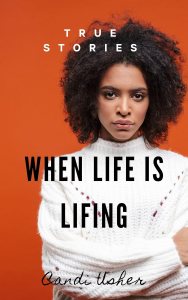
When Life is Lifing cover

Sabitha: Sabitha: We’ve all had times when life feels like it’s more than we can deal with—Candi Usher certainly has. Her life story and wisdom can be found in her newest book, When Life is Lifing. Candi, can  you tell us a bit about your book?

Candi: When Life is Lifing is a compilation book.  It contains my 3 books I’m Still Standing Here, My Forever Angel, and Delusional: When I Lost My Mind in Love.  These are my life stories.  The things people don’t want to talk about because they feel it’s embarrassing,  or because they just feel like it will never change.

Sabitha: What song belongs on your book playlist?

Candi: If I could choose a song for my book,  it would be “How Can I Ease the Pain” by Lisa Fishcer.  My life has been painful.  But it doesn’t define me. It shaped me.

Sabitha: How much research did you need to do for your book?

Candi: There wasn’t much research needed for my books,  as therapy was my research of myself.  I learned things I never realized. You never know what you look like until you see yourself through someone else’s eyes.

Sabitha: Who did you imagine reading your book as you wrote it? 

Candi: If I could have anyone read my book,  it would be other women who have lived the life I have like Oprah, or Taraji P Henson.

Sabitha: Thanks for sharing your story and your process. We’re looking forward to reading! Where can the Night Beats community find you and your book?

Candi: My book is on all book platforms.  The main two are my website www.mscandigirl.com and www.amazon.com/dp/B0CY9BYN74.

Behind the Screens: Tuesday Author Interview

Every Tuesday, get to know a bit about the stories behind the books you love, and discover your next favourite novel.

Ruarnon Trilogy Books covers plus a map of the fantasy area

Sabitha: What’s better than a fantasy series? A queer fantasy series, and we’re in luck today! Elise Carlson is here to tell us about their epic and portal fantasy Ruarnon Trilogy, staring (mostly) queer young adults. Elise, what inspired you to write this book?

Elise: Short answer, Narnia, Lord of the Rings, the Wheel of Time and a lifelong love of fantasy. Longer answer: The Ruarnon Trilogy began with the question: why do adults fight wars? Which led to the question: what is the worst someone in a position of power could do out of fear (while also being genuinely well-meaning)?

The answers for war against someone’s will in Manipulator’s War delve into coercion, blackmail, assassination attempts, and of course, ultimately greed. But what someone afraid and in power could do led to breeding monsters, rallying sorcerers, initially unclear motives and attacks, and ultimately war and an entire movement that sweeps the world of Umarinaris.

In countering all of the above, the role of friendship in helping characters manage their spirits, emotions and attempt the impossible was crucial, and perhaps inspired by the importance of friendships to me as an asexual, aromantic person.

Sabitha: Have you ever killed off a character your readers loved?

Elise: Book one, Manipulator’s War has the kind of plot where people will not grow into who they or the story needs them to be unless certain people die. So there was a character an advance reader was very fond of. I eceived comments from her as she read like; “Oh no! That’s very bad! *lots of crying emojis*.”

While I write fantasy, I like writing realistic characters and realistic stories. So with epic battles in all three novels, everyone isn’t going to live.

Sabitha: Do you have any suggestions to help people in our community become better writers?

Elise: The two most important things I would advise fellow writers are: reach out to fellow writers on whatever digital platform works for you, connect with them, get to know them, learn from and share your journey with them —yesterday! And when it comes to the process of writing and editing, try whatever you like and feel free to ignore things that don’t work for you. As an author with ADHD, I finished writing, editing, and publishing 360k words of epic fantasy because I threw unhelpful-to-me-personally advice out the window.

Sabitha: What’s your next writing project?

Elise: My next project will also be set in Umarinaris, around three thousand years later. The sorcerer alliances forming at the end of Ruarnon Trilogy will be like the United Nations by then, but with teeth: emergency services, police, armies, and educational institutions worldwide. It’s a small world, Umarinaris having fractured into inward-looking city states after a nuclear war wiped a continent off the map by then, and everyone abandoned modern (especially communications) technology in fear. Except for organised crime, another international organisation, whom Sythe’s characters will ultimately come up against —even before they graduate from school, magic and combat training!

Sabitha: Thanks for sharing your story and your process. We’re looking forward to reading! Where can the Night Beats community find you and your book?

Elise: You’ll find my ebooks at a range of stores and online subscription services via my books page. You’ll find me on: Blue Sky Social, Mastodon and Facebook.

Behind the Screens: Tuesday Author Interview

Every Tuesday, get to know a bit about the stories behind the books you love, and discover your next favourite novel.

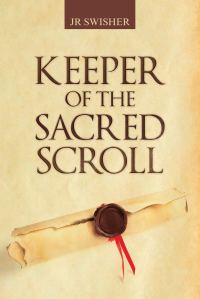
Keeper of the Sacred Scroll cover

Sabitha: Aliens and fantasy are a match like chocolate and peanut butter in JR Swisher’s novel Keeper of the Sacred Scroll. JR, can you tell us a bit about your story?

JR: Keeper of the Sacred Scroll was my first published work, a romance set against political upheaval, and I’m proud of it.

Sabitha: Do you have a playlist for your book?

JR: My entire playlist is dedicated to my book, but Landslide and Sara by Fleetwood Mac are the songs most relevant to the story. Landslide the story is about time. Sarah was the main character’s original name and the song sums up her personality.

Sabitha: If your characters met you, what would they say to you?

JR: If my characters met me, they’d be unimpressed but also encourage me to get my mental health back together. However, if I met my characters I’d tell them I love them, especially my favorite character.

Sabitha: What’s your next writing project?

JR: My next work will be a sequel to the first novel, which will delve more into the culture and backstory of the characters. Vietnam’s history is a big inspiration for the story. It was dying to get written and published as long as I can remember.

Sabitha: Thanks for sharing your story and your process. We’re looking forward to reading! Where can the Night Beats community find you and your book?

JR: I’m on X @JackJRSwisher, and you can find my book on Amazon.

Behind the Screens: Tuesday Author Interview

Every Tuesday, get to know a bit about the stories behind the books you love, and discover your next favourite novel.

An issue of Clarkesworld with an astronaut in a desert looking planet. Another astronaut in the background is tying strings to a spaceship. The issue features a bunch of authors, including today's protagonist.

Rachel: I’m obsessed with Zohar Jacobs’ short stories, and every time she publishes one, I have to send the link around to everyone I know and yell at them until they read it. Today, she’s joined us to tell our readers about her work!

Zohar: I write science fiction and slipstream, and so far have had stories published in the Sunday Morning Transport, Small Wonders, Analog and Clarkesworld. I also have a story forthcoming in Asimov’s.

Rachel: I’m always impressed by the religious and cultural questions you address in your writing, whether it’s about the role of religion on a Soviet lunar base or the question of whether a paired intelligence counts as one person or two in a minyan. Religion is such an under-explored concept in sci-fi—what draws you to exploring it?

Zohar: Mostly I’m getting back at Gene Roddenberry for how badly he dealt with religion in Star Trek. Although I’m an agnostic, religion has always been part of my life, and it’s one of the most complex social and intellectual systems that humanity has created. Why assume that we’d leave all that behind? You could actually argue that the feeling of being unmoored by distance from Earth and the scale of the universe might make people turn to religion more.

Rachel: Another theme I see in your writing is the engagement with real-world issues such as the climate crisis or the war in Ukraine? What are the challenges of writing about a future that is so grounded in our present?

Zohar: Oddly I’ve never thought of it as a challenge. I sometimes think that I’m not a very creative person: reality is always where I get my inspiration, because it comes up with much more complex and bizarre scenarios than I ever could. By hewing close to reality, I can expect my readers to bring their own set of rich, independent associations to my work. I guess the challenge is that I can’t predict how people will take my writing – but I’m not sure I could do that anyway.

Rachel: How important is literary voice in science fiction?

Zohar: Many SF readers prefer transparent, pacy prose that doesn’t get in the way of the story: think Andy Weir’s The Martian. So maybe it’s not that important. On the other hand, some of SF’s best writers have been great prose stylists – Ursula le Guin, Samuel R. Delany, M. John Harrison – so it’s clearly no obstacle to success either. Literary voice is important to me, but then I sometimes joke that I’m actually a literary author who just likes spaceships too much.

Rachel: What’s your next writing project?

Zohar: Funnily enough, a literary novel. It feels odd to temporarily step back from the SFF community, but this is a story that I’ve been wanting to tell for nearly 20 years. (It has spaceships too.)

Rachel: Tell us where the Night Beats community can find you and find your work!

Zohar: Apart from the magazines where I’ve been published, you can find me on Twitter @zoharjacobs and BlueSky @zoharjacobs.bsky.social. One of these days I will set up a website but this is not that day yet.

Behind the Screens: Tuesday Author Interview

Every Tuesday, get to know a bit about the stories behind the books you love, and discover your next favourite novel.

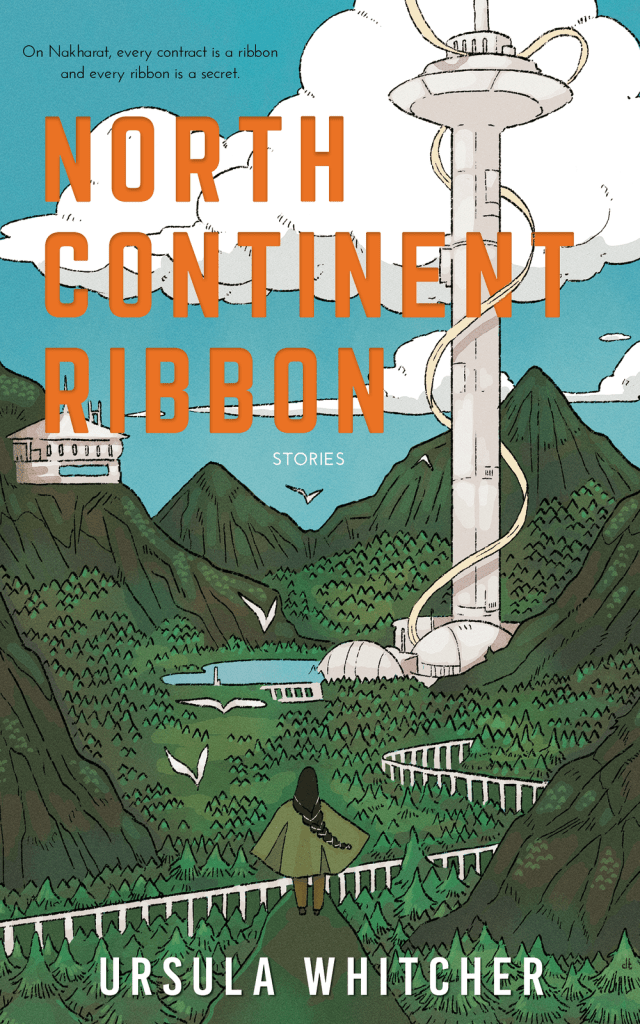
North Continent Ribbon: Stories by Ursula Whitcher. The tagline reads: "On Nakharat, every contract is a ribbon and every ribbon a secret." The cover depicts a person in a cape watching birds fly over a wooded valley. There's a small settlement and what looks like the CN Tower with a ribbon winding up it.

Rachel: I’m a sucker for intelligent, literary sci-fi, so when I finished reading North Continent Ribbon, I immediately asked Ursula if they’d be interested in telling our readers about it so that I’m not screaming about how good it is all by myself.

Ursula: North Continent Ribbon is a collection of connected, queer short stories that’s coming out in August.

Here’s the blurb:

“On Nakharat, every contract is a ribbon and every ribbon is a secret, braided tight and tucked behind a veil. Artificial intelligence threatens the tightly-woven network. Stability depends on giving each machine a human conscience—but the humans are not volunteers.”

Rachel: I was struck by the theme of connection and relationship, both visible and hidden, in North Continent Ribbon. Did this theme emerge organically or did you intentionally build the stories around it?

Ursula: It’s organic! The intentional organizing theme is different parts of Nakharat society—I wanted it to be clear why one person would hate the judges or the army or the Companies but another person might try to join up. But I wrote queer romances while thinking through facets of my own identity, and I was curious about the role bigger social groups like student clubs and groups of drinking buddies play in social change, so I’m not surprised you see a more intricate web.

Rachel: The collection covers multiple eras of Nakharat history, which feels very rich and lived-in. How much worldbuilding exists off the page?

Ursula: In some places there’s a ton, while other parts of the world are more of a mystery. I have lots of thoughts about the culture of the titular North Continent, plus miscellaneous facts (ask me about ocean ecology or grammatical genders!) Other locations are wide open.

Rachel: My absolute favourite element of your world was the grim wire technology in the trains and spaceships, and what it says about labour, class, and automation. Where did that idea originate?

Ursula: The very first writing I did about Nakharat involved an even more furious adult version of the “Last Tutor” protagonist, Isekendriya. I knew that Isekendriya grew up on a mountain estate overlooking wide, empty plains, that the thought of their parents filled them with rage and guilt, and that nevertheless they wore a ribbon in the family colors hidden in their hair. I asked myself what kind of wealth leads to an estate in the middle of nowhere, and the answer was transportation—specifically, trains. 

The combination of ribbon imagery, train tracks, my character’s fury at their complicitness, and my own feelings about the US justice system led to the creepy technology you see in the book. I’m glad you found it compelling! I definitely did—compelling enough that I kept writing stories set on Nakharat, and eventually wrote my way back around to Ise.

Rachel: One of the challenges of short stories is creating characters that the reader can bond with, and who experience growth and change, within a very limited number of words. How do you balance economy of storytelling with creating complex and compelling characters?

Ursula: I cheat and write novelettes! As a poet, I expected that my natural fiction range would be very short. But I love the freedom that a novelette (about twice the length of a traditional short story) allows me to explore the psyches of characters who are uncertain or conflicted about what they want.

Rachel: Will you be revisiting Nakharat? What are you working on now?

Ursula: Right now I’m working on a couple of different historical fantasy projects (Napoleonic wars? Byzantium?) But I haven’t ruled out a return to Nakharat! One of the stories is about an artificially intelligent book, and I’m curious about whom else the book might meet.

Rachel: Tell us where the Night Beats community can find you and find your work!

Ursula: You can pre-order a hardcopy of North Continent Ribbon from Neon Hemlock Press.

If you want an alert the moment the ebook pre-order goes live, or you’re curious about what else I’m working on, you can subscribe to my newsletter:

And I’ve been spending lots of time hanging out on Bluesky ( @yarntheory.bsky.social ).

Behind the Screens: Tuesday Author Interview

Every Tuesday, get to know a bit about the stories behind the books you love, and discover your next favourite novel.

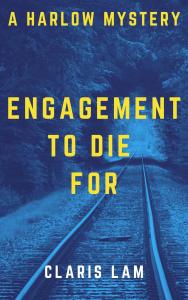
Engagement to die for cover. Train tracks leading ominously into the distance.

Sabitha: If you’re looking for a murder mystery, Claris Lam never disappoints. Her latest mystery continues with Aubri’s story, as she goes from solving her first murder mystery to getting stuck in her second. Claris, can you tell us about your books?

Claris: Engagement To Die For is the second book in the Harlow Mystery series.  Here’s my little blurb:

After everything Aubri went through at the resort, the last thing Aubri needs is more drama. However, meeting her previously-unknown twin sister for the first time, and attending her mother’s engagement party, results in yet another murder.

Due to the remote area of this crime, the police won’t be able to make it for a few days. Aubri realizes that she, along with her friends and her sister, must take up the mantle themselves to solve the case or risk being new victims again.

I’m also happy to share that Engagement To Die For was a  3-category nominee for the 2023 Indie Ink Awards and an 8-category nominee for the 2023 Queer Indie Awards!

Sabitha: That’s fantastic—and very well deserved. What inspired you to write this book?

Claris: Reading books like Murder on the Orient Express by Agatha Christie definitely inspired me to write a murder mystery taking place on a train! It was so fun to figure out how luxurious the train the book takes place in was, in particular – there are many amenities included that most normal trains don’t have.

Sabitha: I love that book too. It’s a classic! So trains were the main focus of your research for the book?

Claris: I had to research the internal layouts of trains. This helped me figure out where the main characters were traveling to and from on the train during their investigation.

I also had to do some medical-related research for this book. This is related to a major reveal in the book, so I can’t share too many details or else I’ll give away spoilers! However, I looked it up because I had to figure out if that was possible in real life before implementing it in the book. The short answer: yes, but it’s very rare.

Sabitha: I’m tempted to ask, but no spoilers! Back to Aubri and her friends and family. If you could meet your characters, what would you say to them?

Claris: If I met my characters, I would just tell them to continue to persevere and move forward the best they can. Bastian goes through some particularly tough moments in this book, so he definitely needs the encouragement.

Sabitha: And of course the response—what would they say to you?

Claris: I think all of my main characters for this book (Aubri, Bastian, Aria, and Nick) would be tired of murders happening wherever they are, but they appreciate at least being on a train where they have plenty of drinks available.

Sabitha: Have you ever killed off a character your readers loved?

Claris: To my knowledge, no. I’m pretty sure every character I’ve killed in the Harlow Mystery series so far is someone people usually don’t mind getting killed off, mainly because they’re terrible (or mostly terrible) people.

Sabitha: Thanks for sharing your story and your process. We’re looking forward to reading! Where can the Night Beats community find you and your book?

Claris: You can find all links to my main website, newsletter, and socials in my Carrd. As for where you can purchase “Engagement To Die For,” check out any of the links here.

Behind the Screens: Tuesday Author Interview

Every Tuesday, get to know a bit about the stories behind the books you love, and discover your next favourite novel.

cover of The Dance with - what else? - a dancer on it.

Zilla: One of my favourite stories in the science fiction anthology The Dance was Eli K.P. William’s tale of duality, “The MachineGarden”. So I asked Eli to come here and answer some questions for me!

Without getting too spoilery about worldbuilding, I fell in love with the duality of the machine side of the world vs the garden side. As a queer person, I instantly jumped to a trans reading of the story, particularly when Eos explains the, “gap between me and myself was there all along.” Did you intend or consider a trans reading as you wrote the story? If not, was there another type of duality intended?

Eli: I think that’s an interesting way to read “The MachineGarden.” The crisis for Eos is that, due to a rare variety of insight she possesses, she experiences her body as swinging between the two poles of a binary. However, this is a binary of ontology, rather than sex or gender, and it convulses all of (post)human existence, rather than any individual body, faster than the mind can follow.

Zilla: You are not the first author to explore the dichotamy of built vs grown, though I’ve never read your particular take on them before. As I read your story, Mass Effect and This Is How You Lose The Time War both came to my mind. What stories inspired you as you wrote your own?

Eli: I could give you a long list of authors who influenced me when writing the Jubilee Cycle trilogy: George Orwell, William Gibson, Ursula le Guin, Haruki Murakami, and China Mieville to name just a few. However, for “The MachineGarden,” I intentionally tried to break away from the influence of past writers because I wanted to unlock a new vision of the future that is rooted in the zeitgeist of the 2020s as opposed to in an earlier age. I don’t think I was entirely successful, but I hope to make further attempts in the coming years. Cultivating a radical new movement in science fiction is, I believe, the central challenge that the current generation of authors must rise to.

Zilla: I have the usual complaint of a reader who finished an excellent short story–I need more. Are you done with Eos, Arata, and particularly with the MachineGarden world, which feels like a character in its own right? Or do you think there are more stories to be told in this ‘verse or with these characters?

Eli:

I think there’s enough narrative and conceptual potential in “The MachineGardenfor it to be extended to novel length, but I’m happy leaving it as is, for now, so I can work on other books. I’m currently seeking an agent to represent a hard-to-classify novel set in two alternate versions of Toronto, and for the past few years, I’ve been gradually building a world for a near future novel about alien communication that takes place mostly in the upper atmosphere. I’m also busy doing research for a non-fiction book on Japanese science fiction. (You can read my first stab at the topic here.) 

However, there are threads in “The MachineGardenI hope to pick up in other stories, such as the built-versus-grown dichotomy you mentioned, which I began to explore in A Diamond Dream, the final book of the Jubilee Cycle. I also have vague plans to run with the IntelSchism idea and use it as the core conceit for a full novel.

Zilla: Thanks for sharing your story and your process. We’re looking forward to reading! Where can the Night Beats community find you and your book?

Eli: You can get The Dance here. You can learn more about me here, follow me on Twitter @Dice_Carver, or join my fledgling Substack Almost Real.