Behind the Screens: Tuesday Author Interview

Every Tuesday, get to know a bit about the stories behind the books you love, and discover your next favourite novel.

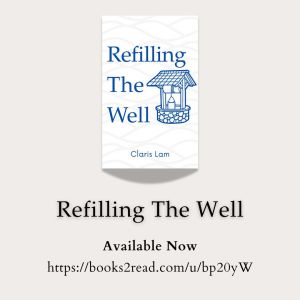
refilling the well cover with a drawing of a well on it!

Zilla: We always love having Claris Lam here to talk about her books, though today is a special interview—she’s crossed genre! Claris, can you tell us about Refilling the Well and your venture into poetry?

Claris: Refilling The Well is my debut poetry chapbook. This chapbook focuses on themes of self-care, burnout, burnout recovery, and hustle culture. 

I also think Refilling The Well focuses a bit on hope – hope that things will get better, even if they’re hard right now. 

Zilla: That seems like a really timely topic. Why did you write this book, and why now?

Claris: My burnout in summer 2023 inspired me to write this book, specifically. I went through creative burnout in summer 2023 specifically because I felt, at the time, I had to keep “working” on my creative craft to become some form of success that others seemed to have. It looked like that if you were a “successful” author, you had to be making huge book sales every month and/or capable of selling many books a year or even a book every two weeks. At some point that summer, I just lost all inspiration and drive to write much if at all.

It was scary, handling burnout. I never knew what it was like to be completely out of ideas before, because I often come up with ideas really quickly. However, it was a good period for me to reflect on what “success” as an author actually meant to me. 

Zilla: That’s such an important part of being an author—finding that internal motivation, and knowing that you can’t define success against anyone else. Can you distill your inspiration into an image?

Claris: Given the title of this chapbook, the image of a well inspired me. I thought about how wells, when overused or going through hotter than expected times such as droughts, can end up drying out and be unable to provide water to others. Our creative minds are like wells—it can generate a lot of ideas, but it also can only provide so much—especially when going through stressful times. And if we have no ideas left, that well of ideas is essentially dried out. 

Zilla: Who did you imagine reading your book as you wrote it? 

Claris: I imagined those who enjoyed poetry reading it, but I also imagined others going through their own periods of burnout, especially fellow creatives. I’ve read and heard of stories from many creatives who fell into similar periods of burnout for various reasons, including mine.

Zilla: What’s your next writing project?

Claris: At this time of writing, I’ll be releasing my debut YA short story collection, Stay Magical!, in fall 2025! It’s magical girl themed. Anyone who is familiar with anime and manga like Sailor Moon, Ojamajo Doremi, Pretty Cure and other series should consider reading it!

I’m also currently writing a new short story collection that is fairytale-themed and is a bit more experimental compared to my past work. I have the first draft done and I look forward to edits and revisions! 

Zilla: Thanks for sharing your story and your process. We’re looking forward to reading! Where can the Night Beats community find you and your book?

Claris: Refilling The Well released on February 10th, 2025! You can order it here

As for where you can find me, check out the following:

Website: https://clarislam.ca 

Newsletter: https://buttondown.com/clarislamauthor 

Instagram: https://www.instagram.com/clarislamauthor/ 

Facebook: https://www.facebook.com/ClarisLamAuthor 

Bluesky: https://bsky.app/profile/clarislamauthor.bsky.social 

Tumblr: https://clarislam.tumblr.com/ 

Bookbub: https://www.bookbub.com/profile/claris-lam 

Goodreads: https://www.goodreads.com/author/show/22277014.Claris_Lam 

Behind the Screens: Tuesday Author Interview

Every Tuesday, get to know a bit about the stories behind the books you love, and discover your next favourite novel.

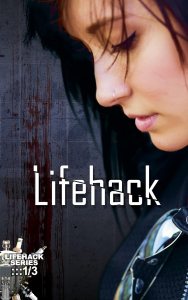
Lifehack cover with a cyberpunk style woman on the front.

Zilla: We all need a good zombie story now and again, and even better if our human heroine is queer. This is why I invited Joseph Picard here to tell us about his post-apocalyptic novel, Lifehack. Joseph, can you introduce us to your book?

Joseph: Lifehack follows Regan as she breaks up with her cheating girlfriend then moves in with her brother. One of his peers twists a medical nanotech project into a zombie plague (the old slow/dumb kind) as a resignation letter.

Regan looks for her brother in the quarantined city for 2 years before she’s ‘rescued’ by a soldier she falls for immediately. Alisia’s a redead, and Regan’s been alone and going slightly batty. Priorities get a little jumbled, and the original culprit is still a potential threat out there somewhere.

Lifehack began my first series and impacts many of my books, even in my 3rd series.

Zilla: What inspired you to write this book?

Joseph: At the time, I’d only ever done one-shot short stories, but Regan and her exploits grew into 4 shorts, which eventually were refined into a book. I was drawing a lot back then—feedback on art of Regan actually resulted in Regan’s orientation… it seemed to fit her.

Zilla: Is your work more plot-driven or character-driven? Or a secret, third thing?

Joseph: Dungeons and Dragons-driven? I come up with a scenario, then sprinkle characters into it. Once they’re ‘active’ I lose most of the control. They reveal hang ups or quirks as events unfold. They fall in love, solve, or create danger. Sometimes they end up pitted against each other. I can kind of predict their path, but a few have surprised me.

Zilla: What’s your next writing project?

Joseph: The Daughter of Erebus series (which expands from the last book in Lifehack’s series, Echoes of Erebus) is coming soon. Daughter of Erebus: Sparrow is currently in the hands of my editor. Meanwhile, I’m chipping away at Daughter of Erebus: The Wronged.

There are still a ton of questions about Sarah’s future. She strives to lead a normal life, but being made out of tech made by Lifehack’s mass-murderer makes public relations a bit dicey. Sarah and her human found family have to face threats from other nano-creations, and public distrust. And despite wanting to keep life as simple as possible, romance finds a way, and Danielle finds a way, too… it confuses Sarah’s synthetic brain thousands of times faster than it would a human’s. She’s got neurosis down to a science.

Zilla: Thanks for sharing your story and your process. We’re looking forward to reading! Where can the Night Beats community find you and your book?

Joseph: Amazon has my kindle, paperback, hardcover, and audibles. But if you’re not an amazon fan, (who could blame ya?) my personal site has links to the books2read links for all my books. For example, you can find Lifehack.

You can find me hanging out on FB, (thoughI’m trying to back off a little from FB given some recent moves by zuck), and I’m settling into Bluesky.

Behind the Screens: Tuesday Author Interview

Every Tuesday, get to know a bit about the stories behind the books you love, and discover your next favourite novel.

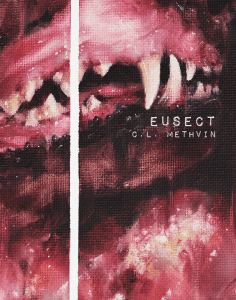
The cover of Eusect with some very bitey teeth on it.

Zilla: I devoured C.L. Methvin’s gruesome, touching and grotesque collection of short stories Eusect. I was delighted when they agreed to do an interview with us so I could pick their brains (not literally). C.L., can you tell us a bit about your book?

C.L.: It is a collection of horror shorts all flavored with Southern Gothic dread, varying in tone from subtle SCP-esque horrors to explicit gore, and in length from ~500 words to 6k+. Blurbed as follows:

The end is scary. The perpetual is scarier.

A suicidal housemate’s property regresses in ownership. A father is tormented by his immortal infant son. A school of fish offers communion with the heavens. A woman’s dead body multiplies across the world. These fourteen stories of terror, gore, and dissociation present people facing themselves and the infinite―often both at their worst.

Zilla: Let’s start with an introduction—between you and your characters. What would they say if they met you?

C.L.: “How fucking dare you.”

Zilla: Honestly, I can’t fault them for it, though as a reader I’m glad you did. Of all the characters you’ve tormented, who’s your favourite?

C.L.: In general: probably Aften from my 2022 novella Biting Silence. The book presents the story and characters in media res, and as such the reader doesn’t have much to go on to really meet the characters, essentially treating the reader as a wallflower. The circumstances under which the reader is introduced to Aften make him very swiftly (I think) a sympathetic character. What makes him my favorite is how one then watches his actions unfurl alongside other character vignettes and context(s) and slowly realizes the behavior and sympathy may not have been deserved. 

In EUSECT, probably the cute old woman Miriam, for reasons I’ll let the reader discover 😉

Zilla: Oh, Miriam. She’s certainly committed to self-discovery, and you have to admire someone who doesn’t let age slow her down from seeking new experiences. I’m a sucker for a love story, so as a reader, I’d pick Richard. When you’re in reader-mode, who’s your favourite character?

C.L.: It’s hard to choose just one, but probably Dorian Gray. The horrors he faced and enacted were just so human, even if the compulsion via portrait wasn’t necessarily. He was captivating, unapologetic, malleable, indulgent in his vices—and all of these wrapped up into a naïve socialite made for the perfect mixture of a man who could get away with anything. I find my favorite characters are often those who captivate (whether good or bad) by being extremely human. Martin’s Tyrion Lannister is clever; Woolf’s Mrs. Dalloway is endearing; Ellis’s Clay is infuriating—each of them exemplify certain traits so wholly that everything they do is painted by it, and that consistency regardless of circumstance makes them feel real.

Zilla: After all this chat about characters, would you say you’re a character-driven writer?

C.L.: Definitely more character-driven! My general style of writing is to envision a character and circumstance and then let them interact with the situation. I find in many cases, plotting (for me) gets easily derailed because I may have outlined what I need, but if the characters would not organically reach that point, then the story doesn’t go there. Cliché as it may be, the characters often write themselves. 

Zilla: Beyond following the characters’ lead, do you do any research for your books?

C.L.: It depended on the story in EUSECT: for some, none; for others, maybe a few days of on-and-off research. I’m not one to write too heavily on a topic if I’m not familiar, for fear of misrepresenting an element of it. 

Zilla: Thanks for sharing your story and your process. We’re looking forward to reading! Where can the Night Beats community find you and your book?

C.L.: Handles on Twitter and Bluesky, and EUSECT can be found for purchase in various forms on tRaum Book’s site!

Behind the Screens: Tuesday Author Interview

Every Tuesday, get to know a bit about the stories behind the books you love, and discover your next favourite novel.

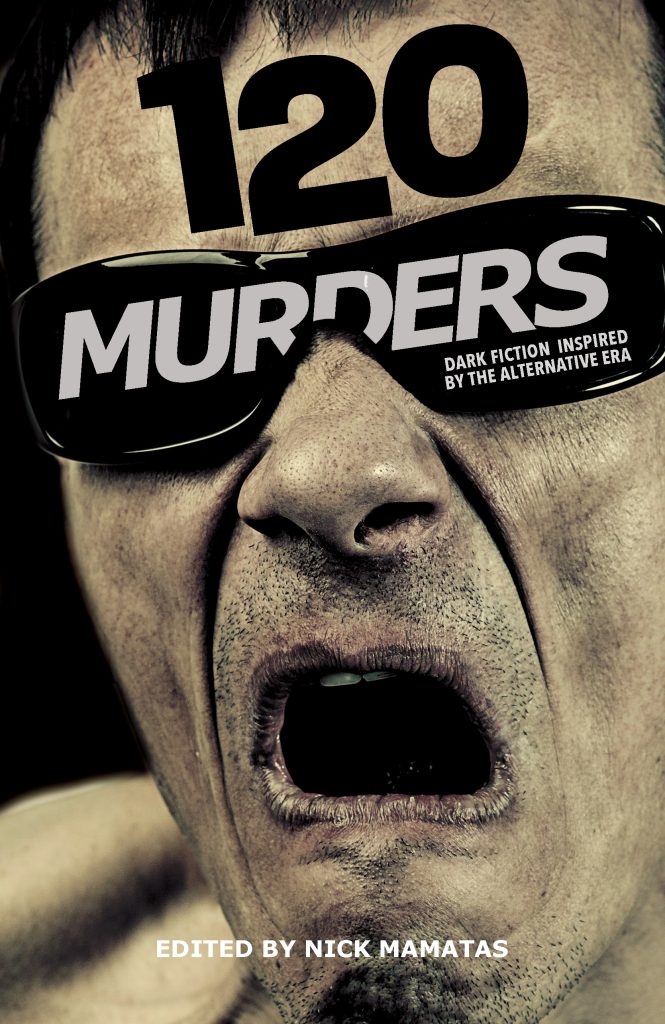
120 Murders: Dark Fiction Inspired By the Alternative Era, edited by Nick Mamatas. Closeup of a screaming white man wearing sunglasses.

Rachel: Nick Mamatas is a fantastic author and a longtime friend, and every time he puts out a new book, I know I’m going to love it. This one is no exception, and I’m thrilled that he’s here to tell you about it. Nick, please tell us about yourself and 120 Murders.

Nick: I’m Nick Mamatas, an author and editor. My most recent editorial work is the editing of the anthology 120 Murders: Dark Fiction Inspired by the Alternative Era. I asked top writers of noir, gothic, and horror fiction to write a story inspired somehow by the songs played on college radio and “alternative” music video programming blocks, and, boy howdy, did they!

It’ll be published by a new independent press, Ruadán (pronounced ROO-ah-dawn) Books, which focuses on all manner of dark speculative fiction.

120 Murders includes brand new stories by William Boyle, Selena Chambers, Jeff Chon, Libby Cudmore, Jeffrey Ford, Meg Gardiner, Todd Grimson, Cara Hoffman, Maxim Jakubowski, Alex Jennings,  Cyan Katz, Josh Malerman, Michael Marano, Silvia Moreno-Garcia, Zandra Renwick, Jason Ridler, Veronica Schoanes, Elena Mauli Shapiro, Brian Francis Slattery, Molly Tanzer, Chris L. Terry, and Paul Tremblay, as well as little notes about their musical tastes.

Rachel: One of the hazards of growing older is that delusion that the pop music you listened to when you were 17 was truly the best pop music ever produced by humanity. For GenX, of course, that is objectively true. In Ghosts Of My Life, Mark Fisher talks about the material conditions that led to post-punk, and how they no longer exist to produce music with the same originality and emotional resonance. Is there something about the alternative era that lends itself particularly well to horror, dark fantasy, and noir?

Nick: There might be some biases built into that conception. I remember when Don’t Tell a Soul came out; most Replacements fans I knew thought something along the lines of “What the hell is this?!” and now that album is a classic, I guess. Do people still listen to Helium? I suspect not. I just tried and almost made it through “Superball.” Yow! 

But I do agree; the 80s and 90s were the last time when rents and rehearsal space were cheap enough, but recording equipment expensive enough, that bands would write and play out and perfect their sounds, and then be discovered and signed. The incubation period for songwriting has been drastically shortened thanks to self-releasing, and labels for lack of something to spend their capital on so focus on brand development over band development, and high-priced producers and songwriters/punch-up artists that flatten sounds and eliminate lyricism. You can’t mass produce “It’s so easy to laugh, it’s so easy to hate/ It takes strength to be gentle and kind.” It doesn’t rhyme!

Deeper lyrics tend to be darker. Analog production tends to sound dirtier. Reagan, Thatcher, and Kohl, those great annihilators of society, gave everyone plenty to write about. Now everyone’s a Reaganite—1980s Reagan in economics and queerphobia, 1960s Reagan in racism. One can hardly even object to it anymore; what’s a ruin when it’s your cradle?

Rachel: Horrifying, though I am relieved it’s not just because I’m old. What was your process for assembling the collection? Did any authors have to fight it out for a particular song?

Nick: I asked the writers whose short stories I like, and begged some famous friends whose short stories I like, to lend me their names and then went hunting for money. For the most part, everyone wanted something different to riff off of, though for a moment there 120 Murders looked like it might have ended up 120 Murmurs–an R.E.M. tribute. 

I was also quietly open to query letters, which, back in the old days, every anthologist was. The SATization of submissions by editors, who claim to be interested in new voices, mean that many anthologists don’t entertain query letters, which I think is a huge mistake. Slush piles are an extremely inefficient way to find new voices, but they do serve to make editors objects of respect and fear among hundreds of hopeful submitters, which is often rather the point of launching some anthology or magazine project. You get prominent writers to love you by giving them money, and would-be writers to fear you by holding forth on social media about how writers aren’t following submission guidelines or are otherwise being bad boys (almost always boys, of course).

One might say that querying serves as an in politic, as someone needs to know how to write an effective business letter, but that’s a skill one can master in an afternoon. Others suggest that it serves as a barrier against writers who are shy or lack confidence. I’ll say that several people tweeted/commented to me, publicly, to ask when/if/why wouldn’t I open to slush submissions. Anyone nervy enough to ask an anthologist to quintuple his workload, and to attempt a bit of public shaming while they’re at it, is certainly brave enough to just write and privately send a normal query letter.

Three of the stories in the final book were query acceptances, and a fourth was the author’s fiction debut. Cyan Katz was a student in an online workshop I ran and I was impressed enough with their work, which was wild and raw and had a very “punk” feel, that I solicited them for a story and worked to get it into great shape. Other authors generally needed light edits, or some rewrites, or were given a second chance after the first story wasn’t great.

Rachel: With BookTok and niche online communities, the many genre markets are increasingly segmented, and trend-chasing publishers seem to be leaning towards cozy, hopeful stories. What were some of your motivations and challenges when pushing back against these trends?

Nick: I’m very skeptical of the cozy trend, though every subgenre and movement has its virtuosos and its hacks. The top three percent of anything is going to be great. I do think there are two trends—plenty of cozy and hopeful, but also a lot of dark stuff. Barnes & Noble here in the US has a horror section again, major publishers have relaunched horror lines for the first time in thirty years, and neo-noir is pretty huge. There may even be a cozy story in 120 Murders, though the author and I disagree about how cozy it is. I think any story with a closetful of desiccated corpses is pretty dark.

In crime fiction, there’s been a microtrend toward anthologies in tribute to this or that musical artist. I even have a story in one, Lawyers, Guns, and Money, which is obviously a Warren Zevon tribute. Some of the book themes are a little shakier, honestly. I thought a broad musical range—all of college radio and alternative—and a thematic range of noir, science fiction, crime, and gothic—would make more sense, or would at the very least put a bullet in the head of the trend.

Rachel: I would never ask you to pick favourites, but are there any particular images or moments from any of the stories that live rent-free in your head? What are they?

Nick: Bunches! I’ll list a few. One of the stories begins with its author contemplating being solicited for the story she is writing and the reader is reading. My name is in it, so of course I love it. We have queer cyborgs who actually do queer things on the page, alleyways full of broken glass sparkling under the streetlamps, a big pile of sloppy joe mix plopped atop a cardboard chore wheel (ew!), poor Jeffrey Ford writing about a very Jeffrey Ford-type guy being shot in the head for being annoying (Jeff, no!) a horrific historical scene of butchery and cannibalism, and much much more.

Rachel: Cara Hoffman’s author’s note references “collective loneliness,” and “art from garbage and lack,” concepts that as a cynical Gen Xer immediately resonated with me. What does this era of music—and the stories inspired by it—tell us about our struggles today?

Nick: There’s a weird social media trend in which Gen X people describe themselves as feral and tough because they were latchkey kids and roamed the streets freely and had to get up and walk across the room to change the TV channel. It’s extremely tedious, if you ask me, and obviously just whistling past a graveyard.

But art from garbage and lack is totally it. The internet is dead; this interview may well be the only non-AI tainted thing a reader may come across today, and even then they’ll likely just find it via links you and I post to our social media accounts. Does anyone just stop by any website anymore to see what’s up? Amazon Prime Day, maybe! Ugh. So we are back to where we were in 1992—photocopy machines (many books are print-on-demand, that’s just big photocopying!) and homebrew movies (albeit with phones and not VHS camcorders) and singing over beats. If the Sisters of Mercy had Doktor Avalanche (the first Dr was a Boss DR55 drum machine that could produce all of four sounds) and toastmasters and MCs had the first twenty seconds of a vinyl track to work with in the 1980s and 1990s, well, so do we. The struggle is going to be to find our humanity between gaps in the algorithm, and as the last people to hit adolescence in an analog world, Gen X and Xennials have something to say and something to share.

Rachel: I’ve already read it, but where do normal readers get a copy? And how do they find you?

Nick: Find me on Bluesky at nmamatas!

On Instagram I mostly post license plates and pizza slices, but there I am concentrateandtryagain. You can get 120 Murders at a nice discount, with a bonus story by me bundled in with your receipt, at the publisher website. I would also highly recommend special ordering a copy from your local independent bookstore, though the book will also be available via the megachains—emphasis on the word chains, if you catch my drift. You don’t want to be chained, do you?

Wrong Genre Covers

20,000 Leagues Under the Sea as a documentary was suggested by Rob. Have a funny idea for a Wrong Genre Cover? Email us at nightbeatseu@gmail.com, and if Rachel likes your suggestion, she’ll make it in a future issue. Or @ us on basically any of the socials.
20,000 Leagues Under the Sea by Jules Verne with the subtitle "the Oceangate story." It looks like a TV documentary and has an image of the OceanGate sub, pre-implosion, towards the bottom.

Behind the Screens: Tuesday Author Interview

Every Tuesday, get to know a bit about the stories behind the books you love, and discover your next favourite novel.

Zilla: I am so ridiculously excited for this interview—I’ve been waiting (somewhat) patiently for Rachel A. Rosen to be read to share the second book in her Sleep of Reason series with the world. And it’s finally here! Rachel, please introduce us to Blight.

Rachel: Reader, meet Blight. Blight, meet Reader. Blight is the sequel to Cascade, my first novel. Kind of a grim fella but I promise you there’s a sense of humour under there, not too far beneath the spiky surface. Cascade follows the attempts of the various characters, inside and outside systems of governmental power, to stop a climate-induced magical disaster from overrunning Canada and the world. Since there are three books in a trilogy, it’s not too big a spoiler to say that they fail at that, and Blight, which takes place three years later, is about picking up and living in the ruins.

Zilla: Among the many, many things that fascinated me about this book was how much magic derived from the power of true names, whether they protect us from demons or deliver us to sorcerers. What drove you to write your fantasy this way?

Rachel: I was Ursula K. LeGuin-pilled early in life, but of course she wasn’t the first person to write a form of magic in which one’s true name should be carefully guarded, lest the speaker end up with power over you. In Cascade, it’s established that several of the main characters have buried their true names, a type of curse that makes everyone incapable of even thinking of it; in Blight, we are about to find out why that’s important. My version of demons, people and animals who have been corrupted by magic to become monstrous, lure their victims to their deaths by whispering their true names. But humans are always worse than that, and we see what the power of a true name can be in the hands of a magician with malicious intent.

Identity is a form of armour. It’s not a coincidence that the far right weaponizes words—woke, antifa, fake news—twisting their original meanings to corrupt them. If we are going to survive the next few years, battles will not only have to be fought in the streets, but on the terrain of speech. I’ve just made it somewhat more literal for my characters, who risk being turned inside out should the wrong word get said.

Zilla: I love the subtle world building you used to show how life changes under fascism. Could you tell us about some of the inspirations there—for example, for the two types of money your characters use, Canadian dollars & DEC?

Rachel: We often get caught up on definitions, but fascism has never been a coherent ideology. When fascism comes to Canada, to paraphrase George Carlin, it will be polite and couch its atrocities in language about national pride, tradition, and orderliness. 

You can convince people to accept massive socio-political and economic changes through framing particular issues as not political. You can still vote, but why would you? The issues most critical to your wellbeing—say, do we light the planet on fire in pursuit of shareholder value—have been decided amongst the ruling class by consensus, and you won’t be consulted on them. This is managed democracy, and it’s on its way here too. It’s no wonder that North Americans are exhausted by traditional electoral politics.

The levers of power are financial, so I wanted to look at how the currency would work in a post-apocalyptic authoritarian regime. One model was China, which adopted a dual currency in its transition to capitalism. In Blight, most characters use a devalued Canadian currency, but Dominion Exchange Credits—DEC—are available for luxury goods. These, being digital, are easier for the state to control, and the list of what constitutes luxury is always growing. You end up with people selling their souls for health care, something that of course would never happen here.

Zilla: Speaking of fascism (and who isn’t, these days), I noticed that at the beginning of the novel, characters had a range of methods of resistance, from large to small. By the end, all our heroes had chosen to opt out and actively resist. Is this a choice for narrative arcs, or does it speak to broader realities activists need to confront?

Rachel: Activists want to be inclusive, and the struggle has many levels. Protesting in the streets is activism. Is feeding people activism? It’s one of the most fundamental forms of activism. Creating art? Maybe, if it inspires action rather than just making people feel better about their political opinions. Is teaching the next generation critical thinking activism? As a teacher, I believe that’s just kicking the can down the road a bit. Ultimately, you have to stand in front of the bulldozer to prevent the machine from doing its job. The arc of one character goes from singing the wrong note, in the first book, to machine-gunning brownshirts by the end of the second, and to a degree that’s all of our arcs, if we’re going to be honest.

Zilla: On a more personal note, I’d like to ask, HOW DARE YOU KILL [REDACTED], HOW DARE YOU MAKE ME FEEL FEELINGS?

Rachel: Because I am a monster. Every time someone complains about the character deaths in Cascade, I am gleeful, because that means I made a little person who a reader likes enough that they are sad to see them die. To be real with you, I like that character too and gave myself a big sad whilst writing that scene.

Zilla: Is there a happy ending to the trilogy? WILL ANYONE EVER BE HAPPY AGAIN???

Rachel: I won’t reveal much about the ending beyond that there is one. I’m not going to pull a George R.R. Martin—I’ve plotted out The Sleep of Reason to the third and final book. But in terms of whether anyone will ever be happy, the disaster gays at least get to swap spit and witticisms in this one, which should make at least some people happy.

Zilla: Thanks for sharing your story and your process. We’re looking forward to reading! Where can the Night Beats community find you and your book?

Rachel: I am firehosing social media in an attempt to make these books discoverable. A good place to follow me is right here on Night Beats, since any updates will go directly to your inbox. You can sign up for the Night Beats Newsletter here.

You can also find me on:

Bluesky

Mastodon

Threads

Insta

Facebook

My website is rachelrosen.ca and my podcast is at wizardsandspaceships.ca, or wherever you get your podcasts.

You can buy the book at this universal link, The BumblePuppy Press, or order it at your local bookstore or library!

Behind the Screens: Tuesday Author Interview

Every Tuesday, get to know a bit about the stories behind the books you love, and discover your next favourite novel.

Rabbit in the Moon cover with a young person standing in a broken-down amusement park

Zilla: If you’re in the mood for a science fiction adventure, you are in luck, because Fiona Moore is here to tell us about their novel, Rabbit in the Moon. Fiona, take it away!

Fiona: Here’s the blurb:

Ken Usagi, a daring young journalist from the icy wilderness of Nunavut, is thrust into a perilous journey through the war-ravaged remnants of the former United States. Haunted by a chilling encounter with a mysterious biotechnical machine—a relic from his troubled childhood—he becomes convinced it holds the key to ending the devastating conflict tearing the world apart.

Far to the south, Totchli, a brilliant young biotechnician from a Mesoamerican society pummeled by catastrophic climate change, receives a desperate order. He must venture north to uncover the fate of a critical colonial expedition, a mission that once carried the last hopes of his people’s survival. Communication channels with the expedition have fallen eerily Silent.

As Ken and Totchli embark on their separate quests, the very fabric of reality begins to unravel. Their paths converge, leading to a fateful encounter where the boundaries of their worlds blur and shatter.

Zilla: What inspired you to write this book?

Fiona: The initial inspiration was something of a mashup. I had been watching Apocalypse Now while also reading the Raffles novels and Castle Keep, and I had an irresistible image of a riverboat going through a jungle, crewed by Harry Manders from the Raffles novels and Alfred Benjamin from Castle Keep. When I have an image like that, I start exploring it. How did it happen? Where are they going? What are they looking for? It all just came from there.

Zilla: I love that! Were there any other images that inspired you?

Fiona: As well as that mental image, there was another source. A friend of mine told me a story about how, on an early morning walk, he’d seen two magpies herding a rabbit. One driving it from behind, the other hopping in front. That struck me as a very sinister image, but also one that tied in with the novel—these people, symbolically associated with rabbits, being driven by forces they don’t understand towards conclusions that might be disturbing.

Zilla: How much research did you need to do for your book?

Fiona: On the one hand, a lot—on the other, hardly any! I’m a university professor in my day job, and I’m very interested in Indigenous approaches to economics as an alternative to the growth-focused model. This is one of the reasons why the novel centres on two futures, one in which the Inuit are the most stable and successful society in North America, and another, where an Aztec-influenced post-human society dominates.

Zilla: Thanks for sharing your story and your process. We’re looking forward to reading! Where can the Night Beats community find you and your book?

Fiona: You can buy the book here: https://books2read.com/u/mVLQgp and I am drfionamoore on Facebook, LinkedIn, Twitter, Instagram, BlueSky and TikTok. My blog is www.adoctorofmanythings.com.

Book Report Corner

by Rachel A. Rosen

the cover of Rakesfall by Vajra Chandrasekera. It's trippy, bright pink with an animal skull and flowers and worms, with the tagline "Will you follow me to the end?"

Vajra Chandrasekera’s first novel, The Saint of Bright Doors, is probably the best fantasy novel I’ve read in a decade. So it is unsurprising that I bought his second, Rakesfall, without even knowing what the book was about.

Rakesfall is WILD and defies description, veering from the 1970s to the end of the world, written with the kind of narrative confidence that you’d expect from an author after they’ve won a lifetime of prestigious literary prizes. I made people stop what they were doing so that I could read parts of it to them. It’s a story about struggle—often in a way that is very visceral and brutal—love and death and reincarnation and science and nationalism and climate collapse.

Can I explain what I just read? Maybe if I took a course in it. Did it blow me away? Absolutely.

Behind the Screens: Tuesday Author Interview

Every Tuesday, get to know a bit about the stories behind the books you love, and discover your next favourite novel.

Be the Sea cover with gorgeous illustrations of sea life

Zilla: We can all use some beauty in our lives—the open ocean, teeming with life, the unshackled consciousness we call dreams, and the joy of sharing both with each other. Clara Ward’s ecofiction gives us all of these in their book, Be the Sea. Clara, can you introduce us to your book?

Clara: Be the Sea dips into a queer neuro-inclusive future with chosen family, sea creatures, and mysterious dreams.

In November 2039, marine scientist Wend Taylor heaves themself aboard a zero-emissions boat skippered by elusive nature photographer Viola Yang. Guided by instinct, ocean dreams, and a shared birthday in 1972, they barter stories for passage across the Pacific. Aljon, Viola’s younger cousin, keeps a watchful eye and an innovative galley. Story by story, the trio rethink secrets, flying dreams, and how they experience their own minds.

Zilla: What inspired you to write this book?

Clara: My earliest memories are of the ocean. I was born in Kāneʻohe, Hawai’i, back when loving the ocean meant fighting to protect Kāneʻohe reefs from human sewage.

Rocking on a boat or standing with surf lapping at bare feet has always been my happy place. After half a century, I realized that wherever life threw me, I always returned to the ocean. My fight has grown to include climate change, ocean acidification, plastic and other pollutants—too much for a single person or a single lifetime. Alongside this realization came the characters for my story, a near-future chosen family drawn together by mysterious forces and their love of the sea.

Zilla: Who did you imagine reading your book as you wrote it—your own chosen family of readers?

Clara: While writing, my head was full of characters who cared enough to act. Whether a teacher, scientist, sailor, photographer, lawyer, or marine lifestyle entrepreneur, each found their own path to preserving the ocean. I wrote my characters’ grief over losing the coral reefs alongside their drive to protect a giant manta ray. I believed readers as diverse as my characters could share a sense of wonder and be inspired with love for the ocean, the earth, and each other. People want to save what they love. I pledged all my royalties to Conservation International and launched Be the Sea out into the world.

I found plenty of kindred spirits while speaking on environmental and marine science panels. However, the readers who embraced the book most fiercely from the start, some literally hugging the book to their chests, were those who saw themselves in my neurodivergent, nonbinary, and queer protagonist. Those readers not only changed my connection to our community, but they literally changed the trajectory of Be the Sea a month after it came out. Neurodivergent readers especially told me they, or someone they wanted to share the book with, needed an audiobook version right away. I told my tiny indie publisher, Atthis Arts, and they supported this shift in scheduling. The audiobook for Be the Sea came out in December!

Zilla: If your characters met you, what would they say to you?

Clara: I live in Silicon Valley now, and half the young people I know have jobs that could be read as science fiction by outsiders. They challenge society to accept them as they are: queer, trans, neurodivergent, proud. They ask when—not if—sea level will rise a meter, and they take for granted that we need alternatives to fossil fuels and plastic packaging as soon as possible. It has become common to hear people of all ages say that we need a solution for these problems yesterday. Sadly, although my book takes place fifteen years in our future, that’s what I hear my characters saying to me. I did the best I could, and wrote Be the Sea for them, yesterday.

Zilla: I love this. Thanks for sharing your story and your process. We’re looking forward to reading! Where can the Night Beats community find you and your book?

Clara: You can find me (and lots of bonus material for my book!) on my website (https://clarawardauthor.wordpress.com/novels/be-the-sea/). Be the Sea is available at your favorite online or brick-and-mortar bookseller.  Or go directly to my small press publisher, Atthis Arts (https://www.atthisarts.com/product/be-the-sea/) and use code BETHESEA this week only to get 20% off your entire order and a free Sea Creature postcard!