Behind the Screens: Tuesday Author Interview

Every Tuesday, get to know a bit about the stories behind the books you love, and discover your next favourite novel.
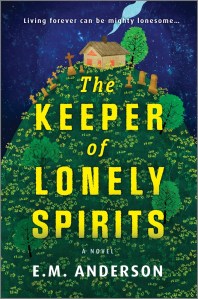
keeper of lonely spirits cover, with a graveyard on the top of a cheerful hill

Zilla: Sometimes we want to cuddle up with a cozy book in the dark of winter, and E. M. Anderson has just the thing! They’re here to tell us about their paranormal mystery, The Keeper of Lonely Spirits.

E.M.: The Keeper of Lonely Spirits is a queer cozy fantasy in which an old man cursed with immortality hunts ghosts rather than making mortal friends who will die one day. When the residents of an Ohio town beset by a vengeful spirit adopt him as their own, he must decide: leave to protect his heart, or stay to save their lives?

Zilla: What inspired you to write this book?

E.M.: There’s a soft old man character in my debut, The Remarkable Retirement of Edna Fisher. While he’s a more minor character, he’s also one of my favorites. I really wanted to write a book about a soft old man, and then when my nesting partner drove us past a cemetery one day, I had a vision of a soft old man working the grounds. That was the initial inspiration for The Keeper of Lonely Spirits, although the main character is also inspired by my maternal grandfather in many ways.

Zilla: That’s very sweet—and shows that you’re a character-centered writer. If your characters met you, what would they say to you?

E.M.: I’m pretty sure my characters would mostly go, “DEAR GOD WHY” if they met me! Peter, the main character of The Keeper of Lonely Spirits, has even more reason to react to me that way than most of them do, between the immortality, the unsettling relationship with ghosts, and the sheer number of people he’s lost, but maybe he’d refuse to speak to me at all. Which is too bad, because I’d really like him to be my grandpa.

Zilla: Oh dear! Who is your favourite character you’ve written, and why?

E.M.: I love all my characters, but Edna Fisher—the titular character from The Remarkable Retirement of Edna Fisher—is a massive comfort character. She’s the quintessential grandma, she’s cheerful, she’s always there for anyone who needs her, and she aggressively adopts every young person who walks into her life. No problem is too much for her, even if she has to sit and feel things about it for a while before tackling it. And even though she isn’t cursed with immortality, in my head she’ll live forever.

Zilla: What’s your next writing project?

E.M.: Currently, I’m partway through a second draft of a queer cozy mystery starring a grumpy old lightkeeper. I’m also revising another queer cozy fantasy for my publisher, MIRA; hopefully it’ll be cozy, anyway—it’s getting a tad dark. But the main character adores romance novels, so the book has sort of turned into a 1980s bodice-ripper thinly disguised as a fantasy novel.

Zilla: Thanks for sharing your story and your process. We’re looking forward to reading! Where can the Night Beats community find you and your book?

E.M.: My website is elizmanderson.com, and I’m also elizmanderson on Instagram, BlueSky, and Facebook (as well as a couple other platforms where I’m less active). Here are BookShop links to The Keeper of Lonely Spirits and The Remarkable Retirement of Edna Fisher, but a more complete list of retailers is available at my linktree (linktr.ee/elizmanderson).

Behind the Screens: Tuesday Author Interview

Every Tuesday, get to know a bit about the stories behind the books you love, and discover your next favourite novel.

Up the Entropic Hill cover with a cyberpunk looking person sitting on a fence

Zilla: Social media can be a wonderful place to meet strange new people, and Mattie Bukowski, who I met on Tumblr, certainly qualifies as wonderful! He and I bonded over our shared love of deep, queer science fiction, so I am delighted to announce that he’s published a novel that promises to be as introspective and engaging as he is. Expect a review from me soon, but til then, Mattie, can you tell us about your novel Up the Entropic Hill?

Mattie: Up the Entropic Hill—my debut novel—is a queer, existential space adventure.

In the distant future, humans live in a utopia where even death is not the end—for everyone except Amber’s parents. At 25, she is a cynical, aloof Ph.D. in history who resents her sheltered life at home and yearns to find her place in the world. Then, an exciting job offer comes her way—the chance to uncover the mystery of a civilization that disappeared thousands of years ago. Teaming up with the archeologist Lullaby, Amber embarks on a hitchhiking quest to find the fabled Aquamarine Moon and, perhaps, some much-needed meaning in her life.

Zilla: What inspired you to write this book?

Mattie: A few things! First is a biophysics lecture I attended while in undergrad—it was about the laws of thermodynamics, and entropy, and information, and how those concepts are connected. This lecture was somehow quite philosophical, for me at least. It made me think about existentialism and the nature of reality and human purpose. That’s where I got the main themes of the book. Another major inspiration is Hitchhiker’s Guide to the Galaxy—I love the series and it was constantly in the background of my mind as I was writing. That’s why the novel is mostly one long space hitchhike. Lastly, I was inspired by some other philosophical questions that were tumbling around my brain at the time, especially questions about free will and anti-natalism. So this book is quite philosophy heavy, though hopefully not in an academic sense.

Zilla: If your characters met you, what would they say to you?

Mattie: I think Amber, the protagonist of the novel, would hate my guts for all I put her through! Especially because of the ending (spoilers…). Amber is not a people person to begin with, she hates almost everyone she meets. I think the idea of having an author in control of her narrative would infuriate her, even though I feel like Amber was more in charge of this book when I was writing it than I ever was. 

Zilla: You’ve told us about plot, and about characters…so is your book more plot-driven or character-driven? Or a secret, third thing?

Mattie: It might actually be the secret third thing! My first instinct is to say it is character-driven because of how much it focuses on Amber and her experiences and reflections and character development, but based on some of the feedback I’ve gotten, it’s a mix of both. The book is quite fast-paced and adventurous too, there’s something happening every chapter, so I think typical space opera readers wouldn’t be bored with it.

Zilla: Once I finish reading this, what do I have to look forward to next? What’s your next writing project?

Mattie: I’m working on a dark academia horror with a M/M romance! Here’s the pitch:

When two researchers discover a horrifying truth about consciousness and death, their obsessive devotion to each other pushes them to do the unthinkable.

Zilla: Okay, I’m sold on both of these books now! Thanks for sharing your story and your process. We’re looking forward to reading! Where can the Night Beats community find you and your book?

Mattie: You can find me on Tumblr.  The novel is available on publisher’s website and Amazon.

Behind the Screens: Tuesday Author Interview

Every Tuesday, get to know a bit about the stories behind the books you love, and discover your next favourite novel.

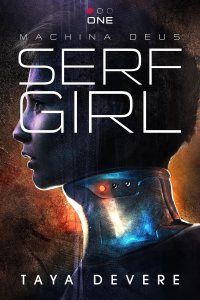
Serf Girl cover with a young woman with a metal collar on

Zilla: The best science fiction makes us think about our own world—the people and politics that inhabit it—while still telling a great story. Which is why we have Taya DeVere here today to tell us about her novel Serf Girl (Machina Deus Book 1). Taya, tell us a bit about yourself and your book!

Taya: Hello! I spend half of the year in Finland, the other half in Spain, and visit my third happy place, Maine, whenever possible. I write dystopian sci-fi stories under the pen name Taya DeVere.

My new release tells the story of Sam, a PTSD-driven woman who volunteers in a human experiment in the year 2150. To escape the horrors of Slumland, she moves into a questionable haven; an abandoned mall. She’s no different than any other Serf in the mall program… except for the secret that would terrify them all.

Zilla: What inspired you to write this book?

Taya: The idea for Serf Girl came to me while sitting in the Maine Mall food court. It’s not a brand-new idea; people living in repurposed buildings due to housing shortages and overpopulation. But that’s where the story originated—and then along came Sam. With Sam’s nightly flashbacks and nightmares, Tourette’s syndrome, antisocial ways, and PTSD symptoms, she was in for a (torturous) ride. While writing the first draft, I let Sam lead the way. I started to enjoy the time I spent in her headspace more and more. During the second draft, I pushed her to overcome her trust issues and defenses – no matter how much blood she had to spill along the way.

Zilla: How much research did you need to do for your book?

Taya: My partner, Chris, has Tourette’s syndrome. All the ‘twitches’ in Serf Girl are from real life and what we call Chris’s “Demon.” In addition to interviewing Chris about his twitches and tics, I also did extensive research on the syndrome to avoid the biggest pitfalls.

Zilla: Have you ever killed off a character your readers loved?

Taya: Yes, I’m known to kill off my characters, whether they’re loved or hated. I had to slow my roll while writing my previous series, Unchipped, because my development editor threatened to quit her job if I slaughtered any more of her favorite people. People do die in Machina Deus, but I think we’re moving in the right (happier) direction. I did read somewhere how European writers are expected to kill their characters, no matter the genre, how interesting is that? Good thing I’m not writing romance or children’s books!

Zilla: I’ve never heard that, but it checks out. Speaking of other people’s books, what book do you tell all your friends to read?

Taya: I’m currently devouring The Ministry of Time by Kaliane Bradley. It’s a story about time traveling, romance, expats, and refugees. I can’t wait for bedtime to dive back in!

Zilla: Thanks for sharing your story and your process. We’re looking forward to reading! Where can the Night Beats community find you and your book?

Taya: Serf Girl is available on Amazon (e-book: https://www.amazon.com/dp/B0CYX85MNB) and anywhere paperbacks are sold. 

Find me on Facebook (https://www.facebook.com/tayadevereauthor) and on Instagram (https://www.instagram.com/tayadevere_author/).

Behind the Screens: Tuesday Author Interview

Every Tuesday, get to know a bit about the stories behind the books you love, and discover your next favourite novel.

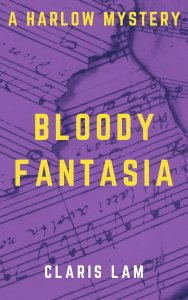
Bloody Fantasia cover with torn pages of sheet music

Sabitha: We’re so excited to have Claris Lam back to tell us about her third mystery in the Harlow Mystery series. Winner Takes All and Engagement to Die For were great, so I can’t wait to hear what Bloody Fantasia has in store for us! Claris, can you introduce us to the book?

Claris: In Bloody Fantasia; Aubri Harlow and her friends believe that their days of investigating murders are over. However, when Aubri’s sister, Aria, moves into her new music school, the Da Capo Music Institution, the school’s acting president suddenly dies during the welcoming ceremonies.

However, the acting president’s death is far from the first murder committed on campus. A string of past murders haunt the school’s reputation and its students. It doesn’t take long before new corpses start piling up, and Aubri, Aria, and their friends realize they must take up the mystery-solving mantle once more and find out who the murderer is.

Will they figure out the person responsible for causing these new tragedies, or will they become part of its bloody history? Find out by reading Bloody Fantasia!

Sabitha: You’re on a roll with the Harlow Mystery Series … what inspired this third book?

Claris: Fun fact: Bloody Fantasia was initially supposed to be a crossover between the Harlow  Mystery series and a different standalone book I had planned years ago!

The other standalone book would have featured the events of what happened at the Da Capo Institution prior to the current events of Bloody Fantasia. That book, and Bloody Fantasia, were both inspired by a fusion of La Corda D’Oro (a manga series) and The Secret History by Donna Tartt, and elements from several other mystery books set in school settings.

However, I ended up dropping the standalone book idea, and Bloody Fantasia became this project that was still influenced by La Corda D’Oro and The Secret History. I had to significantly simplify the story since I didn’t have the other standalone book (which took place before the events of Bloody Fantasia) to provide context for the story to make complete sense.

Sabitha: Do you have a playlist for your book? Can you tell us why you picked a couple of the songs?

Claris: I have playlists for all the main characters! I’ll link to each of them below.

Aubri Harlow: https://open.spotify.com/playlist/3BXi63oe0OFdmi24HltNhk?si=a30a0685c2b64fa2

Bastian Faulkner: https://open.spotify.com/playlist/1tzPptocq3hD9wA6WNkBIs?si=91052ffc89e64627

Aria Hawthorn: https://open.spotify.com/playlist/4umEcteGfZ4lTnt2nm6KO2?si=4044368c94b846bd

Nick: https://open.spotify.com/playlist/2AvgBWVf9QOBhjo71jrTj5?si=238f145183d547a6

I hope to share playlists featuring the antagonists/murderers of each book and a playlist for the whole Harlow Mystery series (or separate playlists for each book) in the future.

Sabitha: I can’t wait for that! As a prolific author, do you have any tips to help people become better writers?

Claris: Please give yourself some regular breaks and take care of yourself.

I’ve gone through burnout as a writer back in 2023. Despite taking time to recover from said burnout, I kept going through an unhealthy cycle of getting everything writing-related done as fast as possible. I felt this pressure to keep producing content at such a fast pace to be a “successful” writer, especially when seeing other authors who published multiple books in a year with high sales and rankings.

It’s only recently (early July 2024 onwards) that I’ve decided to slow down a bit and take my time with writing. I find that by doing so, it gives me more opportunities to enjoy the actual process of writing again. I’ve missed that for a long time, and I’m glad to rediscover joy in the process again.

Also, figure out what your definition of “success” as a writer is.

Everyone’s definition of how they want to reach “success” as a writer will be different. Mine has changed drastically in the past few months so I can have a writing journey that gives me more joy regardless of how fast or slow I am with having new work published. It’s really important that when you figure out your definition of success, it’s because it’s something you genuinely strive for versus doing it because everyone else seems to be working for that same type of goal.

Sabitha: That is solid, hard-won wisdom. Taking that into account, what’s your next writing project?

Claris: I’m currently writing two poetry chapbooks and several fantasy books. They’re drastically different from the Harlow Mystery series but writing in these genres brings me the most joy right now. I also want to write more short stories and individual poems, and experiment with those forms more.

Sabitha: Thanks for sharing your story and your process. We’re looking forward to reading! Where can the Night Beats community find you and your book?

Claris: Want to check out my website, socials, & newsletter? Check out all the links in my Carrd: https://clarislam.carrd.co. Currently I’m more active with my newsletter than anything else, so I’d highly recommend that you subscribe to it! I send newsletters every 2nd and 4th Tuesday each month.
Here’s the link for where you can find Bloody Fantasia: https://books2read.com/u/38veQa

Behind the Screens: Tuesday Author Interview

Every Tuesday, get to know a bit about the stories behind the books you love, and discover your next favourite novel.

The cost of power cover

Sabitha: It’s time for some science fiction intrigue! Joyce Reynolds-Ward is here to talk about her near-future trilogy, The Cost of Power. Joyce, can you give us a taste of what we have to look forward to?

Joyce: I write speculative fiction that deals with themes of high-stakes family and political content, digital sentience, personal agency, realistic strong women, and (whenever possible) horses. My science fantasy NeoWestern trilogy, The Cost of Power, released this fall—starting with Book One, The Cost of Power: Return.

Return focuses on exiled heir Gabriel Martiniere’s reinstatement to a leadership position within the Martiniere Family’s privately held corporation, the Martiniere Group. He discovers that not only has the Martiniere mind control technology been co-opted by a rival family that seeks to destroy the Martinieres, but that he, his beloved wife Ruby, and others he cares about face a multiverse-level threat. Digital thought clones and vengeful water spirits add to the peril that Gabe and Ruby face. Crucible (Book Two) and Redemption (Book Three) continue the story past Ruby and Gabe’s wedding, placing them in even greater challenges as they face threats both professional and personal, including situations that impact the future of their marriage. Much of The Cost of Power takes place on a ranch in an isolated part of Northeastern Oregon.

Sabitha: What inspired you to write this series?

Joyce: I wrote this trilogy to wrap up some considerations I had within the Martiniere Multiverse. I’ve written three other short series in what I call the Martiniere Family Saga, all set in different universes. This trilogy took the multiverse concept head on and expanded it, with a significant change in one secondary character who has been the villain in the rest of the books. I also laid in some significant family developments.

Sabitha: Do you have a playlist for your books?

Joyce: As far as a playlist for these books, I’d have to say that amongst the top choices would be the Disco Biscuits Tractorbeam, Serena Ryder’s Stompa, Bruce Springsteen’s Devils and Dust, Anna Nalick’s Breathe, and assorted Pink Floyd and Alan Parsons, amongst others.

Sabitha: That sounds great! Do you ever wonder what your characters would say to you if they could talk? 

Joyce: My characters have plenty to say to me. When I was writing the first Martiniere series, Gabe spoke up right away to tell me that my original framing of him was wrong, wrong, wrong. Ruby flat-out told me that she needed the final scene in The Cost of Power. It’s been my experience that when my characters speak, I’d darn well better listen.

Sabitha: That’s wise of you to pay attention to your characters! What’s your next writing project?

Joyce: Right now I’m uncertain whether my next project will be writing a NeoWestern book or continuing with a sequel to my Goddess’s Honor fantasy series. I’m about half and half between the two options. But I’m not planning to decide until the fall.

Sabitha: Thanks for sharing your story and your process. We’re looking forward to reading! Where can the Night Beats community find you and your book?

Joyce: The Cost of Power can be found at Amazon, and at other retailers like Apple, Kobo, and Smashwords. All my books and short stories are on my Amazon Central Page, or you can buy my ebooks directly through Ko-fi, or my paperbacks on Bookshop. I can be found on X/Twitter (https://twitter.com/JoyceReynoldsW1), Instagram (https://www.instagram.com/jreynoldsward/), CounterSocial (@joycereynoldsward), and Bluesky (@joycereynoldsward.bsky.social).

Behind the Screens: Tuesday Author Interview

Every Tuesday, get to know a bit about the stories behind the books you love, and discover your next favourite novel.

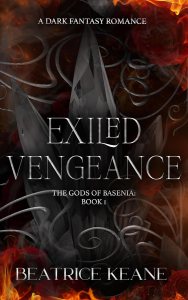
Exiled Vengeance cover

Zilla: If you (like me) like your romance dark and magical, then you are the perfect reader for Beatrice Keane’s debut novel, Exiled Vengeance. Beatrice, can you tell us what we have to look forward to in your book?

Beatrice: Exiled Vengeance is my debut romance novel, and it is a dark fantasy romance. Emphasis on the dark. Trigger warnings are in the front matter of the book!

So, it’s about Eliana–a violently oppressed woman in a walled city ruled by religious fascists. When she’s pushed too far, she turns to the forbidden God of Vengeance. Unfortunately for her, the ritual texts are a little difficult to follow and instead of being imbued by his powers, he appears right in front of her and oh no he’s hot. One accidental kidnapping later, he quickly becomes obsessed with her. They join forces to take down their common enemy–and find something more than allies in each other.

Zilla: Oh, I love this! But do your characters love this as much as your readers do? What would your characters say if they met you?

Beatrice: Probably something like, “thanks for the trauma, asshole,” which… I think that’s fair.

Zilla: How much research did you need to do for your book?

Beatrice: A weird amount on desert flora and fauna, before deciding that it’s fantasy and it’s totally okay if barrel cacti coexist with jackals. Also I researched ancient clothing styles and weapons. 

Zilla: I relate to that—it’s hard sometimes to remember how much freedom we have as authors when we’re writing fantasy. So, next question, what book do you tell all your friends to read?

Beatrice: Come Out Come Out by Alexia Onyx. It’s a more contemporary dark romance with a paranormal twist. The love interest is a literal ghost. He’s hot. It’s a thing. 10/10. Would highly recommend if you were an emo kid in 2006-2010. Grab your Hawthorne Heights CD, pals, we’re reading ghost smut.

Zilla: What’s your next writing project?

Beatrice: There’s a few! Right now I’m working on Book 2 for Exiled Vengeance, which is Infamy Descending. And I just published a paranormal romcom about a coffee shop owner who just so happens to be a shifter, and a paranormal investigation TV show audio engineer—it’s called Bikes and Bear Claws.

Zilla: Thanks for sharing your story and your process. We’re looking forward to reading! Where can the Night Beats community find you and your book?

Beatrice: Primarily Instagram! I’m @beatricekeane.writes, and that’s where I spend most of my online-time. The book is available on Amazon (it’s also in Kindle Unlimited) and the link is HERE.

Behind the Screens: Tuesday Author Interview

Every Tuesday, get to know a bit about the stories behind the books you love, and discover your next favourite novel.

Cover of Deads Rise! by Shawn Whitney. It's yellow and pink with a woman with her fist upraised and a skeleton overlaid on her. Other text is "No signs of life book one" and "Dying is just the beginning...".

Rachel: We love to get politics all over our pulp fiction, so here’s screenwriter and novelist Shawn Whitney to tell us about his latest book, Deads Rise! Shawn, tell us about the book!

Shawn: It’s the first in a series called No Signs of Life. When half the world’s population suddenly drops dead, humanity braces for the zombie apocalypse. But as the “Deads” reawaken hours later, it becomes clear this is something far more complex.

Tanitia Mortero never asked to die, let alone rise again. Now, she finds herself caught in a war between the living and the Deads – a war fueled by fear, misunderstanding, and a refusal to accept that death was just the beginning of a startling evolutionary leap.

Rachel: That sounds rad, and hints at something more complicated than your typical action-horror.

Shawn: My own work focuses on typically unrepresented folks. However, when I’m writing to pay the bills, I have to write what my publisher tells me. That means male-led and even restricts the kinds of men that can appear because apparently the audience for male-led sci-fi is so fragile that they can’t even handle a flawed hero or they will explode into a thousand tiny pieces of testosterone. Nonetheless, I try to squeeze in some thoughtful elements that relate to social change, changing consciousness and personal transformation.  

Rachel: Testosterone explosions sound like the least fun type of apocalypse. What inspired Deads Rise?

Shawn: It might have been seeing the film adaptation of The Girl With All The Gifts, to be honest. I saw it and thought “what if the zombies were the heroes in the zombie apocalypse story?” Originally it was conceived as a kind of YA TV series but getting anything past first base is easier at a Mormon summer camp than in the film/tv industry. So, it sat for a couple of years till I decided to make it a novel.

Rachel: Do you have a playlist for your book? Can you tell us why you picked a couple of the songs?

Shawn: Lots of Rage Against the Machine. Always. Maybe some Wet Leg and Gil Scott Heron —both the Revolution Will Not Be Televised and Whiteys On The Moon. Largely for the particular energy of the music for different plot points. Heron for a pivotal scene near the end of the book.

Rachel: Speaking of good taste, what book do you tell all your friends to read? Besides yours, of course!

Shawn: At the moment it’s Children of Time. I was blown away by how the writer handled an alien species’ consciousness, culture and history. And how they created a continuous character through multiple generations.

Rachel: And it’s another great example of making the “monster” the hero of the story. Do you have any suggestions to help people in our community become better writers? 

Shawn: The most important thing to do is to write a lot and write to the end. Practice makes perfect. The more you work a muscle, the stronger it gets. 

Then start writing another novel because you don’t want to be one of those writers who never finishes their books. Once you get past your first, it’s important to learn not to be precious about it. I’m not saying you need to crank out ten a year—and maybe your pace of writing and the spaces in your life only allow one every couple years. But don’t let perfection be the enemy of the good.

There’s no right way. I started reading John Truby’s Into the Story and I got so annoyed with him constantly emphasizing how brilliant he was and how all other methods were wrong that I stopped reading it. There are some rules to writing—rising action, conflict, etc. But there’s many ways to skin a novel.

I remember people used to say “writers are readers. You should read obsessively.” Yeah, well, I don’t. I have a job, two kids, a house to maintain. And I also want to read about what’s going on in the world and understand the source of conflicts or scientific advances or whatever. Sometimes I want to watch TV. There’s only so many hours in a day. Don’t beat yourself up if you don’t read a book a week.

Rachel: What’s your next writing project?

Shawn: For my publisher, I’m ghostwriting a trashy, male harem fantasy story set in Hell. Gotta pay the bills! For myself, I’m torn to be honest. I just finished the second book in the No Signs of Life series. I’d like to take a break from that world and I’m tossing around a few different possibilities, all sci-fi. You know how it is; ideas are never wasted; they just come back as new story ideas down the road.

Rachel: We’re so looking forward to reading Deads Rise! Where can our community find you and your work?

Shawn: You can find me at my website, shawnwriteshere.com, or my Amazon author page. I can also be reached via email at shawn@shawnwriteshere.com. on Twitter I’m @shawnwriteshere. On FB I have a page called Shawn Whitney – author guy that absolutely nobody goes to.

Behind the Screens: Tuesday Author Interview

Every Tuesday, get to know a bit about the stories behind the books you love, and discover your next favourite novel.

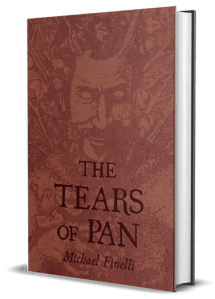
The Tears of Pan cover

SSabitha: Poetry has the ability to reflect emotion in a pure form, and emotion is what Michael Finelli brings in the collection Tears of Pan. Michael, can you tell us a bit about your book?

Michael: My debut book of poetry is called The Tears of Pan, delving into the individualistic warring of the mind between caustic repugnance and rejuvenating love. Greek myth is intermixed with dreary contemplation on life, death, suicide, and love. These emotions are emblematic of the oscillation between dissonance and confidence, regret and hopefulness for the future. We all of us can find relatability in these sentiments. Miscellaneous poetry juxtaposes the overwhelming

atmosphere of dread.

Sabitha: What inspired you to write this book?

Michael: I started writing poetry back in 2010, at a different stage in my life. At that time, depression, self-loathing, doubt, and hopelessness assailed my heart, and my creative response was to transmute those intense and profound emotions into cathartic poetry. Mythology has always fascinated me—especially Greek—so I made the artistic decision to merge the two subjects into poems that allowed for a unique writing experience; mythical, introspective reflections, representative of the complexities of the human condition.

In October of 2023, I had a third-life existential crisis. I felt like a large portion of my life had slipped away from me, that I had been remiss with my writing passion. The flame of creativity was suddenly relit, with a torrent of miscellaneous and love poetry being written at nearly break-neck speed. The time felt right in October to publish.

Sabitha: Do you have a playlist for your book?

Michael: I absolutely do! Music plays an integral part in my life, more so during bursts of inspiration. The Tears of Pan was written within a framework of depressing music; the soul of the artist truly presents itself in a bare and raw form, devoid of the clandestineness of falsehoods. Flowing Tears’ Lovesong for a Dead Child and Radio Heroine, alongside The Sisters of Mercy’s Nine While Nine and Some Kind of Stranger encapsulate the feelings representative of my book.

Sabitha: Do you have any suggestions to help people in our community become better writers?

Michael: Always be true to yourself, and the words will flow. Authenticity is the foundation of true art, so never diverge from the genuineness and the veracity found in reality and experience.

Sabitha: What’s your next writing project?

Michael: Another two books of poetry are already being written! There’s two Wonderland-esque children’s books in the work, a collection of fantasy short stories, and a fiction novel. So, quite a bit to juggle. Stay tuned!

Sabitha: Thanks for sharing your story and your process. We’re looking forward to reading! Where can the Night Beats community find you and your book?

Michael: Readers can purchase a copy of The Tears of Pan on my website (michaelfinelliauthor.ca). If interested, please connect with me on Facebook (Michael Finelli – Author) or Instagram (@michaelfinelliauthor)!

Behind the Screens: Tuesday Author Interview

Every Tuesday, get to know a bit about the stories behind the books you love, and discover your next favourite novel.

Lost Station Circe cover

Sabitha: We’ve got Thomas Wrightson here, and he’s got a military space opera to blow your socks off. Thomas, can you introduce us to your books? 

Thomas: My debut work is The Cluster Cycle, a science fiction space opera published by Roan & Weatherford. It’s set in the distant future, reimagining old stories with new problems. The current title is Lost Station Circe.

Lost Station Circe follows the junk cargo ship Benbow and its seven person crew, each with ambitions and problems. One day, chance grants them a datacube holding the secret to a fortune. A covert expedition is formed to find an ancient space habitat near intergalactic space. Waiting beyond known space are treachery, revelations, and a horrific secret that threatens to destroy them all.

Sabitha: Spooky! What inspired you to write this book?

Thomas: Since my last book. Starborn Vendetta, drew from Dumas’s Monte Cristo, I decided to use two of my other favourite old works, Robert Stevenson’s Treasure Island and Homer’s Odyssey. It’s not one-to-one, but there’s definitely references. Both share a theme of toil, growth, and bonds.

Sabitha: How much research did you need to do for your book?

Thomas: I not only had to read through the books I was inspired by, but look up some facts behind the science featured. The theory of warp drive, the concept of engrams, mutation—the usual science fiction fare.

Sabitha: Do you have a playlist for your book? Can you tell us why you picked a couple of the songs?

Thomas: Sonus Lab’s album Planetary Suite and some of Gaming Ambience’s extended tracks helped set a good writing tone. And for certain later parts of Lost Station Circe, Jerry Goldsmith’s original non-theatrical Alien soundtrack was essential listening, particularly tracks 4 to 10.

Sabitha: What book do you tell all your friends to read?

Thomas: Ursula le Guin’s Earthsea series—with Juliet E. McKenna’s Green Man’s Quarry,

Jonathan Stroud’s Bartimaeus trilogy and Arthur Clarke’s A Fall of Moondust as

close seconds.

Sabitha: Do you have any suggestions to help people in our community become better writers?

Thomas: It’s easy to say “write what you know.” But I’d say “write what speaks to you.” I can’t do Lovecraftian, non-speculative or straight male/white leads to save my life. I may not be straight, but I am male and white.

Sabitha: What’s your next writing project?

Thomas: One is editing the next book in the Cluster Cycle, which is a tribute to Golden Age detective stories. My two current WIPs are a new science fiction concept, and a fantasy set between Heian and Reiwa-era Japan.

Sabitha: Thanks for sharing your story and your process. We’re looking forward to reading! Where can the Night Beats community find you and your book?

Thomas: You can order my book here. Night Beats denizens can visit my website and blog where I post reviews, opinions and short stories. I also have a podcast, Author Talks, on Spotify and YouTube which includes different opinions and short story readings. I can be found on Bluesky, Facebook, Instagram, Threads, X, and LinkedIn.