Behind the Screens: Tuesday Author Interview

Every Tuesday, get to know a bit about the stories behind the books you love, and discover your next favourite novel.

The Stolen Child Cover

Sabitha: We are delighted to have author and environmentalist Clara Hume here, to tell us about her eco-fiction novel, The Stolen Child. Clara, take us away!

Clara: The final part of the Wild Mountain duology, The Stolen Child, picks up two decades after the events in the first book, Back to the Garden, and focuses on the continued lives of the characters, and their new children, including Fae—Fran and Leo’s youngest child. A bright but reserved girl, who would rather be riding her horse in the mountains or reading a spectacular novel than socializing with the rest of the ranch family, Fae begins to shed innocence as she learns of the changing world outside her bubble. A mysterious cult is making appearances, as if extreme climate events weren’t bad enough. Rumor has it that children are missing. As Fae begins to sense she is being watched, the family is forced to move off their Idaho mountain after a wildfire ruins their homes. They make a decision to head north to an old grizzly bear sanctuary in the British Columbia rainforest. Just as Fae is getting settled in, a religious cult kidnaps her and takes her to Ireland.

Sabitha: There’s so much happening there—the intersection of climate change with extremism but also with daily life. What inspired you to write this book?

Clara: I wrote Back to the Garden (Part I) because I was wondering why climate change had not found its way into many novels. Writing about climate change, which is known as a hyperobject, is difficult to do. You have to break it down into something manageable for the reader. Back to the Garden was meant to be a stand-alone novel, but a few years later I found myself writing the sequel, The Stolen Child. I had also started the website Dragonfly.eco, which is all about eco-fiction—fiction that has strong ecological themes—so I began to find patterns and related topics, such as diaspora, that found its way quite naturally into eco-fiction. The sequel included some of these themes.

Sabitha: Was there any music that inspired you while you were writing?

Clara: My mother was born in a log cabin in the Appalachian mountains of eastern Kentucky. Her ancestors came from Ireland and Scotland, so I often heard relatives playing bluegrass. Gaelic music, along with the African banjo and Appalachian revival music, inspired a lot of my writing. We also visited cèilidhs in our own province as I wrote the novel. I based the main characters off my mother’s descriptions of how she grew up as well as my own memory of that poverty-stricken area of eastern Kentucky. The simple but resilient ways of mountain people inspired a lot of scenes in the Wild Mountain series. Many of the characters are loosely based on my memories of eastern Kentucky and our trip with Mom to Ireland later.

Sabitha: I love how you’ve woven your own story into this book. How did you choose the title?

Clara: “The Stolen Child” is a WB Yeats poem. Both its figurative and literal meanings are referenced in the novel. Yeats often wrote about cultural trappings vs. the wonderment of nature and a simpler life, which inspired the characters in the Wild Mountain series. I wrote The Stolen Child about eight years after Back to the Garden. During that gap, we visited Ireland, and I just knew I wanted to include some place-writing about Ireland. We made it a point to do some trail-running to places mentioned in Yeats’ poetry.

Sabitha: I can see that location was really important to you when you were writing this book. Can you tell me a bit about the setting in BC?

Clara: Part of the story takes place in the Great Bear Rainforest of British Columbia. I used to live near there,and we’ve traveled to many of its isolated rainforests. Of all the places I’ve lived or visited, British Columbia is the most beautiful. The rainforests there are considered the lungs of the Earth, and they offer such an amazing place to run, raft, hike, and do some amateur photography. I was fascinated by the iconic spirit bear of the area, which is a black bear with a recessive gene that makes its coat cream-colored. It’s rare, and I’ve never seen one. In the story, Fae has the same fascination and wants to see one some day. 

Sabitha: Thanks for sharing your story and your process. We’re looking forward to reading! Where can the Night Beats community find you and your book?

Clara: You can find me on Mastodon. The Stolen Child can be ordered directly from the publisher, from Malaprops Bookstore, or from Barnes & Noble or Amazon.

Behind the Screens: Tuesday Author Interview

Every Tuesday, get to know a bit about the stories behind the books you love, and discover your next favourite novel.

Beyond Human Cover

Emma: Anna Otto is contributing with a short story in Lower Decks Press forthcoming anthology Beyond Human: Tales of the new us. Anna, how did you come up with the idea to your story? What inspired you?

Anna: In my non-writing life, I’m a psychiatrist. Seeing the proliferation of online and computerized treatment options for mental health has been interesting and puzzling – I had always felt that humans preferred a connection with another human and believed this to be the necessary part of healing. And yet, as a past programmer, I could also envision the possibility of creating an advanced program capable of assessing human facial expressions, breaking down emotions to 0s and 1s, and responding accordingly. After all, one highly effective treatment for anxiety and depression is cognitive behavioral therapy, which at the core is a series of algorithms and “if-then” statements. As a writer, I dreamed big and created Gabriel, the AI therapist anyone would like to have. Read my anthology story, “A Work in Progress”, to see if you agree.

Emma: As you mentioned, the main character in your story, Arthur, regularly sees an AI therapist. Is it something you see will happen in the foreseeable future or is it a utopia? Is it even desirable?

Anna: While I don’t see this happening in the immediate future, I believe that humans can create AI that is smarter and has far greater capacity for understanding human emotions than what we have right now (the recent publicized stories of “creepy behavior” by AI concern me as much as anyone else). Is it desirable? The psychiatrist in me wants to say no, as I’d like to think myself indispensable to my patients, current and potential. I still believe in the human connection and mutual regard as the necessary ingredients for healing, however messy and unpredictable humans are (and therapists are human and imperfect). However, I can also see the advantages to the computerized model of treatment. AI is not subject to the negative human emotions or uncomfortable countertransference that may impact the treatment efficacy. Further, with the current shortages of mental health professionals, I see many people being forced to turn to alternatives such as AI when this becomes a possibility. My preference would be for training more psychiatrists though.

Emma: Can we look forward to something more about Arthur in the near future? What writing projects are you working on at the moment?

Anna: If I were to write more about Arthur, I fear I’d write a neat resolution – and I don’t favor those in my stories. I love him, the hopeless human that he is, and I have the best hopes for him – but I will let the readers imagine what his ultimate ending is.

I’m forever working on my series of a post-apocalyptic North America, the first novel of which is titled The Face of the Snake. The setting is but a background to messy human relationships. I’ve written two sequels – all before editing and publishing the first book. This is where all my effort is going now. I’m looking forward to sharing it with the world.

Emma: I loved your story about Arthur, and I’m looking forward to reading The Face of the Snake! Where can Night Beats readers find “A Work in Progress”?

Anna: The Face of the Snake isn’t published yet so you’ll have to wait. But you can find the anthology for pre-sale at the Lower Decks Press website!

A Work in Progress Art
Art for “A Work in Progress” by Marten Norr

Behind the Screens: Tuesday Author Interview

Every Tuesday, get to know a bit about the stories behind the books you love, and discover your next favourite novel.

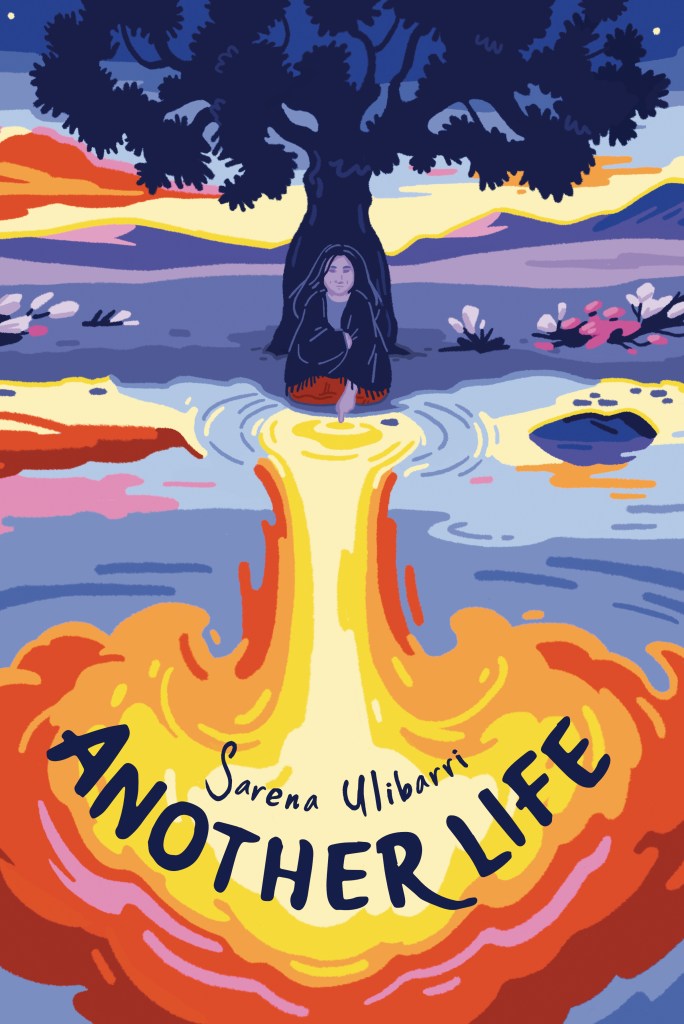
Another Life cover

Sabitha: Sarena Ulibarri joins us to talk about her solarpunk novella, Another Life. Sarena, tell us about this warmhearted eco-fiction!

Sarena: Another Life is a science fiction novella set in a peaceful ecovillage called Otra Vida. When a scientific method of uncovering past lives emerges, the founder of Otra Vida learns she’s the reincarnation of the previous generation’s greatest villain. This shakes the foundations of Galacia’s identity and her position within the community, threatening to undermine the good she’s done in this lifetime.

Sabitha: What inspired you to write this book?

Sarena: What if there were a “23andMe” type test, but for reincarnation instead of ancestry? And how would a “good” person react to finding out their previous incarnation did some really bad things?

Sabitha: Tough questions! Was there any music that inspired you while you were writing?

Sarena: The playlist for this book starts with “Policy of Truth” by Depeche Mode, which captures the conflict Galacia feels about whether or not to reveal her past life to her community. 

Because they share the same soul, Thomas Ramsey’s song is also by Depeche Mode, “Walking in My Shoes.” Ramsey is who Galacia was in her previous life: he was a manipulator and con-man who knew he’d made a villain of himself, but he had his reasons. 

Sabitha: We have a lot of writers in our community. What’s your writing process?

Sarena: My process seems to be to write the wrong book first, and then yank out the spine and write a new book around that foundation. I’ve done this several times, though it’s not a method I recommend. Early drafts of Another Life had whole superfluous storylines and tangents. After letting the book sit for a couple of years, I went after it with a (metaphorical) cleaver, killing darlings with no remorse until I found the core of what I was really trying to say.

Sabitha: What book do you tell all your friends to read? Besides yours of course!

Sarena: A Half-Built Garden by Ruthanna Emrys. It’s such a fresh take on alien first contact and the best example of solarpunk I’ve read yet.

Sabitha: Does the location the story takes place mean something to you or to the work?

Sarena: Because the story is about reincarnation, it seemed appropriate to set it in Death Valley. It’s a harsh and extreme place, but it’s also beautiful and full of life. That contrast fits the themes of Another Life quite well.

Sabitha: Thanks for sharing your story and your process. We’re looking forward to reading! Where can the Night Beats community find you and your book?

Sarena: My website, Twitter, or Mastodon are the best places to find me! Preorder of Another Life is available from Amazon, B&N, Kobo, or direct from Stelliform Press.

Behind the Screens: Tuesday Author Interview

Every Tuesday, get to know a bit about the stories behind the books you love, and discover your next favourite novel.

Sabitha: Today, we torment one of our own with questions. Zilla Novikov is the co-author of the Sad Bastard Cookbook and the author of Query, which I could not read without tears of laughter streaming down my face. Fortunately this interview is conducted via text so both of us can pretend to be professional about it. 

Zilla: Um. Hi. Yes. A professional interview. I got this. I am a PROFESSIONAL. 

Query is a fictional account of my attempts to break into traditional publishing. It’s told in the form of query letters that my fictional-self is writing to literary agents asking them to represent my book. In both fiction and real life, my odds of finding a winning lottery ticket on the sidewalk are higher than my odds of getting represented by an agent. During the self-induced bloodletting that was querying, I sent a lot of very polite letters, and I drafted a lot of letters which were much more honest and much less polite and I did not send them. This novella is my fictional self sending those letters. 

It’s also about political activism, because my response to living in a neoliberal hellscape is to be mad about it. Or tired, but mad makes for a more active story.

Sabitha: Readers of Rachel A. Rosen’s Cascade will recognize several familiar names from that book. How are they similar or different from their counterparts?

Zilla: The characters in Cascade got in my head and in my heart, like roommates you don’t want to kick out even when they’re late on rent. I adore fanfic, so when I finished reading Cascade and found myself missing Ian, Blythe, Jonah, and Sujay, it was natural for me to ask Rachel if I could borrow them for the novella I was working on. It’s a philosophical question whether a person is the same if you transport them to an alternative universe—if Ian would have escaped small-town Newfoundland without magic, if Jonah and Ian would have fucked sooner in another verse. Sabitha, you’ve read both books, what do you think? Jonah/Ian = yes?

Sabitha: I ship it, as the kids say. And it’s nice to see Blythe hooking up with someone who appreciates her.  I want to know more about the excerpts—to what degree do the stories exist fully formed in your head vs. made up  for this purpose?

Zilla: All writers know that the only thing better than writing is not-writing. That’s the spirit I took into Query

I originally set out to write the novel that Zilla is querying in Query. I planned out all the fun scenes in my head, and I drafted a few chapters. (If y’all are very nice to me, I might give one of them away as a newsletter bonus for subscribers.) But a novel can’t just be the most fun scenes to imagine, and the story that held them together didn’t capture my attention enough to finish writing the novel. When I realized that Query needed to include excerpts from fictional-Zilla’s novel, I found a purpose for these wayward scenes.

Sabitha: We’re increasingly seeing a wealth of fiction that glorifies activism and anti-capitalist resistance. I’m thinking of works like Andor or The Boys that actively challenge late-stage capitalist hegemony, but are produced by massive corporations. It’s been suggested that activist-oriented fiction exists, in part,  as a cultural safety valve to make the consumer feel like they’ve done a thing by consuming said media. How do you navigate that space as an activist and a writer?

Zilla: I’m a late-bloomer at activism. On my way to my first protest, I imagined myself meeting vast numbers of articulate, morally superior, and extremely good-looking people, and I was incredibly intimidated to actually go through with it and attend. One of my goals in writing Query was to give a roadmap to people like my past-self. I can’t promise you’ll fall in love with a redhead marine biologist if you start organizing on the left, but you will attend extraordinarily dull meetings, you will drink awful coffee, and you discover how much better life is when your friends share your values. I don’t know if Query is going to make any more of a difference than your average green-washing and rainbow-washing corporate bullshit fiction, but I tried to write a non-didactic call to action. I hope I succeeded at least a little.

Sabitha: So I’m guessing that you didn’t literally slap your book up on telephone poles with wheat paste. If readers want to find you, or even give you money in exchange for a truly entertaining read, how do they go about doing that?

Zilla: All the book-purchasing links are available at the tRaum website. We’re doing a limited run of special edition palm-sized print books in a swag-filled book box, and then print books and e-books will be available forever.

I hate social media, but in the bad old days when I was querying, it was considered a fact that you couldn’t get signed without it, so I signed up for a few. Tumblr’s alright, but the rest of the socials are mostly full of fascists, so far as I can tell. I write for the Night Beats blog and newsletter, and I promise there are absolutely zero fash on the editorial board of either.

Behind the Screens: Tuesday Author Interview

Every Tuesday, get to know a bit about the stories behind the books you love, and discover your next favourite novel.

Beyond Human Cover

Anna: Emma Berglund is a co-editor of the sci-fi anthology Into the Unknown. She wrote another short story, “In Our Midst,” for the next anthology installment Beyond Human: Tales of the New Us. This is your second sci-fi anthology outing. Tell us what attracted you to this group project?

Emma: Lower Decks Press started with me, Rohan O’Duill, and Jason Clor having the idea to put together and edit our first anthology, Into the Unknown, within our online community, as we have so many talented writers there. It all worked out well, so we said, hey why not try again! And here we are!

Anna: Your story describes an Earth after an alien invasion. Tell us more about it.

Emma: “In Our Midst” starts off after Earth has been stricken by aliens, but no one knows how they look like or what their intention is. However, what’s visible is how they affect humans. People are turned into either what we would describe as zombie-like creatures, or a sneakier version, where it’s not immediately visible whether a person is infected or not. The invasion has created suspicion in people because of this.

Anna: Is there life outside of this planet? How do you think the contact will be established?

Emma: Out of pure probability, there has to be some sort of life somewhere. Chance is we totally miss any contact tried because we don’t have the right tools to detect them. In the light of that, contact will probably be made from the alien part rather from our side.

Anna: Your story offered hope during a dark time for humanity. Do you believe it is the mission of sci-fi to help us through the conflicts of our dark times?

Emma: In a way, but I’d say that goes for any form of culture. We need the distractions, the explanations, the alternative worlds to enrich our minds, but it also helps us to enhance or be able to cope with our daily life.

Anna: What is it like to work with dozens of writers? Tell us about your editorial process.

Emma: It’s a great, yet overwhelming feeling! But to be able to follow all the writers process from their first draft to the published version is such a fantastic journey. We started with smaller groups where the first draft of the stories was read and discussed, then all the contributors have submitted their story to the three of us as the editors of Lower Decks Press. Since there are twice as many stories compared to our first anthology, we had to add an extra editorial resource person to help us out. Right now, we’re line editing and assembling the layout of the anthology as soon as we get the corrected versions back from the authors. We’re also thrilled to have fabulous illustrations by Marten Norr and a brilliant cover by Rachel A. Rosen, and we’re hoping to set a pre-sale date soon!

Anna: Find both anthologies with Emma’s stories at our website!

Emma: And you can find me on Twitter.

An Image from In Our Midst
Art for “In Our Midst” by Marten Norr

Behind the Screens: Tuesday Author Interview

Every Tuesday, get to know a bit about the stories behind the books you love, and discover your next favourite novel.

Rubberman's Exodus cover

Sabitha: Joseph Picard is joining us today, to talk all things science fiction. Joseph, what book are you going to tell us about?

JosephRubberman’s Exodus is the third and final novel of my Rubberman series. Following Tara, the head Engineer, and her love and partner Sasha, the multi-generational bomb shelter is put at risk when fuel for the generator runs out unexpectedly. 2000+ survivors have been hiding from the after effects of war for over a century.

In that time, they’ve regressed into sub-cultures born from necessity, but have stagnated into ignorance and dogma.

In Rubberman’s Exodus, the blackout leads to events that force them out to the surface, and re-examine their way of life. From the Engineers who run the power generator, to the isolated workforce Subjects, to Citizenry, which was created to contain the worst trouble makers.

Everyone in the facility has had a taste of conflict over the years, but the Citizenry section has suffered the bloodiest of internal little wars, and most abusive little tyrants. (The previous book, Rubberman’s Citizens is all about them getting themselves sorted out… mostly.)

As the events of Rubberman’s Exodus unfold, across the facility, (not just Citizenry,) everyone will be facing threats they have no experience with. Threats from outside, where the big war happened, and the Enemy is known to patrol above.

I’m very pleased to have wrapped up the Rubberman series in a way I’m happy with, since the advancement of my multiple sclerosis (on top of my pre-existing paraplegia, whee!) makes writing very difficult these days.

Sabitha: What inspired you to write this book?

Joseph: The whole series was sparked from the notion of being trapped in a routine and job that feels meaningless, in near isolation. The characters took over, and the facility grew a life of its own, which demanded resolution. The Rubberman name comes from the Managers of the workforce, who wear rubber hazard suits, for reasons forgotten and misunderstood.

Sabitha: That is sadly very relatable. We have a lot of writers in our community. What’s your writing process?

Joseph: 1: Cool sounding idea/concept

2: Think of a way to make it plausible

3: Throw in likeable characters who have to deal with it. And not-so-likable characters to make things difficult.

I don’t do ‘proper’ outlines, but will make a point-form list of the big plot points I want to hit. I write through point 1, with the other points being suggestions. They’re all subject to total change if ‘uncovered’ events and actions of the characters take control.

As well, I’ve been sometimes labelled as ‘hard sci fi’, because I don’t use transporters or warp drives, etc., but I like my fictional science to be in the realm of very possible. And maybe soon.

Sabitha: What book do you tell all your friends to read?

Joseph: I’m frequently barking about Michelle Patricia Brown, who gives us characters with depth, and words with detail. She has a plot/character balance that’s similar to my own.

I’m currently in the middle of her After the Garden, set in a ruined future filled with shattered memories, uncanny ‘gifts’, and jerks who are basically a witch-hunting cult.

Sabitha: Thanks for sharing your story and your process. We’re looking forward to reading! Where can the Night Beats community find you and your book?

Joseph: The fastest link to type in is www.ozero.ca. My books in various formats are at my Amazon page.

Behind the Screens: Tuesday Author Interview

Every Tuesday, get to know a bit about the stories behind the books you love, and discover your next favourite novel.

Sugarplum zombie motherfuckers cover

Sabitha: Tim Lieder is an expert in the weird and scary, as well as a good friend and great author. Today he’s here to talk about his collection of his Christmas themed horror stories, Sugarplum Zombie Motherfuckers. Tim, can you tell us a bit about this book?

Tim: There are three short stories in this book. The Xmas Video was a story about zombie porn that was directly inspired by Michael Hemmingson’s “Hardboiled Stiff” which I had published in Badass Horror. “Santa Claus Dies” was the kind of story I used to love when I first edited anthologies, the kind of hard-drinking loser stories that filled up Teddy Bear Cannibal Massacre.

Sabitha: What made you decide to self publish Sugarplum Zombie Motherfuckers?

Tim: The reason why I chose to self-publish was because of “The Man in the Red Suit”. This story was originally inspired by E.T.A. Hoffmann’s “The Sandman”, particularly the beginning when the narrator talks about his father telling him horrifying stories about a Sandman who steals children’s eyes. I had written one story in this vein and it amused me to write another one, only to make it about Santa Claus, whose mouth stunk of spoiled milk and sucked the life out of reindeer to make them fly. The second inspiration for “The Man in the Red Suit” was the Serbian genocide and the banality of evil. For some reason, I was having trouble selling it to the better horror magazines.

Sabitha: We have a lot of writers in our community. What’s your writing process?

Tim: I revise, give up, dig up an old story, try to revise that one. Sometimes I rip pages out of a public domain book of classic literature and steal phrases. If I’m getting confused about a story, I go back and revise it again to remember who is doing what. If I really hate an old story, I replace every “t” with a “g” and then run an autocorrect. Then I see what can come out of that. Basically, I am never going to give a word count because a productive day might involve getting rid of 1200 words as much as it would involve typing 320 words.

Sabitha: Do you have a “fan-cast” – do you have actors you’d cast as your main characters?

Tim: My favorite story in this collection is about a girl who grows up hearing horror stories about Santa Claus and when she’s an adult, joins a Serbian militia and helps to commit genocide. I’m not sure anyone would want to adapt it.

Sabitha: What book do you tell all your friends to read? 

Tim: There are a lot of books that I tell my friends to read, but I am China by Xiaolu Guo is a beautiful work about expatriates, world politics and the ways that privilege informs political stances. I also love everything I read by Junji Ito. He’s either the scariest or the funniest manga artist working today, depending on your mood.

Sabitha: Does the location the story takes place mean something to you or to the work?

Tim: “The Xmas Video” takes place in an apartment in the 1980s and the college is the University of Minnesota. “The Man in the Red Suit” takes place in 1990s Bosnia where militias were murdering Muslims while the rest of the world ignored the genocide. I’m obsessed with the ways that humanity can justify and ignore its atrocities. Whether Florida is trying to censor all African-American studies or Poland criminalizing suggestions that it was in any way complicit in the Holocaust, we love to forget just how evil we are. In the case of the Serbian (and Rwandan) genocides, America didn’t even have to forget. Americans were too busy paying attention to Tonya Harding and Nancy Kerrigan to bother about mass graves. Even today, the main takeaway from Bosnia is that it’s just another reason to hate Tony Blair for his interventionist policies.

Sabitha: These stories sound like they draw on some of the richest traditions of horror, where the greatest threat isn’t the monster outside the walls, it’s the monster within our hearts. Where can the Night Beats community find you and your book?

Tim: You can find me on Tumblr, Dreamwidth, and Facebook. If you want to read Sugarplum Zombie Motherfuckers, you can find the e-book here and audiobook here, or look wherever books are sold online.

Behind the Screens: Tuesday Author Interview

Every Tuesday, get to know a bit about the stories behind the books you love, and discover your next favourite novel.

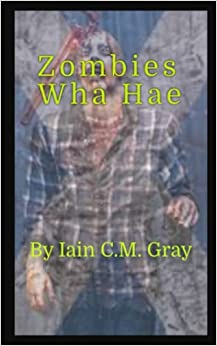
Zombies Wha Hae cover

Sabitha: Today we’ll talk to Iain C.M. Gray about his British zombie apocalypse novel, Zombies Wha Hae, and his short story collection, The Ruined Road. Iain, can you introduce us to your books?

Iain: I am the author of a collection of short stories, The Ruined Road, which is an eclectic mix of styles and genres, covering a variety of topics from anthropophagy to Mormons, prostitution to fratricide and all sorts in between. I have also written a zombie book, called Zombies Wha Hae.

Sabitha: Does the location the story takes place mean something to you or to the work?

Iain: Zombies Wha Hae is set in my original hometown of Greenock. The book follows the fate of a variety of random Greenockians who happen to find themselves in the middle of a zombie apocalypse. There are scenes of drug addiction, alcoholism, and domestic and sectarian violence; just another Friday night in Greenock (forgive me my flippancy, please, I do know these are serious issues, and I hope I deal with them with sensitivity and some humour).

Sabitha: What inspires you to write?

Iain: I have always been happier when I am involved in doing something creative. I used to be a musician, busking on London underground. But I had let my creative side be shelved by real life, work, family etc. I was inspired to rededicate some time to creative pursuits after reading Lonely Boy, the autobiography of Steve Jones (guitarist, founder member and joint songwriter from The Sex Pistols). There is a paragraph in the book where he talks about what motivates him to create, and he came to the conclusion that purely by being in a creative process, he is a happier person. This was a light bulb moment for me, and I have been writing ever since.

Sabitha: We have a lot of writers in our community. What’s your writing process?

Iain: Even though I do say so myself, I am very well read, and I have always had a love of books, and the written word. So my style, and choice of material is varied. I won’t be tied down to any particular genre or style. My influences are too many to mention. I squeeze in my writing in-between work and family duties, so I write wherever and whenever I can.

Sabitha: How did you choose the title?

Iain: I wrote Zombies Wha Hae first. My original idea was to write it in the style of a Russian classic. So it was originally titled, If Tolstoy Did Scottish Zombies. I still like this. But half-way through, the madness of this idea gradually dawned on me, and I realised that 500K words was probably beyond me. I was inspired to name it after Robert Burns poem/song Scots Wha Hae while I was listening to Canadian Celtic Punks sing a rousing version of it. I am equally as fond of this title as I was with the Tolstoy one.

Sabitha: Thanks for sharing your story and your process. We’re looking forward to reading! Where can the Night Beats community find you and your book?

Iain: Here’s the UK link to Zombies Wha Hae on the UK Amazon Website, I am self-published, and Amazon is just by far the biggest market, forgive my blatant lack of ethics. If you are interested in my short story collection, here is the UK link for it. If you want to hear more about me or my influences, you can check out my website.

Behind the Screens: Tuesday Author Interview

Every Tuesday, get to know a bit about the stories behind the books you love, and discover your next favourite novel.

Of flames and curses preorder

Sabitha: We have Whitney L. Spradling with us, to talk about her new release, Of Flames and Curses. Whitney, tell us about your fantasy romance!

Whitney: I write adult fantasy/paranormal romance. Of Flames and Curses is an adult urban-to-fantasy romance. It takes place in two realms, the human realm (New York City), and the Faerie Realm. It is a slow burn romance that contains mystery, curses, magic, evil queens, and so much more. It has been compared to the TV miniseries The 10th Kingdom. I’m horrible at elevator pitches, but if I had to give one, it would be: Her sister has just been mysteriously murdered and her quest for answers leads her to life-changing revelations; thrown into a magical world she didn’t know existed, this newly discovered half-breed must overcome her fear of loss while searching for a way to break a curse, or she will lose more than her sister to this magical world.

Sabitha: That sounds like so much fun. What inspired you to write this book?

Whitney: The opening paragraph came to me in the shower. I kept repeating it to myself until I got out and could write it down. From there, I planned out a rough idea of what I wanted to happen, then just let the words flow.

Sabitha: Was there any music that inspired you while you were writing?

Whitney: Music is my biggest inspiration when writing. For this particular book, I listened to Yellowcard a lot. Also, the song Dangerous Night by 30 Seconds to Mars has kind of become the theme song for this book. Usually, I listen to whatever genre tends to fit the book I’m writing. For Of Flames and Curses, it was a lot of old school punk.

Sabitha: We have a lot of writers in our community. What’s your writing process?

Whitney: I’m a pantser. I have a general idea of the direction I want the book to take, and a general idea of the ending. From there, I just let the words flow, and let my characters go where they please.

Sabitha: Do you have a “fan-cast” – do you have actors you’d cast as your main characters?

Whitney: Yes! Lucy Hale is my Lainey 100%. For Phoenix I’m torn between Liam Hemsworth and Lucas Bravo. Lucas Till (if he were just a tad bit older) is who I picture for Ash, however Victor Seitz (model) is the inspiration for him. 

Sabitha: What book do you tell all your friends to read? Besides yours of course!

Whitney: Anything published by Midnight Tide Publishing. Brindi Quinn’s Come True genie series is amazing. As is Lou Wilham’s Heir to Moondust series. H. R. Truelove’s Alter, Morgan Gautheir’s Mark of the Hunter, and so many more.

Sabitha:  You have great taste – we love Midnight Tide. Which character do you relate to the most and why?

Whitney: Probably, Lainey. She is kind of a loner. While she’s a loner due to her circumstances in life, mine is by choice. She’s quiet, but fierce when she needs to be. In this first book, she is definitely the damsel in distress, but in book two, she decides she’s had enough and steps up to the plate. I feel like her determination is similar to mine when I decided to write and publish books. It was out of my comfort zone, but I pushed through to do it anyway.

Sabitha: Thanks for sharing your story and your process. We’re looking forward to reading! Where can the Night Beats community find you and your book?

Whitney: You can find all of my socials and websites here. 

Behind the Screens: Tuesday Author Interview

Every Tuesday, get to know a bit about the stories behind the books you love, and discover your next favourite novel.

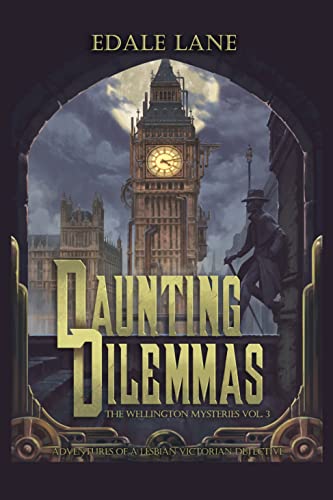
Daunting Dilemmas cover

Sabitha: We’ve got the wonderful Edale Lane with us again. This time, she’s sharing her lesbian Victorian detective novel, Daunting Dilemmas, with us. Edale, tell us about your novel!

Edale: Sometimes one must lie to live her truth.

Stetson has been fooling London for ten years while her fictitious alter-ego solves crimes. But could a criminal mastermind put her carefree days of sleuthing in jeopardy?

Evelyn longs to be recognized for her talent; will her music prove to be the key in helping Stetson solve a mystery?

While Jack the Ripper terrorizes London, Stetson closes in on the art thief she has been after for months; however, will catching him place her in an impossible position which threatens to expose her?

Daunting Dilemmas: The Wellington Mysteries, Vol. 3, Adventures of a Lesbian Victorian Detective is a collection of five sequential novellas, each encompassing its own exciting mystery while furthering the story of Stetson’s life in London. If you enjoy crime dramas, Victorian era fiction, or a sweet lesbian romance, then you’ll love award-winning author Edale Lane’s Daunting Dilemmas.

Sabitha: What a delightful story! What inspired you to write this?

Edale: Years ago, before my debut novel, Heart of Sherwood, I saw a call for submissions for Private Dicks Packing Heat, an LGBTQ mystery anthology. Being a historian and fan of Sherlock Holmes, I set my work in Victorian London. Mr. X and the Blackmailed Female became the published result. I always wanted to go back and do more with my protagonist, Stetson Goody (AKA Xavier Wellington), and when I hit a snag working on Walks with Spirits in 2021, I turned all my attention to expanding one novella into 5 in Daring Duplicity. It did well and readers liked the Holmes-like Stetson, so I expanded the series with Perilous Passages and now Daunting Dilemmas.

Sabitha: You clearly love alliteration. How did you choose the titles?

Edale: Daring Duplicity got its name due to the double-life my bold heroine has undertaken. Perilous Passages was so titled because Stetson and her partner head out for a “road trip” on steamships and trains, meeting with dangerous criminals along the way. But in the third installment written against the backdrop of Jack the Ripper’s “Fall of terror” in 1888, Stetson faces her most daunting dilemma thus far. (I can’t tell you what it is without a spoiler.)

Sabitha: No spoilers! If you could pick any author to read your book, who would you want to read it? Why them?

Edale: Sir Arthur Conan Doyle, of course, as he was a foundation master of the genre and the creator of Sherlock Holmes. I’d love his opinion on how I could make Volume 4 the most compelling yet.

Sabitha: What’s your writing process?

Edale: It varies depending on what manuscript I am working on. For this series, tons of research is required to recreate an accurate portrayal of 1880s London and meticulous planning to create and solve fresh, engaging enigmas. Not much “pantsing” here, except in some personal scenes between Stetson and her partner Evelyn. After all, an exceptional locked-door mystery doesn’t just solve itself!

Sabitha: Thanks for sharing your story and your process. We’re looking forward to reading! Where can the Night Beats community find you and your book?

Edale: I have a website with a newsletter. You can also check out my Goodreads and my Bookbub. You can find Daunting Dilemmas on Amazon, and the rest of my novels on my Amazon page.