Behind the Screens: Tuesday Author Interview

Every Tuesday, get to know a bit about the stories behind the books you love, and discover your next favourite novel.

Audacity Gambit cover with a garden arbour on fire

Zilla: I just ordered my paper copy of The Audacity Gambit (my review will go in the newsletter—I am PUMPED to read this) but while I wait for it to arrive I’ve got B. Zedan here to tell me all the details of their fantasy novel. So, with no spoilers, can you introduce me to your book, B.?

B.: Here’s The Audacity Gambit’s blurb:

It’s the back half of the 1990s and recently-graduated Emily’s big life plans include maybe getting promoted at her grocery store job, and not much else. It’s not that she doesn’t have ambitions, it’s that she feels more or less fulfilled already. She has a roof over her head (her aunt’s trailer), friends (the much-younger kids she babysits), hobbies (babysitting, reading), what more could she want?

Of course, it’s not about what she wants. It’s about what she was made to do. With little choice in the matter, Emily is plunged head-first into a fairy world that isn’t nearly as fabulous and fantastical as books would lead you to believe, though it’s a nice enough place for a vacation.

Zilla: What inspired you to write this book?

B.: I’m from a poor rural part of Oregon, originally, and boy-o one just doesn’t see that world in fiction unless it’s romanticised by people who haven’t lived it. So why NOT have the chosen one live in a trailer and treat it like its normal to live in a trailer, actually.

Zilla: I love that. Were you inspired by an image when you wrote this?

B.: In a way yes—the idea of the garden arbour on fire is so central to the book it’s on the cover. I love the idea of something so mundane as a portal.

Zilla:  Is your work more plot-driven or character-driven? Or a secret, third thing?

B.: The real truth of it is: I am a Nickelodeon run on Aarne-Thompson-Uther Index tokens. I like to take the structures of folktale types, use those as the scaffolding and see what I can build. It’s very obvious in the context of The Audacity Gambit, but more so in other work I do. I don’t mean “remixed Cinderella,” btw, though that’s great, I mean like “type 565, “the magic mill” and looking at the actual components of that story type.

Zilla: I love when stories are in conversation with other stories that way. After all, an author is always influenced by every book they’ve read, so why not put the inspiration to direct use? Now that this book is out in the world, what’s your next writing project?

B.: I am desperately trying to finish a story that combines food review writing like Jonathan Gold’s with cosmic horror. Which means I’ve been working on anything else.

Zilla: Okay, so you need to tell me when that one comes out, though I relate far too much to the issue of working on the alternative projects instead of the “main” one. For everyone who hasn’t ordered your book yet, where can the Night Beats community find you and it?

B.: You can pick up The Audacity Gambit just about anywhere (a handy books2read page of places) but if you want to read it for free I’ve also serialised it and it’s available here: https://bzedan.com/blog/the-audacity-gambit-serialised/I have other writing work on my site (https://bzedan.com/blog/writing/), I kind of just… put things up and hope people read them sometimes. I’m also on all the places as “bzedan” but mostly you’ll find me on Tumblr.

Behind the Screens: Tuesday Author Interview

Every Tuesday, get to know a bit about the stories behind the books you love, and discover your next favourite novel.

Trve Cvlt cover, with a metalhead getting eaten by some kind of monsterish thing

Zilla: Black metal in an even darker storyline, a weird storytelling form, and I’m swooning in love. Michael Bettendorf’s Trve Cvlt sounds like everything I like best in a book. So Michael, can you introduce us to your black metal horror gamebook?

Micheal: Trve Cvlt is a meta-take on stories similar to Choose Your Own Adventures with a bit of a fatalist spin.

You wake up with a brutal hangover, but that can’t crush your spirits: you’ve been invited to take back the drum throne for Abyss, the cult band you co-founded.

It means setting aside a turbulent history with Abyss’ vocalist, Austin. You aren’t sure if he’s invited you back to bury the hatchet or if he’s just desperate because infamous black metal legends Waste Doctrine are rolling through town. They’ve given you the opportunity to open for them and maybe, finally, get the hell out of this nowhere town.

The promise of the upcoming gig doesn’t come without its share of hurdles, though. Austin’s hellbent on creating a ritualistic experience out of the performance, turning the abandoned roadhouse he’s chosen as a venue into a bloody, occult nightmare.

Yes, it’s black fucking metal, but is it too far?

Only you can decide.

Zilla: What inspired you to write this book?

Micheal: Trve Cvlt is rooted in an urban legend, specifically Cult Road and the alleged house(s) where local cultists gathered. Me and a couple of buddies went out looking for Cult Road one day and ended up lost on some backroads. We eventually found an abandoned farmhouse that was the epitome of dread. We almost ran out of gas on low maintenance roads before finding our way back. I wanted to write a black metal book for a long time, but didn’t know what it was supposed to be, but eventually I framed it in this setting and it clicked into place. It wouldn’t have existed if Alex Woodroe of Tenebrous Press didn’t tell me, “Pitch her something weird. Something no one has done,” at StokerCon 2023. I thought her partner in crime, Matt Blairstone was in on it, but it turns out I pitched him cold. Still the best rouse Alex has pulled on me. I’m forever grateful.

Zilla: What would your characters say if they met you?

Micheal: Austin would probably call me a fucking poser. The unnamed main character would probably have my back. So would Danny…mostly. Ryan would likely tell me to get better at drums.

Zilla: A range of responses! So who is your favourite character in Trve Cvlt?

Micheal: I think Abyss is my favorite character. It didn’t start as a character, but it morphed into one. It’s chaos. It’s love. It’s dread. It’s a god. It’s an ungod. It’s a manipulator. It’s existential dread. It’s us. It’s…the abyss.

Zilla: Who do you imagine reading your book?

Micheal: I wrote it for the outcasts and metalheads and weirdos and I think they are among the crowd who read it, but I also think it has struck a chord with the horror-curious.

Zilla: Thanks for sharing your story and your process. We’re looking forward to reading! Where can the Night Beats community find you and your book?

Micheal: You can find me on Bluesky @BeardedBetts, at www.michaelbettendorfwrites.com, and my linktree. You can pick up Trve Cvlthere.

Book Report Corner

by Rachel A. Rosen

Green Fuse Burning by Tiffany Morris. The cover is a trippy image of a kind of punk looking woman with stylized plants coming out of her mouth.

This one goes HARD. I had been eyeing it for awhile—the psychedelic, visually arresting cover kept popping up on my feed. I finally picked it up after hearing the author speak on a panel, and was immediately besieged by friends incredulous that I hadn’t read it already. I mean. It’s swampcore. How much more up my alley can you get? I am pleased to report to both them and to you, dear reader, that it absolutely lives up to the hype.

Green Fuse Burning is about Rita, an artist on an involuntary retreat after her girlfriend Molly forges a grant application in her name. Is Molly being helpful and romantic? Or patronizing? Is a breakup imminent? It might be easier to tell if Rita could get any cellphone bars in her remote location.

But Rita has bigger problems: her own grief over her father’s death, her disconnection from her Mi’kmaq heritage, and the unsettling landscape of the swamp. She hears noises at night—perhaps a body being dragged into the murk? The handful of people she meets are menacingly cold and strange. She’s plagued by intrusive thoughts.

The framing device is a series of gallery labels for Rita’s paintings, alluding to her mysterious disappearance. The story itself is a vivid fever dream told in lush, intense prose. Morris’ background as a poet shines through—every sentence is a visceral gem, packing incredible intensity into only 100 pages. This is what eco-horror should be: unnerving, upsetting, and unforgettable.

Roundtable: Our Favourite Fictional Toxic Romances

We asked the Night Beats crew about their favourite fictional toxic romances and of course, they were very normal about it.

Rachel A. Rosen: The love triangle between Captain Ahab, Starbuck, and a whale to whom human beings really have no business ascribing motive or malice. It’s clear from the start that Ahab cares much more about Moby Dick than his wife and kids, and the same goes for Starbuck and Ahab, and Moby Dick is just trying to live his best life. Of course the whole thing was always going to end in tears.

Dale Stromberg: My favourite literary toxic romance (stretching the definition of “romance” but indubitably “toxic”) has got to be the uncannily ill-defined situationship that develops between Valerie and Ly in Ryszard Merey’s novella Read and Then Burn This. This book aims not to shock but to disturb: to lead you past the easy ethical decisions and into the grey and blurry borderlands that lie between them—then abandon you to wander there, wondering, “Is this… is this okay? Wait, is this… really okay?”

Read and then Burn This by Ryszard Merey with a man facing backwards on the cover.

Nicole Northwood: THAT WAS MY SUGGESTION TOO.

Zilla Novikov: My favourite literary toxic romance is between me and my TBR. I keep buying it expensive gifts (more books) and all it does is shame me (for buying books faster than I can read them).

Behind the Screens: Tuesday Author Interview

Every Tuesday, get to know a bit about the stories behind the books you love, and discover your next favourite novel.

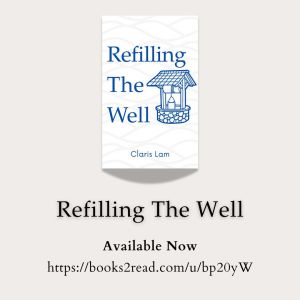
refilling the well cover with a drawing of a well on it!

Zilla: We always love having Claris Lam here to talk about her books, though today is a special interview—she’s crossed genre! Claris, can you tell us about Refilling the Well and your venture into poetry?

Claris: Refilling The Well is my debut poetry chapbook. This chapbook focuses on themes of self-care, burnout, burnout recovery, and hustle culture. 

I also think Refilling The Well focuses a bit on hope – hope that things will get better, even if they’re hard right now. 

Zilla: That seems like a really timely topic. Why did you write this book, and why now?

Claris: My burnout in summer 2023 inspired me to write this book, specifically. I went through creative burnout in summer 2023 specifically because I felt, at the time, I had to keep “working” on my creative craft to become some form of success that others seemed to have. It looked like that if you were a “successful” author, you had to be making huge book sales every month and/or capable of selling many books a year or even a book every two weeks. At some point that summer, I just lost all inspiration and drive to write much if at all.

It was scary, handling burnout. I never knew what it was like to be completely out of ideas before, because I often come up with ideas really quickly. However, it was a good period for me to reflect on what “success” as an author actually meant to me. 

Zilla: That’s such an important part of being an author—finding that internal motivation, and knowing that you can’t define success against anyone else. Can you distill your inspiration into an image?

Claris: Given the title of this chapbook, the image of a well inspired me. I thought about how wells, when overused or going through hotter than expected times such as droughts, can end up drying out and be unable to provide water to others. Our creative minds are like wells—it can generate a lot of ideas, but it also can only provide so much—especially when going through stressful times. And if we have no ideas left, that well of ideas is essentially dried out. 

Zilla: Who did you imagine reading your book as you wrote it? 

Claris: I imagined those who enjoyed poetry reading it, but I also imagined others going through their own periods of burnout, especially fellow creatives. I’ve read and heard of stories from many creatives who fell into similar periods of burnout for various reasons, including mine.

Zilla: What’s your next writing project?

Claris: At this time of writing, I’ll be releasing my debut YA short story collection, Stay Magical!, in fall 2025! It’s magical girl themed. Anyone who is familiar with anime and manga like Sailor Moon, Ojamajo Doremi, Pretty Cure and other series should consider reading it!

I’m also currently writing a new short story collection that is fairytale-themed and is a bit more experimental compared to my past work. I have the first draft done and I look forward to edits and revisions! 

Zilla: Thanks for sharing your story and your process. We’re looking forward to reading! Where can the Night Beats community find you and your book?

Claris: Refilling The Well released on February 10th, 2025! You can order it here

As for where you can find me, check out the following:

Website: https://clarislam.ca 

Newsletter: https://buttondown.com/clarislamauthor 

Instagram: https://www.instagram.com/clarislamauthor/ 

Facebook: https://www.facebook.com/ClarisLamAuthor 

Bluesky: https://bsky.app/profile/clarislamauthor.bsky.social 

Tumblr: https://clarislam.tumblr.com/ 

Bookbub: https://www.bookbub.com/profile/claris-lam 

Goodreads: https://www.goodreads.com/author/show/22277014.Claris_Lam 

Behind the Screens: Tuesday Author Interview

Every Tuesday, get to know a bit about the stories behind the books you love, and discover your next favourite novel.

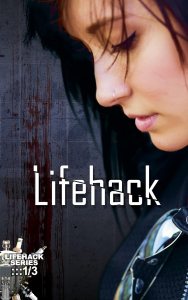
Lifehack cover with a cyberpunk style woman on the front.

Zilla: We all need a good zombie story now and again, and even better if our human heroine is queer. This is why I invited Joseph Picard here to tell us about his post-apocalyptic novel, Lifehack. Joseph, can you introduce us to your book?

Joseph: Lifehack follows Regan as she breaks up with her cheating girlfriend then moves in with her brother. One of his peers twists a medical nanotech project into a zombie plague (the old slow/dumb kind) as a resignation letter.

Regan looks for her brother in the quarantined city for 2 years before she’s ‘rescued’ by a soldier she falls for immediately. Alisia’s a redead, and Regan’s been alone and going slightly batty. Priorities get a little jumbled, and the original culprit is still a potential threat out there somewhere.

Lifehack began my first series and impacts many of my books, even in my 3rd series.

Zilla: What inspired you to write this book?

Joseph: At the time, I’d only ever done one-shot short stories, but Regan and her exploits grew into 4 shorts, which eventually were refined into a book. I was drawing a lot back then—feedback on art of Regan actually resulted in Regan’s orientation… it seemed to fit her.

Zilla: Is your work more plot-driven or character-driven? Or a secret, third thing?

Joseph: Dungeons and Dragons-driven? I come up with a scenario, then sprinkle characters into it. Once they’re ‘active’ I lose most of the control. They reveal hang ups or quirks as events unfold. They fall in love, solve, or create danger. Sometimes they end up pitted against each other. I can kind of predict their path, but a few have surprised me.

Zilla: What’s your next writing project?

Joseph: The Daughter of Erebus series (which expands from the last book in Lifehack’s series, Echoes of Erebus) is coming soon. Daughter of Erebus: Sparrow is currently in the hands of my editor. Meanwhile, I’m chipping away at Daughter of Erebus: The Wronged.

There are still a ton of questions about Sarah’s future. She strives to lead a normal life, but being made out of tech made by Lifehack’s mass-murderer makes public relations a bit dicey. Sarah and her human found family have to face threats from other nano-creations, and public distrust. And despite wanting to keep life as simple as possible, romance finds a way, and Danielle finds a way, too… it confuses Sarah’s synthetic brain thousands of times faster than it would a human’s. She’s got neurosis down to a science.

Zilla: Thanks for sharing your story and your process. We’re looking forward to reading! Where can the Night Beats community find you and your book?

Joseph: Amazon has my kindle, paperback, hardcover, and audibles. But if you’re not an amazon fan, (who could blame ya?) my personal site has links to the books2read links for all my books. For example, you can find Lifehack.

You can find me hanging out on FB, (thoughI’m trying to back off a little from FB given some recent moves by zuck), and I’m settling into Bluesky.

Behind the Screens: Tuesday Author Interview

Every Tuesday, get to know a bit about the stories behind the books you love, and discover your next favourite novel.

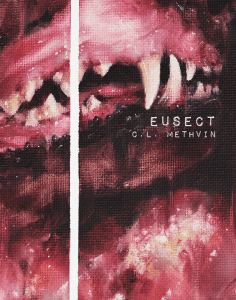
The cover of Eusect with some very bitey teeth on it.

Zilla: I devoured C.L. Methvin’s gruesome, touching and grotesque collection of short stories Eusect. I was delighted when they agreed to do an interview with us so I could pick their brains (not literally). C.L., can you tell us a bit about your book?

C.L.: It is a collection of horror shorts all flavored with Southern Gothic dread, varying in tone from subtle SCP-esque horrors to explicit gore, and in length from ~500 words to 6k+. Blurbed as follows:

The end is scary. The perpetual is scarier.

A suicidal housemate’s property regresses in ownership. A father is tormented by his immortal infant son. A school of fish offers communion with the heavens. A woman’s dead body multiplies across the world. These fourteen stories of terror, gore, and dissociation present people facing themselves and the infinite―often both at their worst.

Zilla: Let’s start with an introduction—between you and your characters. What would they say if they met you?

C.L.: “How fucking dare you.”

Zilla: Honestly, I can’t fault them for it, though as a reader I’m glad you did. Of all the characters you’ve tormented, who’s your favourite?

C.L.: In general: probably Aften from my 2022 novella Biting Silence. The book presents the story and characters in media res, and as such the reader doesn’t have much to go on to really meet the characters, essentially treating the reader as a wallflower. The circumstances under which the reader is introduced to Aften make him very swiftly (I think) a sympathetic character. What makes him my favorite is how one then watches his actions unfurl alongside other character vignettes and context(s) and slowly realizes the behavior and sympathy may not have been deserved. 

In EUSECT, probably the cute old woman Miriam, for reasons I’ll let the reader discover 😉

Zilla: Oh, Miriam. She’s certainly committed to self-discovery, and you have to admire someone who doesn’t let age slow her down from seeking new experiences. I’m a sucker for a love story, so as a reader, I’d pick Richard. When you’re in reader-mode, who’s your favourite character?

C.L.: It’s hard to choose just one, but probably Dorian Gray. The horrors he faced and enacted were just so human, even if the compulsion via portrait wasn’t necessarily. He was captivating, unapologetic, malleable, indulgent in his vices—and all of these wrapped up into a naïve socialite made for the perfect mixture of a man who could get away with anything. I find my favorite characters are often those who captivate (whether good or bad) by being extremely human. Martin’s Tyrion Lannister is clever; Woolf’s Mrs. Dalloway is endearing; Ellis’s Clay is infuriating—each of them exemplify certain traits so wholly that everything they do is painted by it, and that consistency regardless of circumstance makes them feel real.

Zilla: After all this chat about characters, would you say you’re a character-driven writer?

C.L.: Definitely more character-driven! My general style of writing is to envision a character and circumstance and then let them interact with the situation. I find in many cases, plotting (for me) gets easily derailed because I may have outlined what I need, but if the characters would not organically reach that point, then the story doesn’t go there. Cliché as it may be, the characters often write themselves. 

Zilla: Beyond following the characters’ lead, do you do any research for your books?

C.L.: It depended on the story in EUSECT: for some, none; for others, maybe a few days of on-and-off research. I’m not one to write too heavily on a topic if I’m not familiar, for fear of misrepresenting an element of it. 

Zilla: Thanks for sharing your story and your process. We’re looking forward to reading! Where can the Night Beats community find you and your book?

C.L.: Handles on Twitter and Bluesky, and EUSECT can be found for purchase in various forms on tRaum Book’s site!

Wrong Genre Covers

20,000 Leagues Under the Sea as a documentary was suggested by Rob. Have a funny idea for a Wrong Genre Cover? Email us at nightbeatseu@gmail.com, and if Rachel likes your suggestion, she’ll make it in a future issue. Or @ us on basically any of the socials.
20,000 Leagues Under the Sea by Jules Verne with the subtitle "the Oceangate story." It looks like a TV documentary and has an image of the OceanGate sub, pre-implosion, towards the bottom.

Behind the Screens: Tuesday Author Interview

Every Tuesday, get to know a bit about the stories behind the books you love, and discover your next favourite novel.

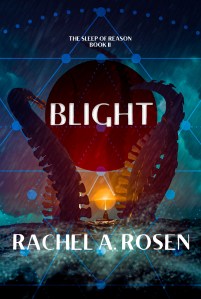
Zilla: I am so ridiculously excited for this interview—I’ve been waiting (somewhat) patiently for Rachel A. Rosen to be read to share the second book in her Sleep of Reason series with the world. And it’s finally here! Rachel, please introduce us to Blight.

Rachel: Reader, meet Blight. Blight, meet Reader. Blight is the sequel to Cascade, my first novel. Kind of a grim fella but I promise you there’s a sense of humour under there, not too far beneath the spiky surface. Cascade follows the attempts of the various characters, inside and outside systems of governmental power, to stop a climate-induced magical disaster from overrunning Canada and the world. Since there are three books in a trilogy, it’s not too big a spoiler to say that they fail at that, and Blight, which takes place three years later, is about picking up and living in the ruins.

Zilla: Among the many, many things that fascinated me about this book was how much magic derived from the power of true names, whether they protect us from demons or deliver us to sorcerers. What drove you to write your fantasy this way?

Rachel: I was Ursula K. LeGuin-pilled early in life, but of course she wasn’t the first person to write a form of magic in which one’s true name should be carefully guarded, lest the speaker end up with power over you. In Cascade, it’s established that several of the main characters have buried their true names, a type of curse that makes everyone incapable of even thinking of it; in Blight, we are about to find out why that’s important. My version of demons, people and animals who have been corrupted by magic to become monstrous, lure their victims to their deaths by whispering their true names. But humans are always worse than that, and we see what the power of a true name can be in the hands of a magician with malicious intent.

Identity is a form of armour. It’s not a coincidence that the far right weaponizes words—woke, antifa, fake news—twisting their original meanings to corrupt them. If we are going to survive the next few years, battles will not only have to be fought in the streets, but on the terrain of speech. I’ve just made it somewhat more literal for my characters, who risk being turned inside out should the wrong word get said.

Zilla: I love the subtle world building you used to show how life changes under fascism. Could you tell us about some of the inspirations there—for example, for the two types of money your characters use, Canadian dollars & DEC?

Rachel: We often get caught up on definitions, but fascism has never been a coherent ideology. When fascism comes to Canada, to paraphrase George Carlin, it will be polite and couch its atrocities in language about national pride, tradition, and orderliness. 

You can convince people to accept massive socio-political and economic changes through framing particular issues as not political. You can still vote, but why would you? The issues most critical to your wellbeing—say, do we light the planet on fire in pursuit of shareholder value—have been decided amongst the ruling class by consensus, and you won’t be consulted on them. This is managed democracy, and it’s on its way here too. It’s no wonder that North Americans are exhausted by traditional electoral politics.

The levers of power are financial, so I wanted to look at how the currency would work in a post-apocalyptic authoritarian regime. One model was China, which adopted a dual currency in its transition to capitalism. In Blight, most characters use a devalued Canadian currency, but Dominion Exchange Credits—DEC—are available for luxury goods. These, being digital, are easier for the state to control, and the list of what constitutes luxury is always growing. You end up with people selling their souls for health care, something that of course would never happen here.

Zilla: Speaking of fascism (and who isn’t, these days), I noticed that at the beginning of the novel, characters had a range of methods of resistance, from large to small. By the end, all our heroes had chosen to opt out and actively resist. Is this a choice for narrative arcs, or does it speak to broader realities activists need to confront?

Rachel: Activists want to be inclusive, and the struggle has many levels. Protesting in the streets is activism. Is feeding people activism? It’s one of the most fundamental forms of activism. Creating art? Maybe, if it inspires action rather than just making people feel better about their political opinions. Is teaching the next generation critical thinking activism? As a teacher, I believe that’s just kicking the can down the road a bit. Ultimately, you have to stand in front of the bulldozer to prevent the machine from doing its job. The arc of one character goes from singing the wrong note, in the first book, to machine-gunning brownshirts by the end of the second, and to a degree that’s all of our arcs, if we’re going to be honest.

Zilla: On a more personal note, I’d like to ask, HOW DARE YOU KILL [REDACTED], HOW DARE YOU MAKE ME FEEL FEELINGS?

Rachel: Because I am a monster. Every time someone complains about the character deaths in Cascade, I am gleeful, because that means I made a little person who a reader likes enough that they are sad to see them die. To be real with you, I like that character too and gave myself a big sad whilst writing that scene.

Zilla: Is there a happy ending to the trilogy? WILL ANYONE EVER BE HAPPY AGAIN???

Rachel: I won’t reveal much about the ending beyond that there is one. I’m not going to pull a George R.R. Martin—I’ve plotted out The Sleep of Reason to the third and final book. But in terms of whether anyone will ever be happy, the disaster gays at least get to swap spit and witticisms in this one, which should make at least some people happy.

Zilla: Thanks for sharing your story and your process. We’re looking forward to reading! Where can the Night Beats community find you and your book?

Rachel: I am firehosing social media in an attempt to make these books discoverable. A good place to follow me is right here on Night Beats, since any updates will go directly to your inbox. You can sign up for the Night Beats Newsletter here.

You can also find me on:

Bluesky

Mastodon

Threads

Insta

Facebook

My website is rachelrosen.ca and my podcast is at wizardsandspaceships.ca, or wherever you get your podcasts.

You can buy the book at this universal link, The BumblePuppy Press, or order it at your local bookstore or library!