Wrong Genre Covers

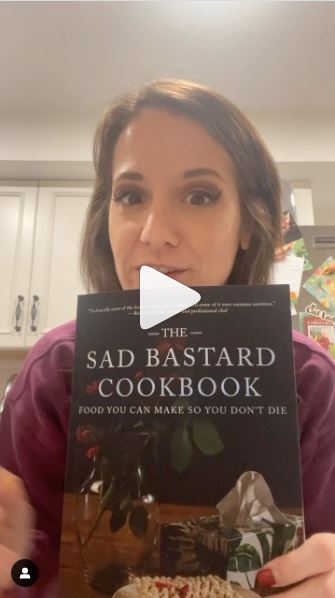
People keep asking us for new versions of The Sad Bastard Cookbook. Do a low-carb one! Do one for kids! Do one that has meat in it. Nah. We did one for cats. Email us at nightbeatseu@gmail.com, and if Rachel likes your suggestion, she’ll make it in a future issue.
the soft bastard cookbook: food you can make so your cats don't eat you in your sleep

Behind the Screens: Tuesday Author Interview

Every Tuesday, get to know a bit about the stories behind the books you love, and discover your next favourite novel.

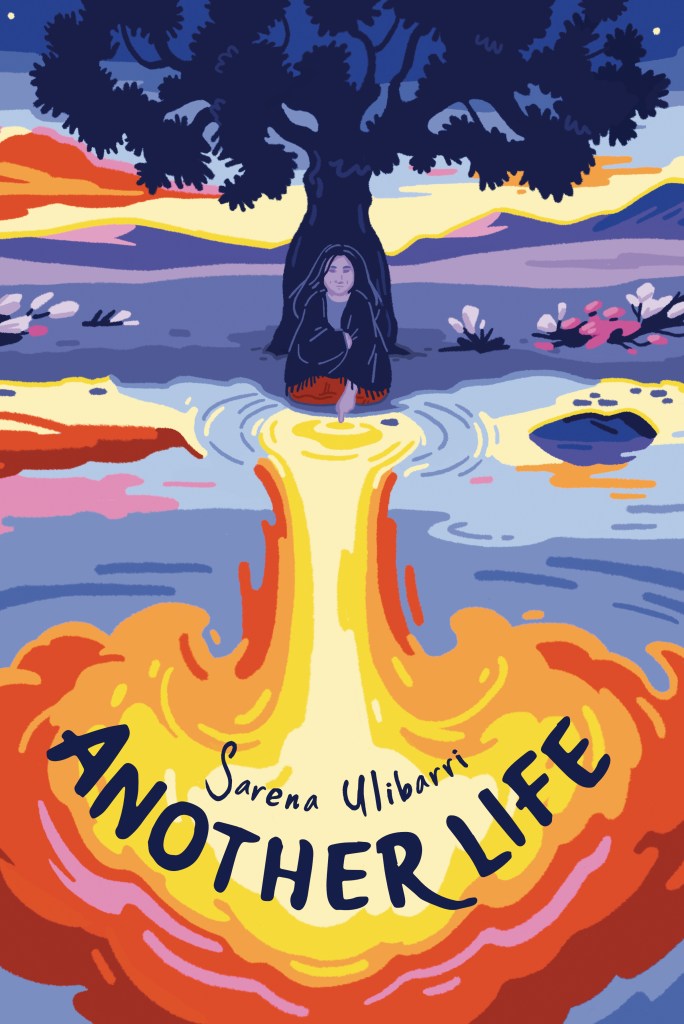
Another Life cover

Sabitha: Sarena Ulibarri joins us to talk about her solarpunk novella, Another Life. Sarena, tell us about this warmhearted eco-fiction!

Sarena: Another Life is a science fiction novella set in a peaceful ecovillage called Otra Vida. When a scientific method of uncovering past lives emerges, the founder of Otra Vida learns she’s the reincarnation of the previous generation’s greatest villain. This shakes the foundations of Galacia’s identity and her position within the community, threatening to undermine the good she’s done in this lifetime.

Sabitha: What inspired you to write this book?

Sarena: What if there were a “23andMe” type test, but for reincarnation instead of ancestry? And how would a “good” person react to finding out their previous incarnation did some really bad things?

Sabitha: Tough questions! Was there any music that inspired you while you were writing?

Sarena: The playlist for this book starts with “Policy of Truth” by Depeche Mode, which captures the conflict Galacia feels about whether or not to reveal her past life to her community. 

Because they share the same soul, Thomas Ramsey’s song is also by Depeche Mode, “Walking in My Shoes.” Ramsey is who Galacia was in her previous life: he was a manipulator and con-man who knew he’d made a villain of himself, but he had his reasons. 

Sabitha: We have a lot of writers in our community. What’s your writing process?

Sarena: My process seems to be to write the wrong book first, and then yank out the spine and write a new book around that foundation. I’ve done this several times, though it’s not a method I recommend. Early drafts of Another Life had whole superfluous storylines and tangents. After letting the book sit for a couple of years, I went after it with a (metaphorical) cleaver, killing darlings with no remorse until I found the core of what I was really trying to say.

Sabitha: What book do you tell all your friends to read? Besides yours of course!

Sarena: A Half-Built Garden by Ruthanna Emrys. It’s such a fresh take on alien first contact and the best example of solarpunk I’ve read yet.

Sabitha: Does the location the story takes place mean something to you or to the work?

Sarena: Because the story is about reincarnation, it seemed appropriate to set it in Death Valley. It’s a harsh and extreme place, but it’s also beautiful and full of life. That contrast fits the themes of Another Life quite well.

Sabitha: Thanks for sharing your story and your process. We’re looking forward to reading! Where can the Night Beats community find you and your book?

Sarena: My website, Twitter, or Mastodon are the best places to find me! Preorder of Another Life is available from Amazon, B&N, Kobo, or direct from Stelliform Press.

Book Report Corner

by Rachel R.

cover of sushi and sea lions

This is such a life-affirming read. Dany is a ballerina whose career is cut short after a devastating on-stage injury, and whose relationship is cut short because her not-quite-boyfriend is a Grade A fuckboy. Forced to leave the glamour of Manhattan for her old neighbourhood in Queens, she must reevaluate her life, her career, and the possibility of a new relationship with an old friend, Vinny.

I love a story about second chances and finding whatever joys you can from the wreckage of your old life. Written with warmth and heart and grounded in a neighbourhood of big Italian families and sports bars, this tale of two hot messes picking up the pieces and falling in love is spellbinding and an absolute delight.

Find it on AmazonBarnes and Noble, and Apple Books.

Behind the Screens: Tuesday Author Interview

Every Tuesday, get to know a bit about the stories behind the books you love, and discover your next favourite novel.

Sabitha: Today, we torment one of our own with questions. Zilla Novikov is the co-author of the Sad Bastard Cookbook and the author of Query, which I could not read without tears of laughter streaming down my face. Fortunately this interview is conducted via text so both of us can pretend to be professional about it. 

Zilla: Um. Hi. Yes. A professional interview. I got this. I am a PROFESSIONAL. 

Query is a fictional account of my attempts to break into traditional publishing. It’s told in the form of query letters that my fictional-self is writing to literary agents asking them to represent my book. In both fiction and real life, my odds of finding a winning lottery ticket on the sidewalk are higher than my odds of getting represented by an agent. During the self-induced bloodletting that was querying, I sent a lot of very polite letters, and I drafted a lot of letters which were much more honest and much less polite and I did not send them. This novella is my fictional self sending those letters. 

It’s also about political activism, because my response to living in a neoliberal hellscape is to be mad about it. Or tired, but mad makes for a more active story.

Sabitha: Readers of Rachel A. Rosen’s Cascade will recognize several familiar names from that book. How are they similar or different from their counterparts?

Zilla: The characters in Cascade got in my head and in my heart, like roommates you don’t want to kick out even when they’re late on rent. I adore fanfic, so when I finished reading Cascade and found myself missing Ian, Blythe, Jonah, and Sujay, it was natural for me to ask Rachel if I could borrow them for the novella I was working on. It’s a philosophical question whether a person is the same if you transport them to an alternative universe—if Ian would have escaped small-town Newfoundland without magic, if Jonah and Ian would have fucked sooner in another verse. Sabitha, you’ve read both books, what do you think? Jonah/Ian = yes?

Sabitha: I ship it, as the kids say. And it’s nice to see Blythe hooking up with someone who appreciates her.  I want to know more about the excerpts—to what degree do the stories exist fully formed in your head vs. made up  for this purpose?

Zilla: All writers know that the only thing better than writing is not-writing. That’s the spirit I took into Query

I originally set out to write the novel that Zilla is querying in Query. I planned out all the fun scenes in my head, and I drafted a few chapters. (If y’all are very nice to me, I might give one of them away as a newsletter bonus for subscribers.) But a novel can’t just be the most fun scenes to imagine, and the story that held them together didn’t capture my attention enough to finish writing the novel. When I realized that Query needed to include excerpts from fictional-Zilla’s novel, I found a purpose for these wayward scenes.

Sabitha: We’re increasingly seeing a wealth of fiction that glorifies activism and anti-capitalist resistance. I’m thinking of works like Andor or The Boys that actively challenge late-stage capitalist hegemony, but are produced by massive corporations. It’s been suggested that activist-oriented fiction exists, in part,  as a cultural safety valve to make the consumer feel like they’ve done a thing by consuming said media. How do you navigate that space as an activist and a writer?

Zilla: I’m a late-bloomer at activism. On my way to my first protest, I imagined myself meeting vast numbers of articulate, morally superior, and extremely good-looking people, and I was incredibly intimidated to actually go through with it and attend. One of my goals in writing Query was to give a roadmap to people like my past-self. I can’t promise you’ll fall in love with a redhead marine biologist if you start organizing on the left, but you will attend extraordinarily dull meetings, you will drink awful coffee, and you discover how much better life is when your friends share your values. I don’t know if Query is going to make any more of a difference than your average green-washing and rainbow-washing corporate bullshit fiction, but I tried to write a non-didactic call to action. I hope I succeeded at least a little.

Sabitha: So I’m guessing that you didn’t literally slap your book up on telephone poles with wheat paste. If readers want to find you, or even give you money in exchange for a truly entertaining read, how do they go about doing that?

Zilla: All the book-purchasing links are available at the tRaum website. We’re doing a limited run of special edition palm-sized print books in a swag-filled book box, and then print books and e-books will be available forever.

I hate social media, but in the bad old days when I was querying, it was considered a fact that you couldn’t get signed without it, so I signed up for a few. Tumblr’s alright, but the rest of the socials are mostly full of fascists, so far as I can tell. I write for the Night Beats blog and newsletter, and I promise there are absolutely zero fash on the editorial board of either.

Behind the Screens: Tuesday Author Interview

Every Tuesday, get to know a bit about the stories behind the books you love, and discover your next favourite novel.

Beyond Human Cover

Anna: Emma Berglund is a co-editor of the sci-fi anthology Into the Unknown. She wrote another short story, “In Our Midst,” for the next anthology installment Beyond Human: Tales of the New Us. This is your second sci-fi anthology outing. Tell us what attracted you to this group project?

Emma: Lower Decks Press started with me, Rohan O’Duill, and Jason Clor having the idea to put together and edit our first anthology, Into the Unknown, within our online community, as we have so many talented writers there. It all worked out well, so we said, hey why not try again! And here we are!

Anna: Your story describes an Earth after an alien invasion. Tell us more about it.

Emma: “In Our Midst” starts off after Earth has been stricken by aliens, but no one knows how they look like or what their intention is. However, what’s visible is how they affect humans. People are turned into either what we would describe as zombie-like creatures, or a sneakier version, where it’s not immediately visible whether a person is infected or not. The invasion has created suspicion in people because of this.

Anna: Is there life outside of this planet? How do you think the contact will be established?

Emma: Out of pure probability, there has to be some sort of life somewhere. Chance is we totally miss any contact tried because we don’t have the right tools to detect them. In the light of that, contact will probably be made from the alien part rather from our side.

Anna: Your story offered hope during a dark time for humanity. Do you believe it is the mission of sci-fi to help us through the conflicts of our dark times?

Emma: In a way, but I’d say that goes for any form of culture. We need the distractions, the explanations, the alternative worlds to enrich our minds, but it also helps us to enhance or be able to cope with our daily life.

Anna: What is it like to work with dozens of writers? Tell us about your editorial process.

Emma: It’s a great, yet overwhelming feeling! But to be able to follow all the writers process from their first draft to the published version is such a fantastic journey. We started with smaller groups where the first draft of the stories was read and discussed, then all the contributors have submitted their story to the three of us as the editors of Lower Decks Press. Since there are twice as many stories compared to our first anthology, we had to add an extra editorial resource person to help us out. Right now, we’re line editing and assembling the layout of the anthology as soon as we get the corrected versions back from the authors. We’re also thrilled to have fabulous illustrations by Marten Norr and a brilliant cover by Rachel A. Rosen, and we’re hoping to set a pre-sale date soon!

Anna: Find both anthologies with Emma’s stories at our website!

Emma: And you can find me on Twitter.

An Image from In Our Midst
Art for “In Our Midst” by Marten Norr

Query Stretch Goal: Punch the Sun

an environmental activist / aspiring writer’s query letters get increasingly unhinged as the rejections pile up

zilla punches the sun

Not one, but two print editions of Query are coming your way soon. A Daddy Bezos-approved blackout poetry cover, and a probably NSFW, definitely not safe for Amazon cover, which is printed on a special edition paperback and comes in a goodie bag of unexpected swag items hand-foraged by the author. 

These book boxes are selling like hotcakes, which means it’s time for STRETCH GOALS. If we sell more than 50 book boxes, when Zilla goes into the wilds to scavenge up more strange delights for the second run of boxes, she will celebrate by PUNCHING THE SUN.

Help show the daystar who’s boss. Buy your copy here.

Book Report Corner

by Rachel R.

Cover of Query

Here is a review of Query by Zilla Novikov. This review, like the book, has words in it. It’s not merely a keyboard smash or ASCII characters in provocative arrangements. It takes substantial effort on my part to put words to my feelings about this weird little book, and I hope you will appreciate that.

Look, Gentle Reader. I am trying here. I really am. I credit myself as a half-decent writer and reviewer. One of the things that I aim to do when I review books is write not just about what the book does for me, a specific being with subjective feelings and tastes and preferences and strongly held opinions about semicolons and found family tropes, but to attempt to identify the kind of reader a book is for, what the book is aiming to do, whether it succeeds in these goals for that reader.

The thing is that this is a book in which I, an aspiring genre fiction writer, a once-baby, now burned-out elder activist, and a lover of strange, sparkling, difficult-to-define stories, am in fact the direct target audience. So of course I love it. It feels written for me. (And given the subplot in which some familiar characters appear, perhaps in part it was.) The question is whether you, Gentle Reader, will also love it.

I think that you very much will.

Query is an epistolary novel that tells the story of a city planner coming to the realization that she can’t solve the climate crisis from inside the system through her increasingly unhinged query letters to various literary agents. If you’ve ever tried to publish anything, the impersonal form rejections and the unending grind of trying to get someone, anyone, to take a chance on you, will be familiar. If you’ve ever tried to make a genuine difference in your job, if you’ve ever felt small and hopeless in the face of late-stage capitalism, that aspect of the novel will feel familiar too. This book is a scathing satire with genuine passion and heart at its core. Come for the wit and the blackout poetry, stay for the actual inspiration to fight the good fight.

All the book-purchasing links are available at the tRaum website. There’s going to be a limited run of special edition palm-sized print books in a swag-filled book box, and then print books and e-books will be available forever.

Behind the Screens: Tuesday Author Interview

Every Tuesday, get to know a bit about the stories behind the books you love, and discover your next favourite novel.

Rubberman's Exodus cover

Sabitha: Joseph Picard is joining us today, to talk all things science fiction. Joseph, what book are you going to tell us about?

JosephRubberman’s Exodus is the third and final novel of my Rubberman series. Following Tara, the head Engineer, and her love and partner Sasha, the multi-generational bomb shelter is put at risk when fuel for the generator runs out unexpectedly. 2000+ survivors have been hiding from the after effects of war for over a century.

In that time, they’ve regressed into sub-cultures born from necessity, but have stagnated into ignorance and dogma.

In Rubberman’s Exodus, the blackout leads to events that force them out to the surface, and re-examine their way of life. From the Engineers who run the power generator, to the isolated workforce Subjects, to Citizenry, which was created to contain the worst trouble makers.

Everyone in the facility has had a taste of conflict over the years, but the Citizenry section has suffered the bloodiest of internal little wars, and most abusive little tyrants. (The previous book, Rubberman’s Citizens is all about them getting themselves sorted out… mostly.)

As the events of Rubberman’s Exodus unfold, across the facility, (not just Citizenry,) everyone will be facing threats they have no experience with. Threats from outside, where the big war happened, and the Enemy is known to patrol above.

I’m very pleased to have wrapped up the Rubberman series in a way I’m happy with, since the advancement of my multiple sclerosis (on top of my pre-existing paraplegia, whee!) makes writing very difficult these days.

Sabitha: What inspired you to write this book?

Joseph: The whole series was sparked from the notion of being trapped in a routine and job that feels meaningless, in near isolation. The characters took over, and the facility grew a life of its own, which demanded resolution. The Rubberman name comes from the Managers of the workforce, who wear rubber hazard suits, for reasons forgotten and misunderstood.

Sabitha: That is sadly very relatable. We have a lot of writers in our community. What’s your writing process?

Joseph: 1: Cool sounding idea/concept

2: Think of a way to make it plausible

3: Throw in likeable characters who have to deal with it. And not-so-likable characters to make things difficult.

I don’t do ‘proper’ outlines, but will make a point-form list of the big plot points I want to hit. I write through point 1, with the other points being suggestions. They’re all subject to total change if ‘uncovered’ events and actions of the characters take control.

As well, I’ve been sometimes labelled as ‘hard sci fi’, because I don’t use transporters or warp drives, etc., but I like my fictional science to be in the realm of very possible. And maybe soon.

Sabitha: What book do you tell all your friends to read?

Joseph: I’m frequently barking about Michelle Patricia Brown, who gives us characters with depth, and words with detail. She has a plot/character balance that’s similar to my own.

I’m currently in the middle of her After the Garden, set in a ruined future filled with shattered memories, uncanny ‘gifts’, and jerks who are basically a witch-hunting cult.

Sabitha: Thanks for sharing your story and your process. We’re looking forward to reading! Where can the Night Beats community find you and your book?

Joseph: The fastest link to type in is www.ozero.ca. My books in various formats are at my Amazon page.