Behind the Screens: Tuesday Author Interview

Every Tuesday, get to know a bit about the stories behind the books you love, and discover your next favourite novel.

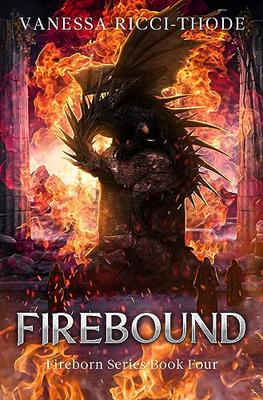
Firebound cover

Sabitha: Ready for adventure? Vanessa Ricci-Thode has what you need, with another installment of her fantasy series. Vanessa, tell us about Firebound

Vanessa: For the first time in her life, Spark has friends and has cobbled together something that’s starting to look like a family in her new home under the dragon city. But she’s never felt more alone. Or under more pressure. It’s only a matter of time before Loch and the ice dragons take revenge and attack the dragon city again.

Spark throws herself into spellcraft as the dragons’ only hope. But there’s no way she can do it alone. And then there’s the matter of having mere days to rescue a stolen dragon egg. 

In order to save the dragons, she needs her mother and her grandmother at her side. Spark must delve into the most dangerous kind of magic while learning that rebuilding a family isn’t easy.

While this book is about grief and isolation and loneliness, it’s also about queer joy in the darkness. It’s about being the light that drives away darkness. It’s about family and trust and healing. It’s also the most like How to Train Your Dragon of the entire series.

Sabitha: What inspired you to write this book?

Vanessa: Dealing with a lot of complicated emotional trauma, mostly from a crappy relationship with my mom. I wanted to write a book that teen me needed to help adult me heal, but also to help anyone else who wishes their family had been more accepting.

Sabitha: If you could meet your characters, what would you say to them?

Vanessa: I would (once again) apologize a lot!

Sabitha: What book do you tell all your friends to read?

Vanessa: Listen, if you really need a warm hug in book form I highly recommend The House in the Cerulean Sea by TJ Klune. So gentle! So nurturing!

Sabitha: Have you ever killed off a character your readers loved?

Vanessa: Oh yes. One of the family members Spark lost in Fireborn (Book 3) was a sweet

cinnamon bun and I’ve had some very cranky readers over that one.

Sabitha: Do you have any suggestions to help people in our community become a better

writers?

Vanessa: Attend writers’ conferences. See if there are any good ones local to you. If not, there are some terrific free/cheap online ones like WriteHive.

Sabitha:  What’s your next writing project?

Vanessa: I’ve started working on the fifth and final book in the series for NaNoWriMo. It’s going to be very queer and full of complicated messy women. Complicated, messy, and deeply powerful women in an epic team up! Also, there will be more dragons.

Sabitha: Thanks for sharing your story and your process. We’re looking forward to reading! Where can the Night Beats community find you and your book?

Vanessa: They can go to my website, or subscribe to my newsletter—(subscribers get a free short story from the dragon’s point of view). I use the handle vriccithode on all the social media platforms I use (currently mostly Discord and Bluesky with some Instagram and Mastodon—wandering.shop on Mastodon). And they can buy Firebound here.

Behind the Screens: Tuesday Author Interview

Every Tuesday, get to know a bit about the stories behind the books you love, and discover your next favourite novel.

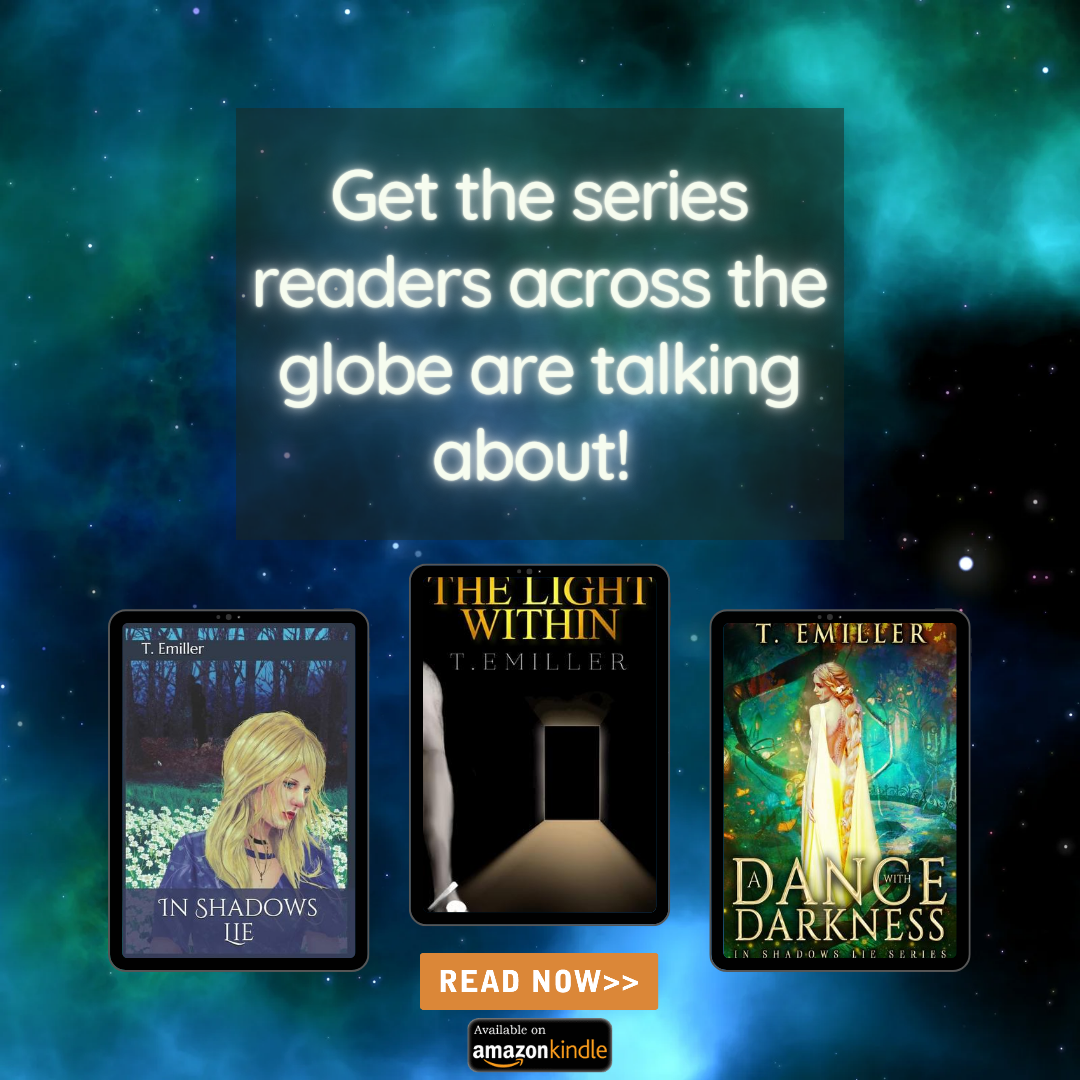
Get the series readers across the globe are talking about! Covers for all of T. Emiller's books.

Sabitha: Today we’ll talk to T. Emiller about their fantasy series, starting with In Shadows Lie. T., can you introduce us to your books?  

T.: Living the dream? More like a nightmare! When Liana’s dreams start blending with reality, she isn’t sure what to trust or even who! Ripped from her average life and thrown into the realm of her past, Liana must figure out which way is up or risk losing herself and an entire Kingdom to the darkness unleashed.

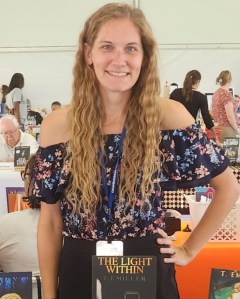
Image of T. Emiller

Sabitha: That’s an exciting premise! What inspired you to write these books?

T.: I have sleep paralysis. When I first started having episodes, I would keep myself up for days to avoid them. After some time, my mother said that wasn’t good for my health and suggested journaling. My brother read the journal and suggested I turn it into a book. I started the book, but life interrupted numerous times, and I lost countless copies. Later in life, after being baptized and praying for the purpose of my life, I felt led to write again. I was drawn back to this story and finally finished the first book. When my partner learned about it, they were adamant that I publish.

Sabitha: Writing is so important, both for authors and readers. On that note, what book do you tell all your friends to read?

T.: It’s hard to think of just one, but The Screwtape Letters by C. S. Lewis had a huge impact on my mindset when writing this story and in general.

Sabitha: Have you ever killed off a character your readers loved?

T.: I haven’t received feedback from my readers on the characters that have hit the chopping block. Personally, it was quite traumatic killing off at least two of them and one wasn’t human. I don’t want to spoil it so you’ll just have to read for yourself!

Sabitha: How much research did you need to do for your book?

T.: When it came to research that needed to be done for my series, I did quite an extensive amount. The series contains quite a bit of supernatural entities. I spent countless hours researching tales and myths across cultures to find commonalities in the creatures encountered in my stories. I also researched the way these creatures were usually depicted in other stories and tried to give a twist so they weren’t the typical creatures the reader would expect.

Sabitha: Do you have any suggestions to help people in our community become better writers?

T.: I would suggest writing and reading more! Education and practice are key to honing any technique. The writing community is also extremely supportive. Find the group of writers that match your style, then learn and grow! Don’t waste time worrying if you’re good enough.

Sabitha: That’s such good advice. Who did you imagine reading your book as you wrote it?

T.: As I wrote the book, I imagined my target audience would be a young adult, primarily female crowd. I was beyond amazed to find my books have been embraced across gender, age, and geographical demographics. I even have a huge fan that’s in their 90s.

Sabitha: What’s your next writing project?

T.: I am currently working on a poetry collection and hope to release it soon. Don’t worry, I’ll be back to the fantasy books after!

Sabitha: Thanks for sharing your story and your process. We’re looking forward to reading! Where can the Night Beats community find you and your book?

T.: All of the links to my socials and each book are listed here.

Book Boxes! Boxes of Books!

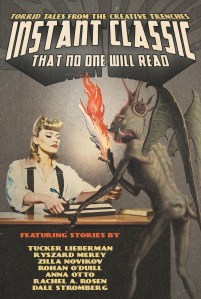
Instant Classic offers nine sardonic tales holding a carnival mirror to writers and stories. From a deal with the Devil to the ultimate AI versus human showdown, witness the terrifying spectacle of artists who will do anything to clamber out of the creative trenches alive.

cover of Instant Classic

Featuring works from the usual suspects, and some new voices! Stories by Tucker Lieberman, Ryszard Merey, Zilla Novikov, Rohan O’Duill, Anna Otto, Rachel A. Rosen, and Dale Stromberg.

Get our special limited edition paperback of this anthology, printed locally on Blue Angel paper and sent in a book box with goodies hand-curated by one of the authors. We know you love a book box. Get it here.

If you prefer “free”, apply here—we just ask that you post an honest review on a platform of your choice in return for the epub or pdf.

All proceeds from the sale of the anthology go to Médecins Sans Frontières / Doctors Without Borders.

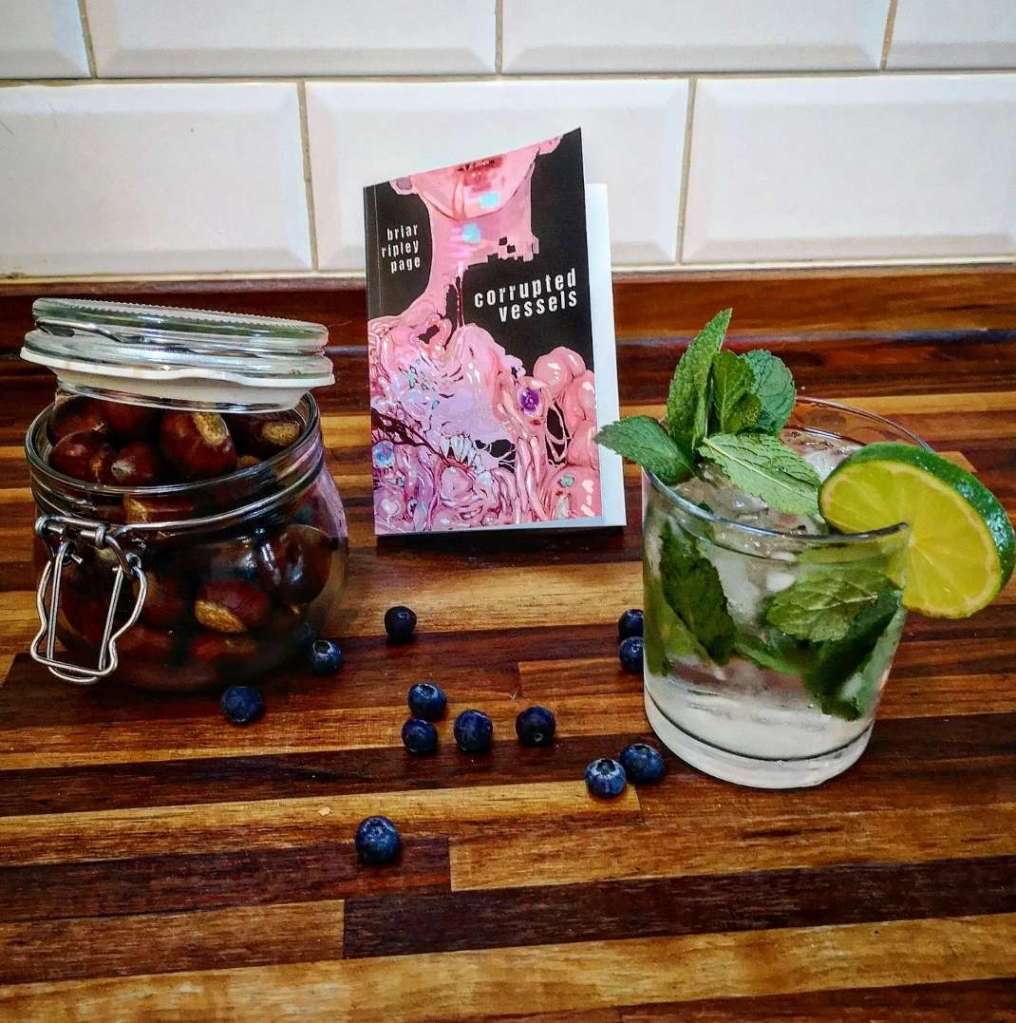
Corrupted Vessels by Briar Ripley Page with a Mojito Cocktail

Fiction To Sink Your Teeth Into, a feature from author and professional chef Rohan O’Duill!

While reading this beautifully sordid little book, Corrupted Vessels, I was really struggling to come up with a meal to go with it. And then I realised a meal would be all wrong—it needed a cocktail. While some of Ash’s herbal infusions were tempting, I decided it was safer to go with a traditional mojito.

corrupted vessels with a mojito
Continue reading

Behind the Screens: Tuesday Author Interview

Every Tuesday, get to know a bit about the stories behind the books you love, and discover your next favourite novel.

Ghost Signs cover

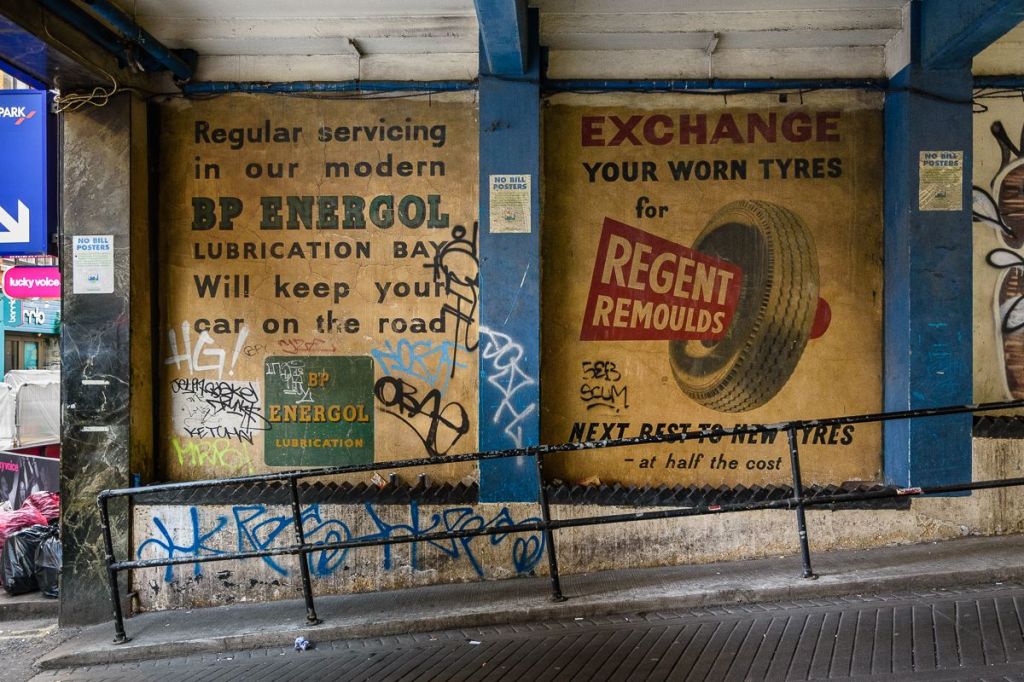
Sabitha: Happy Halloween! This spooky Tuesday brings us an unconventional kind of ghost. Ghost Signs: A London Story tells history through photography. Sam Roberts, can you tell us about your fascinating project?

Sam: Ghost Signs: A London Story explores London through its ‘ghost’ signs, fading painted signs on brick walls. Imposing yet hidden in plain sight, they are London’s history written on to the contemporary cityscape. They reveal fascinating stories of everyday life in the capital and each sign has its own tale to tell – not just of the business it represents and the people behind it, but of its own improbable survival.

The book was a collaboration with Roy Reed, who took the vast majority of the photographs inside, and is a feast of history, typography and the urban environment. It showcases London’s most impressive and historically significant faded painted signs, located, photographed and presented with archival and other contextual images. It is split across the two sections: the first shares insights into topics such as production techniques, economics and preservation. This is then followed by themed chapters that take on subjects including building, clothing, entertaining, branding and, ultimately, burying the city.

Ghost Signs Energol

Sabitha: What inspired you to create this book?

Sam: Since 2006, I have been documenting and researching the phenomenon of ‘ghost’ signs, those fading painted signs on brick walls. I always felt there was a book in me, and the pandemic gave me the necessary time and space to create something that would do justice to the topic.

Sabitha: Do you have a playlist for your book? 

Sam: While writing the book I discovered The War on Drugs from Philadelphia. Many of the songs from their albums A Deeper Understanding (2017) and Lost in the Dream (2014) made it onto a playlist, which was more or less on rotation. Their album Live Drugs (2020) then came out while working on the book, with lots of my favourites on it.

I especially like An Ocean In Between the Waves (the bass when it comes in!) and You Don’t Have to Go, which is much more mellow. Overall the music struck a chord at that particular moment in my life and work, and somehow enabled me to escape the ravages of the pandemic and focus on researching and writing the book.

Sabitha: What books do you tell all your friends to read?

Sam: I tend to read more non-fiction, and some books that have influenced me include: Working Identity by Herminia Ibarra, which helped me navigate a career change; How to Be Free by Tom Hodgkinson which made me reappraise my material consumption; and Doughnut Economics by Kate Raworth which chimed with my understanding of global climate change and what we should do about it. As for fiction, I most recently read Carter Beats the Devil by Glen David Gold, and thoroughly enjoyed the intrigue and twists that fill its pages.

Ghost Signs Commit No Nuisance

Sabitha: How much research did you need to do for your book?

Sam: Research probably made up about 75% of the work on the book. Each of the 250 featured signs has their story told, and then there were another 50 or so that were researched but not included in the final edit. Research involved many different approaches, from historical documents and picture archives, to google streetview and the wisdom of crowds on social media, especially Twitter (RIP).

Sabitha: Do you have any suggestions to help people in our community become better writers? If so, what are they?

Sam: I think that the main thing is to write, whether that’s by hand in a journal, on your desktop, or via a blog. Getting your work in front of people is important. So is analysing writing that you enjoy, to see what you can learn from it and bring into your own work.

Sabitha: What’s your next writing project?

Sam: I am currently developing my latest initiative which is a magazine, BLAG, serving the international sign painting community. In addition to writing content myself for publication in print and online, I am also gaining experience of editing the work of others. In particular, I enjoy helping to shape the texts without losing the writer’s voice, a new stage in my own personal and professional development as a writer and editor.

Sabitha: Thanks for sharing your story and your process. We’re looking forward to reading! Where can the Night Beats community find you and your book?

Sam: You can find Ghost Signs: A London Story here. You can also read me in BLAG (Better Letters Magazine).
Ghost Signs Little Crown Court

Behind the Screens: Tuesday Author Interview

Every Tuesday, get to know a bit about the stories behind the books you love, and discover your next favourite novel.

cover of Instant Classic

Sabitha: Here at Night Beats, we love a good meta story, and what’s more meta than stories about the making of stories? Two Night Beats authors, Tucker Lieberman and Rachel A. Rosen, join us to talk about Tucker’s stories in Instant Classic (That No One Will Read). Tucker, can you introduce us to the stories and the anthology?

Tucker: My story “Pygmalion v. Aphrodite” discusses an artificial intelligence that’s neither human nor divine. Humans create AI, and we like to believe we can profit from it, but it may transcend our control. Someday it might pursue its own artistic goals and earn its own money.

My other story, “Alicia’s Revision,” discusses how real-life experiences can be fictionalized. Multiple people can alter the fictional story. It may continue to change through layers of editing, pen names, and even theft. Wait long enough, and you’ll have a public domain story that belongs to everyone.

So many people are going to read Guaranteed Bestseller that, from the standpoint of its future fame, it won’t require me to explain it. But we aren’t in the bestselling future yet, so let me just say that it’s mostly about the frustration of not finding a publisher at all, never mind not having a plan to turn a published book into a bestseller.

Rachel: Both of your pieces deal with work in the public domain. How are these very old stories relevant to our contemporary lives?

Tucker: Pygmalion is an old myth that asks what art is trying to do: Imitate life? Be more perfect than life? Turn us on? It asks whether art is divinely inspired. It asks whether art could be brought to life or if perhaps it’s already alive. We’re asking similar questions today now that computers can form sentences and sketch images. Never mind whether art is divinely inspired; does it need to be humanly inspired? If it’s not, is it still art or is it just noise?

La Vorágine (The Vortex) is a famous Colombian novel that’s about to celebrate its centennial. The narrator is driven by lust and anger, and he waxes lyrical. In one sense, he de-romanticizes the jungle: it’s a place full of dangerous wildlife and exploitative bosses. But in another sense, Romantic sensibilities are central to the story, as the narrator is wrapped up in the exquisite self-importance of his own emotions. Long-form investigative journalists wrestle with how they show up in their stories, and so do a lot of novelists. When we warn of a social problem, how prominently should we feature in the message? Does it matter what we feel? How poetic should we be? Is our ego simply in the way?

Rachel: Your stories also deal critically with the question of authorship and who owns the stories that we tell. Can you tell me a little about your thoughts on the individual storyteller/intellectual property holder vs. collective storytelling?

Tucker: One person shouldn’t steal another’s creative work to profit from it. If the story fairy visits me in a dream and I spend a thousand hours writing a little book and pay a thousand dollars to an editor, I don’t want someone to lie that it was they to whom this happened and they who invested their time and money. They can’t slap their name on the cover and sell it. They can’t just take it without asking permission.

But in a more nuanced sense, art is co-created by a culture. Story ideas surface from other places, along with the language that forms them and clothes them. I’m just participating in the retelling. Besides, once a story’s in its new form, it’s up to readers to interpret it. Readers shouldn’t sell someone else’s story for dollars, but in more interesting ways, someone else’s story does belong to them. They’re allowed to make their own meaning with it.  

Rachel: The story of Pygmalion is relatively well-known, whereas this is the first time I’ve come across La Vorágine. What drew you to each of these sources for inspiration?

Tucker: About 15 years ago, I thought of doing a Pygmalion retelling. I drafted a few paragraphs and forgot where I put them. Recently I uncovered those paragraphs, which had loomed ever-larger in my imagination, and was disappointed that they weren’t nearly as genius as I recalled. I started from scratch. The impetus was wondering what people think they are doing when they ask AI to bring stories to life. Is it different from, say, asking a goddess to bring something to life?

When I moved to Colombia, my Spanish teacher gave me La Vorágine as an abridged graphic novel. Now I can read the original. It’s a classic in Colombia. The writing prompt that drew me back to it was to imagine a classic novel with an unfortunate woman character and give her a better outcome.

Sabitha: Thank you both for this—I am so excited for this project! Where can readers get their hands on a copy? And where can they find your other work?

Tucker: The anthology is available for pre-order on Amazon, but if they want a free review copy, they can apply here—we just ask they post an honest review on a platform of their choice. I lurk on various networks at @tuckerlieberman, and tuckerlieberman.com directs you to my books, essays, and other crimes.

Behind the Screens: Tuesday Author Interview

Every Tuesday, get to know a bit about the stories behind the books you love, and discover your next favourite novel.

History that never was cover

Sabitha: We are delighted to be joined by Dawn Vogel, a prolific author and editor who shares our love for creative timelines. Dawn, can you tell us about your latest work?  

Dawn: My background is in history, which means a lot of my fiction winds up being fantastical history, which is similar to alternate history, but instead of asking, “What if history was different?” I ask, “What if history included speculative elements?” My latest book is Unfixed Timelines 3, where I collect several fantastical-history short stories and poems, and write an accompanying essay that looks at the real history I’ve twisted. I’m also releasing the Unfixed Timelines Omnibus, which collects the first three volumes of this series for a print version.

Sabitha: What inspired you to write this book?

Dawn: In all honesty, it was short story rejections. Editors rejected some of my fantastical history stories because they thought the historical setting was unrealistic or the language was too modern. As a historian, I do research when I’m writing fantastical history to make sure I’m getting the real part of the story right. There are always bits of that research that don’t make it into the story, of course, so I concocted the idea of writing essays to both explain the history and let me geek out about the facts I’d left out.

Sabitha: So, how much research do you do for your books? It sounds like a lot!

Dawn: A bunch! This volume has seven stories and one poem, which meant first I researched the various historical periods, settings, and other such details as I was writing the stories and the poem. Then, when I put together the book, I needed to write eight historical essays. For some of them, I still had an email with links I collected when I was writing the stories. For others, I had to reconstruct my research. Most of the essays are fairly brief, but they frequently were based on me reading a bunch of Wikipedia articles and tracking down the sources for those articles, plus searching my local library for relevant books. I had a stack of library books on my dining room table for several weeks and took dozens of pages of notes just for the essays.

Sabitha: You seem unstoppable—what’s your next writing project?

Dawn: I’m always working on more short fiction and poetry, but my next big project is going to be a non-fiction book about novel writing. It will be extremely tongue in cheek, but I also hope it will be useful to people who want to write a novel but would prefer a humorous look at the process. It’s also ironic for me to be writing this book because I don’t like writing novels! But maybe in the process of writing this non-fiction book, I’ll figure out some novel writing tips that work for me, too!

Sabitha: Thanks for sharing your story and your process. We’re looking forward to reading! Where can the Night Beats community find you and your book?

Dawn: Unfixed Timelines 3 is on Amazon and the Unfixed Timelines Omnibus is here. My website is https://historythatneverwas.com, where you can also subscribe to my monthly newsletter. I’m on Mastodon and BlueSky as @historyneverwas, and I’m on Instagram (mostly my cats and other animals) as @scarywhitegirl12.

Book Report Corner

by Anarchist Review of Books

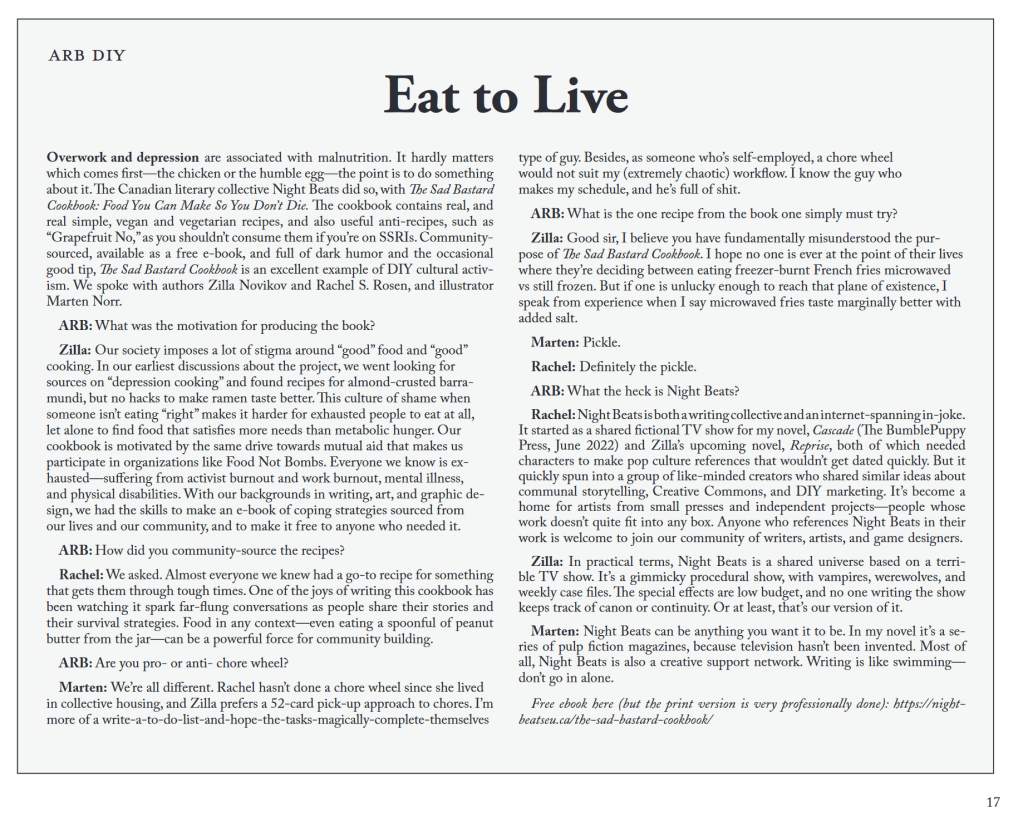
The cover of the sad bastard cookbook. It has a photo of uncooked ramen and a plastic knife, but no spoons.

Yes, the literal Anarchist Review of Books did a feature on The Sad Bastard Cookbook. I’m not screaming with excitement, you’re screaming with excitement. We’re both screaming.

We’re in Issue 6 (not yet available online but keep checking here!) or read the interview/review below.

Behind the Screens: Tuesday Author Interview

Every Tuesday, get to know a bit about the stories behind the books you love, and discover your next favourite novel.

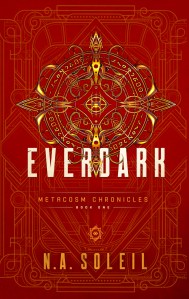
Everdark Cover

Sabitha: If there’s one thing we love here at Night Beats, it’s a shared universe. The Metacosm Chronicles caught our fancy as soon as we heard about then! N.A. Soleil, can you tell us a bit about yourself and your stories?

N.: Hi! We’re N.A. Soleil, pronouns ‘they’ (because we’re two people, though one of us is nonbinary and does use ‘they’ pronouns). I’m N. and my partner is A.

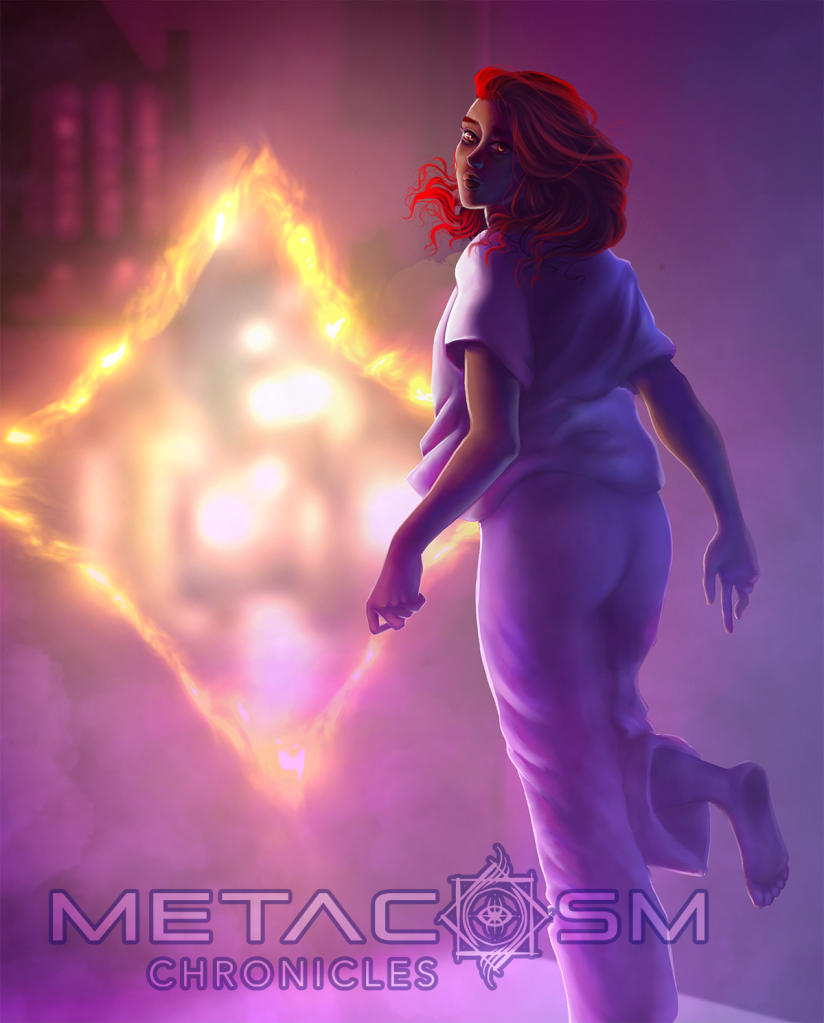
We have spent over a decade and a half creating an in-depth science fantasy universe from its foundation upward. We write novels from that universe, which we’ve dubbed the Metacosm Chronicles, and we just released our debut chronicle, Everdark. The short blurb: a psionic teenager becomes entangled in an interplanetary war … while also battling her own mind.

Sabitha: What inspired you to write this book?

N.: A. and I both had … troubled childhoods. A. was abused, and I had undiagnosed AuDHD and was chronically ill. We had both separately created universes in our heads to escape. When we met and started dating in our 20s, we found that our universes were creepily similar. (A 100% true fact: we both had a space military called the Rangers headed by an eccentric female Commander. Hi, Chani.) Over the next fifteen years, we merged our universes and started creating an overarching storyline for them. Everdark is the first step of many, and pulls a lot from our experiences of being mentally ill/autistic: being tethered to a reality that everyone else understands and we don’t, what ‘identity’ is when nothing is real, the actual toll that having to constantly fight your own mind takes, and how people bond while in hell.

Sabitha: Do you have a “fan-cast” – do you have actors you’d cast as your main characters?

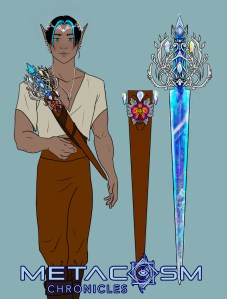
N.: Not a full cast, but Jackson Wang would make a perfect Tyyrulriathula (snarky but soulful elven Bladesinger), Gwendoline Christie would make a great Chani (the aforementioned Commander—buff mommy, mostly cybernetics, knows far more than she lets on), and only Tilda Swinton could ever be Ichiryu (a tyrannical Elysian with too many minds and not enough mental real estate.)

Ty art

Ty from Metacosm

Sabitha: How much research did you need to do for your book?

N.: All the research! A. has ADHD and has always hyperfocused on intellectual pursuits, so the Metacosm was very much built on real and emerging science, theology, anthropology, metaphysics and quantum theory, and good ol’ ‘what if.’

Sabitha:  What’s your next writing project?

N.: We have two other books fully written and ready to be polished up for publishing, and a fourth half-written. All a part of the overarching storyline, scheduled to be released one per year in March. ‘Codename: Book 2’ will be released March 2024. While not a sequel to Everdark, it’s the next step. We are also planning a novella as a sort of prequel to Everdark, into which a Night Beats cameo would fit rather well 👀

Sabitha: We love Night Beats cameos—please tell us if it happens because it will be an absolute joy. Thanks for sharing your story and your process. We’re looking forward to reading! Where can the Night Beats community find you and your book?

N.: You can find us on any of your friendly neighborhood social media as MetacosmChronicles (except for … *sigh* … X … which is MetacosmSeries) or at our website. Everdark and a snazzy bookmark are available from our shop! We’re currently most active on Facebook.

Art of Metacosm

Redd from Metacosm