Behind the Screens: Tuesday Author Interview

Every Tuesday, get to know a bit about the stories behind the books you love, and discover your next favourite novel.
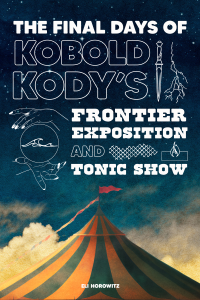
cover of The Final Days of Kobold Kody's Frontier Exposition and Tonic Show with a circus tent on the front

Sabitha: Fortune-telling combined with wide open spaces give us an open canvas for our imaginations to write fascinating stories. Eli Horowitz is here to tell us about his latest novel, The Final Days of Kobold Kody’s Frontier Exposition and Tonic Show, which is a fantasy inspired by the myths of the Wild West. Eli, can you tell us the blurb?

Eli: The end is near for Kobold Kody’s Frontier Exposition and Tonic Show, but Andra, the show’s fortune-teller, is the only one who knows. As the seams come undone and the curtain falls for the last time, it’s up to her to save as many of her friends as she can—and, if she can find a way, herself.

Sabitha: What inspired you to write this book?

Eli: This book was inspired by three main threads: the Wild West, trashy fantasy from the ’60s through the ’80s, and the antiwork movement. I was reading a bunch of pulp fantasy when I realized that the barbarian trope felt a lot like the colonialist idea that Native Americas were so-called “noble savages.” In both cases, the characters are thought to be fearsome warriors who obey a simpler, less refined, and somehow purer moral code. So I wanted to write a barbarian character whose real life and personality were less sensationalistic than his reputation in the dominant culture. And from there it just expanded: who would the gunslinger be? What could I do for a lion tamer? If the Wild West was when America colonized the breadth of the continent, how would that translate to a fantasy context? What would all of these familiar characters look like if we tried to let them define their own experience instead of seeing them through a growth-oriented, colonial-type lens?

Sabitha: How much research did you need to do for your book?

Eli: To help flesh out my world, I wanted to build a magic system that had a scientific flavor so that it connected in some way to nature. That way, we could see how all these different cultures use magic differently in light of their different beliefs and values. So I used a system of sympathetic magic based on the consumption of animal products (meat, organs, secretions, etc.). That was probably the most intensive part of the research, because it gave me an excuse to learn about both real and mythical creatures that have cool, unique abilities. I ended up referencing everything from the cockroach wasp and the kangaroo rat (made famous by Dune) to dragons and salamanders, so that was a lot of fun.

Sabitha: Do you have any suggestions to help people in our community become better writers?

Eli: If anyone is looking for writing advice, I’d say two things. First, it’s important to realize that different people need different advice depending on their strengths, goals, and development as a writer. And then second, to go along with that, I’d strongly suggest finding people you can trust to listen to you and give you the advice that’s right for you. It can be really scary and even painful to ask other people for help or feedback, but it’s so incredibly important. Finding the right community, even if it’s just one person, will unlock a lot of doors.

Sabitha: Thanks for sharing your story and your process. We’re looking forward to reading! Where can the Night Beats community find you and your book?

Eli: You can find Kody here and my first novel, Bodied, here. I’m also on Mastodon, where I’m always eager to connect with other writers and help to build the Masto writing community.

blurbs for The Final Days of Kobold Kody's Frontier Exposition and Tonic Show. "An intriguing and fantastical tale of power lost and gained, brimming with spiritual and mythological allegory." - Candice Zee, multi-award-winning author of The Munchkins series 


"While the story is elegiac in tone, people’s interactions within it are both prickly and witty, and each locale the carnival visits is vibrant. Dark incidents, including genocide, appear alongside lyrical passages [...] And during the book’s intense final confrontation, when Andra faces the imperial sorcerer who first cursed her, all of the story’s threads come together in a satisfying fashion." - ForeWord Reviews

Behind the Screens: Tuesday Author Interview

Every Tuesday, get to know a bit about the stories behind the books you love, and discover your next favourite novel.

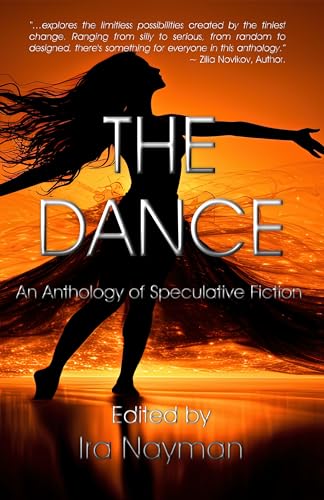
cover of The Dance with - what else? - a dancer on it.

Zilla: Rachel A. Rosen, Night Beats founder and writer extraordinare, has written another piece of literary glass to pierce my heart. Her newest short story “Do You Love the Colour of the Sky” can be found in the anthology The Dance.

The story starts with a poignant image–the protagonist circling the sky between a thumb and forefinger, trying to memorize the colour so it can be stored, temporarily, in memory rather than lost immediately. The story is about two characters who deeply love beauty dealing with its loss. The way I’ve made my own peace with loss is to say the transience itself is part of the beauty. But then, publishing a story about loss is a way of building permanence out of that feeling. How do you handle the space between permanence and transience within art?

Rachel: Everything I write will be forgotten.

There’s a strange contradiction where everything you say on the internet is forever, but the chances of any single thing you say being immortal is infinitesimally small. I am not Shakespeare, nor am I Nanni writing to Ea-nāṣir. This might bother me more if I were the sort of person who thought much about her legacy, but for the most part I’m not. If I can capture a fleeting emotion, put it down on paper, and shove it into someone else’s mind for however many minutes or hours they’re reading about it, that is cool and magical and good.

Zilla: The links between the Sunken Museum and the British Museum are obvious–the story reminds me of the debates about whether it’s best to keep stolen artworks “safe” in the the UK or return them to their war-torn homelands, with the British studiously avoiding the question of why those homelands are so war-torn in the first place. Curators are regularly confronted by the archivist’s conundrum. I assume you’re on the side of repatriation, but do you see any nuance in that question?

Rachel: I’m of course on the side of repatriation/rematriation—the Archivist’s arguments are intended to be understandable and sympathetic, but ultimately wrong—and it’s a theme that I often address in my day job as a teacher of both Visual Arts and Indigenous literatures. This story was inspired in part by a workshop I attended by Leslie McCue, an Anishinaabe arts educator who works with the Royal Ontario Museum on addressing some of the historical wrongs that the museum’s curatorial practice has perpetrated. She talked about some of the complexity in identifying poorly categorized objects and tracing ownership and belonging. I think there’s nuance in the how of returning cultural artifacts, art, and ancestors to their peoples and homelands, and that in itself is a fascinating discussion, but I don’t think there’s a lot of room for nuance when it comes to the should.

Zilla: Is it possible for a story like this one to have a happy ending?

Rachel: I think it is, though ultimately mine doesn’t have one. Besides memory and impermanence, this is a story about change—in order for the ending to be happy, the Archivist has to change in a manner that is in many ways a death. At least one of the alternate pathways suggests that this is something she’s capable of doing, and the choice that she ultimately makes isn’t by any means necessarily the end to her character arc. But ultimately, the story was inspired by melancholic works—in particular the works of Walter Benjamin—so a melancholic ending seemed most fitting.

Zilla: Are you prepared to share the story behind the title? Or is that an Easter egg that if you know, you know?

Rachel: It’s an Easter egg for a subset of extremely online depressed Millennials who spent too much time on Tumblr. Years ago, there was a meme entitled that, featuring a comically long image gradient of the sky throughout a 24-hour cycle. Its popularity points to the Dadaist humour that Tumblr is absolutely fantastic at, but I also see something tender in it, about the meditative pause that it enforces while doomscrolling. Of course, it refers more literally to the Archivist’s habit of mentally “preserving” the sky (also a habit I had as a child that I of course have grown out of and never find myself doing) but thematically, it’s about the desire to capture something transient by its nature.

Zilla: Thanks for sharing your story and your process. We’re looking forward to reading! Where can the Night Beats community find you and your book?

Rachel: They can get The Dance here, and all my social links are here.

Behind the Screens: Tuesday Author Interview

Every Tuesday, get to know a bit about the stories behind the books you love, and discover your next favourite novel.

Mewing cover

Sabitha: Chloe Spencer shows us the true horrors of influencers in her novella Mewing. Can you tell us about your story, Chloe?

Chloe: Mewing is a body-horror novella which centers on a small-time Instagram model named Vix who joins a co-op of influencers led by a mysterious and charismatic supermodel, Margo. After Margo takes Vix under her wing—and into her bed—Vixen’s success comes hard and fast, but the glitz and glamor comes with a price that may cost her her sanity… and her life.

Sabitha: What inspired you to write this book?

Chloe: Oh gosh! A lot of things inspired me to write this book. My thesis film for my MFA program, a body horror film entitled Serotonin, explored concepts of influencer worship and body dysmorphia, and I wanted to expand on it. I’m also inspired by Satoshi Kon’s Perfect Blue and Eric LaRocca’s Things Have Gotten Worse Since We Last Spoke. I have body dysmorphia, so some of my own experiences influenced the book as well.

Sabitha: Do you have a playlist for your book?

Chloe: I actually do! As a sapphic story, Mewing is inspired by a lot of sapphic icons and popstars. Given that it’s also grounded in a toxic romance, there’re a lot of songs that tug at your heartstrings. I’ve included Chappell Roan’s Casual and FLETCHER’s Bitter. I’ve also included songs about influencer culture and stardom, such as Allie X’s Girl of the Year.

Sabitha: If you could meet your characters, what would you say to them?

Chloe: To Margo, I would say, “Shame on you!” and to Vix, I wouldn’t say anything, I’d give her a big hug.

Sabitha: How much research did you need to do for your book?

Chloe: A ton! Despite the fact that Mewing is approximately 100 pages, it was research intensive. It’s meant to touch on a variety of issues related to body image disorders and influencer culture, but honestly, only scratches at the surface. I had to research things related to how managers/agents work, modeling history, and medical stuff.

Sabitha: What’s your next writing project?

Chloe: My next book, Haunting Melody, releases October 2024, actually! It’s a spooky fantasy YA about a ghost hunter that teams up with a ghost girl in order to solve a grisly mystery in a small island town. It’s got some scares, but mostly just Halloweentown vibes: cozy and cute!

Sabitha: Thanks for sharing your story and your process. We’re looking forward to reading! Where can the Night Beats community find you and your book?
Chloe: You can find out more about me at my website. I’m also available on Instagram and TikTok @heyitschloespencer, and on Twitter as @chloespencerdev.

Behind the Screens: Tuesday Author Interview

Every Tuesday, get to know a bit about the stories behind the books you love, and discover your next favourite novel.

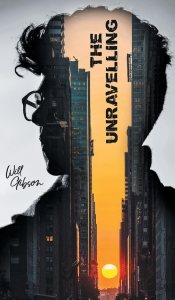
The Unravelling cover

abitha: We’re delighted to have Will Gibson here (not William!) to talk about his science fiction novel The Unravelling.  Will, want to start with an introduction to your book?

Will: In the year 2038, a disillusioned English boy’s audacious plan to save his beloved Asian pop star collides with a weary New York cop’s pursuit of an unfathomable global conspiracy, as humanity balances on the razor’s edge between AI-governed order and lawless urban chaos. As unprecedented system failures plunge the world into turmoil, Joe Jones races against time to unravel the deceit behind apocalyptic threats and protect those he loves, revealing the delicate intersection of human vulnerability and technological dominance.

Sabitha: What inspired you to write this book?

Will: Boredom! Haha. But seriously, I get a lot of down time in my work in the telecom industry. I regularly travel over 200,000 air miles, so that’s a lot of time in airports and on planes. Only so many moves you can watch! So I started writing this in 2018 on my iPhone, got half of it done, then COVID hit and sent the world in a spin, and that prompted me to pick it back up again in 2022 and really make a dash to get it finished. I’m delighted with the end result and hope to be an inspiration to my two little children.

Sabitha: Do you have a playlist for your book? 

Will: Oh absolutely! Firmly Radiohead and especially their 1997 album OK Computer. Even though its now 26 years old it still feels futuristic, and could easily be set in the year 2038! I listen to that and other Radiohead stuff while I’m working and writing/editing, as well as Morrissey, The Cure and The Arctic Monkeys. Music is a huge part of my life.

Sabitha: If you could meet your characters, what would you say to them?

Will: Well, for starters I’d tell Monica not to be so uptight, I’d tell Joe to believe in himself and I’d tell Suki to run a mile from Kelly hahahaha.

Sabitha: Do you have a “fan-cast” — do you have actors you’d cast as your main characters?

Will: Of course! My protagonist is Joe, just an ordinary New York cop, and he’d for sure be Pedro Pascal! A man of few words and quite reserved, he’d be perfect! His wife Monica would be played by Alexandra Daddario, a raven-haired beauty for sure. Suki is hard to cast as she’s a figment of my imagination, but she could easily be Shioli Kutsuna who was amazing in Invasion on Apple TV recently. Dylan is hard to cast as he’s so young, so would probably be an up-and-coming young Brit.

Sabitha: What book do you tell all your friends to read? 

Will: I’m big into science fiction, sports biographies and espionage thrillers. I’ve read every single one of Andy McNab’s Nick Stone series and always find them really good reads. My favourite of all-time is my namesake William Gibson, of Neuromancer fame, and I’ve read everything he’s ever done.

Sabitha: Thanks for sharing your story and your process. We’re looking forward to reading! Where can the Night Beats community find you and your book?

Will: They can find me on my website, Facebook, Instagram, Tiktok, or X. My book is on Amazon USA and Amazon UK.

Behind the Screens: Tuesday Author Interview

Every Tuesday, get to know a bit about the stories behind the books you love, and discover your next favourite novel.

Sabitha: Spies in space—what’s better than a hard science espionage thriller? John Kirk is here to tell us about his book, DEVIN’s WAY: 01: Eternal Spies. John, take it away! 

John: In the near-future, engineer Peter Hubbard’s modest aspirations shelter him high above London’s withering proletariat—why would he ever want to change that?

But fate has other plans. Forced to accept a test mission in low Earth orbit, Peter is drawn into a cold war between competing corporate states—a conflict that transforms his identity forever…

The exciting Devin’s Way trilogy hurls this most reluctant spy from low-Earth orbit, out beyond the Asteroid Belt to a moon of Jupiter, before ending on the barren wastes of Mars.

Sabitha: What inspired you to write this book?

John: Since a young age I have always found the image of a bespectacled person tapping away at a keyboard to be quite alluring. At age 14 I was encouraged to write my first science fiction, and the idea for the DEVIN’s WAY trilogy has been coalescing in my head ever since. This is my first truly serious attempt at getting these books written and ‘out there.’

Sabitha: So space and science fiction were always your passion! How much research did you need to do for your book?

John: Lots! Actually these have been written mostly from memory having absorbed decades’ worth of facts and trivia on the solar system and space and stuff. But occasionally I have to fact-check an item or two, the resources to hand these days are immense! I can visit any part of the cosmos I wish with just a few clicks—we should never take that for granted.

Sabitha: Who did you imagine reading your book as you wrote it? 

John: People just like me—avid ‘hard science fiction’ readers who have grown up fascinated with the exploits of NASA, ESA, ROSCOSMOS etc., and have always imagined how life may be ‘out there’ just around the corner. The DEVIN’s WAY trilogy is set “100+ years from now” as I enjoy extrapolating current tech and trends and placing them into this environment.

Sabitha: What’s your next writing project?

John: The second book in the sequence, Jupiter’s Moon, is already well under way, with the third and final installment, Martian Rising, to follow. I have a dream of combining the DEVIN’s WAY trilogy into one hardback compendium, with a number of short stories filling the gaps in between, since the whole thing spans more than 10 years. Once that is on my bookshelf, I will light that cigar!

Sabitha: Thanks for sharing your story and your process. We’re looking forward to reading! Where can the Night Beats community find you and your book?

John: Here’s my website, and my Amazon Author page.

Behind the Screens: Tuesday Author Interview

Every Tuesday, get to know a bit about the stories behind the books you love, and discover your next favourite novel.

cover of The Dance with - what else? - a dancer on it.

Zilla: One of Night Beats‘ own, Rachel A. Rosen, has a story in the anthology The Dance. After all, we love an alternative perspective on timelines! Today we’re talking to the editor of the anthology, Ira Nayman, about his story in the book and the work as a whole. Ira, can you tell us about the theme?

Ira: Life is the dance between choice and chance. The Dance contains 17 speculative fiction short stories exploring how the world into which we are born, random events out of our control and the choices we make within the options available to us shape our lives. Oh, and it’s fun.

Zilla: The anthology is themed around alternative universes coming together. Sometimes a story shows a multiverse of realities caused by varying decisions, sometimes it’s an alternative history of Canada, and sometimes it’s anything and everything in between. What drew you to all these stories for this multiverse anthology?

Ira: The original call was for stories similar to Multiverse triptychs which I had been writing: stories with three distinct parts set in three different universes that comment on each other in a “sum of the parts is greater than the whole” kind of way. As stories came in, I saw that other writers have their own ways of structuring stories across multiple universes; since I get bored easily, I loved the variations and decided to run with them.

Zilla: You have a background as a comedy writer. Where did the impetus to collect science fiction, fantasy, and horror stories come from?

Ira: I’ve been combining humour with speculative fiction for around 15 years. Partially, I grew up with both and love both. Partially, many of the tropes of speculative fiction are both useful for allegorical purposes and lend themselves well to humour.

Zilla: In your story, some of the funniest moments come from bureaucracy gone into overdrive (and I certainly caught the digs at Ottawa!) Did you draw these from personal experience?

Ira: Not in the sense that I have had any career in politics (although I have been a legal observer at protest actions for around five years). However, I have been writing satire for decades. In fact, one of my other projects, Les Pages aux Folles, is a web site of political and social satire. I have updated it weekly for over 20 years (which makes it ancient in internet terms!). So, satire is a large part of what I write, and I try to sneak it into my narrative fiction whenever it is appropriate.

Zilla: Speaking of comedy, in your story, a robot writes a thousand-page analysis of humour. If you can manage it in maybe less than 1000 pages, what’s your theory of humour?

Ira: I had a high school teacher who used to say that all humour is based on “juxtaposition of the absurd,” putting two or more things together that you don’t usually see together and wouldn’t think belong. This accounts for a large amount of humour, but, since we laugh at a wide variety of things, it doesn’t explain all humour. I have a lot of ideas about humour, but if I had to boil it down to something basic, I would say that it involves a surprise that, if we think about it, has its own internal logic.

Zilla: Thanks for sharing your story and your process. We’re looking forward to reading! Where can the Night Beats community find you and your book?

Ira: They can get The Dance here. They can find me on Facebook or Bluesky, and they can read Les Pages aux Folles here.

Behind the Screens: Tuesday Author Interview

Every Tuesday, get to know a bit about the stories behind the books you love, and discover your next favourite novel.

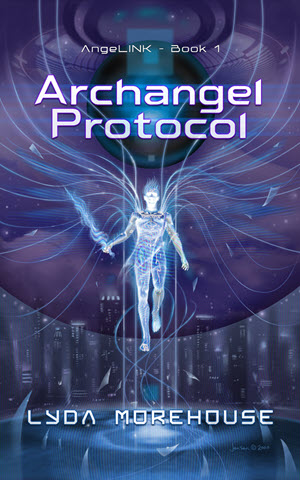
Archangel Protocol cover with a glowing humanoid figure on the front.

Rachel: Today we’re joined by author—and my long-time Star Trek Adventures RPG buddy—Lyda Morehouse, whose science fiction and fantasy series AngeLINK is back in paper–including, for the first time ever: hardback. Lyda, can you tell our readers about the series?

Lyda: AngeLINK begins with Archangel Protocol, a novel originally published by Penguin in 2001. It eerily echoes the current US political climate–including a joke/proto-fascist candidate who, nonetheless, gains ground on the internet, or “the LINK.” Angels claiming to support this fascist appear online. Our heroine, Deirdre McMannus, is ex-communicated, cut off from all social media–a fate worse than death. Into her life, like a reverse femme fatale, walks a handsome man claiming to be the archangel Michael. Michael often speaks of God in the nonbinary, as “Them,” which rocks the Catholic heroine’s worldview.

Rachel: That sounds eerily and disturbingly prescient. You wrote this well before a certain tangerine authoritarian waddled onto the scene, so what was the inspiration?

Lyda: The X-Files. Specifically, Season 2, Episode 14, ‘Die Hand Die Verletzt. It’s the episode where you think that the School Board is upset that the local high school is staging Jesus Christ: Superstar because they’re uber Christians. But, as they begin to pray for guidance, you see that they’re clearly Satanic! I spent the whole time watching, waiting for Scully, the more religious one, to turn to the skeptic Mulder and say, ‘You know what this means! If there is a devil, then angels exist.’ But it never happened. I figured you could do it subtly, right? Saint Michael is the patron saint of police officers. All you need is some help from a cop named Mike and it’s a clever little nod. So I started writing that and then because I wasn’t raised Christian and my writers’ group wouldn’t allow fanfic, things got very weird.

Rachel: As a X-Phile back in the day myself, I totally get wanting to correct that show’s shortcomings. And it’s definitely something that, at least for me, reads quite differently—to its detriment—in today’s world. Do you think, over two decades later, that AngeLINK will resonate with modern readers?

Lyda: One warning to modern readers who may not have read these books previously: when I wrote these, different words were used to describe trans folks. Likewise, a trans archangel, Ariel, gets misgendered often. In the forward there is an explanation why this wasn’t changed for the new editions. I’m an out lesbian myself. I need to stay aware and to acknowledge my past mistakes, not ignore the historical record, but to stand up, face those I’ve injured, and apologize.

Rachel: I really respect that approach. What are you working on these days, and where can readers find more of your work?

Lyda: I’m putting the finishing touches on Welcome to Boy.net, due out from Wizard’s Tower Press later this year. It’s a fun lesbian romance adventure romp in a ‘Wet Venus’-retro universe, but which also touches on the intersections of cybernetic enhancements and transness. You can find my equally retro, although up-to-date website at: lydamorehouse.com. I’m also on the socials either as Lyda or in my paranormal romance guise, Tate Hallaway.

Behind the Screens: Tuesday Author Interview

Every Tuesday, get to know a bit about the stories behind the books you love, and discover your next favourite novel.

Cover of Licking with two artistic faces kissing

Sabitha: Horror can take many forms as it holds a funhouse mirror to our everyday existence. J.V. Sadler shares her alluring horror anthology, Licking. J.V., can you tell us about your book?

J.V.: My first collection of horror short stories is titled Licking (published January 22). It is a smorgasbord of surreal horrific poetry, micro fiction, flash fiction, and long-form short stories. The stories balance between the nightmare world and the conscious, blurring the lines of reality.

Sabitha: What inspired you to write this book?

J.V.: Since many of the stories came from my actual dreams and nightmares, I would say that it was my subconscious mind that inspired me to write the book. I am a very vivid and lucid dreamer, so I said to myself “I can’t let these fantastical dreams go to waste.” So, I go to writing. When I wrote this book, I was going through some of the toughest depressive episodes I’ve ever been through. Later, I’d be diagnosed with depression, anxiety, bipolar II disorder, and mild autism. The book became my solace from my intrusive thoughts. And, in some ways, saved my life.

Sabitha: I’m very glad! Do you have a playlist for your book?

J.V.: I didn’t have a set playlist per se. I listened to a lot of Lofi radio while writing. Funny enough, I would turn on Mystic Stylez, the debut studio album from Three 6 Mafia. For some reason, that album got me in the mindset of the book.

Sabitha: Do you have any suggestions to help people in our community become better writers?

J.V.: My advice: Do it anyway. Whatever doubts you have in your mind, whatever discouragement you’ve gotten from peers and outside sources, whatever limitations you think you have—write anyway. If you don’t know where to start, get a piece of paper, write “My Book” on the top, then in the center of the paper write one word that comes to mind when you think of your future book. Next, congratulate yourself. You’ve just started writing a book! Lastly, fill the white space with anything. It can be words, drawings, a picture collage, anything! Just fill in the blank space with that word in the center and use it for inspiration for your writing. That’s the advice I have for upcoming writers.

Sabitha: Sounds like you never stop writing! So what’s your next project?

J.V.: A poetry collection! I am a poet too after all. It will be a very different project to Licking and will focus heavily on themes of social justice in addition to my struggles with mental health. If you’re looking for another Licking I suggest you wait till my third project comes out—a second collection of short stories with a focus on speculative fiction.

Sabitha: Thanks for sharing your story and your process. We’re looking forward to reading! Where can the Night Beats community find you and your book?

J.V.: You can find Licking on Amazon, Barnes & Noble, and Walmart! You can follow my author page on Facebook @JVSadlerAuthor, or find all my links here.

Adam Interviews … Zilla Novikov

One of Night Beats‘ own, Zilla Novikov recently engaged in a hard-hitting interview with Adam Gaffen, covering all things books and not-books.

Adam: Coffee, tea, or cacao?

Zilla: Coffee flows through my bloodstream where other people have—blood, I guess. I bleed brown and delicious. Tea and cacao are delightful side characters, but coffee is my codependent toxic love interest.

Read the whole interview here.

Behind the Screens: Tuesday Author Interview

Every Tuesday, get to know a bit about the stories behind the books you love, and discover your next favourite novel.

South Breaks cover

Sabitha: If you like your fantasy and science fiction epic, you’ll have Hannah Steenbock’s rich, sprawling fantastical worlds. Hannah, can you introduce us to your writing? 

Hannah: I’ve been writing for 20+ years, mostly fantasy, some science fiction. I like telling stories about people being suppressed and fighting for their freedom. They can be mages, wolf shifters, teenagers, vampires or dragons. I also write happy, satisfying endings—feel-good stories, in other words.

Sabitha: Let’s pick one to start with. What inspired you to write South Breaks?

Hannah: South Breaks is the first book in my Winds and Pillars series. I wanted to incorporate some Aztec vibes into my story and chose the perspective of a sacrifice who escapes. All my main characters in the series escape that fate, some more actively than others. I wanted to show the brainwashing that happens in captivity and how it can be undone. I also wanted to show the strength it takes to overcome life-long conditioning and to build a new life. Fortunately, South does find friends and new love. 

If you’re intrigued, South Breaks is free in all online bookstores.

Sabitha: What book do you tell all your friends to read? I’m guessing it’s fantasy too!

Hannah: I tell my friends about How I Stole the Princess’s White Knight and Turned him to Villany by AJ Sherwood. It’s a hilarious book, a male/male romance in a fantasy setting with fun adventures, an adorable Black Sorcerer (and his weird siblings) and a not so White Knight. It also makes great fun of role-playing tropes. It’s a pick-me-up book when I’m feeling sad.

Sabitha: That sounds so much fun. Now, back to your work. Have you ever killed off a character your readers loved?

Hannah: I rarely kill characters, and I haven’t killed one that readers loved. It really breaks my heart when I have to, but sometimes, the plot demands it. There are a few side characters that die. I do my best to make every death worthwhile. I mean, these are feel-good books, even if I put my characters through hell.

Sabitha: How much research did you need to do for your book?

Hannah: Not a whole lot. I mean, I do soak up knowledge, I studied archaeology for a few semesters, I can do medieval worlds easily. And I used to be fascinated by Mid- and South-American cultures as a kid. It’s one of the reasons I rarely write historical fiction, because it does take so much research. In fantasy, you can hand-wave a lot more and do your own world-building.

Sabitha: Do you have any suggestions to help people in our community become better writers?

Hannah: Writing is a craft, it takes practice. So write what your fancy tells you. You’ll grow with every story—but do your best to finish them. Also read extensively in your favorite genre, in the one you write, and beyond. Reading imprints story-telling techniques into your Writer Brain.

On the other hand, do not write by committee. Don’t let beta readers, critique circles and such water down your voice. Learn the rules and then break them with confidence. Protect your voice and your stories.

Sabitha: What’s your next writing project?

Hannah: Right now, I’m writing a vampire tale with a twist, for funsies. Another work in progress is A Wolf’s Hacker, Book 8 in my shifter series Wolves of the South. The next book I’ll publish, however, will be Sky Falls, Book 6 in my Winds and Pillars series.

Sabitha: Thanks for sharing your story and your process. We’re looking forward to reading! Where can the Night Beats community find you and your book?

Hannah: You can get South Breaks here. I’m on Facebook, Mastodon, and Youtube, and I have a website