Behind the Screens: Tuesday Author Interview

Every Tuesday, get to know a bit about the stories behind the books you love, and discover your next favourite novel.

Latent State cover

Sabitha: We have Ben Winter with us, author of the cyber-thriller Latent State. Tell us about your book!

Ben: Latent State takes place in the near future of Neo-London where drugs have made Virtual Reality feel like real life and the populace are hopelessly addicted. Within this crumbling cyberpunk dystopia, a couple of junkie brothers stumble on hidden tech that leaves one catatonic and the other, Daryl, suffering from episodes where time comes to a standstill. Now, to save his brother, Daryl must uncover the mystery of what’s happening to him, all the while battling his drug problems and the shadowy forces that are hunting him.

Sabitha: What inspired you to write this book?

Ben: The initial idea for Latent State was quite abstract. At the time I was watching a lot of superhero movies and was getting bored by them. I liked the idea of a main character with special abilities but the normal fantasies seemed too easy. It got me thinking about the downsides. What if someone could stop time? What would it mean? To my mind, it would be incredibly perilous; the air would be frozen and everything would be like stone. Those dangerous scenarios created lots of fascinating plot points, and everything else soon fell into place, including the cyberpunk dystopia, and the characters’ addictions to drugs and technology.

Sabitha: That’s a fascinating concept, and I bet there’s some great worldbuilding in the book. How did you choose the title?

Ben: I wish I’d known the title before starting as finding something that said everything I wanted was a challenge. The goal was for it to evoke the main themes: time manipulation, dystopia, control, and cyberpunk. Perhaps I set my expectations too high! In any case, I recall spending hours pouring over a thesaurus searching for synonyms. Then it finally came to me one night in the moments before sleep. I hastily made a note and couldn’t remember what it was until I checked my phone the following morning.

Sabitha: That is so relatable—finding the perfect title is a huge deal. We have a lot of writers in our community. What’s your writing process?

Ben: I broke every rule when writing Latent State. One of the biggest being I didn’t get feedback until I was more or less done. That was tough and lonely, but after many false starts I learned that unless people know about writing, they tend not to give helpful feedback, and all that does is ruin your motivation. I found the right kind of feedback later and had to change some parts, but I’m still grateful for the focus I achieved writing this way.

Sabitha: What do you most want your readers to take away from reading your book?

Ben: Latent State is set in a dystopia populated with flawed humans, but most of the characters are still hopeful for better and battle against the odds to achieve it. That’s the sort of mentality I think everyone can benefit from; the idea that no matter how bad things are, or how far you are from your goal, there’s always the chance to strive for better.

Sabitha: This book sounds very cool—we’re looking forward to reading! Where can the Night Beats community find you and your book?

Ben: Latent State is out now on Amazon , and you can also sign-up at my website or follow me on Twitter for updates. 

Behind the Screens: Tuesday Author Interview

Every Tuesday, get to know a bit about the stories behind the books you love, and discover your next favourite novel.

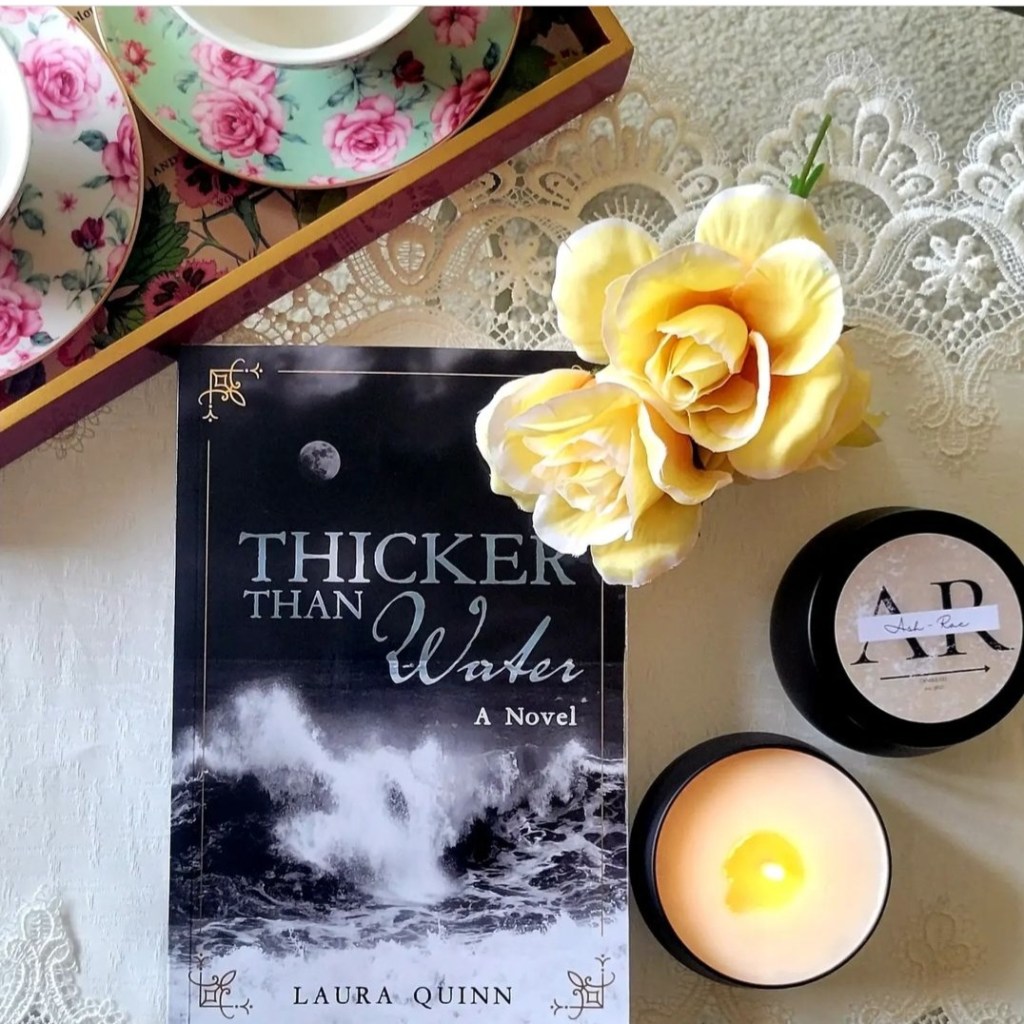
Thicker than Water Cover

Sabitha: Laura Quinn is here! She’s written a sweeping historical novel about family and love set in the time of World War One. Laura, can you introduce us to your book?

Laura: Titanic meets Boardwalk Empire in this historical fiction set against the picturesque shore town of Cape May, NJ, at the onset of World War One. Siblings Danny and Shannon Culligan are trapped under the thumb of their alcoholic father. Danny’s been in love with his childhood sweetheart, Jennie Martin- a wealthy cottager from Philadelphia- for as long as he can remember while her cousin, Hugh, is smitten with his sister.

As the foursome struggles to surmount the class differences between them, the nation is plunged into the Great War, changing all of their lives forever. Danny is drafted into the Army and Hugh enlists in the Navy- defending the home front as a lieutenant at Cape May Section Base Number 9. While Jennie works tirelessly on the Liberty Loans campaign in Philadelphia, Shannon finds herself ensnared in a rum ring operation as the temperance movement ebbs closer to its goal of Prohibition.

A sweeping saga of betrayal, lies, and loss on all sides, Thicker Than Water, marries the historically accurate world building of Ellen Marie Wiseman’s The Orphan Collector with the emotional resonance of Renee Rosen’s works.

Sabitha: What inspired you to write this book?

Laura: I grew up going “down the shore” every summer during childhood, and have a deep love of the area. The idea for Thicker Than Water came to me shortly after becoming a parent myself. My oldest was a terrible sleeper, and the story of one of the pairings (Danny and Jennie) was one I’d tell myself in my head while rocking him at night. 

Sabitha: That’s a lovely story! What was your favourite thing to write in the book?

Laura: I love being able to give readers a peek into yesteryear. The Christmas scenes (at John Wanamaker’s Department store) are particularly endearing to me. 

Sabitha: What advice would you give to someone who’s writing or querying?

Laura: Get it down. Whether handwritten in a notebook, typed up on a laptop, or texted from your phone when you can’t sleep. Tell your story. Be authentic and don’t hold back. 

Sabitha: What do you most want your readers to take away from reading your book?

Laura: The idea that people aren’t their parents. Change is possible, as is love, if you’re able to open your heart and let it in. 

Sabitha: That’s a really lovely sentiment. In your novel, which character do you relate to the most and why?

Laura: Shannon shares my snark and guarded nature. I’m an #ACoA (Adult Children of Alcoholics) myself, so portraying her and Danny’s home environment accurately was very important to me. 

Sabitha: Thank you so much for sharing a story that comes from such a deeply personal place. It sounds like a great read! Where can the Night Beats community find you and your book?

Laura: It is available in both eBook and paperback at a variety of bookstores. Those visiting Cape May can find it in stores at Exit Zero and Ferry Park. You can find me on my website, Instagram, Facebook (either my author page or my private fan group), Pinterest, and Goodreads.

Laura at a book signing

Behind the Screens: Tuesday Author Interview

Every Tuesday, get to know a bit about the stories behind the books you love, and discover your next favourite novel.

The Art of Becoming a Traitor cover

Sabitha: Andrea Bougiouklis, author of the delightfully titled The Art of Becoming a Traitor, joins us to talk about her military thriller novel. Tell us a bit about your book, Andrea!

Andrea: A young woman with a larger-than-life legacy and an incredible sense of self truly believed that what she was doing was right. With all of her being, she thought that she was helping to serve a long-overdue justice.

When Eleri learns that she had been used as a pawn in a larger, evil plot, she has to find it in herself to right her wrongs – even if it means going against everything and everyone she ever loved. The war had been raging since she was a young child, and she had never thought to question it.

When Eleri and her best friend Fyodor discover that their leaders have been doctoring and altering history and are planning to disintegrate an entire population, they realize that they may be the only two who can prevent this atrocity.

In a race against time, power, and their own morals, they can only hope that their willpower and strength are enough to overturn a war that has already begun.

 Sabitha: How do you come up with story ideas? Character ideas? Setting ideas?

Andrea: I don’t think of myself as a very conventional writer, in the sense that there is not one specific way that I come up with story ideas, and most times, it has nothing to do with me conceiving a plot. Oftentimes there is inspiration drawn from anything in my life – whether or not it is other media, world events, personal experiences, or anything else – and this inspiration will lead to a single piece of dialogue, a single scene, or perhaps even a character. I then tend to build around that one concept. I don’t storyboard or pre-determine an outline for what I write. Instead, I just write and see where the story goes on its own. Obviously, when I re-read or revise my work, I fix any plot holes or inconsistencies that I overlooked as I was writing, but in general terms of my process or how I create ideas, there is no real answer!

.Sabitha: That’s a pretty loose process. Do you have any self-imposed writing rules? How do they help
your writing?

Andrea: There was something that I saw a long time ago, I can’t remember where or who to credit for it, but it said that to make your characters come to life, write out five or ten things about them (personality, interests, fears, etc.) and try to never explicitly mention it in your work. It helps to make them seem fuller and more well-rounded and adds dimension to the characters. Beyond that, there isn’t any one thing that I do when I’m writing. As I mentioned before, I do not have a linear or conventional writing style. I like to make themed playlists or sometimes find visual references, especially when worldbuilding, but those only enhance ideas that I already have.

Sabitha: Thanks for sharing your story and your process. We’re looking forward to reading! Where can the Night Beats community find you and your book?

Andrea: You can get my book here, and find out more about me here. You can find me on Twitter and Instagram.

Behind the Screens: Tuesday Author Interview

Every Tuesday, get to know a bit about the stories behind the books you love, and discover your next favourite novel.

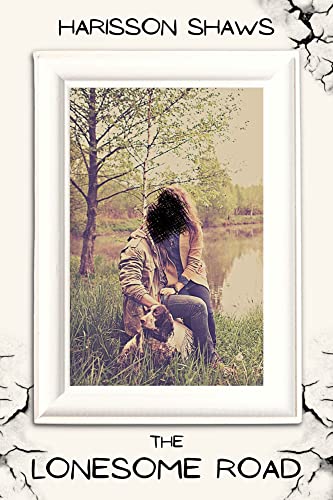
The Lonesome Road Cover

Sabitha: Today we’ll talk to Londoner Harisson Shaws about his debut novel, The Lonesome Road. Henry, can you introduce us to your book?

Harrison: Life as we know is gone. The once vivid city now stands abandoned. Earth became a wasteland, stripped of all life. Broken, confused, and in a desperate search for answers, one person still roams its desolate remains. The Wanderer has no memories, no recollection of the events that led to the end of the world. All he sees are deserted buildings and the smoke that covers the sun. While taking shelter in an abandoned house one night, the last man on Earth gets a knock on his door. He finds an unexpected guide in a woman who feels familiar.

Will he choose to keep traversing these lands, lost as before, or will he take her guidance to find the answers his heart so deeply desires?

Sabitha: Does your book touch on any social issues or topics?

Harrison: The main topics that are sprung throughout The Lonesome Road are mental health, mortality, and morality. In today;s age, it is ridiculous that mental health issues still carry a certain stigma. As someone who suffers from severe depression and anxiety, I felt obligated to write about these certain issues.

People are left in fear of opening up to even those closest to them. Without the ability to share the burden, it burrows even deeper inside of them, rotting their core as they become even more hurt, desperate, and confused. Without a helping hand, we are forced, same as our main protagonist, to wander the world searching for answers that are on the end of a hard and difficult road. To get to them, we are at risk of corrupting the image of the world we hold and the image of our own self, our own worth, and our ideals. With someone who would dare to understand, the world would seem less grim.

There are questions of morality and mortality, what really is evil and what is good, are there such things, or is the world much more complicated, as both are mere matters of perspective?

The book also touches on topics of humanity and moral compass, are we bound to do good within the borders of set norms? If those who are higher do not abide, how can we be judged by someone who has the same or even worse sins than ourselves? One of the final questions that the book tries to ask is the question of destiny and hope. What is destiny, really? If destiny is real, does anything we do really matter? The Wanderer presents a curious take on it, saying that destiny is two points in time, one set and final we can’t affect (our birth) and the other ever-changing (our death). The path in between as we walk determines how our death will be, further saying that the point of life is a good death. But can we really rely on an opinion of a cynical narcissist that is our main protagonist?

Sabitha: What are some interesting facts about you that others might not know?

Harrison: I speak five languages. I spent some time of my childhood in Hamburg, Germany. I started writing at the age of 9, and I still remember parts of that fantasy I created, even though who knows where that notebook I wrote in is. Fitting that after all, I’ve been through, I am here, as a writer, feeling that this is my true calling. Before writing, I spent some time working as a video editor, but my love of writing was bigger than the one for editing.

Sabitha: Thanks for sharing your story and your values. We’re looking forward to reading! Where can the Night Beats community find you and your book?

Harrison: You can find my book here. You can find information about me here, or follow me on Twitter and Instagram.

Behind the Screens: Tuesday Author Interview

Every Tuesday, get to know a bit about the stories behind the books you love, and discover your next favourite novel.

Sabitha: Rachel A Rosen is here! One of the founding creators of Night Beats, plus activist, writer, and all around fantastic human being, Rachel is going to tell us about her novel, Cascade, and all things magical and climate change. Rachel, take us away!

Rachel: Cascade is set a generation after climate change returns magic to the world—for better or worse, but mostly worse. A small number of people are able to channel otherwise unpredictable magical energy, and one of them, Ian Mallory, works for the Canadian government, using his precognitive abilities to keep the ruling minority party in power. But when the disaster he predicts is much larger than the usual sordid affair, expense scandal, or minor terrorist incident that he’s hired to avert, it falls to the magic-loathing photojournalist Tobias, land rights activist Jonah, climate scientist Blythe, and Ian’s emoji-spell wielding intern Sujay, to prevent a future cataclysm bigger than politics or ideology. 

Sabitha: What inspired you to write this book?

Rachel: For most of my life, I’ve worked in one way or another for social change—as an activist, educator, union member, and a volunteer for political parties. The majority of that time has been spent on the losing side of one struggle or another. Sometimes you just want to wave a magic wand and make people see reason. But of course, people being people, the realist in you knows that we’d find a way to screw that up too. Cascade, which is about magic colliding with the political process, is about that inherent contradiction.

Sabitha: We have a lot of writers in our community. What’s your writing process?

Rachel: I’m what’s known euphemistically as a discovery writer and more commonly as a pantser, which is to say that I don’t make detailed outlines or attempt to follow commercial story beats. I do have a vague plan for where the story goes—and I generally have the last scenes of each book in my mind. But the story itself comes to me in very distinct images and I write around those.

Sabitha: Which character do you relate to the most and why?

Rachel: They’re all kind of me at some level.

Sabitha: Even the villains?

Rachel: Especially the villains.

That said, in many ways Sujay is my younger self, with her insecurity and nerdy optimism, and Ian, with his cynicism and rage, is my older self. And Eric, alas, is how I often cope in a crisis.

Sabitha:  Did anything change from when you started planning your first draft to the published version? What?

Rachel: My original draft was 20,000 words longer. Much of it was supplementary material—chat logs, reports, even a Wikipedia entry. But I also cut plotlines and scenes and combined characters, in particular two pairs of important secondary characters. And there is one scene at the end that changed quite dramatically.

Sabitha: What do you want readers to take away from your book?

Rachel: Cascade is about climate catastrophe, rising fascism, and widespread apathy in the country currently known as Canada, and it’s entirely possible that my bleak novel is too optimistic. It could not only happen here, but it is happening here. And the wizards aren’t here to save us. If there’s any takeaway, it’s the pressing need for ordinary people to fight for a better world.

Sabitha: Obviously I loved this book and I think everyone else would too. Where can they find it? And you?

Rachel: You can find Cascade in various digital formats here, in paperback on Amazon, or at the BumblePuppy Press. You can connect with me through my website or on Instagram. Or, hey, right here on the Night Beats blog.

Behind the Screens: Tuesday Author Interview

Every Tuesday, get to know a bit about the stories behind the books you love, and discover your next favourite novel.

Into the unknown cover

Sabitha: Today we’re talking with one of the Night Beats crew, the multi-talented Rohan O’Duill! He’s here to tell us about the anthology he contributed to and co-edited, Into the Unknown. Rohan, so good to have you. Let’s start like we always do—tell us about the book!

Rohan: Into the Unknown is a science fiction anthology published by Lower Decks Press, a not-for-profit press set up by my writing group. An anomaly in space attracts the curious and the obsessive. An artificial intelligence expresses very real needs. A civilization lives out its last days on a doomed generation ship. From the recesses of a closet to the dark side of the Moon, from mysterious islands to alien worlds and the furthest reaches of unexplored space, join eleven authors as they explore the mysteries that lie within our technology, our universe, and ourselves. Embark on a science fiction expedition … Into the Unknown.

Sabitha: I fully intend to embark! So how did this book come to be? And what inspired your story, Alinda?

Rohan: Within our writing group, we had suggestions on an anthology theme and voted on those ideas. Exploring the unknown won the vote and I started thinking up ideas for a story. I started working on a very speculative and mind-bending story, but very soon I got bored of it and the writing dried up. I realised that it just wasn’t my style. I write stories for fun, with action and cool characters—I needed to go back to my roots.

Soon the story Alinda was born. It’s set in the Cold Verse that my other works are all written in. Josh and his rag-tag bunch of mercenaries head out on an aging frigate to the asteroid Alinda. Their mission to retrieve a mysterious artefact that had crash landed there hundreds of years earlier, but they soon realise the artefact has other plans. I had recently watched Alien with my son, and I really wanted to recreate that slowly building tension and the impending sense of doom that the movie does so well.

Also, we hope to make a healthy donation for the World Literary Foundation which is our chosen charity for this book.

Sabitha: We have a lot of writers in our community—including you! What’s your writing process?

Rohan: Umh, it might be a bit much to call it a process, lol. I get an idea and then I speed write out the story, almost like I was speaking it. Then I do a couple of run throughs where I tidy it up a bit before I hit up my critique partner for a read through. I always get great feedback from her and I do my big edits after that. Then I send it out to another 3 or 4 betas and I really try and hone down the story with that feedback.

Sabitha: What do you most want your readers to take away from reading your book?

Rohan: I would love readers to feel like they had a bit of fun. I write to give enjoyment, just like when I tell a story in the pub, I want a big ‘OOOOOHH’ or a belly laugh. That is what keeps me writing.

Sabitha: To give away a secret to our community—Rachel A Rosen already has her advance review copy and she’s really enjoying it! Where can everyone else get their copy? And where can they find you?

Rohan: Pre-order the book here. It comes out Sept 1, 2022, and all the proceeds go to charity to support literacy. You can find me on Twitter or check out my First Page Reads on Tiktok.

Behind the Screens: Tuesday Author Interview

Every Tuesday, get to know a bit about the stories behind the books you love, and discover your next favourite novel.

Adventurer's Overture cover

Sabitha: Today we’re chatting with Lynette Bacon-Nguyen about her fantasy novel, Adventurer’s Overture. Lynette, can you introduce us to your book?

Lynette: My book is called Adventurer’s Overture, it’s a fantasy novel starring two characters, Amber the would be adventurer and Arabella, an apprentice priestess. Amber is trying to join the adventurer’s guild and gain a party and the story is much about her trying to get that goal and the struggles associated with it. It’s also about a few other things happening in the background, especially a recent uptick in instances of the undead entering the city. It’s a story about friendship, overcoming trials and dealing with your own shortcomings. 

Sabitha: Lynette, a lot of writers follow our blog. What advice would you give to someone who’s writing or querying?

Lynette: Make a plan for your story, but don’t force yourself to stick strictly to it. Writing is a creative process which means it’s very subject to change. Treat your outline like a sketch, things will be removed, things will be added and the final picture will be very different once it’s colored and shaded.

Sabitha: That’s solid advice. Can you give our community a writing prompt to inspire their next story?

Lynette: The day after a funeral, you enter the room of the person you loved who has died. As you look through their things, you find a letter addressed to you. What does it say?

Sabitha:  Which character do you relate to the most and why?

Lynette: The main character Amber. Like me, she is very feisty and very impatient. She has to put on a lot of bravado and is very easily frustrated when she doesn’t get her way. Still, she tries her best and pushes through.

Sabitha: Did anything change from when you started planning your first draft to the published version? What?

Lynette: Yes, originally the story was going to be more mystery oriented. There was going to be a crashed ship in the harbor and the ending was going to involve a harvest ball which the characters were invited to and attending. Both ideas were scrapped for simplicity sake and I think the story is better for it.

Sabitha: Stories have a way of transforming as you write. What do you most want your readers to take away from reading your book?

Lynette: The big message of the book is simply, don’t assume because more often than not, you’re wrong. Also don’t attribute simple reasons to complicated actions, everyone has a story and a reason for the things they do even if they don’t readily explain it to you.

Sabitha: Thanks for sharing your story and your process. We’re looking forward to reading! Where can the Night Beats community find you and your book?

Lynette: You can pre-order my book on Amazon. And I’m on Twitter.

Behind the Screens: Tuesday Author Interview

Every Tuesday, get to know a bit about the stories behind the books you love, and discover your next favourite novel.

Are you okay Elliot Hart interview

Sabitha: Kate Martin joins us today to talk to us about her novel Are you Okay, Elliot Hart? We always like to start by learning a bit about the book, so Kate, can you give us an introduction?

Kate: Fifteen-year-old Elliot ‘Matchstick’ Hart spends his days caring for his mum and hiding from the school bully.

Fifteen-year-old Josh McBride spends his days tormenting Elliot and avoiding his abusive stepdad.

Inspired by a picture in an old newspaper, Elliot embarks on an adventure to the city. Little does he know that Josh has decided to join him. On their journey, strangers and surprises force them to look at each other in a different light. As secrets are uncovered, can the boys bury their differences or will it tear them further apart?

Sabitha: This book has a lot of heart. What inspired you to write it?

Kate: I started writing Are you Okay, Elliot Hart? in my late thirties. My mum had poor health since I was a teenager and I was still struggling with the emotions this created—the feelings of helplessness, hurt, and anger. I created the character of Elliot Hart to highlight the daily struggles of being a young carer. I then created the character of Josh McBride to explore the themes of bullying and why teenagers might hurt others. This was mainly inspired by my job as a high school teacher and the pupils I encounter. 

Sabitha: What was your favourite thing to write in the book?

Kate: I actually enjoyed writing a scene where Elliot sings with a busker. I love singing but I am terrible at it! Maybe this was me channeling my dreams! 

Sabitha: My writing voice is also much better than my singing voice! We have a lot of writers in our community, Kate. What’s your writing process?

Kate: Messy and chaotic! I handwrite really bad first drafts. There are lots of notepads scattered around my house. I scribble the first draft down, not concerning myself with whether it is any good. Then I type it up and look at what plot I have. Once I’ve decided on the plot, I type it all up and edit for what feels like forever! I actually like the editing process, making the messy first draft look somewhat coherent and engaging. 

Sabitha: One of the hardest parts of writing a novel is picking the title. How did you choose?

Kate: I had a few ideas at first. I had Matchstick because that was Elliot’s nickname at school. Then I thought of Step Outside because his mum is agoraphobic and Josh bullies him, but I ended up with Are you Okay, Elliot Hart? because really, both Josh and Elliot just need someone to ask them if they are okay. Like we all do!

Sabitha:  If you could pick any author to read your book, who would you want to read it? Why them?

Kate: Maybe Fiona Scarlett? I have recently read her book Boys Don’t Cry and I thought it was so well written. The voices are incredible. I would hope she could give me some tips. She is a teacher as well, so we can talk about the highs and lows of that occupation too!

Sabitha: Thanks for sharing your emotional, heartfelt story and your process. We’re looking forward to reading! Where can the Night Beats community find you and your book?

Kate: You can buy my book from any of the stores here. I’m on Twitter, Instagram, and Facebook, and you can also find me at my website.  

Behind the Screens: Tuesday Author Interview

Every Tuesday, get to know a bit about the stories behind the books you love, and discover your next favourite novel.

the one woman cover

Zilla: Zilla here! A quick note for our readers. There’s a pre-order giveaway contest for this book, so make sure you read to the end of the interview to find out how to enter!

Sabitha: Laura May joins us to talk about her LGBTQ+ romance novel, The One Woman. Laura, we’re delighted to have you! Can you tell us a bit about your book?

Laura: The One Woman is a story of a girl meets a girl. But what if the girl is already in a steady relationship with a long-term boyfriend? 

The main character, Julie, a graphic designer, is in a mundane relationship with her boyfriend Mark. Until she meets Ann. Ann is successful, beautiful, and charismatic. Julie can’t deny the spark during their chance meeting. When their present entwines once again in Barcelona the spark is impossible to extinguish. When tragedy strikes, Julie must decide between her devotion to Mark and her love for Ann. Can true love survive when the timing is all wrong?

Sabitha: Okay, I’m intrigued! So what inspired you to write this book?

Laura: The dedication to this book says, ‘To all the books that came before.’ All the books that I’ve read before were my inspiration. From my childhood I always found friends in books—later, they managed to evoke such a magnitude of feelings that I sat stunned, dreaming of one day writing something as remotely emotional as the book I was holding in my hands at that moment.

When the pandemic struck, and we all were confined to our homes with no way to travel, instead of looking out, I started to look in.

The One Woman started in my head as a woman walks into a bar…

Sabitha: What was your favourite thing to write in the book?

Laura: It was not a thing, but a character, Ann. I loved everything about her, and meeting her and writing about her was my favourite thing.

Sabitha: Falling in love with a character is such a magical feeling. But writing isn’t all high points. What advice would you give to someone who’s writing or querying?

Laura: Writing requires just showing on the page, so if you do show regularly, something wonderful will be on that page. You cannot edit the empty page, as they say.

With querying I have only one piece of advice, which I constantly say to myself: don’t stop. In the end, you need only one yes.

Sabitha: How did you choose the title?

Laura: It’s kind of a funny story, or a strange one. I wrote The One Woman by hand and it took two and a half notebooks. The first notebook had a floral cover, with two words: The One. So these two words were with the story from the beginning. Later I added Woman. Because it’s a story of two women, and I hope the readers will find something to relate to in each of them.

Sabitha:  If you could pick any author to read your book, who would you want to read it? Why them?

Laura: I’d be honored if one day TJ Klune, Leigh Bardugo and Taylor Jenkins Reid could read my book. They broke my heart and healed it back with their books, I cried, pressing their books to my chest. Their ideas and stories are so beautifully written, that I would love them to read this, or any of my future books.

Sabitha: This book sounds like a great read. When can the Night Beats community find you and your book?

Laura: Thanks for the interview!  You can find The One Woman here and on Amazon here. You can find out more about me at my website, Instagram and Facebook.

We’re running a pre-order giveaway! Anyone who completes this form and uploads proof of a preorder will be entered to win a $10 Amazon gift card. The prize will be announced at my launch party in August.