Behind the Screens: Tuesday Author Interview

Every Tuesday, get to know a bit about the stories behind the books you love, and discover your next favourite novel.
The cover of the sad bastard cookbook

Sabitha: Today we talk to one of the Night Beats creators, Zilla Novikov, about The Sad Bastard Cookbook. Full disclosure—I beta read this cookbook, and I love it already. But for people who haven’t had the chance to read it yet, Zilla, tell us about the project that you created with Rachel A. Rosen and Marten Norr.

Zilla: Thanks Sabitha! The Sad Bastard Cookbook is a cookbook of coping mechanisms and dark humour. There’s a lot of mental illness in the Night Beats community—and the world. We wanted to share how we get through eating on the days when picking up a spoon seems impossible. Also, we wanted an excuse to make jokes about Watchmen when we eat beans straight from the can. This cookbook let us do both at once.

Sabitha: What inspired you to write this book?

Zilla: I realized I needed to write this book while watching Mrs P stream Dead by Daylight on Twitch. We were discussing ramen hacks, and someone mentioned adding egg to ramen soup to up the protein. Mrs P asked whether you needed to cook the egg first, and the whole community chimed in with suggestions for ways to make egg-in-ramen soup. Before that chat, I thought everyone already knew about eggs in ramen. And I thought there was only one way to prepare them. 

As we’ve worked on this project with our community, I’ve realized that everyone has a version of my story. Sometimes it’s about teaching their sibling, sometimes their students, or sometimes their friends. Eating is essential, but when you’re depressed, or exhausted, or overworked, it can be really hard. Little tricks like eggs in ramen can be so important. This cookbook meant Rachel and I could share our coping strategies, and at the same time learn from everyone else in our community. 

Sabitha: You’ve written Query, and Rachel’s published Cascade. How did writing The Sad Bastard Cookbook differ from writing fiction?

Zilla: You’ve already mentioned the first difference—this is my first time co-writing a book, and my first time having it illustrated. I’m so lucky to work with such fantastic, creative people, who understand what I’m trying to express even when I can’t put it into words. Which is a bad trait in a writer!

The other difference is that this cookbook was sourced from the community. We asked around widely for suggestions about recipes to include, and we were not disappointed! From Cheater Channa Masala to a new pancake recipe, I learned so many tips and tricks, and it’s been wonderful seeing how caring our community is.

Sabitha: It’s an unusual process, but also an unusual sales tactic. You’re making it free.

Zilla: We’re making the e-book free. Unfortunately, we don’t have the wealth to make the paper copy free to everyone who wants it. But we’re not impressed with how capitalism makes it expensive to be mentally ill or in poverty. There might not be much we can do to fight that system, but we can make our book free for people to learn these coping strategies. 

We’re going to release early December, in time for Christmas gifting. The paper copy will go up on Amazon then, and our newsletter subscribers will get access to the free e-book. Both editions make great gifts! We’ll “sell” the e-book version to the general public in Jan, but newsletter subscribers get the bonus of early access to the e-book. We hope you like it!

Behind the Screens: Tuesday Author Interview

Every Tuesday, get to know a bit about the stories behind the books you love, and discover your next favourite novel.

Nigel and the Festival of Flames cover

Sabitha: We’ve got Macy Lewis here, telling us about her children’s book Nigel and The Festival of Flames. Macy, can you introduce us to your book?

Macy: I wrote my Nigel and The Festival of Flames to help children learn that being different is what makes us unique, which is something we shouldn’t feel nervous about. It also teaches them to be kind and kindness can be difficult to find these days.

Nigel the dragon is competing in the Festival of Flames, but he can’t throw his flames as high as the other dragons can because he’s smaller than the other dragons. When Nigel takes a walk, he meets Princess Rakella, can she convince Nigel to return to the Festival of flames and try again?

Sabitha:  Which character do you relate to the most and why?

Macy: I relate to Nigel because I’m blind and sometimes, I don’t think I can do things that sighted people can do, but when I talk with friends or my family, they always encourage me to try and more often than not, I’m able to find a way to do what I have wanted to do. I think we all need a little encouragement like Princess Rakella does for Nigel, and it’s such a beautiful thing to watch as the story unfolds.

Sabitha: What do you love about the writing process?

Macy: I love writing children’s books because it’s a challenge. I always feel like I must captivate children with the first lines of my story, so they’ll want to continue reading my books. I couldn’t have written Nigel without my editor Emily. She’s the one who gave Nigel’s text the rhyming rhythm that everyone loves so much.  My illustrator, Miara, hand painted each one of the pictures, and I think they turned out absolutely beautiful. I knew I wanted Nigel to be light blue, but I let Miara do what she wanted with everything else and create her own vision when she read the text.

Sabitha: That sounds really sweet and meaningful. Thank you for sharing. Where can the Night Beats community find you and your book?

Macy: They can find my books at their favorite online bookstore, but here’s my Amazon author page. They can follow me on Facebook and Twitter.

Behind the Screens: Tuesday Author Interview

Every Tuesday, get to know a bit about the stories behind the books you love, and discover your next favourite novel.

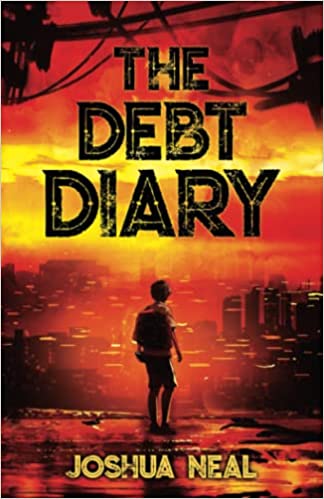
The Debt Diary cover

Sabitha: Joshua Neal is with us today to talk about his YA science fiction novel, The Debt Diary. Josh, take it away!

Josh: The Debt Diary is dystopian young adult fiction. It focuses on Harry, a teenage climate refugee, as he struggles to survive living on the streets of an inhospitable city. The book also has a supernatural hook in the form of Harry’s debt diary, a book that Harry uses to track his debts but that begins to predict his future. 

Sabitha: That sounds very topical. What inspired you to write this book?

Josh: Brexit, mostly. But also a complete and utter disdain for the heat. There was a decent amount of xenophobia tied up within the Brexit narrative, and I’m sure I don’t need to make anyone aware of the continuing discourse about our changing climate. Take these two things to the extreme and you’ve got some very desperate people in very desperate situations. I was also inspired more specifically by the Essex lorry deaths and other similar news stories.

Sabitha:  Which character do you relate to the most and why?

Josh: I think Harry is the most relatable character. He has no idea what the future holds, yet he’s forced to make decisions every day that will inevitably change that future. Whether it’s changed for better or for worse, he has no idea. All he can do is make the best, most informed decision that he can and hope the rest falls into place.

Sabitha: We have a lot of writers in our community. What’s your writing process?

Josh: The writing process for The Debt Diary was very different from the process that I’m developing now. The Debt Diary is my first novel, and I pantsed it pretty hard. I just put my head down and wrote until I finished it. Then, I sought direction from a number of sources and used the feedback to fix everything that I’d done wrong (which was a lot). The experience was enlightening but I’m plotting my current projects far more thoroughly.

Sabitha: What was the hardest part about editing?

Josh: Fleshing out act two and trying to ensure that Harry’s transformation was a satisfying and moving one. Also, trying to tie together the two book’s two primary themes and ensure that they synthesise in the final act.

Sabitha: What do you most want your readers to take away from reading your book?

Josh: That the future is uncertain, but that doesn’t mean that you can compromise your morals or hang others out to dry. We can achieve more together than we can alone, and it’s up to each of us to continue to build connections rather than burn bridges.

Sabitha: Thanks for sharing your story and your process. We’re looking forward to reading! Where can the Night Beats community find you and your book?

Josh: You can find The Debt Diary on Amazon (UK and US) and it is free on Kindle Unlimited. You can find me on Twitter, Instagram, TikTok, and Facebook

I’m donating 25% of the proceeds of my book sales to a local charity in Norwich. You can find out more about this on my website.

Behind the Screens: Tuesday Author Interview

Every Tuesday, get to know a bit about the stories behind the books you love, and discover your next favourite novel.

Sabitha: Emma Berglund is here! She was an editor on the Into the Unknown science fiction anthology, a set of short stories which (spoiler alert!) we absolutely loved. She also wrote a story in the anthology, “Birds of Fortune.” Emma, can tell us us a bit about the book?

Emma: Into the Unknown is a science fiction anthology, with eleven new stories covering everything from the aftermath of an excursion to the dark side of the moon, to outer space, to the recesses of a closet, to a mysterious island and to alien worlds. It’s like a well sorted bag of candy; it has something for everyone. The anthology is edited by me, Rohan O’Duill, and Jason Clor.

Sabitha: We know Rohan—close readers will recognize him as the chef behind the Night Beats Feature Fiction to Sink Your Teeth Into. What inspired you and the rest of your team to write this book?

Emma: It all started when Rohan first got the idea of us putting together an anthology in the science fiction writing group that we all are a part of, and both Jason and I weren’t hard to persuade. And luckily, the crew thought it was a fun idea, too! When we had decided on a theme—which also ended up as the title—I settled for an adventurous steampunk story with a touch of romance. And so “Birds of Fortune” came to be. I was going for a matinee feel, with a fast-paced story line and problems to solve along the way. The flirty part happened by itself, I’d say.

Sabitha:  Was there any music that inspired you while you were writing?

Emma: I like to have music that matches the mood in the story or a beat that keeps me going. Mostly the latter, or I fall asleep, as I usually write late evenings. I like alternative/indie rock/pop, so bands like Smash Into Pieces, Daughtry, ViVii, and artists like Zayde Wølf, AURORA, Alba August are on repeat, just to mention a few. But honestly, I’m an omnivore when it comes to most things, so don’t be surprised if you find K-pop or classical music on my playlists as well.

Sabitha: What do you most want your readers to take away from reading your book?

Emma: I’d like the readers of the anthology to have an open mind when they read our stories. We are all different and like different things, and that’s how it should be. At the same time, it’s great to read something you wouldn’t have picked up in the first place, and find out that you really enjoy it. Or not. But you tried.

Hopefully the reader finds a new subgenre in science fiction to explore. The anthology is a smorgasbord; pick what you want or eat it all.

Sabitha: Thanks for sharing your stories. We’re looking forward to reading! Where can the Night Beats community find you and your book?

Emma: You can find the book here, or read it on Kindle Unlimited; all proceeds from the sale of this anthology go to The World Literacy Foundation. Our press has a website and a Twitter. If you want to get in touch with me, you can contact me on Twitter.

Behind the Screens: Tuesday Author Interview

Every Tuesday, get to know a bit about the stories behind the books you love, and discover your next favourite novel.

Most Famous Short Film of All Time Cover

Sabitha: Tucker Lieberman joins us to talk about his weird and wonderful literary novel, Most Famous Short Film of All Time. Tucker, what can you tell us about your book?

Tucker: Most Famous Short Film of All Time is a philosophical novel. It’s set in Boston in the 2010s. Lev Ockenshaw is a thirtysomething transgender man who works for a tech company. He sees supernatural beings, which isn’t a big deal to him, and he likes telling campfire stories with his friends. One day, he receives an anonymous, threatening email, and things start to get weird. 

The literary style is absurdist with nonfiction-style digressions. There’s a bibliography: books, film, pop music.

Sabitha: It sounds absolutely delightful. What inspired you to write this book?

Tucker: Several overlapping cultural problems in the US are of concern to me. First, not knowing what an anonymous threat might mean, given the frequency of mass shootings. Second, the inability to make yourself heard, or a more active silencing perpetrated by people who you hoped would help you. Third, problems of visibility and invisibility, and self-interpretation and being interpreted by others, specifically as a transgender man might experience that. Of course, everyone’s experience is different, and this character is fictional, but his perspective is a transgender one. He’s not giving dictionary definitions of how trans people feel, but many trans people might relate to a lot of what he says. Ultimately, his philosophy is his own. It’s one attempt to unpack some of the cultural experiences of people who are transgender.

Sabitha: What was your favourite thing to write?

Tucker: The first scene I wrote was the Tele-Quiz gameshow where the main character makes 20 attempts to solve a question. I wrote it as a short story, and it was published in an anthology in 2019. That was fun. What came later felt harder. It took three years to write the next 100,000 words. I suffered with it.

Sabitha: The book’s got a catchy title—how did you choose it?

Tucker: In thinking about the stress of watching footage related to mass shootings on television news, I thought about the home video footage of the assassination of JFK in 1963. How much has changed in a half-century—the guns, the cameras. Most Famous Short Film of All Time is a reference to the presidential assassination that was captured accidentally by a bystander with a camera. The book is illustrated with the 486 frames of the film, with permission from the museum that owns it. I was thinking also about how each of us play certain memories on a loop, especially traumatic ones, and those memories become our own privately famous “films” that we examine, looking for clues, hoping to find answers.

Sabitha: Thanks for sharing your story. We’re looking forward to reading! Where can the Night Beats community find you and your book?

Tucker: Most Famous Short Film of All Time was released on September 20, 2022. You can find purchase links here. You can find my website here, or find me on Twitter.

Behind the Screens: Tuesday Author Interview

Every Tuesday, get to know a bit about the stories behind the books you love, and discover your next favourite novel.

Dread Cold cover

Sabitha: Kester R Park joins us to talk about his five stories in the Dread Cold anthology. Kester, how did you end up being so involved?

Kester: In 2019, Fantastic Books Publishing ran a competition to write short horror stories featuring the scene on the front cover in some way. There was no limit on the number and I had a year, so I wrote five. All were selected for publication in a blind judging process and two were selected for prizes. The book contains twenty other stories selected the same way plus some commissioned works.

Sabitha: That’s fantastic! What inspired you to write these stories?

Kester: Although horror is not my usual genre, I think it’s ideal for exploring the theme of vulnerability. When you look at the world through that lens, it’s everywhere: the vulnerability of youth, our vulnerability to love and disease. The future itself is vulnerable to the actions we take today. I found it fascinating to develop that theme through my five contributions. I don’t think I arrived at anything spine-chilling but I hope my stories will be thought provoking for most readers.

Sabitha:  Which character do you relate to the most and why?

Kester: I haven’t admitted this until now, but without a doubt it’s the narrator of Return of the Hunter. In a couple of my submissions, I really enjoyed developing the voices of thoroughly malevolent protagonists and the narrator of Return of the Hunter is easily the most evil. Fear not, though! I have no wish to spread disease, desperation and despair across the world as the narrator does. The point of identification is more to do with the anger expressed by the voice in this piece. The figure is trapped and unable to pursue its ambitions. It’s hungry for influence and its desire to exercise its true power is frustrated. As a writer who is obliged to sell his services to an employer 40 hours a week, I feel that frustration very keenly.

Sabitha: That is a very relatable feeling. How did you choose the titles of your stories?

Kester: I’ve already mentioned Return of the Hunter. The other four titles are Moon and I, Sunday Lamb, The Giants, and Utopia Mine. In each case, I limited myself to a short phrase. I think that horror pieces need short titles because they can only permit the prospective reader to peek into the terrifying world you’ve created as if through a crack between the door and the jamb. Additionally, each is an encoded clue to a key location, character or event in the story. In a perfect world, such a title initially disorients or misleads the reader and then, as the story goes on, ultimately comes to crystalise the sheer horror of the tale, and that’s what I tried to do in each case.

Sabitha: Thanks for sharing your stories. We’re looking forward to reading! Where can the Night Beats community find you and your book?

Kester: An electronic version is currently available for pre-order at 0.99 USD. A paperback version is also available. A proportion of the purchase price will go to Anti-Slavery International and Embrace the Middle East. You are very welcome to follow me on Twitter (I follow back!) and you can find a collection of my stories, essays and poems in English and Spanish at my website.

Behind the Screens: Tuesday Author Interview

Every Tuesday, get to know a bit about the stories behind the books you love, and discover your next favourite novel.

Cover of Reckoning

Sabitha: Nick Wilford’s here to tell us about Reckoning, the last book in the Black & White trilogy. Nick, take it away!

Nick: Reckoning is the last part of a YA dystopian trilogy entitled Black & White. The series explores two nations, Harmonia and Loretania, one of which is spotlessly clean while the other is full of dirt and disease. At the beginning of the series, the residents of each country are unaware of the other, until my protagonist Welles makes a discovery that unravels the secrets the government of Harmonia has been keeping. Through various twists and turns, in this last part we find the members of that government on trial for what amounts to genocide.

Sabitha: How did you choose the title?

Nick: I don’t really choose titles, they normally suggest themselves at a certain point – usually after the first draft is finished! This was definitely one of those cases. Reckoning suggested itself and was a natural fit for the story, so it stuck. It comes up in the work of Terry Pratchett, my favourite author quite a bit, in the phrase “There will be a reckoning” – in other words, a judgement, someone is going to get what’s coming to them. It’s got a great sense of foreboding to it, and obviously it suited the narrative of the courtroom and the former government being on trial.

Sabitha: You have good taste in favourite authors! What was your favourite thing to write in the book?

Nick: I enjoyed what happens to my main character, Welles, in this book. It’s the last part of the trilogy, and for most of the series he’s been this beacon of goodness, standing up for what’s right and striving to change things. Without wanting to give away spoilers, in this last part he becomes compromised, through no fault of his own, and goes off to the wrong side, which really jeopardizes what his partner, Ez, is trying to accomplish. I wasn’t sure whether or how I was going to bring him back, and I really enjoyed that sense of peril, things going wrong, which creates the stakes and tension in the story. I’m like a lot of writers. For some reason, we like being sadistic and putting our characters through hell!

Sabitha: What advice would you give to someone who’s writing or querying?

Nick: Can I tackle both? It’s really important to keep them separate. When you’re writing, you should try not to think about querying or about how someone else might receive it. That can be hard to do, but when you’re drafting you need to think of it as telling the story to yourself first. Without outside pressure, you’ll enjoy it a lot more, it will be more authentic, and that will hopefully translate to the reader. If you start thinking about what someone else will think, or about trying to write to trends, it’s a sure way to cripple your creativity and momentum. When it comes to querying, the most important thing to do is keep busy with something new rather than obsessing over responses, which is easier said than done!

Sabitha: Thanks for sharing your story and your process. We’re looking forward to reading! Where can the Night Beats community find you and your book?

Nick: Reckoning is available for preorder here and links to my socials can be found here.

Behind the Screens: Tuesday Author Interview

Every Tuesday, get to know a bit about the stories behind the books you love, and discover your next favourite novel.

The Phantom of Nob Hill Theater cover

Sabitha: We have John Luke Maxwell on the blog, with an absolutely delightful novel, Jean Locke Holmes: Pornstar Detective — The Phantom of Nob Hill Theater. John, tell us a bit about your book please!

John: For Rafael, the hits keep coming—losing his job, quarantine lockdown, bills piling up, and now…dumped by his boyfriend.

When a bad day seems only destined to get worse, something finally goes right. Retired porn legend Jean Locke Holmes stops by the used bookstore where Rafael managed to pick up a few hours. This is a man Rafael idolizes and has had many dirty fantasies about. Shockingly, Holmes seems to take a liking to Rafael. Sparks soon fly between the two men.

But sparks also fly on stage. During a charity performance featuring Locke at the recently-closed Nob Hill Theatre, a set of lights comes crashing down—and it’s clear this was no accident. Someone is out to murder porn stars.

But Holmes is a man of surprises. With his keen eyes and a knack for spotting details others miss, he soon leads Rafael hot on the trail of clues in a deadly chase. But will they catch the murderer before the murderer catches them?

Sabitha: This book sounds like such a fun combination of things. What inspired you to write it?

John: I’ve been a fan of mysteries for almost as long as I have been alive. My favorite cartoon show as a toddler was Scooby-Doo! lol I wanted to be a mystery writer for years and finally took the plunge.

Sabitha: We have a lot of writers in our community. What’s your writing process?

Jonathan: Usually, I plan a lot before I ever get started writing. I can never write just one book. An idea grows into several before very long so I lay out the overall plot before I get down to business. I also like to have a couple of book titles worked out because they help serve as a kind of memory road map. Even then, though, a lot about a book and the series as a whole can change while I’m writing it. I’ve learned to expect the unexpected.

Sabitha: How did you choose the title?

John: I wanted the “detective” character to have a career that no one would take seriously. And I had tossed around the idea of a porn star who stumbles upon a murder mystery plot. The Nob Hill Theater has a lot of history to it in the queer community. That influenced the setting and title as well. Plus, a lot of us like a good ghost story. 😉

Sabitha: Yes we do! When you picture your ideal reader, what are they like?

John: I hope that people enjoy a bit of fun with their mystery like I do, and they have fun following along with a mystery story as well.  🙂

Sabitha: Thanks for sharing your story and your process. We’re looking forward to reading! Where can the Night Beats community find you and your book?

John: You can find my book on Amazon. I’m on Twitter and Smashwords.

Behind the Screens: Tuesday Author Interview

Every Tuesday, get to know a bit about the stories behind the books you love, and discover your next favourite novel.

children of the black cover

Sabitha: Today we have William Long with us, author of the science fiction novel Children of the Black. William, can you start us off by giving a summary of your book?

William: Children of the Black is a fast-paced SciFi/Action thriller set in a universe recovering from a millennia-spanning war between interstellar superpowers. Claude, a former soldier, and Vision, an eleven-year-old orphan with psionic abilities, have been shaped by this conflict and now struggle to keep the lights on in their modest apartment. It is only when shadows offer much-needed credits in exchange for information on a lost superweapon that Claude and Vision begin to realize that some things are more important than money.

Sabitha: What inspired you to write this book?

William: I first wrote this tale in a series of notebooks while I was bored in class. It was an escape that I fell in love with but ultimately placed on the back burner for decades while I tried my hand at filmmaking. But a few years ago, I had a stroke and was forced to come out of work and face several significant changes in my life. That brought me back to my love of writing, and the first story I wanted to revisit in novel form was this one.

Sabitha: If you’re a filmmaker, do you have a “fan-cast” – do you have actors you’d cast as your main characters?

William: I’m not sure I have a full-fan cast involved, but there are some very interesting thoughts I’ve had about the characters and who I want to play them. For Claude, I built him around Harrison Ford circa 1986, but I see Alexander Dreymon (from The Last Kingdom) in that role. With Vision, I think Mckenna Grace would knock it out of the park, and I’ve always seen Aisha Tyler as my villain, Miranda.

Sabitha: How did you choose the title?

William: The original title for the story was Silver, but when I decided to turn it into a novel, I just felt like that title brought to mind images of shirtless men in the moonlight with the eyes of wolves, which is very far from what my story is. So, I decided to name it after humanity’s position in the novel’s universe. They are all children lost in the darkness of space, without parents to guide them or a map to lead them home, hence Children of the Black.

Sabitha:  When you picture your ideal reader, what are they like?

William: As ideal readers go, I wrote the book to appeal to anyone who likes rich characters, detailed worlds, and pulse-quickening set pieces. If I’m honest, I wrote this book with the idea that it might be someone’s first foray into science fiction, whether they have read consistently since childhood or were inspired because they just saw the new Dune film. So, if you’re reading this interview, you are my ideal reader.

Sabitha: That’s a lovely sentiment! What do you most want your readers to take away from reading your book?

William: I wrote this book to be entertaining above all other considerations, but if there’s one thing I’d want anyone to take from my novel, it’s that life is messy. It’s brutal, and it’s hard. There’s far more gray than either black or white. Navigating through it changes us all, but that’s not necessarily a bad thing.

Sabitha: Thanks for sharing your story and your process. We’re looking forward to reading! Where can the Night Beats community find you and your book?
William: You can find my book here, or on Amazon. I’m on Twitter and Instagram.

Behind the Screens: Tuesday Author Interview

Every Tuesday, get to know a bit about the stories behind the books you love, and discover your next favourite novel.

An Icy Road to a Warm Heart

Sabitha: Today we’ll talk to Nichol DeCastra about her first novel, An Icy Road to a Warm Heart. Nichol, lovely to have you here! Can you introduce us to your book?

Nichol: The first book I ever published is called An Icy Road to a Warm Heart.  The book is about a young woman named Dominique Miller, who is fleeing her abusive ex over the holidays and runs into a trucker, Edgar Himura, who offers to drive her to her family’s house. Along the way, they fall in love. 

Sabitha: What inspired you to write this book?

Nichol: The ending scene of the original Texas Chainsaw Massacre, where the heroine is helped by a trucker, honestly inspired me. 

Sabitha: We have a lot of writers in our community. What’s your writing process?

Nichol: Somewhere between a pantser and plotter. I am mainly the former, but occasionally I will make notes about what I want to happen in the future.

Sabitha: What do you most want your readers to take away from reading your book?

Nichol: That there is hope in escaping an abusive relationship and finding love again.

Sabitha: That’s a lovely message. Thank you for sharing your interview. Where can the Night Beats community find you and your book?

Nichol: You can buy the book on Amazon. You can find me at Twitter, Facebook, Instagram, and my website.