Rohan and Rachel on Writers Not Writing

Writers Not Writing is a weekly show by Not A Pipe Publishing, where writers talk to host Benjamin Gorman about what they get up to when they’re procrastinating. Night Beats authors Rohan and Rachel have been featured on the show recently, which you can watch on YouTube or listen to on your favourite podcasting app.

Here’s Rohan, talking about Shogun, archery, and First Chapter Reads.

And here’s Rachel, talking about the Second Greatest Art Feud Of All Time, a kinder internet, and Whale Weekly.

Behind the Screens: Tuesday Author Interview

Every Tuesday, get to know a bit about the stories behind the books you love, and discover your next favourite novel.

The cover of Maej by Dale Stromberg. It's a sculptural relief image with airships flying over tents, a griffin, and a scene of badass women in the bottom. The text and a tree emerging from an ornamental element are glowing white.

Rachel: I have been quietly freaking out about this book since I read it in manuscript form, and now it’s finally time for you to tell our readers about it. Do so!

Dale: Mæj is a high fantasy novel that one early reviewer has called “a work of very unapologetic genre fiction that’s equally unapologetic in its intelligence and dedication to doing strange, creative things with language.”

Madenhere sells mæjwerk; Taræntlere sells sex. Both young women have grown up seeing people starved and children kidnapped in their tentslum. When Madenhere learns of an imprisoned hundred-day child, her heart burns to act—but the consequences of freeing the girl will be dire. 

Meanwhile, Taræntlere’s molten fury leads her to join a secret insurrection whose implications neither woman is ready to face. Tying everything together is a power older than history which threatens to revolutionize an economy and spark a war—the power of mæj.

Rachel: Many authors depict the idea of matriarchy as something inherently softer and gentler than a patriarchy. You went a very different route. Why?

Dale: First of all, I find it perfectly believable that a given matriarchy could be softer and gentler than a given patriarchy. But I want to emphasise “given”: specific, particular. One problem we face when we imagine alternate worlds is that we, or our readers, can fall into the trap of essentialism: “Because women are all this way, a woman-led society would always work out like this.”

We wouldn’t say the same thing about patriarchy. For example, in the twentieth century, which was dominated politically by men, we saw the coexistence of liberal democracy, fascism, totalitarianism, democratic socialism, Islamic republicanism… as well as kibbutzes, hippie communes, you name it… There were all sorts of ways people were organising human affairs politically. Men were the bosses of the big systems, but those systems didn’t all function the same, and some were arguably softer and gentler than others. There’s no reason to suppose women-led systems would not also differ in this way.

This is the source of my resistance to the notion that, you know, “if we just put women in charge, there’d be no more wars,” et cetera. That sort of thinking is insultingly reductive. But it would be equally simplistic merely to swap the pronouns and portray matriarchy as a perfect mirror of patriarchy. So I wanted to think, not about how “female nature” would dictate political systems, but about how this particular matriarchy would have evolved to operate. Because the world in Mæj is not a world without exploitation.

What matriarchy and patriarchy have in common is the –archy, the rule of some over others. The particular matriarchy I wrote about preserves such hierarchy, such power differentials—and human beings are rarely at our best when given arbitrary power over others. If one group is up, another group will be down, and those with power will display a range of attitudes towards those beneath them, from sympathy and solicitude at one end to supercilious callousness at the other. Sadly, the crueler sort of people tend to be more adroit at manipulating and benefiting from power.

Rachel: Maej features extreme acts of linguistic acrobatics, with language denoting class and caste in a skillful way. How did you design your various dialects?

Dale: Oh, we could get nerdy with this one… I’ll try to rein myself in.

Before I wrote this novel, for years I nursed the notion of “my fantasy novel”, a book I would someday write. I love the language of Shakespeare and decided beforehand that, when I wrote my fantasy novel, I was going to throw in everything I liked, so “thee” and “thou” had to go in. 

The Hwoamish language is a mashup of Tudor English with various other dialects, including traces of characteristics of Japanese (which I happen to speak) such as sentence-ending interjectory particles and rhyming four-word aphorisms which are meant as homages to four-character idiomatic compounds found in Chinese and Japanese. Also, I live in Malaysia and hear so-called “Manglish” on a daily basis, so bits and pieces of that went in as well.

As for using language to denote characters’ classes and backgrounds, I think life in Malaysia has greatly influenced me. In addition to English, people here speak Malay, Canto, Tamil, Hokkien, Hakka, Mandarin… all to varying degrees, and I don’t think there’s a single language common to everybody in the nation. Characteristics from one language will ooze into another, but there is still a mélange of linguistic difference which links people to a multiplicity of backgrounds.

I think of things like this, and I also think of an Irish guy I once knew, from Belfast; every time he met another person from Belfast, he’d listen to them speak for a moment, then declare (generally with great accuracy) which neighbourhood they had grown up in. This fascinated me as a U.S.-born person because I speak a dialect of English that spans time zones, lacking such geographical specificity. So I am intensely interested in focusing in on such things. If we maintain an awareness of what our voices and words say about our biographies, we can craft dialogue for individual characters which hints at such histories and differences.

Other made-up languages in Mæj are mostly translated into contemporary English, but when I wanted to show a few lines of untranslated Ennish, for example, I’d take an English sentence, reorder the words to Japanese grammatical order, then have fun with spelling and diacritics.

Yes, “fun with spelling and diacritics”. Freak flag: flying.

Rachel: As the cover designer, I was of course struck by the visuals—the art, architecture, and fashion of your invented world. Did you have a strong sense of the aesthetics when you started writing, or did that come later?

Dale: It came gradually as I drafted the manuscript. Before starting a new scene, I would do “pre-production” work, including lots of image searches for clothing, buildings, artwork, and so forth. I’d also sketch things out on paper, such as the exterior of West Hospitium or the floor plan of Nighpetal Manse. I stink at drawing, but having a visual helped me discover how I wanted to paint things in words. 

I’m also an inveterate word collector, and for Mæj I compiled a list of more than 2,500 words and phrases I just had to use. Many of these were wonderfully evocative of a visual, which helped me fill out my imagery.

Rachel: Maej is highly literary. Is it a challenge to balance the expectations of epic fantasy as a genre with your own proclivities towards literary fiction?

Dale: To be honest, I am rather naïve about genre expectations. When I began working on Mæj, I had no idea how publishing worked. I figured, “You write the kind of book you’d love to read, and then somehow (vague waving of hands) it gets published.” I remained blithely uncognisant of the idea that publishers and ultimately readers would measure the book against genre expectations.

So any such “balance” of expectations and proclivities happened by accident; I wanted magic spells and talking gryphons, and I also wanted Shakespearean dialogue and jawbreaker vocabulary words… and everything else I personally like also got tossed in. Maybe “mishmash” is a better word than “balance” here.

Rachel: This brick of a novel is such a tremendous feat. What are you working on next?

Dale: Shorter works! After wrapping up the bulk of Mæj, which occupied me for (I cringe to say it) about ten years, I sat down and wrote a literary novella titled Gyre in just a couple of months. Now I’m working on a science fiction novella (with bathyscaphes, sea monsters, mind control tech, etc.) which, again, above all else, I hope to keep brief.

Spending a long time slow-cooking a massive novel was, in its way, highly rewarding, but now I’m enjoying the change to a quicker pace of writing. Gyre is about a woman who is born a second time with some knowledge intact from her prior lifetime, and it is currently seeking a publisher. If the Fates smile, in the fulness of time it may see the light of day.

Rachel: Where can readers find you, Maej, and your other work?

Dale: Mæj will be published on 21 October 2024 by tRaum Books. You can preorder the book on Amazon (ebook and paperback) or Bookshop.

The publisher and I are also keen to find people who are willing to receive a free advance review copy (ARC) in exchange for posting an honest review; anybody interested can sign up for that here. I send an infrequent newsletter called The Seldom which you can sign up for on my website. My favourite social media platform is called “email” but I also lurk on Bluesky and Goodreads.
Wrong Genre Covers

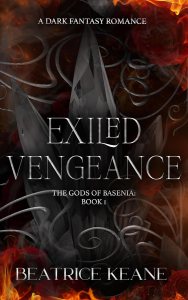
Anne of Green Gables as a spy thriller was suggested by Nicole. Have a funny idea for a Wrong Genre Cover? Email us at nightbeatseu@gmail.com, and if Rachel likes your suggestion, she’ll make it in a future issue. Or @ us on basically any of the socials.
Anne of Green Gables by Lucy Maud Montgomery, but make it spooky. A freckled redheaded girl holds a stone to her eye, superimposed over a foggy lighthouse.

Behind the Screens: Tuesday Author Interview

Every Tuesday, get to know a bit about the stories behind the books you love, and discover your next favourite novel.

The Girl Between cover

Sabitha: Looking for thrills and suspense? Tony Healey has you covered with his latest book, The Girl Between. Tony, can you introduce us to your mystery novel?

Tony: Five years ago Maddie Ryan found herself the target of a vicious serial killer and barely escaped the encounter with her life. She lost everything in the process and had no choice but to leave Seattle and start afresh. Now a resident of Sanctuary Bay, a small seaside town, Maddie owns a popular local diner and has done everything in her power to leave the past behind her.

But when local girl Ruth Preston goes missing over Thanksgiving, Maddie finds herself drawn into assisting police chief Ben Taylor to help find her—and realizes that her long-dormant ability to see the dead has been reawakened.

With winter holding Sanctuary Bay in its icy grip, and the truth of Ruth Preston’s disappearance proving all the more elusive, Maddie must reconcile the specter of her past with the new life she has made…

The Girl Between is a gripping small-town mystery with a paranormal twist that will appeal to fans of The Family Plot by Megan Collins, Later by Stephen King, and the Virgin River series by Robyn Carr.

Sabitha: What inspired you to write this book?

Tony: I wrote two mystery novels for Thomas and Mercer, then four westerns for Berkley, and so when it came to writing my latest I really wanted to return to some of what I’d done with T&M, a mystery with a paranormal edge. But whereas Ida Lane in my Harper and Lane series can see things about people by touching them, I wanted a main character who could literally see the dead. That, combined with a desire to write a small-town romance at some point, gave me the bones of what would become The Girl Between. The novel is a complete story in and of itself, but there will be a direct sequel, The Wolf Circles, next year at some point that will complete the story of the main character, Maddie Ryan. It’s envisioned primarily as a two-book series (but that could change if readers enjoy the books and demand more, of course!)

Sabitha: Do you have a playlist for your book?

Tony: I listened to a LOT of Bob Dylan during the writing of The Girl Between. I also listened to a lot of jazz, but I’d say Dylan was definitely my jam this time around–I made a playlist called Seven Eras: The Best of Bob Dylan that the Night Beats community might enjoy.

Sabitha: What book do you tell all your friends to read?

Tony: I will always point readers to An Unsettled Grave by Bernard Shaffer, which is my favourite of his Santero and Rein series. I also like to pontificate about a book that inspired me during the writing of The Girl Between, and that is Who Haunts You? by Mark Wheaton. It’s a ghost story told through the lens of neurodiversity, and I couldn’t put it down.

Sabitha: Thanks for sharing your story and your process. We’re looking forward to reading! Where can the Night Beats community find you and your book?

Tony: The Night Beats community can find me over at www.tonyhealey.com and on Threads. The Girl Between is out and if anyone would like a free review copy in PDF format, just give me a shout.

Book Report Corner

by Rachel A. Rosen

a very simple black cover with white sans serif text. Speculative Whiteness Science Fiction and the Alt-Right by Jordan S. Carroll.

Speculative Whiteness: Science Fiction and the Alt-Right by Jordan S. Carroll is a chilling examination of the far-right’s claim to science fiction.

If you lived through the Sad Puppies/Rabid Puppies debacle or were baffled by the reactionary temper tantrums over Star Trek getting “woke,” this won’t be unfamiliar to you, but the author goes much farther in untangling the assumptions about time, technology, and colonialism that underpin sci-fi from its very roots.

Every antifascist should read this to better understand fascist psychology, and every sci-fi geek should read this to combat entryism by the far-right.

If this subject is of interest to you, stay tuned for a very cool upcoming episode of Wizards & Spaceships!

Behind the Screens: Tuesday Author Interview

Every Tuesday, get to know a bit about the stories behind the books you love, and discover your next favourite novel.

Closer by Jeffery Widerkehr cover

Zilla: My favourite books defy classification. Noir? Love story? Fairy tale? All of the above? Something entirely novel? Jeff Wiederkehr gives us this phantasm of a novel, Closer, and frankly I don’t know what to make of it, besides that I like it. Jeff, your turn. You try and describe this thing.

Jeff: I really don’t know what it is, but I do know what inspired me and by knowing that, it might be possible to get near a description that works. The works of Henry Miller and Anaïs Nin hit me at a certain point in my life. I found their works to be both beautiful and tragic and both for the same reason ~ they gave me the dirty yellow underbelly of very hyper-specific situations. Despite the worthy inspiration, with Closer, I was originally attempting to shoehorn the narrative into a more classic Romance template (Miller rolls over in his grave), that is, whatever happens, in the end there is a happy ending. 

Closer is a lot of things, but it certainly isn’t a Romance novel. It’s got the spice, but not the required ending.

Maybe it is this … a dirty, yellow, mockumentary, one with a twisted happy ending, one that both Miller and Nin would be happy to read.

Zilla: Do you have a playlist for your book?

Jeff: I do. It is on Spotify. It’s called “Closer ~ a soundtrack to a novel.” 

Zilla: Fair enough. Next question. If you could meet your characters, what would you say to them? 

Jeff: “You are an idiot.”

Zilla: Relatable. I would phrase it more delicately, but I’d probably say the same to my characters. So what would they say back to you?

Jeff: “Fuck you.”

Zilla: Also relatable. Next question. What book do you tell all your friends to read?

JeffThe Sorrows of Young Werther by Goethe.

Zilla: You seem a pretty tragic guy. Did you ever kill a fan favourite character? 

Jeff: With Closer I mainly killed every character’s dignity and self-respect.

Zilla: Honestly, even better. How much research did you do for this book?

Jeff: The great thing about fiction is I made it all up. Though my writing was informed by my love of the south western desert and my collection of broken hearts dating from 1st grade.

Zilla: Do you have any suggestions to help people in our community become better writers? 

Jeff: Oh man, I need all of the suggestions. Please collect these answers and send them my way.

Zilla: Who did you imagine reading your book as you wrote it?

Jeff: For fans of Henry Miller and Anaïs Nin. I am not sure if those people exist any longer. The people that ended up taking a chance on the book and loved it were people who needed to hear a story like this. A story where they imagined themselves as the nameless narrator looking to be seen and heard and loved in a draught of a relationship. So, people who are stuck and hurt and unsure if there is anyone else out there in the world that wants more than the status quo ~ those that need to vent the guilt associated with wanting more out of life.

Zilla: What’s your next writing project?

JeffCherry-Rose: Blood & Wishes ~ it is a reimagined fairy tale. Super dark and creepy and lovely.

Zilla: Thanks for sharing your story and your process. Where can the Night Beats community find you and your book?

Jeff: I can be found being silly, going to dive bars, playing records, drinking whisky on instagram @likeshattereddiamonds, and sometimes promoting my book Closer @closer_not_further_away. And also on my fancy new website! You can find the book on Goodreads and you can buy it here.

Wrong Genre Covers

Carrie as a teen period guide was suggested by Rob. Have a funny idea for a Wrong Genre Cover? Email us at nightbeatseu@gmail.com, and if Rachel likes your suggestion, she’ll make it in a future issue. Or @ us on basically any of the socials.
Embracing womanhood with Carrie: Your complete guide to your menstrual cycle by Stephen King. A silhouette of a woman on a beach in front of a sunset. Looks suspiciously like the cover of the Dance. Just saying.

Behind the Screens: Tuesday Author Interview

Every Tuesday, get to know a bit about the stories behind the books you love, and discover your next favourite novel.

Losers and Freaks cover

Sabitha: We’re here for the weird and wonderful, which is why we’ve got C.E. Hoffmanto tell us about their anthology, Losers and Freaks. C.E., what do we have to look forward to in you book?

C.E.: Losers and Freaks is a short story collection of speculative and generally weird fiction. It’s my second full-length release!

Sabitha: What inspired you to write this book?

C.E.: For my second short story collection, I chose another theme that resonates with the collective shadow, and me personally. I tackled sexual stereotypes in Sluts and Whores, and sought to do the same for the losers and freaks of the world (and in my heart) with this collection. The theme isn’t as obvious or pointed as it is in my first collection, but I still think (and hope!) the message comes across.

Sabitha: If you could meet your characters, what would you say to them?

C.E.: Thank you for choosing me as your writer!

Sabitha: What books do you tell all your friends to read?

C.E.: For Coloured Girls Who Have Considered Suicide by Ntozake Shange, NW by Zadie Smith, Come and Join the Dance by Joyce Johnson, and The Grass Harp by Truman Capote.

Sabitha: How much research did you need to do for your book?

C.E.: Does living count as research?

Sabitha: What’s your next writing project?

C.E.: I’m pitching a horror novella and two more poetry chapbooks! I’m writing my first memoir and I’m editing MANY novels.

Sabitha: Thanks for sharing your story and your process. We’re looking forward to reading! Where can the Night Beats community find you and your book?

C.E.: I’m on Twtter as @CEHoffman2. cehoffman.net. Visit cehoffman.net, and buy Losers and Freaks here!

Book Report Corner

by Zilla N.

the cover of love/aggression by june martin. Two abstracted line drawings of dripping faces about to kiss. Probably.

Sometimes a person is a friend, sometimes they’re the daughter of a cult leader, sometimes they’re the ideal of femininity, sitting in a room daintily eating estrogen pills. But would the ideal of femininity make a good roommate? Worse, imagine living with someone who wants to be the ideal of feminity but is, at best, a movie star with a good pout.

When Elena’s mirror shards reflect her paintings, the only face shown clearly is the portrait Zoe accidentally smeared the paint on. I’m not certain I’m making sense, but you know what I mean.

If you’ve ever read a postmodern novel and thought, that was cool but what if instead of cis masculinity this book was about trans femininity, Love/Aggression is the book for you.

Behind the Screens: Tuesday Author Interview

Every Tuesday, get to know a bit about the stories behind the books you love, and discover your next favourite novel.

Cargo Hold 4 cover

Zilla: Full disclosure—I read Lonnie Busch’s science fiction thriller Cargo Hold 4 and I absolutely loved it. I don’t want to say too much, because the mystery is part of what makes this horror so compelling. So Lonnie, tell us a bit about Cargo Hold 4—but no spoilers!

Lonnie: Several years into a multi-decade deep space mission, a team of eight scientists—four women, four men—explore a dwarf planet near the Kuiper Belt and inadvertently bring aboard a stowaway, which is desperately trying to escape from Cargo Hold 4. Or so the crew believes.

Zilla: The alien is a science fiction horror masterpiece, mashing up elements of frogs, bees, and plenty more. What inspired it?

Lonnie: I honestly don’t know. I’m what a lot of writers call a “pantser,” meaning I “write” by the seat of my pants. In other words, I don’t plot out the story. Cargo Hold 4 came out of nowhere. I’m trying to get my latest book, Project Übermensch, ready for publication, and I keep hearing in my head, Cargo Hold 4, Cargo Hold 4, like a mantra. I ignore it as long as I can, until “something” in Cargo Hold 4 starts beating on the huge yellow metal hatch, and I can see the big yellow hatch, and these enormous dents pushing out (which is what I animated in my book trailer.) 

So, I start writing, and when I get to finally revealing this thing, I realize I may be done. Nothing’s coming but worn-out tropes from years of too much TV and moviegoing. I ease forward and wait for something to emerge, and it does, and it’s super creepy and I go with it, trying to learn what it is, and what’s going on. There is always a risk with the panster approach of writing a lot of pages and ending up nowhere. But I’m used to that from my background in painting and working on sculpture. Just part of the creative process. I’m okay with it.

Zilla: It’s not just the alien though–plenty of the characters have their own dark secrets. Who is the real monster, the aliens or the humans?

Lonnie: Yeah, that was so cool, how organically it developed. Once this thing was kind of revealed, I started following what I imagined this crew would do, how they might react, how I might react, pitting reason against morals, navigating the conundrum they found themselves up against. I tried to be as honest as possible about the potential eruption of human emotions and choices, no matter how dark it got. As you know, it got pretty dark, way darker than I imagined.

Zilla: I really enjoyed the science tidbits you sprinkled through the book. Do you have a scientific background?

Lonnie: None. My older brother had a telescope when we were kids, but that was about it. But the first moon landing happened when I was 17 years old in 1969. That had to have affected me, I suppose. However, I believe many of the ideas I had about the journey, sprung from a reasoned approach to what might be needed for extended space exploration. I wasn’t ready to concede to “replicator-type” devices like Star Trek, as I didn’t see the mission that far in the future. And I’m glad I didn’t. The idea that came to me for their food and supply problem became a huge plot element. I hadn’t planned that. I think one thing that really spurred my ideas around the mission was reading about Voyager 1 and 2 and the Hubble telescope. Those articles debunked many misconceptions I had about space. Voyager 1 and 2 are still out there, still traveling into deep space after decades. Voyager 1, launched in 1977, is still sending data back, and is expected to keep sending it back until 2036! And Voyager 2, also launched in 1977, is the only spacecraft ever to visit Uranus and Neptune, and is now in interstellar space. That’s wild to me.

Zilla: Thanks for sharing your story and your process. Where can the Night Beats community find you and your book?

Lonnie: My books are on Amazon—go to this link for Cargo Hold 4. I’m still in the baby-steps stage as an indie author. My first novel was published by Blackstone Publishing, The Cabin on Souder Hill. I had an agent, a nice advance, a sweet two-book deal, and it seemed like after twenty plus years of writing I had finally arrived. But no. When The Cabin on Souder Hill didn’t fly off the shelves, Blackstone terminated the contract for the second book. Not long after, I ended my relationship with my agent when she seemed less than enthusiastic about my novel, All Hope of Becoming Human, which has won numerous awards and done pretty well. The audiobook for The Cabin on Souder Hill is now an Audible bestseller with over 3400 reviews, but that’s most likely due to Sarah Mollo-Christensen, the narrator. She has an incredible voice and a massive following. So, yeah, the short answer, just Amazon. But it’s cool. I like the KU aspect. I can reach a lot of readers I might otherwise not reach. All Hope of Becoming Human was just accepted into the Amazon Prime Readers Program, though I’m not sure when it will be available there.

People can find all my books, as well as links to my social media, on my website. They can even sign up for new release news and shout-outs for review readers there. I always welcome review readers!