Romance: Let’s Talk Spice!
Sabitha: Are you regular romance readers?
Zilla: As much as I’m regular about anything in life! I grew up on the Harlequins you get at yard sales, 4 for a dollar, and I’ve always loved the comfort, the spice, and seeing what an author can do to make the genre their own. And now I’ve got friends who write romance, so I’m (beta) reading a lot of it, and I really love that. I just finished reading MadameRaeRae’s chicklit novel about a recovering ballerina and I cannot wait until someone picks that up and publishes it.
Rachel: Far less so! When I was growing up, I had a lot of internalized misogyny around romance as a genre, and it was only in later adulthood that I realized that quite a lot of it is good, actually. So now it’s about making up for lost time.
Sabitha: What are your favourite tropes, either in romance as a genre, or in romantic plotlines in general?
Zilla: At the risk of being a cliche myself, enemies to lovers. Gideon the Ninth is everything. Goth lesbian necromancers in space, childhood enemies until they are forced to rely on each other for survival … It’s catnip.
Rachel: 100% it’s the slow burn for me. Give me years of pining, or decades, or, if we’re venturing into the paranormal, centuries. Enemies to lovers is fantastic, but I’m equally if not more of a fan of friends to lovers. I want to know and appreciate the characters as individuals and watch their relationship change and develop over time. And because I’m sadistic, I want to see the characters obsess and suffer and come to the brink of giving up on happiness until they take that last possible chance at love.
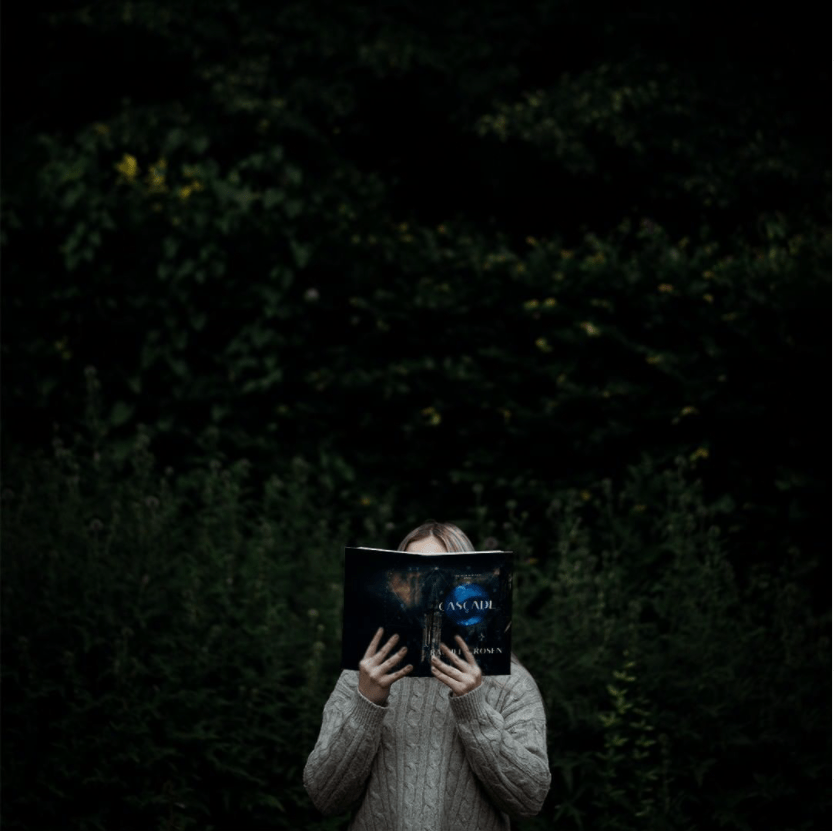
Zilla: Readers in the audience, take note of Rachel’s answer. It is a warning. Rachel’s magical realism novel Cascade has two characters who’ve been in love with each other for like … twenty years already when the novel starts? And at the risk of spoilers, Cascade is the first novel in a trilogy. And Rachel loves a slow burn.
Rachel: Haha. Also take note of Zilla’s answer. What’s a little murder between love interests?
Sabitha: Any tropes you don’t like?
Zilla: I have an allergy to anything which gets earnest. I break out in hives when I read heartfelt communication. So hurt/comfort usually gets a pass from me. I don’t want characters to talk about their feelings, I want them to fuck about them. That said, I’ll give Nicole Northwood’s Unsteady a pass here, because while there’s definitely hurt and comfort, there’s also plenty of, um, physical therapy.
Rachel: I’m not a fan of forced anything, which is something that put me off a lot of bodice-ripper romances when I was younger. This applies to consent but also to tropes where characters are destined or fated to be together. To me, the heart of romance is choice, regardless of whether or not it’s a good choice or a terrible one.
Sabitha: What would you like to see more of in romance?
Zilla: As a disaster bisexual, I’d like to see more of them in romance. I’m not picky, though. I’ll take disaster queers across the spectrum, from disaster ace to disaster gay, and anything in between. And while there are plenty of het romances in the world, we can always use more disasters hets too—if you haven’t read S.M. Berry’s Hallowed Emancipation yet, get on that. I want to relate to the characters I read about, and while I wish I could relate to your classic “one major flaw” romance protagonist, the truth is that I’m mostly flaw.
Rachel: I loved Hallowed Emancipation. But yes, more queer romance for sure. And more specifically damaged protagonists. I don’t want to impose myself on a blank-slate POV character—I want leads who are complicated and messy and feel real.
More romance that subverts genre expectations. One of the trends I find troubling is just how segmented the marketplace is. I know romance is often a comfort read, but that doesn’t mean that there isn’t room for a bit more weirdness within the formula.
I’d love to see snappy dialogue that puts a modern twist on screwball romantic comedies. And I’d love to see more unconventional settings and characters—give me love stories set during union organizing drives or paranormal romances with non-Western mythological monsters. Maybe not all in the same book!
Zilla: But maybe in the same book?
Rachel: I wouldn’t say no to it.
Sabitha: HEA, HFN, or do you care?
Zilla: I am all over the place here. Romance-romance, I want happiness forever please. If I’m reading something which promises me genre conventions, I want people staring deeply into each other’s eyes for the rest of eternity. One thing I loved about Bixby Jones’ Soulmate, Stage Right was the absolute certainty I had going in that it would end well. It’s such a lovely, gentle read.
That said, if the story is promising me a romance, without being Romance—I’m more open minded. As long as the bittersweet or sad ending feels earned, and not tacked on to make the story feel important, I’m open to a story ending however it needs to. It’s okay to cry at The Fault in Our Stars.
Rachel: It is a complete myth that I bawled like a tiny infant at The Fault In Our Stars. I don’t know where you heard that. I have a cold, withered heart and I have never cried.
In terms of endings, I’m not picky. The difference between a happy ending and an unhappy one is, in any case, where you end the story. My favourite romance of all time is Casablanca, where the leads don’t end up together at all, and the romance and the narrative are stronger for it.
Sabitha: Sexytimes? How explicit should an author go?
Zilla: All the way. Well. It depends on the novel. If I’m reading two cinnamon rolls finding happiness in each other, I’m happy to fade to black. If there had been explicit smut in Fangirl, it would have been deeply unsettling. But If I’m reading about an abusive vampire and his lovingly dysfunctional polycule, I want it to get as raunchy as Dowry of Blood.
Most of all, I want sex in a novel to tell me something about the characters. There’s nothing worse than a sex scene which reads like an IKEA instruction manual, and nothing better than watching characters at their rawest, most vulnerable state.
Rachel: I agree completely. I have fond memories of giggling over turgid sex descriptions in some of the campier romances I’ve seen, but good writing is good writing, and if the author can pull it off, bring me your spiciest ghost peppers.
Sabitha: Favourite romance subgenres? Or other genres with romance plotlines?
Zilla: Regency might be my favourite genre, but I haven’t met a genre I don’t enjoy. Lisa Kleypas is an absolutely delightful author, but give me anyone in period costume and I’m sold. One of my top fanfics I’ve read is a period AU of Gideon the Ninth by JeanLuciferGohard, though it might be a wee bit closer to erotica than romance. I am specifically not linking to it here, because I need to protect the innocence of the reader.
Rachel: Oh my God, yes, Regency. Bonus if it’s Regency with magic. It’s the perfect storm of repression and ostentatious costumes. In general, anything along the historical or Gothic bent generally appeals to me—I may stay for the romance, but I came here for the aesthetic. Silvia Moreno-Garcia’s The Beautiful Ones and Mexican Gothic, Ellen Kushner’s Riverside books, and C.L. Polk’s The Midnight Bargain spring to mind as having lush, immersive backdrops for atmospheric love stories.
Sabitha: Favourite guilty pleasure?
Rachel: Oooh, it’s time to rave about my all-time favourite Harlequin, Firebrand by Rosemary Aubert. It’s the story of a controversial Toronto mayor (no, not the one you’ve heard of—it’s very clearly the progressive, environmentalist John Sewell with the serial numbers filed off) and the City Hall librarian who’s arrested with him during a protest. I bought it as a joke—I mean, it’s a Harlequin about Toronto municipal politics and that is hilarious—but it turned out to be an absolute gem of a book that is as much about two people falling in love with a city as it is about two people falling in love with each other.
Zilla: I refuse to feel guilty about any of my pleasures. 😉
Got a suggestion for a future roundtable? Email us! Nightbeatseu (at) gmail (dot) com.


 Night Beats Extended Universe