Weird, Touching, Agenre Queer Books … on Sale???!!! 

Til Feb 1 (well midnight Jan 31), name your own price (suggested $20) and grab tRaum Books’ entire 2022 catalogue!

That’s seven books, ranging from novella to art book to long novel, from a group of various trans/queer indie authors from all over the world. 

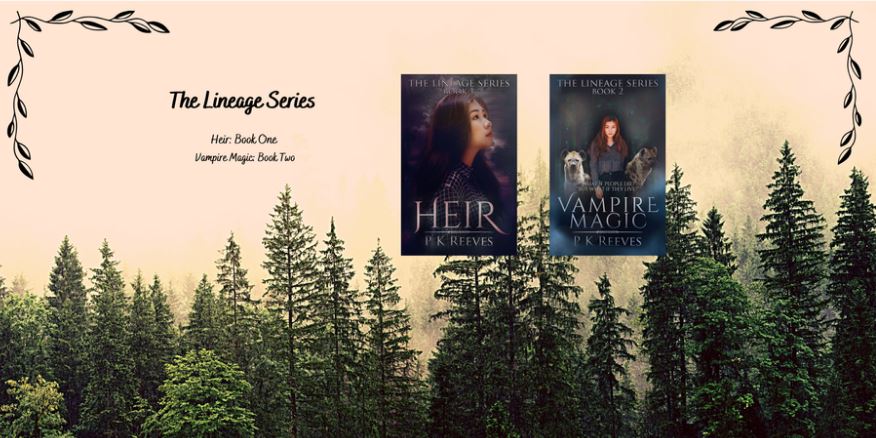
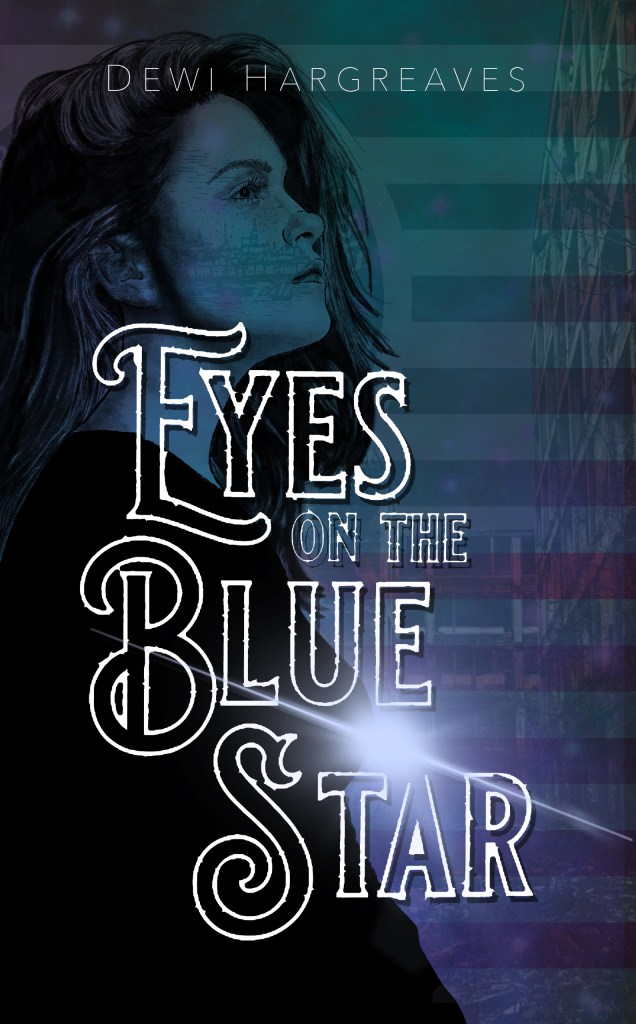
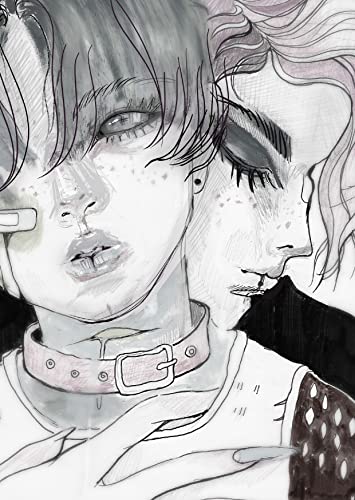
covers of some trauma books that you need to read

Darknesses by Lachelle Seville (neogothic homage) Recovering and broken, Oasis falls right into the arms of Bram Stoker’s original inspiration, currently inhabiting the form of Laura. ||  Most Famous Short Film of All Time by Tucker Lieberman (postmodern philosophical) Life takes a sharp turn for the Kafkaesque when Lev gets an anonyominous email at work. ||  Noema by Dael Akkerman (Mesolithic thoughtful) She’s a girl, she’s a bird, she’s a god; a re-imagining of our original cooperation and betrayal story. ||  It Helps with the Blues by Bryan Cebulski (subtle Midwestern) An introspective modern story about five Midwestern teens feeling their way through an unexpected tragedy. ||  Airy Nothing by Clarissa Pattern (Elizabethan daymare) A gentle, touched boy who longs to become a Shakespearean player gets his heart stolen by a pickpocket in seething London. ||  a/e by Ryszard Merey (novella, art uncomfortable) It’s an early 00s friendship mess. || The Pink and the Blue (art book PDF) by R Merey (neonvomit confessional) Created when the author had the worst extended insomnia of HIS LIFE and was possibly legally insane.

Have all our published books at your fingertips! Purchase this to get everything we put out in 2022 (and our one book from the end of 2021), in instantly downloadable digital form. What a mix of short and long, novella and art book; a range of storytelling styles from indie authors Lachelle Seville, Tucker Lieberman, Dael Akkerman, Bryan Cebulski, Clarissa Pattern, and Ryszard Merey. We want our books to be available to all, so for a limited time, there is the option to pay what you want for the entire bundle (suggested reduced price is 20 USD).

Book Report Corner

by I. Merey

The cover of the sad bastard cookbook. It has a photo of uncooked ramen and a plastic knife, but no spoons.

I’ve never reviewed a cookbook before, but there is a first time for everything!

Let’s start with the cover: This design took me back to the cookbooks my parents used to have–the composition, the color–the ramen… with ketchup on it? Siracha? Is that blood??? Ok, this isn’t my parents’ cookbook. Childhood and nostalgia is over and cooking is actually a bitch (and if you live alone/are broke/are sick/unlucky at feeding yourself or some intersection of multiple of those, it’s just that much worse). Luckily, the authors get that entirely.

So this is a collection of not so much recipes (which promise to make a delicious presentation in fantasy, but in reality, often provide more stress with complicated ingredients and preparations and PRESSURE to not fuck up)–it’s more a collection of tips; concrete looser guidelines that result in meals, without strict measurements. Which results, hopefully, in another day where one of us could feed our sorry asses and feel a little less like a fuckup. It’s also funny! And this book is free ❤ So I recommend you give it a download; the recipes are great to peruse and to collect ideas for those mental rainy days :/ (weeks?? :////)

Get your free e-book PDF here.

Behind the Screens: Tuesday Author Interview

Every Tuesday, get to know a bit about the stories behind the books you love, and discover your next favourite novel.

The Dawnhounds cover

Sabitha: We’ve got the incredible Sascha Stronach with us today. Sascha, please introduce us to your queer science fiction novel The Dawnhounds (Against the Quiet #1).

Sascha: Gideon the Ninth meets Black Sun in this queer, Māori-inspired debut fantasy about a police officer who is murdered, brought back to life with a mysterious new power, and tasked with protecting her city from an insidious evil threatening to destroy it.

The port city of Hainak is alive: its buildings, its fashion, even its weapons. But, after a devastating war and a sweeping biotech revolution, all its inhabitants want is peace, no one more so than Yat Jyn-Hok a reformed-thief-turned-cop who patrols the streets at night.

Yat has recently been demoted on the force due to “lifestyle choices” after being caught at a gay club. She’s barely holding it together, haunted by memories of a lover who vanished and voices that float in and out of her head like radio signals. When she stumbles across a dead body on her patrol, two fellow officers gruesomely murder her and dump her into the harbor. Unfortunately for them, she wakes up.

Sabitha: Everything about this sounds amazing. I’m curious about the creation process. Was there any music that inspired you while you were writing?

Sascha: I had a playlist I had going in a loop for most of the writing process, and the one song I keep coming back to Stick and Poke’s Teeth on a String. It’s this dark surreal fairy tale told in only three minutes—what is Hainak but a dark wood with a couple of street signs? 

Sabitha: From music to movies! Do you have a “fan-cast” – do you have actors you’d cast as your main characters?

Sascha: I do but for time I’ll just go for the big one: Shohreh Aghdashloo as Sibbi. In early drafts the character was a lot physically larger, alchemically roided-up, but I saw Shohreh in—god I think it was Grimm of all things—and went “Oh, yeah, that’s her.”

Sabitha: What book do you tell all your friends to read? Besides yours of course!

Sascha: VanderMeer, Mieville, right now I’m really enjoying Kerstin Hall’s Second Spear. If The Dawnhounds didn’t give it away, I kinda like fungi. 

Sabitha: Everyone should love fungi. If you could pick any author to read your book, who would you want to read it? Why them?

Sascha: Jeff VanderMeer. I feel like I’m too old and hirsute to say “Senpai notice me” but The Dawnhounds never would’ve happened without his influence. 

Sabitha: When you picture your ideal reader, what are they like?

Sascha: Rangy old punk, fine with a little darkness in their fantasy, mycology enthusiast, willing to punch a cop to protect a queer.  

Sabitha: I suspect we have some of those in our community! What do you most want your readers to take away from reading your book?

Sascha: The police exist solely to protect capital and will act in ways deeply harmful to society in order to remain that way. Also mushrooms are cool and you should be fucking more gay people.

Sabitha: Indeed! Thanks for sharing your story. We’re looking forward to reading! Where can the Night Beats community find you and your book?

Sascha: You can get it now at Barnes & Noble and Amazon. You can find me on Twitter.
Book Report Corner

by Sabitha F.

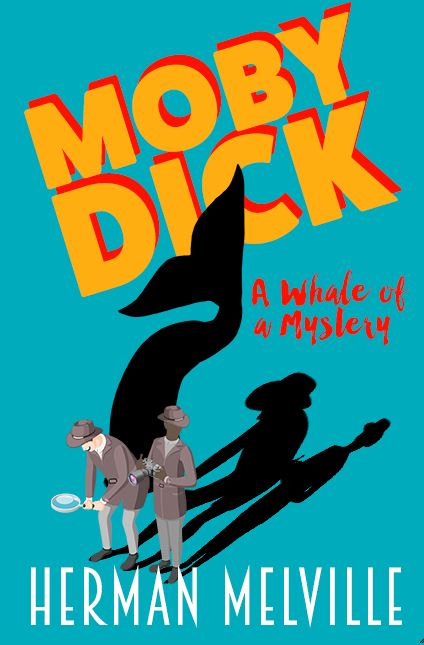
Cover of A+E with Ash and Eu

A + E by Ryszard Merey. This one gets a trigger warning from me, although it’s less the scenes of sexual violence (of which there are a few) and more that the author—who wrote this book well before he met me—somehow knows about my teenage life in startling ways.

Allow me to digress on one of the reasons why I tend to dislike YA—the characters are blank slates, meant for the reader to relate to. I know a lot of teenagers. Very few of them are blank slates. Very few of them fit neatly into “jock” “artsy” “popular,” etc. categories. They are, in fact, people. And the choice of nearly an entire marketing category to eschew specificity for broad appeal is, I believe, doing a disservice to young people.

Anyway this book isn’t YA, it’s just about teenagers. It’s a book I would have wanted when I was that age (I was deeply uninterested in books for my age range because they weren’t like this.) Two gender non-conforming kids—the effeminate, artsy Ash and the loud, brash goth Eu—meet and become friends with the kind of passionate intensity that happens when you’re smart and mentally ill and young. They fall in love, kind of, and they fuck up, and they hurt each other in devastating ways. I felt Seen. It’s also just gorgeously written.

A note for people attempting to read this (and you really should read it): There are two versions, a graphic novel and a novella. I’m talking about the novella, which you can find here. I haven’t read the graphic novel (yet).

Behind the Screens: Tuesday Author Interview

Every Tuesday, get to know a bit about the stories behind the books you love, and discover your next favourite novel.

Brain Created Intelligence cover

Sabitha: AJ Pagan IV joins us to talk about his thought-provoking science fiction novel, Brian, Created Intelligence. AJ, can you start by telling us a bit about the book?

AJ: This story revolves around the world’s first bodiless human brain, created to study and produce real artificial intelligence. Brian the brain does not know he’s a human—he’s been told and believes himself to be an artificially intelligent system.

Sabitha: What inspired you to write this book?

AJ:  As I earned my Master’s in organic chemistry and wrote my thesis, I was searching the job market and came across the still burgeoning technology of 3D organ printing. Well my brain had a thought, what if someone created a brain? 

Sabitha: It’s always fun when a scientist writes science fiction. What’s your writing process?

AJ: My writing process: brain brew for months or years and research the hell out of what I want to write so I’m not ignorant of what’s real. Once it feels right, wake up at 4AM and write ~2k words a day or more every day until the story is out of me. There are minor exceptions.

Sabitha: What book do you tell all your friends to read? Besides yours of course!

AJ: Hyperion (and The Fall of Hyperion) is the best book in existence. 

Sabitha: What do you most want your readers to take away from reading your book?

AJ: I want people to realize this sort of horrible technology is getting close and we need to ensure it never comes about. I don’t want to be a slave nor create one nor have ANY in existence. Everyone deserves all human rights. Body or not. 

Sabitha: Thanks for sharing your story and your process. We’re looking forward to reading! Where can the Night Beats community find you and your book?
AJ: You can find my book on Barnes and Noble, all independent book stores can order it, and Apple/Google/Kobo ebook as well. You can find me on Twitter, on my website, and in Southern California most days.

Book Report Corner

by KaptenSiri

The cover of the sad bastard cookbook. It has a photo of uncooked ramen and a plastic knife, but no spoons.

I received an Advance Reader Copy in return for an honest review.

Some days, there’s not enough time. Some days, you just don’t have the energy. Some days, you feel like a sad bastard and literally don’t know what to do. That’s when you pick up The Sad Bastard Cookbook and just read. It will make you laugh. It will keep you company. It will help you find something to cook, on your level for the day. Make the core recipe, add something if you feel for it, or—on a good day—go all in.

The Sad Bastard Cookbook has already saved my ass several times when it comes to solve the “what’s for dinner” question. The recipes are simple and you’ve probably made most of them before. But here’s the thing; it’s up to you where you set the bar. You don’t have to follow the recipe strictly, but, if you need it, there are a lot of suggestions how to pimp your food. And, it will taste good!

Get your free e-book PDF here.

Into The Unknown Giveaway 

Escape Blue Monday with space adventures!

Into The Unknown cover with a moss-person

January can be a bit of a bummer with those dreary days and cold weather. So for the weekend of Blue Monday, (14th-16th January) we are making our Sci-Fi anthology Into the Unknown completely free on Amazon. We can’t guarantee it will cheer you up, but you can lose yourself in eleven adventures into the unknown.

Book Report Corner

by Dale Stromberg

The cover of the sad bastard cookbook. It has a photo of uncooked ramen and a plastic knife, but no spoons.

Depression can feel like being the body during an out-of-body experience. Or like being a rickety boat sailing a beam sea. You can find it an ordeal to do even the simplest things—like eating. This cookbook understands that you might be broke or even poor, beaten down by fatigue, unable to cope with basic physical tasks, and/or lacking the wherewithal to open a jar of jam. The book prods you, with a gentle humour that is sympathetic to your depressive paralysis, to get something down your gullet. 

Some of the recipes here satisfy the minimum requirements of what might be called actual recipes—but then there are “Peanut Butter on a Spoon” or “Eat a Dill Pickle Out of the Jar While Standing in Front of the Fridge”. How do these qualify as recipes? Well, I myself have experienced spirits low enough that basic life tasks went undone simply because there was nobody standing there telling me, “Now do this. Next do that.” The Sad Bastard Cookbook recognises that, some days, you’re probably going to max out simply by taking one thing (hopefully not mouldy or expired) from your cupboard and choking it down raw. 

But remember, you could take not one but two things, or at the God-Tier level three things, combine them, zap them in the microwave, and satisfy basic caloric intake requirements in a slightly less sorry-ass way, even as you continue to stagger under the crushing burden of your depression. Which is a way, maybe, to be slightly less sad.

Get your free e-book PDF here.

Behind the Screens: Tuesday Author Interview

Every Tuesday, get to know a bit about the stories behind the books you love, and discover your next favourite novel.

Assassin of Reality cover

Sabitha: Vita Nostra is a book that the three of us list as one of our all-time favourites —a story about magic, language, the darkness of academia and the hope of growing into yourself. We’ve been desperate to read the sequel, but unfortunately none of us read Russian. Luckily, Julia Meitov Hersey (winner of the 2021 Science Fiction and Fantasy Rosetta Awards) translated Assassin of Reality, and it’s coming out in March (in e-book and hardcover). Rachel A. Rosen got a review copy and can’t wait to tell you about it in an upcoming issue. While Zilla and I wait for it to be released, Julia’s agreed to do an interview telling us about fantasy, culture, and the process of translation. 

Marina and Sergey Dyachenko’s books defy easy characterization. Julia, how would you summarize Assassin of Reality?

Julia: As the sequel to the critically acclaimed Vita Nostra, Assassin of Reality follows the next stage of Sasha Samokhina’s journey.

Sabitha: The wording in Vita Nostra felt incredibly deliberate, as if every word was carefully selected to convey not only a meaning but a sense of the story, the world, and the characters. It worked especially well for a book where the use of language was a part of the story. When you’re translating a book like Vita Nostra or Assassin of Reality, how do you balance direct, literal translation with translating the vibe of the story?

Julia: I think the secret is to look at the sentence, better yet the paragraph, rather than individual words. You must see the picture in your mind and retell it in the target language. The danger there is to insert too much of yourself and walk too far from the original. At the end of the day, it’s a question of tasteful balance, especially in the case of a meta-novel such as Vita Nostra, where words matter more than anything.

Rachel: Vita Nostra is grounded in an Eastern European tradition of fantasy, which has significant differences from the Anglosphere’s tradition of fantasy. Did these different cultures of literature pose any difficulty when translating?

Julia: Those marvelous differences are the main reason we read translated literature, isn’t it? It’s not just about an unexpected plotline or unfamiliar characters; it is also about a fresh perspective, a novel view, a deeper insight into a different mentality. These cultural differences are what makes the translation process so challenging and so rewarding.

It never ceases to amaze me how easily Eastern European fantasy authors operate with open epilogues and unhappy endings.  They absolutely refuse to coddle their audience, so there is nearly always an element of surprise. If you’re craving a Hollywood ending, you should probably walk away from Eastern European fantasy. I love anticipating that gasp of surprise that is sure to accompany that last page. It’s a lot of fun to translate with that gasp in mind.

It’s worth mentioning that, since I translate from my native language into my second language, the challenge lies less in researching and understanding the culture of the source material and more in localizing and adapting it for the Anglosphere (without losing its flavor and style). I tend to make a lot of unpopular choices, such as standardizing the first names (because the emotional impact of name variations — Sasha vs Sashka vs Sashenka — is pretty much lost on the English-language readers) or loosely translating traditional Eastern European academic terms (finals vs sessions, etc.). Not everyone agrees with that, but I stick with what feels right to me. I am not alone in this effort —the editorial team at Harper Voyager are beyond wonderful, and I am forever grateful for their impeccable taste and eternal patience.

Zilla: When I’m an author, I pour my identity into the story. When I’m an editor, I try to step back and let the story tell itself, but I can’t avoid editing with my point of view. How personal is the translation process?

Julia: Traduttore, Tradittore. Translating a book is akin to fostering a child. The child’s not yours; there is no DNA of yours on those pages. And yet, you take care of the manuscript, you teach it to speak, you make sure it can walk… It’s very hard not to give it some of your identity, and I believe most of us translators fail at that in the most spectacular fashion.

Rachel: We all loved Vita Nostra and hoped to one day read the sequel. We had two problems. First, we only read English, so thank you for translating it! Second, we couldn’t imagine how a sequel could exist, given that Vita Nostra felt like a seamless, complete story. Can you tell us where the sequel fits in, or would that be giving away spoilers?

Julia: Trust me, I was afraid of reading the sequel, even though I was one of the people who tried their best to influence the Dyachenkos to write it. While the open ending allowed for the continuation of the story, I just couldn’t imagine where it would go. I was certainly surprised and decidedly not disappointed. Conceptually, Vita Nostra is a book about youth — radical, cruel, selfish, idealistic youth. In Assassin of Reality, rather than entering the next stage, most logically the world Sasha had created, we return to the familiar world. The difference is that Sasha is now an adult, and the challenges she faces are different — they are less about pushing herself beyond the limits and more about considering the needs of others. The Russian original novel is called Correcting Errors. Think of this telling title and of the fact that Assassin of Reality is heavily influenced by the authors’ immigration experience — and pick up this novel thinking of second chances, the ungrateful task of proving oneself again and again, of the mythical nature of a perfect world — and of the terrible beauty of adulthood.

Sabitha: We’re so glad that we can finally read this book—and to have someone who really gets the heart of the story translating it. How can our community connect with you and how can they buy the book?

Julia: They can pre-order the book in e-book or hardcover form. My Russian-to-English translation services are available at my website. I can be found on Facebook, Twitter, or Instagram