Book Report Corner

by Rachel A Rosen

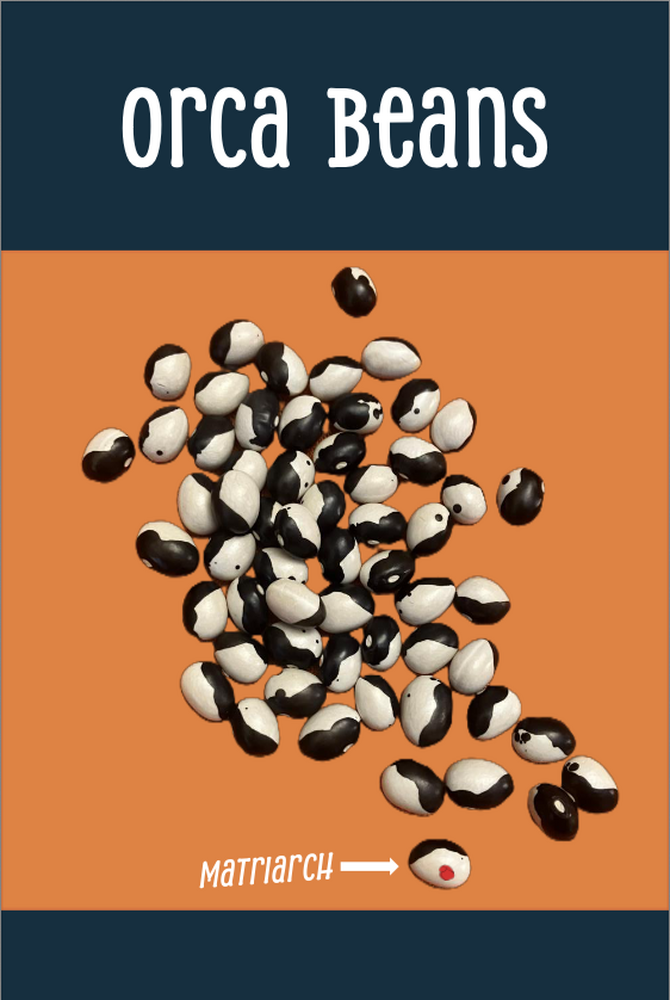
Undrowned: Black Feminist Lessons from Marine Mammals  Alexis Pauline Gumbs . Teal cover, yellow text with a minimalist graphic of dolphins.

As you might guess from my latest book, I love sea creatures and hate capitalism. Which makes Undrowned: Black Feminist Lessons from Marine Mammals by Alexis Pauline Gumbs the perfect sort of book for me. (I mean, my favourite part of Moby-Dick was the whale facts, even when they were wrong. This one won’t take you nearly as long to read.)

Undrowned book is a stunning, poetic tribute to Blackness, queerness, femmeness, fatness, resistance, solidarity, and love, told through the lens of marine biology. It brings together two of my great loves: activism and whale facts. This is a book that’s all activism and whale facts, in the best possible way. What a joyful read.

Wrong Genre Covers

The Metamorphosis as a children’s book was suggested by Dale Stromberg. Have a funny idea for a Wrong Genre Cover? Email us at nightbeatseu@gmail.com, and if Rachel likes your suggestion, she’ll make it in a future issue. Or @ us on basically any of the socials.
the metamorphosis by franz kafka as a children's book, illustrated by rich johnson. The image is of a cartoon cockroach in a bed.

Behind the Screens: Tuesday Author Interview

Every Tuesday, get to know a bit about the stories behind the books you love, and discover your next favourite novel.
A drawing of a pile of old books with the title The Wonder Lands War

Zilla: Peter Darbyshire is back to tell us about the latest installment of Cross’ attempts to stop angels from using classic literature to destroy the universe. It’s a hard life out there for an immortal trying to save the world … so Peter, tell us about it!

Peter: The Wonder Lands War is the fourth book in the Cross series of supernatural thrillers. Cross is in a race against time to find Alice, the character who escaped from the Wonderland tales, before a band of renegade angels can imprison her and use her to find God’s missing bible to end the world. It’s  a quest that takes Cross and his faerie companions across Europe, to famous libraries, forgotten ruins, secret areas within the Vatican — and into the strange and deadly realm that inspired the Wonderland tales.

Zilla: Who is your favourite character you’ve written?

Peter: Definitely Cross! What’s not to love about an immortal, angel-hunting rogue who hangs around with the likes of Christopher Marlowe, literary characters, spirits, gorgons and more, and who keeps saving the world against his better judgement?

But Alice is another favourite. She is a very odd and quirky being who has escaped the Wonderland tales and has various magical abilities such as being able to travel from any one library to another. I have a great deal of fun writing her scenes!

Zilla: If you could meet your characters, what would you say to them?

Peter: For God’s sake, why won’t you listen to me? I had a great plan that would have wrapped up everything smoothly. But no, you had your own ideas….

Zilla: And what would they say back?

Peter: They’d say I haven’t written enough books about them and insist I drop everything to write more. Which is basically what they say in my imagination every day.

Zilla: That is very relatable. Would you say that your work is more plot-driven or character-driven?

Peter: There’s enough books in the series now that the plot comes from the characters, who all have intriguing back stories and entanglements. Each book probably has a dozen other storylines that I could have followed. I like to write collaborative tales with the readers, where I offer an intriguing story within the story and let the readers imagine it for themselves. It’s been interesting to hear what some have come up with — probably better ideas than I would have managed!

Zilla: Who are the Cross readers?

Peter: Anyone who loves a serious mix of the literary and fantastic, who wants to see their favourite characters from other books and plays and myths in one place, and who loves seeing literary tradition torn apart and reassembled into new forms. So basically I’m writing for people like me.

I’ve been amazed and gratified by the audience that is out there for these books, which is much larger and diverse than I expected. The Cross series started out being a love letter to literature but I feel it’s grown into a love letter to an entire community.

Zilla: Thanks for sharing your story and your process. We’re looking forward to reading! Where can the Night Beats community find you and your book?

Peter: You can find me and links to my books at peterdarbyshire.com. I can also be found at the usual social haunts with the handle @peterdarbyshire.

Behind the Screens: Tuesday Author Interview

Every Tuesday, get to know a bit about the stories behind the books you love, and discover your next favourite novel.

The Ruler of the Galaxy cover with an exploding space station

Zilla: Military science fiction, space operas … whatever you call it, we love to read it. Moses Soloman’s series The Ruler of the Galaxy has the excitement you’re looking for. Moses, can you tell us about your books?

Moses: An interstellar epic in the classic tradition, the tale follows Lieutenant Morgan Teggo and Ensign Rayna Choff, young officers in the Alscrasian service. As their brief reunion is interrupted by a mysterious power beam that shoots their craft down on a primitive planet, alarming developments begin forming at the imperial level. Soon, they are embroiled in an assassination and a full-scale invasion of the Central Empire of Eurania by an unidentified fleet led by General Mapooly, an historic figure who has been raised from the dead.

Zilla: What inspired you to write this series?

Moses: This is a story that has been with me since I was 13-years old. At its heart, it is about someone at the center of an expansive space war, and in the midst of this, he comes into conflict with his captain, who is the father of the woman he loves. This all comes to a head during a daring mission, when an ancient malevolent entity makes its long-prophesied entrance. The core plot and character arcs have stayed with me all these decades, while the scope and depth have expanded. It now encompasses not just an interstellar empire on the verge of war, but a history that stretches to ancient myths of gods and monsters, raising questions of existence and final destiny.

Zilla: What would happen if you met your characters? And who would you meet?

Moses: Within all this are Morgan and Rayna, and their friends, Otho Ennuk and Lon Prowzi. If I could meet them in person, I would interview them, perhaps similarly to one by The Galactic Times that is recalled in the book. An excerpt (edited):

Galactic Times interviewer: …How did you all meet, and what brought you together as friends?

Morgan [pointing at Otho]: He and I met first.

Otho: We were in the gym, and you challenged me to a weightlifting contest, which I won, then to an endurance run, which I also won, then to unarmed combat.

Morgan: Which I won.

Otho: No, you didn’t follow the rules…

Rayna: And I was also at the gym. I was working out with the blades, and he must have got some idea about impressing me. He challenged a big muscle guy to a blade match and got knocked on his…you know where.

Morgan: Yes, this is a family-appropriate interview.

 Rayna: And then you asked me to dinner…!

Lon: It was lust at first sight.

 Otho: You were feeling sorry for him.

Zilla: What’s your next writing project?

Moses: Currently, I am writing the next book in the series, Force from Magellania, with the goal of publishing in 2026.

Zilla: Thanks for sharing your story and your process. We’re looking forward to reading! Where can the Night Beats community find you and your book?

Moses: Buy The Ruler of the Galaxy at Amazon for Kindle and in Trade paperback, or order at Barnes & Noble, Kobo, or your favorite local bookstore through Ingram. I can be found at my website.

Behind the Screens: Tuesday Author Interview

Every Tuesday, get to know a bit about the stories behind the books you love, and discover your next favourite novel.

A quilting of scars cover with two men and a horse

Zilla: As a fellow Canadian, I was excited to see Lucy E.M. Black’s novel A Quilting of Scars, which tells a story of 19th century small-town Ontario, and the very human quality of the struggles arising from the restrictions and silences of that time—and some that persist to our day. I’m delighted to have her here to talk about her book. Lucy, can you introduce it to us?

Lucy: A Quilting of Scars is a poignant exploration of forbidden love, abuse, and murder, brought to life through a cast of relatable yet uniquely original characters. Set against the backdrop of a rural community bound by rigid moral codes, the narrative follows Larkin Beattie as he navigates the complexities of a lonely existence filled with repressed sexuality and deep-seated guilt. With a deftly crafted sense of time and place, Larkin’s story unfolds as a thoughtful meditation on aging and remorse. As he reflects on pivotal moments from his past, the narrative delves into the hypocrisy of the church, the profound grief that has shaped his life, and the suffocating fear that grips queer youth in a society quick to judge. Through Larkin’s eyes, readers experience the strictures and rhythms of farming life in the not-so-distant past, revealing how societal expectations can stifle personal truth. A Quilting of Scars resonates with timeless relevance, evoking a deep emotional response that transcends the era in which it is set. It is a powerful reminder of the enduring struggle for acceptance and the scars that love can leave behind.

Zilla: What was the moment that sparked this book?

Lucy: This novel began in an antique store when I fell in love with a reproduction poster from May 1874.  

Reproduction poster selling a horse's services.

The splendid horse, young Netherby, was available as a proven foal-getter at $4 a single leap.  I was charmed by the poster but also intrigued by the idea of a farmer advertising his horse’s services in this way.  I began to wonder about the farmer and gradually Larkin’s story revealed itself and the novel unspooled. 

Zilla: There’s something very special about characters who come to you, instead of being created by you. Can you tell me more about Larkin? 

Lucy: Larkin is a character that I have quite fallen in love with.  He embodies a number of characteristics belonging to family members and farm folk that I have known.  He also represents those vulnerable young people I have encountered over the course of my career as an educator. The secrets that are kept throughout the story changed Larkin’s life and left him isolated and lonely.  And so, as the novel took shape and I came to know Larkin and his best friend Paul, it became important to me to tell their story – which is a love story of sorts and a celebration of male friendship.  The setting is placed at the end of the 19th century when small-town Ontario was still very much under the influence of Victorian ideology.  This is a period of tremendous growth and potential with huge advances in science and technology and yet the social mores, if you will, were much slower to change.  So much of our society has changed in the last hundred years but what is so clear to me is how desperately we still need acceptance and unconditional love without judgement.   

Zilla: It sounds like the story emerged from your own life and those lives around you. Did you need to do any research for it beyond living?

Lucy: The book takes place during a period of Ontario history that I know well and have explored in other novels.  Aspects of this book that required a deeper research dive included the early treatment of breast cancer, prostitution in Collingwood, coroner’s inquests, and rural farm practices including branding, castration, and cattle drives. 

Zilla: Thanks for sharing your story and your process. We’re looking forward to reading! Where can the Night Beats community find you and your book?
Lucy: My books are sold at independent book stores, Chapters, Indigo and Amazon.  I write a monthly newsletter, a website, and post regularly on facebook (lucyEMBlack) and Instagram (lucyemblack). 

Book Report Corner

by Rachel A Rosen

The Practice, the Horizon, the Chain by Sofia Samatar. The image is a set of interlocking circles against a sea of stars.

If you’re in education or academia in the age of austerity, you’ve likely had a moment or two where you’ve wondered what you’re doing there, and whether or not you’re doing more harm than good. I know that I’ve had more than a few of those moments. The Practice, the Horizon, and the Chain, Sofia Samatar’s wonderfully strange and dreamy novella about education, class divisions, and the carceral state on a mining ship, gets this contradiction.

In the Hold, generations of workers are Chained, never seeing anything other than their miserable conditions. But a boy who is good at drawing is plucked from the Hold and brought up to the ship’s university, where he joins the bluelegs, people like his professor, who get an electronic ankle bracelet instead of a chain. Some people even have no fetters, and get names instead. As the boy adjusts to his new circumstances and the professor navigates the boundaries of hers, they become embroiled in a struggle for freedom—not just for themselves, but for their entire society.

This novella manages to be at once intensely relatable and transcendent: a story of the power and the limits of academia, the compromises of political action, the relationship between labour and the state, and the promise of breaking free.

Behind the Screens: Tuesday Author Interview

Every Tuesday, get to know a bit about the stories behind the books you love, and discover your next favourite novel.

Stay Magical with two anime style girls on the cover

Zilla: If you grew up watching Sailor Moon, you’ll be as delighted as I was to see Claris Lam’s newest short-story collection, Stay Magical! Claris, can you introduce us to your book?

Claris: Stay Magical! is a young adult (YA) collection of ten short stories reflecting on what it means to be a magical girl, the tough sides of being a magical girl, and what happens when you’re no longer defeating bad guys in costume every week.

Fans of anime, manga and books such as Sailor Moon, Pretty Cure, and A Magical Girl Retires will enjoy reading Stay Magical!

Zilla: What inspired you to write this book?

Claris: My love of magical girl TV shows like Sailor Moon, Pretty Cure, Ojamajo Doremi and Cardcaptor Sakura inspired me to write this book. I enjoyed watching them because of the hopeful, optimistic themes they had, as well as all of the actual magic involved! 

I’ve always wanted to write a book that was centered on magical girls, and realized that there was a lack of short stories in the genre. Though light novels and manga exist for magical-girl fans to read, I discovered that there aren’t a lot of short stories written for this genre. Given this, I decided to write my own! 

Zilla: Is your work more plot-driven or character-driven?

Claris: Stay Magical! is character-driven, given that all of the characters in each of the short stories face different scenarios in their lives. Some are trying to move on after saving the world with their powers, while others are currently facing the bad guy of the week. All of them have a lot to learn in their life journeys as magical girls (and in some cases, former magical girls). 

Zilla: What’s your next writing project?

Claris: My next writing project is a fantasy book for children, inspired by book series such as Daisy Meadows’ Rainbow Fairy series and Gwyneth Rees’ Fairy Dust series. I also have another young adult fantasy short-story collection on the way, and this one takes heavy inspiration from the Grimm Brothers’ fairytales!

Zilla: Thanks for sharing your story and your process. We’re looking forward to reading! Where can the Night Beats community find you and your book?

Claris: You can purchase your copy of Stay Magical! at this link. Find all links to my socials at: https://clarislam.carrd.co/

Behind the Screens: Tuesday Author Interview

Every Tuesday, get to know a bit about the stories behind the books you love, and discover your next favourite novel.

Alien house cover with an alien hand carrying a mug of beer

Zilla: Science fiction gives a ripe field for comedy, and you find it in spades in Brian K. Lowe’s novels Alien House and Wasted Space. He’s here to tell us about them—Brian, take it away

Brian: Phil was sent to Earth to masquerade as a college student to size us up for invasion, but his ship crash-landed and he lost his weapons, papers, and most importantly, his clothes. Needing a place to stay, Phil pledges Alpha Tau Ceti, the worst frat on campus.

Resurrecting his mission from the ground up turns out to be the least of his problems: someone is shooting at him with lasers, the dean wants him to help with a TV show about UFOs, his fraternity brothers are hiding a secret in the basement, he keeps losing his pants, and worst of all, nobody warned him that Earth girls were so cute.

Conquer the Earth or spend time in the library stacks with a cheerleader? No one said college would be this hard.

Zilla: What inspired you to write this book?

Brian: There was no divine inspiration; it kind of just grew on me over the course of a few days until I had no choice but to write it. I still don’t know where it came from (but I have some vague hints).

Zilla: If you could meet your characters, what would you say to them?

Brian: When I meet high-school grads headed to college, I always tell them that the next four years will be the most amazing, inspiring, and enjoyable time of their lives, the period where they will enjoy the most freedom with the least responsibility. I tell them not to hurry and to appreciate the ride. If I were to meet the ATC gang, that advice would be superfluous, because these guys have mastered the art of college living. I’d probably just remind them, “Recycle your empties.”

Zilla: How much research did you need to do for your book?

Brian: I did very little research, because most of what happens was inspired (loosely) by real events. Most of the characters are amalgams or exaggerated versions of people I knew. Whether anyone I went to college with was actually an alien is a question we debate to this day.

Zilla: Is your work more plot-driven or character-driven?

Brian: Most of my work is plot-driven, without question. Alien House, though, I like to think of more as character-driven, because it’s Phil’s arc as college forces him to grow up (like a lot of us away from home for the first time). I feel the sequel, Wasted Space, is more of the plot-driven story that I typically write.

Zilla: What’s your next writing project?

Brian: Because I can’t focus on one genre, there’s an urban fantasy novel, the sequel to my first space opera, and a disparate handful of short stories all shouting for my attention. It’s anybody’s guess which one gets finished first.

Zilla: Thanks for sharing your story and your process. We’re looking forward to reading! Where can the Night Beats community find you and your book?

Brian: All my work is listed at www.brianklowe.wordpress.com. Alien House and Wasted Space available on Amazon.

Book Report Corner

by Zilla Novikov

The Audacity Gambit cover with flowers and a burning gazebo

The Audacity Gambit by B. Zedan is a gentle fairy tale, though the underlying themes are as uncompromising as any Fae could demand. Emily is the Chosen One, the one who can restore her people to the Fae Kingdom–but this is no accident of fate. Her life has been manipulated since the moment of her birth to fulfil the esoteric needs of prophecy, and the trusted adults of her life have been concerned only with preparing the way. But, while the world can put a person in a box long enough that she assumes its shape, she can still choose who she becomes when she steps outside.

The fantastical world is a character in its own right, full of whimsy in the style of Frank L Baum or Cat Valente, where Polaroid cameras reveal hidden mysteries and trees may–or may not–be trustworthy. While I never feared for Emily’s life, I wondered what she would hold onto when everything changed.