Every Tuesday, get to know a bit about the stories behind the books you love, and discover your next favourite novel.
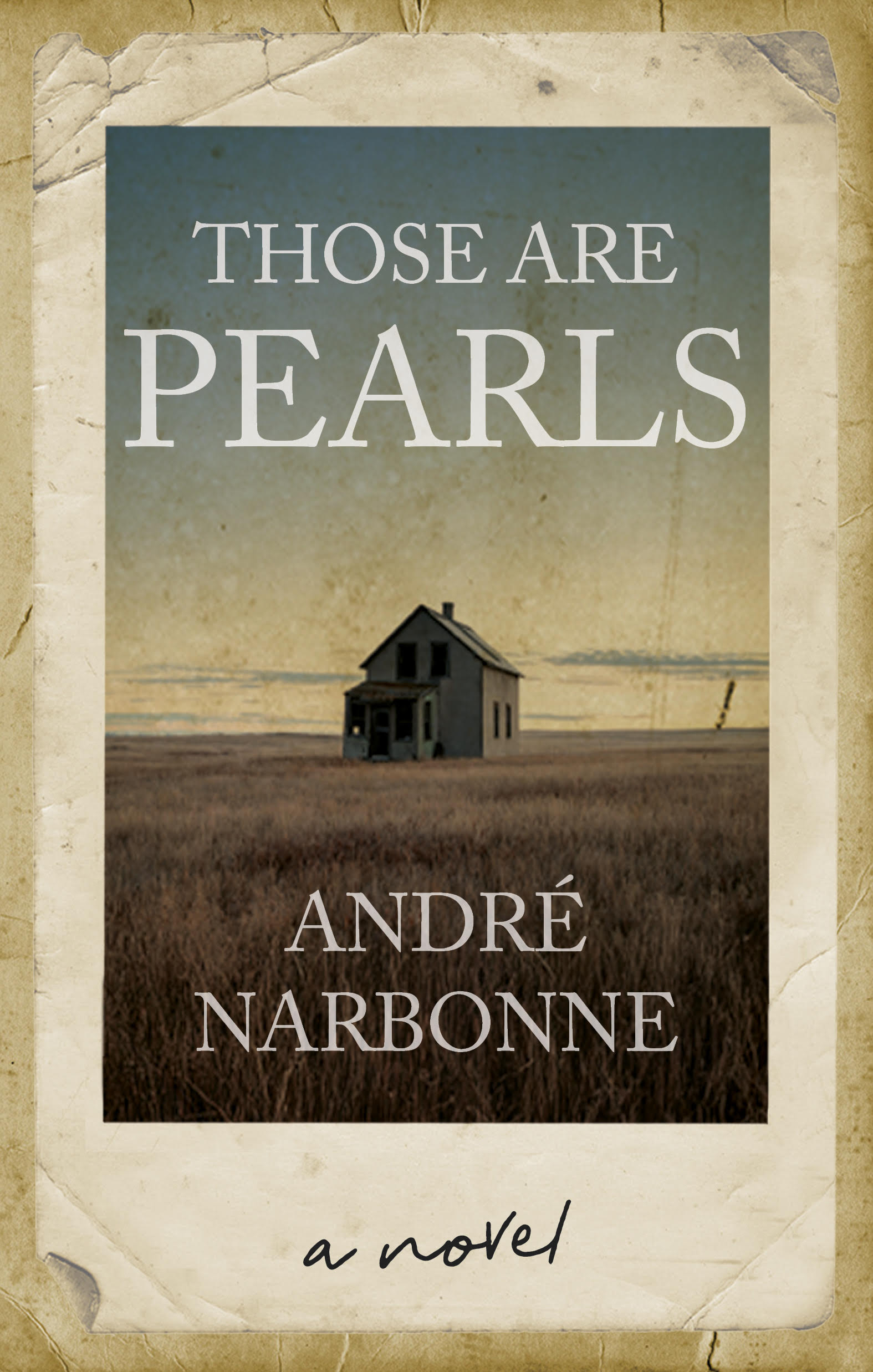
Zilla: The most incredible stories start at home—sometimes in the depths of our own family history. Andre Narbonne fictionalized his family’s story in Those are Pearls, and he’s here to tell us about it. Andre, how does the story go?
Andre: From the seeds of an impoverished boilermaker’s adoration for a rich doctor’s daughter grows a sweeping story of a family whose personal passions are woven into the tapestry of world history. Harry Short first rides into battle at the beginning of the Boer War, in 1895, to win the heart of Margaret Roll. In 1914 he enlists again, to escape her. With Margaret, he sires a family that takes the reader through generations and across continents. They arrive in Canada as prairie homesteaders, witness the Winnipeg Riot of 1919, and survive the Great Flood of 1950 as well as marriage to bootleggers and communists, police investigation, unlikely heroism on the battlefield, and, all but one, a torpedo.
Zilla: What inspired you to write this book?
Andre: I was inspired by my own family’s history, which I have fictionalized. The most extraordinary parts of the novel are the parts that are true. My great-grandfather got a tropical disease after falling off a boiler in Cape Town, South Africa, for which his doctor prescribed moving to Winnipeg. My great-aunt’s gravestone reads, “Old Socialists Never Die, They Organize the Angels.” At the beginning of the Second World War, my mother spent her summer in the “Clean Air Camp” for poor children outside of Winnipeg where she won a medal for the child who gained the most weight. None of my inventions can top those that history.
Zilla: What would it be like to meet your characters?
Andre: My characters lived through three wars, the influenza pandemic, the Winnipeg General Strike and, later, the Winnipeg flood, they lived through the untimely deaths of family members, including the death by suicide of a favourite sister. All this and they still kept their religion.
I expect they would ask me why I lost mine.
Zilla: Who is your favourite fictional character someone else wrote?
Andre: Ishmael. It’s his emotional buoyancy I admire the most. He suspects the universe might be one colossal joke of which he is the butt and is willing to laugh at the joke. He can do that because Ishmael is a connoisseur of irony in the way that other people are connoisseurs of wine. The best line in Moby Dick is typical of his observations: “Better to sleep with a sober cannibal than a drunk Christian.” What other 19th-century sailor would use a coffin as a floatation device?
Zilla: What’s the secret to editing?
Andre: Here’s four:
Don’t edit when depressed.
Don’t be afraid of changing things—allow for play in your drafts. Important characters can become less important, as can passages of dialogue, actions, and scenes.
Keep your first save. This is the ‘honest’ save. If you get sidetracked by your changes in subsequent drafts, the honest save will tell you what the story intends to mean.
Know your audience. A work that’s done, is done. Why change it? The only reason I can think of is to reach an audience. Keep in mind that at this stage you are shaping your work according to the interests of people you will likely never meet and try to imagine them fully and critically.
Zilla: Who did you imagine reading your book as you wrote it?
Andre: My first audience was my wife, who was not my wife at the time. In that regard, the novel has proven a great success.
Zilla: Thanks for sharing your story and your process. We’re looking forward to reading! Where can the Night Beats community find you and your book?
Andre: You can find me here. My book is here, and my press is here.



Pingback: Interview: André Narbonne on Night Beats - Palimpsest Press