Every Tuesday, get to know a bit about the stories behind the books you love, and discover your next favourite novel.
Rachel: With us today to talk about his book Into the D/ark is David Elias! David, can you tell us a little about the book?
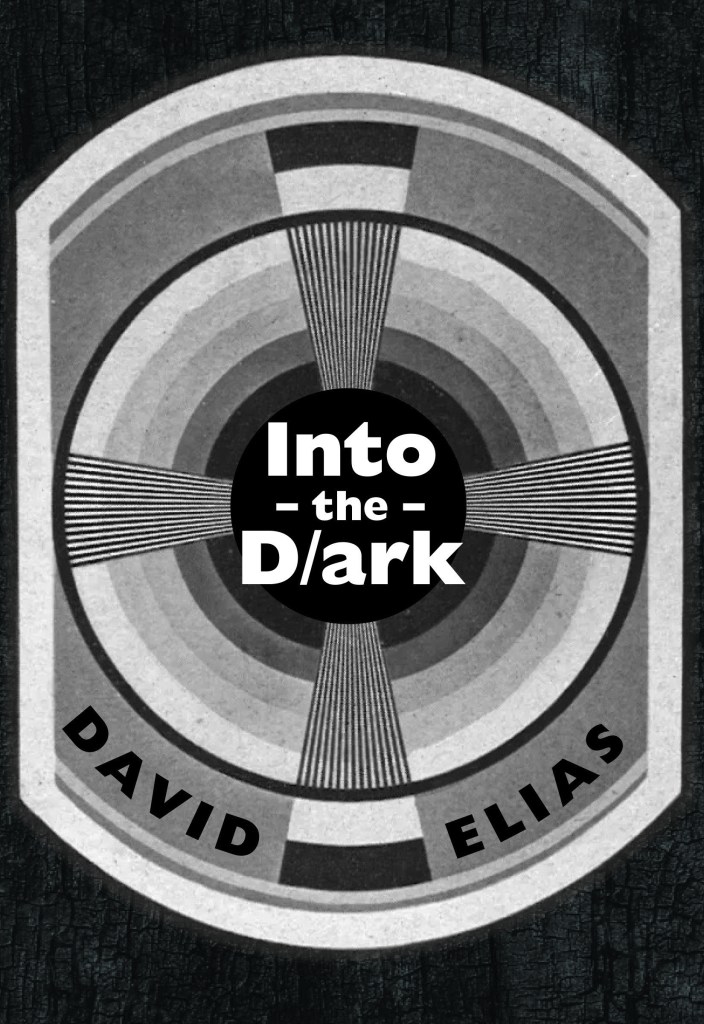
David: Rose Martens struggles with the aftermath of a terrible fire that has left her sons, Jake and Isaac, horribly disfigured. The boys have gone to live in an abandoned house they’ve named Bachelor’s Paradise, where they spend all their time watching American network television. Their father Clarence works day and night in his blacksmith shop, producing bizarre metallic creations no one can make any sense of. Martha Wiebe returns to the stifling conformity of the valley to discover that her brother Abe, a preacher, has abandoned his congregation to devote himself to the construction of “The Ark”, a massive and mysterious edifice whose purpose he will not divulge. When the first major snowstorm of the year roars into the valley, it unleashes a chain of bizarre events that the valley may never recover from.
Rachel: What inspired you to write this book?
David: I was a kid living on a farm in the Pembina Valley of southern Manitoba when American network television started to invade the folk society I’d been born into. Before I knew it, I was sitting down in front of a primitive black and white TV to watch Liberace and Cassius Clay ham it up together on the Ed Sullivan Show. Then, up in the big city (Winnipeg) Marshall McLuhan started talking about the medium as the message, and right about that time Walter Kronkite appeared on the screen, took off his glasses, and announced to the world that the future we thought we were headed for had just gone up in smoke (from a rifle fired out of the Texas Schoolbook Depository). This book came out of that time and place.
Rachel: If your characters met you, what would they say to you?
David: They might say something like: “It’s not as though we aren’t grateful for this opportunity, David, but did you conjure us up just to put us through all this misery? What did we do to deserve being saddled with so much trouble and strife? It wouldn’t kill you to lighten up a bit.
Rachel: I feel like that’s a lot of our characters. Who is your favourite character you’ve written, and why?
David: Of all the characters I’ve created, Martha Wiebe is probably my favorite. I’ve written about her in a number of other books, and she makes another appearance in this one. She keeps popping up in my work because I like her style – a combination of grace and candour, combined with a vast and complex “inner bigness”.
Rachel: Is your work more plot-driven or character-driven? Or a secret, third thing?
David: While a lot of my work is probably more character-driven than plot-driven, both of them often have to take a back seat to the kind of writing that I would characterize as “idea-driven” – a deep dive into the finer intricacies of the human condition.
Rachel: That does sound intriguing! Where can our readers find the book?
David: From Radiant Press, or wherever books are sold!
 Night Beats Extended Universe